
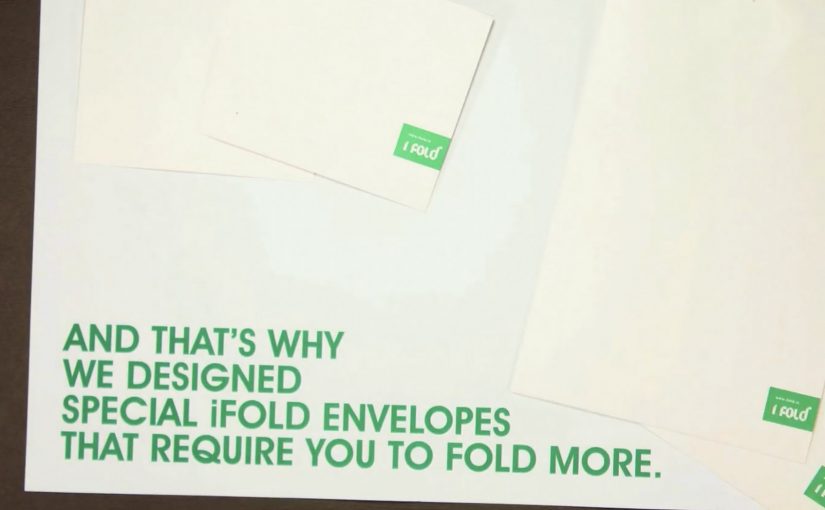
iFOLD: Fold More, Save Paper

iFOLD: Fold More, Save Paper

Billions of business envelopes are used every day. Imagine how much paper can be saved if we just halved their size.

So while posting a letter, ask: can it be folded once more. If it can, fold more.

Use a smaller envelope. Save trees. It’s that simple. It’s called iFOLD.

A tiny behavior change, packaged as a system

The mechanism is effort-to-impact math: a simple rule where one extra fold creates a visible downstream saving. One extra fold reduces envelope size. Reduced envelope size reduces paper consumption. That works because the cause and effect are easy to understand immediately, so the behavior feels practical rather than preachy. The campaign frames this as a repeatable rule anyone can apply without new infrastructure or technology.

In high-volume corporate mailrooms and customer communications, small process changes compound into meaningful material savings.

The real question is how to turn a trivial action into a default business habit. The smart move is to build the fold into standard mailing practice, not treat it as a one-off reminder.

Why it lands

This works because it does not ask for a lifestyle shift. It asks for a micro-habit that fits inside existing routines. The instruction is binary, memorable, and immediately testable. You can literally try it with the next letter in your hand.

Extractable takeaway: When you want behavior change at scale, give people a single, repeatable decision rule that requires almost no extra effort, and make the benefit feel cumulative and obvious.

Steal this envelope logic

  • Make the rule portable: one sentence people can remember and repeat.
  • Target a high-frequency routine: boring, repetitive processes are where scale lives.
  • Prefer “do this instead” over “stop doing that”: substitution habits stick better than abstinence messages.
  • Connect the micro to the macro: one fold feels trivial. Aggregate savings makes it feel worth doing.
  • Design for adoption inside organizations: the best ideas fit procurement, operations, and compliance realities.

A few fast answers before you act

What is iFOLD?

iFOLD is a paper-saving idea that encourages people to fold letters one extra time so they can be mailed in smaller envelopes.

Why focus on envelope size?

Because envelopes are used at massive volume in business and government. Small reductions per unit add up quickly at scale.

What makes this a strong sustainability message?

It is a concrete action, not an abstract appeal. People can do it immediately without buying anything new.

Where does this work best?

In organizations that send large quantities of letters and statements, where a standard change in folding and envelope formats can be implemented consistently.

What could prevent adoption?

Template constraints, inserts that cannot be folded further, window placement, and operational inertia. The idea works best when mail formats are designed with folding flexibility in mind.
Volkswagen: Instant Christmas Recycler

Volkswagen: Instant Christmas Recycler

A Christmas recycler that turns responsibility into a reward

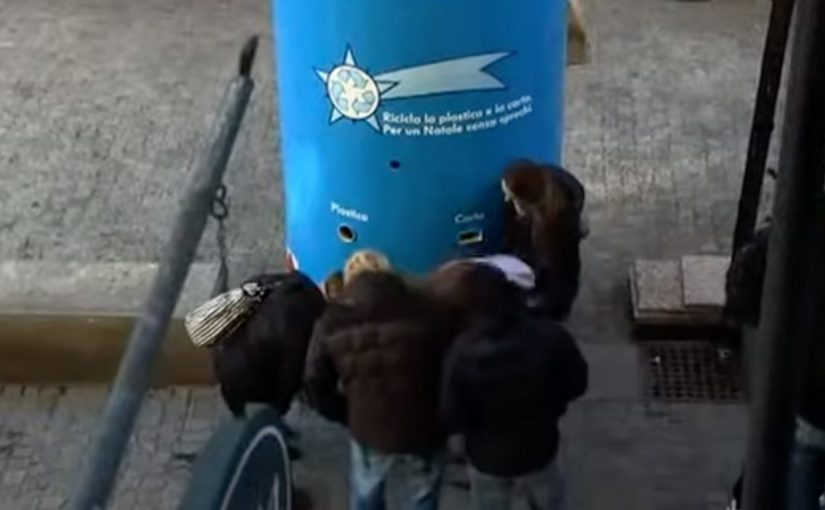
Volkswagen in Italy wanted to convince people to be more responsible towards the environment. So with the help of ad agency Now Available they created an engaging ambient ad called the “Instant Christmas Recycler”.

How the Instant Christmas Recycler works as an ambient activation

The idea is simple: put a recycling station where people are already moving, then make the “right” action feel immediately worthwhile. Here, “ambient activation” means a branded installation in a public setting that invites an on-the-spot action. As described in campaign write-ups, each time someone disposed of rubbish correctly, the machine responded with an instant Christmas-themed reward. That instant feedback is the mechanism. Because the response is immediate, it reinforces the behavior while the motivation is still present.

In retail-adjacent public environments, ambient installations can make sustainability tangible by turning small actions into visible, immediate consequences.

Why it lands: it replaces guilt with a small win

Environmental messaging often asks for sacrifice. This flips the emotional contract. It rewards the behavior on the spot, so the action feels like a game you want to complete rather than a lecture you want to avoid.

Extractable takeaway: If you can turn a “should” into an immediate, visible win, the behavior starts to feel self-propelled instead of imposed.

The Christmas framing matters too. It gives the act of recycling a seasonal “ritual” feel, which makes participation socially acceptable and easy to repeat.

The business intent behind the charm

This is brand reputation building with a behavioral nudge attached. The real question is whether you can design the loop so the sustainable choice feels rewarding in the moment. Reward-based nudges only hold when the payoff is inseparable from the action. Volkswagen gets to show up as a constructive actor in everyday life, while testing a simple truth: if you want people to change behavior, reduce friction and make the payoff immediate.

What to steal for your next sustainability activation

  • Reward the action, not the intention. People follow loops they can feel instantly.
  • Place it where behavior already happens. Footfall beats persuasion.
  • Make the feedback public. Visible participation normalizes the act for bystanders.
  • Keep the rules obvious. One action. One response. No instructions needed.

A few fast answers before you act

What is the “Instant Christmas Recycler”?

It is an ambient activation for Volkswagen in Italy that uses a branded recycling station to encourage responsible disposal by giving immediate feedback and reward.

What is the key mechanism that makes it work?

Instant reinforcement. When someone recycles correctly, the installation responds immediately, making the right behavior feel easy and worth repeating.

Why use an ambient installation for an environmental message?

Because it reaches people in the moment of action. It turns sustainability from a slogan into a behavior you can perform right now.

What should a brand be careful about with reward-based nudges?

If the reward is unclear, delayed, or inconsistent, the loop collapses. The response has to feel reliable and directly tied to the action.

How do you scale an idea like this beyond one location?

Standardize the behavior loop and vary the context. Same simple action and response, different placements and seasonal skins that fit local routines.

WWF: The .wwf Unprintable PDF Format

WWF: The .wwf Unprintable PDF Format

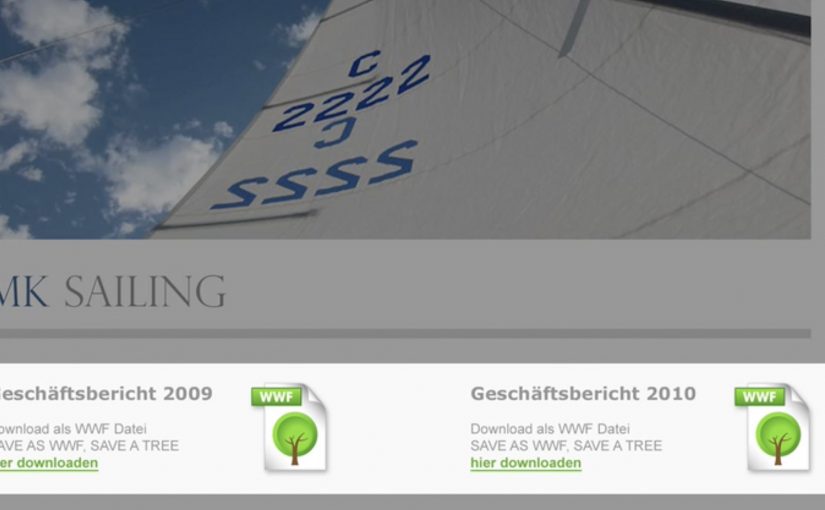
German ad agency Jung von Matt is back with another stellar idea. A new green file format called .WWF.

The WWF format is a PDF-like document that is designed not to print. The point is simple: avoid unnecessary printing by making the “do I really need paper for this?” decision explicit at the moment you save or share a file.

How the .wwf idea works

At the center is a small tool that lets you “save as WWF”. The resulting file behaves like a regular PDF for reading and sharing, but the print option is blocked by design. In other words, it is a familiar format with one permission deliberately switched off.

WWF frames this as a practical nudge within its broader “think before you print” message. It is not trying to shame printing. It is trying to stop the default reflex of printing what never needed to exist on paper in the first place.

In document-heavy organizations, small defaults like a print-disabled file option reduce waste because they change the decision moment without changing the workflow.

Why this lands beyond the gimmick

It turns a values statement into a product behavior. Plenty of sustainability campaigns ask people to care. This one asks people to choose differently in a place they already spend time: saving, sharing, and circulating documents.

Extractable takeaway: When you want less waste, change the default at the moment of action, and keep an intentional override for the few cases that truly need it.

The real question is whether you can make “think before you print” feel like a normal workflow choice, not a policy fight.

It preserves user choice. The format does not decide what “should” be printed. It pushes the decision back to the sender, who knows the context. That framing matters, because it avoids the “policy tool” vibe and keeps it as a lightweight, voluntary habit.

It spreads by forwarding. A file format is distribution. When people send documents around, the format travels with the content and keeps reintroducing the idea in a natural, non-media-buy way.

Steal this pattern for document workflows

  • Change the default, not the lecture. If you want different behavior, move the intervention into the everyday step where the behavior happens.
  • Make the “good choice” feel like a normal choice. Keep the action one click away and compatible with existing habits.
  • Design for shareability. Tools and formats can be media when they travel inside the work people already exchange.
  • Define the mechanism in one sentence. “A .wwf file is essentially a PDF with printing permissions locked, saved under a different extension to force a conscious print decision.”

A few fast answers before you act

What is a .wwf file, in plain terms?

A .wwf file is a PDF-style document saved with a different extension and configured so that printing is blocked by default.

Is it truly impossible to print a .wwf document?

The intent is to block the normal print command, not to claim physical impossibility in every edge case. The point is to remove the easy, mindless print path.

How is this different from just using a “do not print” note?

A note is social friction. A format change is functional friction. The latter works even when people ignore instructions.

Where does this work best?

In teams that pass around drafts, read-only decks, internal updates, agendas, and reference documents. Anywhere printing is mostly habit, not requirement.

What is the real behavior change goal?

To make printing a deliberate act again. The win is fewer automatic prints, not zero printing.