
Heineken: UEFA Giveaway

Here are two campaigns that Heineken created in Europe to give away seats for the UEFA Champions League finals in London last month.

Heineken: The Negotiation

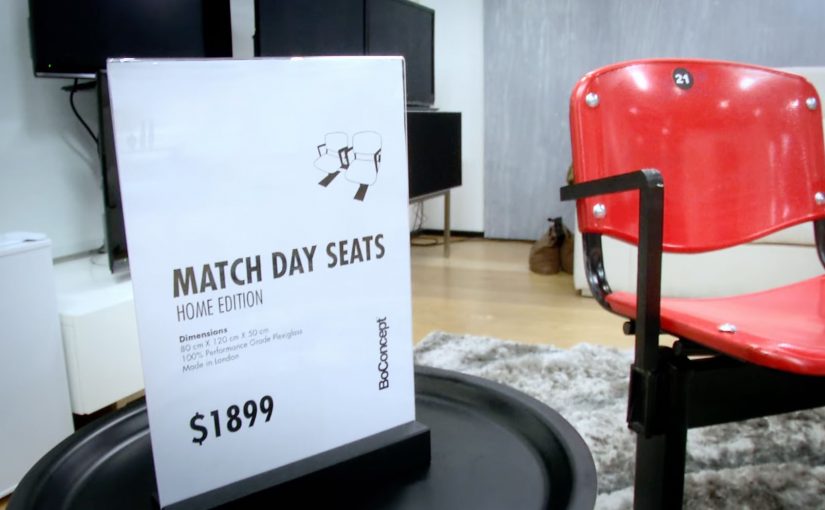
Heineken challenged football fans at a furniture store in the Netherlands to convince their ladies to buy a $1899 set of plastic stadium chairs for their home. If they managed to pull it off, they would win a trip to the final. The result:

Heineken: The Seat

In Italy, Heineken hid 20 tickets under 20 Wembley seats and spread them around Rome and Milan. Fans then had only one hour to find them and secure their place at the final. The result:

Two different mechanics, one sponsorship objective

Both ideas do the same strategic job. They make the sponsorship feel like something you can play, not just something you watch. Here, a mechanic is the simple set of rules that turns a giveaway into a game.

In European consumer brands, the cleanest giveaway mechanics turn sponsorship into something fans do, not just something they see.

The real question is how you turn a scarce prize into a story people repeat without you paying for distribution.

In European football sponsorship, ticket scarcity is a powerful emotion. Brands win when they turn that emotion into participation that fans can retell in one breath.

Why these promos travel so easily

Both promos travel because the giveaway is inseparable from the story. You do not share “I won tickets”. You share the rule that made winning possible.

Extractable takeaway: If the prize is scarce, design the giveaway so the mechanic is the headline, and the brand is the quiet sponsor of the moment.

The Negotiation works because it stages a recognisable domestic conflict and turns it into a public challenge. You do not have to care about Heineken to enjoy the tension. You just need to recognise the situation.

The Seat works because it feels like a real-world game with an unfair advantage for the most alert fans. A one-hour window and a physical search turns “tickets” into a quest, and the city becomes the interface.

Giveaway mechanics worth copying

  • Do not just “give away”. Build a mechanic that proves fandom or commitment in a fun way.
  • Make it legible in five seconds. If people cannot explain the rules instantly, the idea will not spread.
  • Use time pressure carefully. A short window creates urgency, but it must still feel fair.
  • Let the prize stay pure. The reward is the story. The brand should be the enabler, not the gatekeeper.

A few fast answers before you act

What is the core mechanic in Heineken’s Negotiation?

A persuasion challenge staged in a real retail environment. The couple dynamic is the entertainment engine, and the prize converts the tension into a payoff.

Why does a scavenger hunt work for high-demand tickets?

Because it turns passive desire into active effort. The search itself becomes the content, and the winners feel like they earned the prize rather than being randomly selected.

What is the main sponsorship benefit of campaigns like these?

They convert a sponsorship from branding to experience. The brand becomes part of how fans remember the final, not just a logo around it.

What is the biggest risk with “race” mechanics?

Perceived unfairness. By “race mechanics” here, I mean time-boxed contests where speed and timing determine winners. If the rules, locations, or timing feel stacked, the conversation flips from excitement to frustration.

What should you measure beyond video views?

Look for participation rate, speed of uptake, earned media pickup, and how often people retell the mechanic in social posts. Those indicate whether the idea actually travelled.
Heineken Ignite

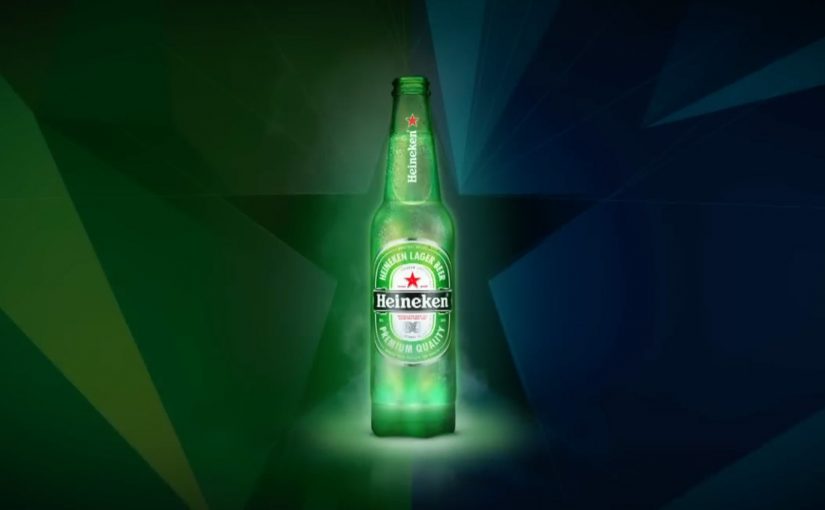
Last year I had written about StartCap, the world’s first digitally enabled bottle top. Now, Heineken has created LED based “smart bottles” that put serious tech into drinking beer.

These interactive bottles are designed to react to the gestures that already define a night out. Cheer and clink bottles together and the LEDs flash. Drink and the light pattern speeds up. Put the bottle down and it shifts into an idle “breathing” mode. Here, “breathing” means the LEDs pulse slowly when the bottle is stationary. The concept also includes software control so bottles can synchronize to music cues for a coordinated light show.

Heineken Ignite is a prototype bottle module that combines LEDs, motion sensing, and wireless synchronization so the bottle becomes part of the club experience, not just the drink in your hand.

Why it lands. When the bottle becomes the signal

What separates this from a gimmick is the engineering story. Coverage around the prototype describes an Arduino based circuit board housed in a reusable 3D printed casing that clips onto the bottom of a standard bottle. The electronics include multiple LEDs, a motion sensor to detect cheers and drinking, and wireless connectivity so the “party” effect can spread across a room. Wireless synchronization matters because it scales the effect from one person’s bottle to a room level cue that people can notice together. This is not a gimmick.

Extractable takeaway: If you want a brand experience to spread in a venue, instrument the object people already hold so natural gestures trigger visible, shared feedback.

This is also why the commercial challenge is real. In prototype form, the tech sits in an external module. To reach a mass market use case, the experience needs to be cheaper, smaller, and embedded, not attached. The real question is whether the connected layer can be made cheap and embedded enough that the bottle ships as the interface, not an accessory.

In European nightlife culture, the most effective brand innovation is the kind that turns the product itself into a social signal.

Why it was shown at Milan Design Week

The concept was unveiled during Milan Design Week as part of Heineken’s future of nightlife exploration. That matters because it frames the bottle as design plus experience, not only packaging. It is a statement about how brands might use connected objects to shape atmosphere in shared spaces.

Recognition and why it matters

Heineken later reported that its Ignite bottle earned a Silver Lion at Cannes Lions 2013 for Exhibitions or Live Events, as part of a broader set of design and innovation activations. Awards do not make a product viable, but they do validate that the idea is legible as a new format for brand experience.

Steal the pattern: product-led nightlife cues

  • Use the product as the interface. When the object in hand is the experience, you do not need to fight for attention elsewhere.
  • Design for social gestures. “Cheers” is a better trigger than any forced interaction because people already do it.
  • Make synchronization the payoff. One glowing bottle is a toy. A room that reacts together is a moment.
  • Prototype in public. Early demonstrations can generate press and learning long before the supply chain is ready.

A few fast answers before you act

What is Heineken Ignite?

Heineken Ignite is a prototype “smart bottle” concept that uses LEDs, motion sensing, and wireless synchronization so the bottle lights up in response to cheers, drinking gestures, and music cues in club environments.

How does the prototype work technically?

Reporting describes a clip-on module under the bottle that houses an Arduino based circuit board, LEDs, motion sensing, and wireless connectivity. The module detects motion patterns and can coordinate lighting across multiple bottles.

Why is syncing to music the key feature?

Because it turns individual behavior into shared atmosphere. Synchronization makes the experience visible at a crowd level, which is what creates talkability and makes the brand feel “in the room”.

What is the biggest barrier to commercializing a concept like this?

Miniaturization and cost. A clip-on prototype can prove the idea, but mass market use needs the tech to be smaller, cheaper, and more seamlessly integrated into production packaging.

What is the main marketing lesson here?

If you want to own a nightlife moment, design around existing social rituals. When the trigger is already natural, the experience feels additive instead of forced.

TNT: A Dramatic Surprise on an Ice-Cold Day

In the quiet town of Dordrecht, a familiar red button sits waiting. When innocent passers-by dare to push it, pure TNT drama unfolds, with a slightly new twist: close participation from the public.

In April last year TNT launched their digital channel in Belgium with a big red push button in a quiet Flemish square.

Now, to launch their movie channel in the Netherlands, they created a new dramatic piece of the now-famous red button, this time pulling bystanders closer into the action.

The mechanic that makes the button irresistible

The mechanism is a simple dare plus instant escalation. A single, universal instruction invites a tiny act of curiosity. The moment someone commits, the environment “answers” with a choreographed sequence that feels bigger than the setting. The new twist is the proximity: the public is not only watching the drama, the public is forced to navigate it.

By “close participation”, the stunt means the action breaks the invisible line between performer and audience, so bystanders become part of the scene rather than spectators at a safe distance.

In channel launches and entertainment branding, public stunts that turn bystanders into participants are a shortcut to earned attention.

Why it lands

This works because it transforms a brand promise into a physical consequence. “We know drama” is not a slogan you politely agree with. It becomes something you experience in real time, in a place that looked ordinary seconds earlier. The tension comes from the button. The payoff comes from the world changing around the person who pushed it. That works because one visible action creates instant narrative clarity: everyone can see the cause, the consequence, and the brand promise in one beat. The real question is whether the escalation makes TNT’s promise legible in seconds, not whether people will press the button. This is a strong launch format because the button is only the trigger, while the readable escalation is what sells the channel.

Extractable takeaway: If you can convert a brand line into a simple action and an immediate, escalating response, you create a story people retell accurately. That accuracy is what makes the idea travel.

Design moves worth borrowing

  • One action, one trigger: make the entry point obvious and almost impossible to resist.
  • Escalation with clarity: raise the intensity quickly, but keep the through-line readable for anyone who arrives mid-scene.
  • Let the environment do the branding: the best stunts feel like the place itself has changed, not like a pop-up was installed.
  • Design for the crowd: build moments that work for the person in it and for everyone filming from the edges.
  • Keep the “twist” singular: here it is proximity. One twist is enough when the production is big.

A few fast answers before you act

What is “A Dramatic Surprise on an Ice-Cold Day”?

It is a TNT red button sequel staged in Dordrecht, where pushing the button triggers a choreographed chain of dramatic events that pulls bystanders into the action.

What’s different versus the earlier “quiet square” button?

The key twist is the closeness of participation: the drama happens nearer to the public, and the public is more directly swept into the scene.

Why does a single button work so well?

Because it creates instant viewer control. One obvious action produces an immediate consequence, which makes the story easy to understand and easy to share.

What’s the core marketing job this format does?

It turns a positioning line into a lived moment, then uses the crowd’s reactions and recordings as distribution.

What’s the biggest execution risk?

If the escalation feels confusing or unsafe, the narrative flips. The format depends on clear choreography and the audience feeling surprised, not threatened.