
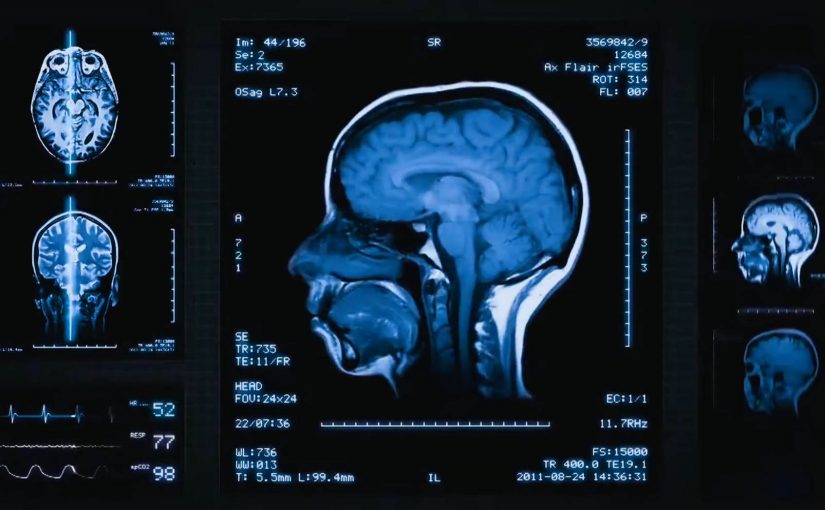
Durex UK: Dual Screen Ads

When the “real” ad plays on your second screen

People watch TV with a phone in hand. Durex UK used that habit to turn a standard broadcast spot into an interactive experience.

Last year, Durex UK created a new way for viewers to interact with its TV ad. Viewers who used the Durex Explore mobile app while watching the ad on their TV or computer got a steamy alternative on their second screen.

How the dual-screen mechanic worked

The mechanism was straightforward. The broadcast spot acted as the trigger, and the Durex Explore app delivered an alternative experience on the viewer’s phone or tablet.

That split matters. The TV carried the mainstream version. The second screen carried the more private, more personal layer, where the viewer could engage without turning the living room into a shared moment.

In UK brand communications, second-screen behavior is already the norm.

Why it lands in real viewing contexts

This works because it respects how people actually consume media.

Phones are personal. TV is social. By moving the steamy content to the second screen, Durex created a “permissioned” experience. The viewer chooses it, in their own space, on their own device.

It also rewards attention. Instead of asking viewers to tolerate an ad, it gives them a reason to participate.

The business intent behind extending TV and radio through an app

The intent is to convert passive reach into active engagement, while keeping the broadcast execution broadly acceptable.

Then, on Valentine’s Day this year, Durex UK repeated the same idea via radio. They released a steamy radio spot that also used the Durex Explore app to provide listeners with a similar steamy video experience on their smartphone or tablet.

That is the strategic move. One app. Multiple channels. A consistent interaction model that travels across TV, computer viewing, radio, and mobile.

What to steal from this second-screen pattern

  • Use the second screen for the private layer. Put the content that needs discretion on the personal device.
  • Make participation optional and clear. The viewer should feel in control of switching modes.
  • Design one mechanic that scales across channels. If the app is the interface, TV and radio can both become entry points.
  • Reward attention with a different experience. The second-screen payoff must feel meaningfully distinct from the broadcast spot.

A few fast answers before you act

What did Durex UK do with the Explore app?

They used it to deliver an alternative, steamy second-screen experience for viewers watching a TV ad, and later for listeners hearing a radio spot.

What is the core mechanism?

A broadcast ad acts as the trigger. The mobile app provides the alternative content on a phone or tablet.

Why is second screen a good fit for this category?

Because it keeps intimate content on a personal device, while the broadcast remains suitable for shared environments.

What business goal does this support?

Turning broadcast reach into measurable engagement and creating a repeatable interaction layer that works across channels.

What is the main takeaway for marketers?

If your message has a “public” and “private” version, broadcast the public layer and let the second screen deliver the private layer by choice.
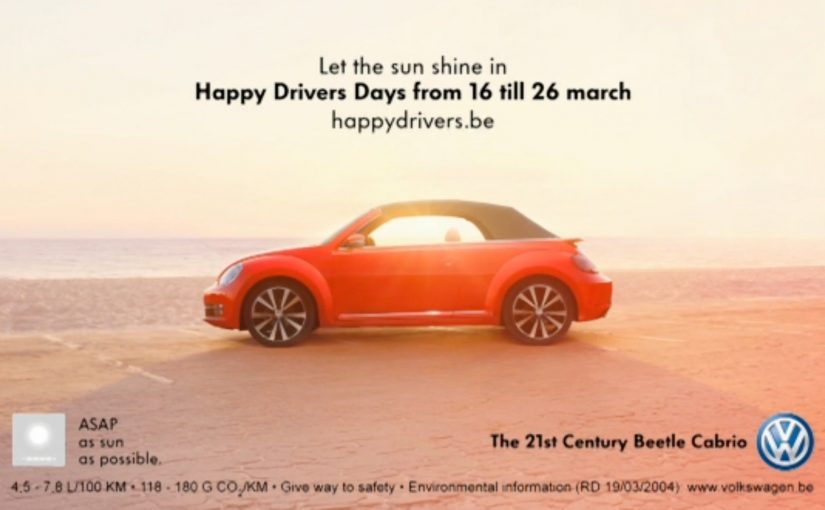
Volkswagen Beetle: Slowmercial

A lot of people fast-forward TV commercials when watching time-shifted shows. So Volkswagen took the opposite approach and made a TV commercial that is deliberately slow and almost static, so it still communicates even at high-speed playback.

The idea is simple. When the spot is fast-forwarded on a TV recorder, it collapses into something that feels like a print ad. A single, readable message. A clear product reveal. No complicated storyline to miss.

A tv spot designed for 8x speed

This is not “slow motion” for cinematic drama. It is time engineered as a media format. The frames are composed to hold meaning when they blur together, and the copy and visuals are built to survive the exact behavior viewers use to avoid ads.

In DVR-heavy TV markets, the remote control is the real media buyer.

Why it lands

It respects the viewer’s habit without pretending it will change. Instead of trying to stop skipping, it designs for skipping. That creates a rare feeling of cleverness, because the ad meets you where you are, and still gives you a complete message.

The deeper lesson is that “attention” is not binary. If you can make your message legible in partial attention, you can still win.

Business intent: keep the message intact

The intent is straightforward. Protect the core benefit and the product impression in a world where traditional 30-second storytelling gets shredded by fast-forward. The slowmercial approach makes sure the Beetle remains visible and understandable, even when the viewer refuses to watch properly.

What to steal

  • Design for the behavior, not the ideal. If people skip, build a format that works while skipping.
  • Make one message unmissable. One benefit. One visual proof. One clean takeaway.
  • Borrow from print discipline. Composition, hierarchy, and legibility beat complexity.
  • Assume partial attention as default. Build creative that degrades gracefully instead of collapsing.

A few fast answers before you act

What is a slowmercial?

A slowmercial is a TV ad designed to work even when viewers fast-forward. It uses ultra-slow pacing and print-like composition so the message remains readable at high playback speeds.

Why does fast-forward turn this into a print ad experience?

Because fast-forward compresses time and removes nuance. If the creative is built around stable frames, clear typography, and a single message, the compressed playback still delivers a coherent visual and idea.

When should a brand use this approach?

When you know a meaningful portion of viewing happens time-shifted, and when the ad’s job is to deliver one clean message rather than tell a complex story.

What is the biggest creative mistake with “anti-skipping” ideas?

Over-engineering. If the concept requires explanation, it fails. The viewer must understand the message instantly, even in partial attention.

What metrics matter for this kind of creative?

Ad recall under time-shifted viewing, brand linkage, and message takeout. If you can test it, compare recall for normal-speed versus fast-forward exposure.

Coca-Cola: Chok Chok

Mobile and creative thinking can come together to create really compelling marketing campaigns. In this example, Coca-Cola Hong Kong created a “Chok Chok” mobile app that turned the viewer’s smartphone into a remote control for their TV ad.

To collect the Coca-Cola bottle caps that appeared on the TV screen, viewers had to swing their phones when the ad came on. Those who successfully managed to swing and collect were instantly rewarded with prizes that included cars, sports apparel, credit card spend value, travel coupons and movie tickets.

As a result the campaign was seen by 9 million people and the app got over 380,000 downloads.

For those wondering, the bottle cap collection was enabled through the audio signal of the ad, which triggered the application and synced the user’s motion with the ad. The accelerometer in the phone was also used to assess the quality of the motion. Together they were used to catch the bottle caps virtually.

However as far as I know, Honda in the UK was the first to pioneer this kind of an interactive TV ad, even though it did not receive results like Coca-Cola.

Why this works so well

  • Viewer control is the hook. The ad is not just watched. It is “played” through a simple physical action.
  • Timing creates urgency. You have to act when the ad is live, which turns media time into a moment of participation.
  • Feedback is immediate. You swing, you collect, you win. The loop is easy to understand and easy to repeat.

The reusable pattern

Start with a single, unmistakable behavior the viewer can do in one second. Then use a reliable synchronization trigger (here, the ad’s audio) and a sensor input (here, the accelerometer) to connect the phone action to what happens on screen.


A few fast answers before you act

What is Coca-Cola “Chok Chok”?

It is a Coca-Cola Hong Kong mobile app that synchronizes with a TV ad and lets viewers swing their phones to collect on-screen bottle caps for prizes.

How did the app sync with the TV ad?

The app used the audio signal of the ad as the trigger, then aligned the on-screen moments with the user’s motion so “collection” happened at the right time.

What role did the accelerometer play?

The accelerometer assessed the quality of the swinging motion, helping determine whether the viewer “caught” the bottle caps virtually.

What is the main takeaway for interactive TV and second-screen work?

Make participation effortless, tie it to a tight timing window, and reward the action immediately so the viewer feels impact in the moment.