Hyundai A-League: Gift Wrapping Swindle

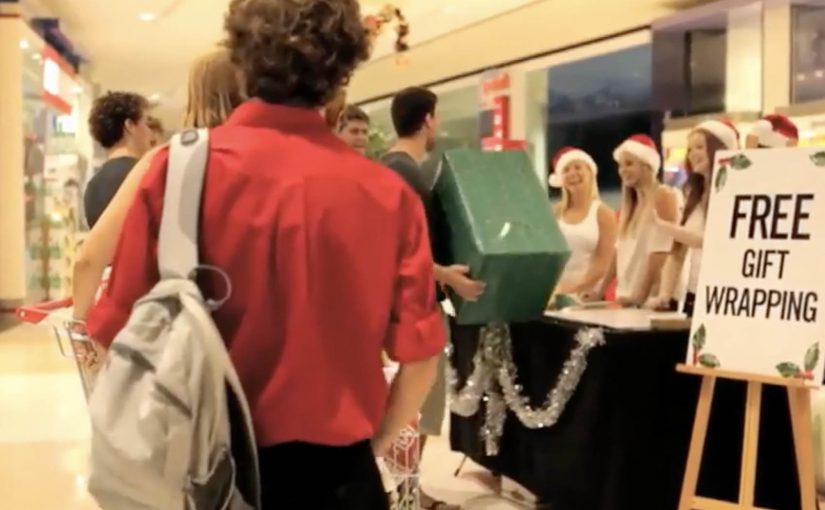
Getting people into a stadium rarely starts with sport. It starts with habit. Lowe in Sydney uses the pre-Christmas rush to put a match invitation into a moment people already care about, without needing another ticket ad.

A Christmas “service” that flips into promotion

The activation doesn’t fight for attention in a new media slot. It borrows an existing ritual, getting gifts ready, when people are already in a generous, social mindset and open to small surprises.

The smart part is the order of operations. It feels like help first, marketing second, which lowers resistance and makes the message easier to carry into conversation afterwards.

The reveal is the media

Once people opt in, the experience pivots. What looks like a straightforward offer becomes a playful con, and that pivot is the part people remember and retell.

That retelling is the distribution engine. It converts passive reach into a personal anecdote, and personal anecdotes are what move a friend group from “I saw something” to “we should go.”

In crowded sports and entertainment markets, attendance is often won at the everyday decision points where people choose what they will do with their next free evening.

The real question is whether you can turn an attendance ask into a story people want to retell, not just a message they notice.

Why the idea lands so well

The “swindle” framing does two jobs at once. Here, “swindle” simply means a playful bait-and-switch, the wrapping offer flips into a match invite. It creates tension and emotion in the moment, and it makes the participant feel involved, not targeted. The reaction is the content, and the retelling is the distribution.

Extractable takeaway: If you can attach your message to a real-world ritual that people already care about, you don’t need to “earn attention” from scratch. You simply redirect it, then give people a story they can repeat without you.

This is also listed in Effie Awards Australia reporting as a winner in the “Most Original Thinking” category, which fits the design: a small behavioural hack, not a big media buy.

What the league is really buying

The hidden win is not just awareness. It’s habit disruption. You take a non-football moment and reframe it as football-adjacent, then you push the idea of attending into a context where people are already planning social time around the holidays.

A ritual-first activation like this beats incremental ticket messaging because it recruits people’s social planning habits, not just their attention.

That’s how you move from “I saw an ad” to “we should go”. The campaign manufactures a nudge that feels organic because it is embedded inside a familiar activity.

Ritual-based attendance nudges to copy

  • Pick a ritual with built-in foot traffic: shopping, commuting, queues, checkouts, waiting rooms.
  • Make the reveal the message: the twist should be the reason people talk, not an extra layer you explain after.
  • Design for retelling: if the story can be repeated in one sentence, it will travel further than the experience itself.
  • Keep the CTA implicit: the best outcome is that people decide to act while they are still talking about what happened.

A few fast answers before you act

What is “The Great Christmas Gift Wrapping Swindle”?

It’s a holiday-season activation that turns gift wrapping into a surprise promotional stunt, engineered to spark conversation and drive attendance.

Why is gift wrapping a smart channel for sports marketing?

Because it’s a ritual people willingly engage with. The message travels physically with the gift, and the moment is social by default.

What makes this more effective than a standard ticket ad?

The participant becomes the messenger. A prank-style reveal produces a story, and stories outperform slogans when it comes to getting people to act.

What’s the main risk with prank mechanics?

If the reveal feels mean-spirited or wastes people’s time, you get backlash without benefit. The tone has to stay playful, and the participant has to feel “in on it” quickly.

How do you adapt the pattern outside sports?

Attach your offer to a real-world ritual in your category. Then design one clear twist that transforms the ritual into a story people want to repeat.
Tiger Beer: The Last Tiger

How far would you go for a bottle of Tiger Beer? That is the question posed by the campaign for the brand by Saatchi & Saatchi.

A last-bottle dare, turned into a brand moment

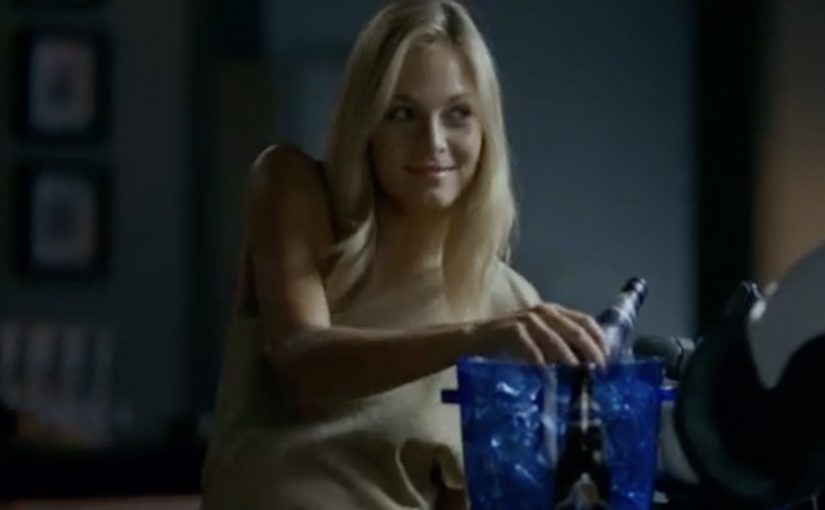
Reportedly, the film plays the “last bottle” scenario as a competitive, larger-than-life showdown, then punctures the testosterone with a dose of feminine charm. It is a simple tension. One bottle. Too many people who want it. Social rules bend fast when scarcity shows up.

From TV tension to small digital interactions

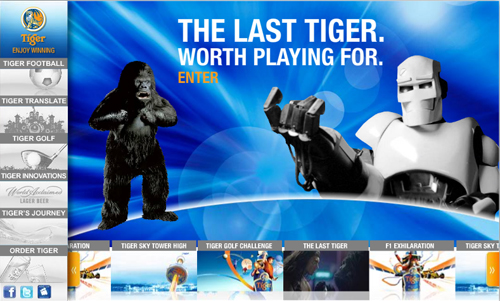
Mechanically, the idea extends beyond the TVC (television commercial) by giving fans lightweight ways to participate: a personality quiz, downloadable avatars, a wallpaper creation function, and a “happy hour” reminder widget that nudges people to take a break after a long day at work.

In Southeast Asian beer marketing, translating a TV story into lightweight, shareable participation is a reliable way to extend reach beyond the media buy.

Tiger Beer Website

A useful pattern here is the conversion of one emotional hook into repeatable touchpoints. Identity (quiz result). Self-expression (avatar). Personalization (wallpaper). Timing cue (the reminder widget). Each interaction is small, but it keeps the campaign’s core question alive in moments when people are actually deciding what to do next.

Brands should resist bolting on unrelated features and instead reuse the same tension across every micro-interaction.

The real question is whether the digital layer keeps the same scarcity tension alive at the moment someone can act on it.

What the “happy hour” widget is really doing

Even if someone watches the film once, a time-based reminder can re-open the narrative at the most relevant moment. End of work. Start of social time. This works because the timing cue re-enters a real routine, so the story resurfaces when choices are being made. It is not about “more content”. It is about putting the same story back in front of the user when it can convert into action or talk value.

Extractable takeaway: A timing mechanic is often the highest-leverage digital element because it returns the same story at decision time, not just at viewing time.

How to reuse a scarcity premise in digital

  • Start with one tension. If the film’s premise can be summarised in one sentence, it is easier to translate into digital actions.
  • Design for replay, not depth. Quizzes and downloads work when they are fast, obvious, and socially legible.
  • Add a timing mechanic. A reminder widget or calendar nudge can outperform another “feature” because it re-enters a real routine.
  • Keep every interaction tied to the same story. If an element does not reinforce the core question, it becomes decoration.

A few fast answers before you act

What is “The Last Tiger” concept?

A scarcity story. One “last bottle” triggers social competition, and the campaign invites viewers to imagine how far they would go for it.

How does the digital layer support the TV film?

It breaks the central tension into quick actions people can complete and share: a quiz, avatar downloads, wallpaper creation, and a time-based “happy hour” reminder.

Why include a “happy hour” reminder widget?

Because it re-surfaces the campaign at a high-intent moment. The end of the workday. The start of social decisions.

What makes the digital interactions feel connected, not gimmicky?

They all reinforce the same premise. One last bottle, and the social scramble it triggers. If an interaction does not echo that tension, it will not travel.

What is the transferable lesson for other brands?

Turn one strong film premise into three to five tiny interactions that reinforce the same story, and add at least one timing cue that re-enters a routine.

Toshiba: Space Chair to the edge of space

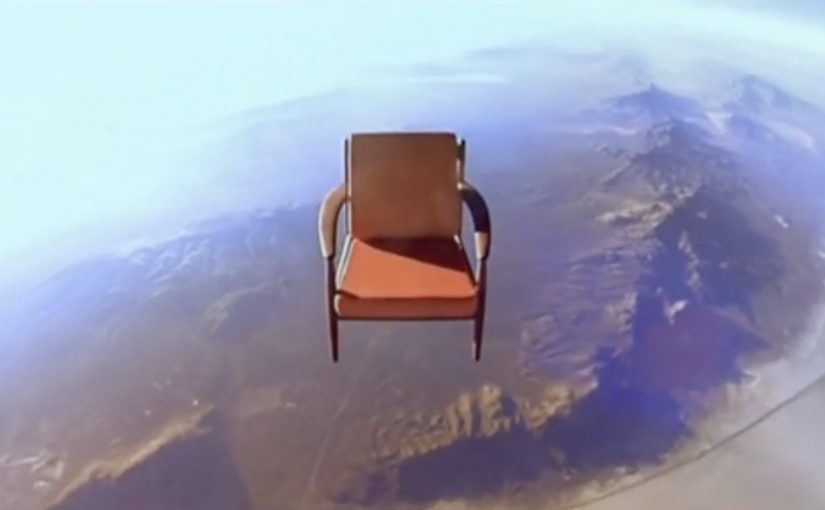
To promote its new line of LCD TVs, Toshiba sends an ultra-lightweight biodegradable chair toward the edge of space using a helium balloon, and films the entire mission in high definition with its IK-HR1S camera system.

The chair rig rises to 98,268 feet. The climb is reported as taking 83 minutes. Once the balloon pops, the fall back to earth is reported as taking 24 minutes.

Armchair viewing, taken literally

The creative move is almost aggressively simple. “Armchair viewing” is a cliché. So Toshiba turns it into a physical event. A chair. A balloon. A horizon line that curves. The resulting footage does the persuasion without needing exposition.

If the product claim is abstract. clarity, detail, realism. put a real object into an extreme, undeniable environment and let the camera do the talking.

Physics as production value

This is not “space” as a metaphor. The production is built around constraints that make it believable. Weight limits. fragile materials. freezing temperatures. low pressure. The rig has to survive long enough to capture usable footage, and the team has to recover it afterwards.

That operational reality becomes part of the brand signal. If you can shoot a commercial in those conditions, “HD” stops sounding like a spec sheet and starts sounding like capability.

In consumer electronics marketing, extreme real-world demonstrations are used to make “picture quality” feel like engineering proof, not advertising promise.

Why it lands as a TV ad, not just a stunt

The footage is the product demo. The shots are what a screen is for. It is scale, texture, contrast, and atmosphere. The chair is simply the reference object that lets the viewer feel distance and altitude.

Extractable takeaway: When the claim is “better quality,” build a proof moment the viewer can judge with their own eyes, and keep the story simple enough that the footage carries the persuasion.

It also avoids the typical trap of “innovation” campaigns. Over-claiming. Instead, the story is modest. Here is what we did. Here is what we captured. Judge the images. For picture-quality claims, a single verifiable proof moment beats layers of copy and metaphor.

The real question is whether your “proof” would still hold attention if the logo were removed.

Steal the Space Chair pattern

  • Make the demo inseparable from the claim. If you sell image quality, build an image that earns attention on its own.
  • Use one hero object. A single recognisable object makes scale and risk instantly legible.
  • Let constraints show. Real limits make real footage feel trustworthy.
  • Design for replay. If viewers rewatch because the visuals are stunning, the brand message repeats without extra media.
  • Keep copy light. When proof is the asset, words should not compete with it.

A few fast answers before you act

What is Toshiba “Space Chair”?

It is a Toshiba commercial built from real high-definition footage of a chair carried toward near space on a helium balloon, created to showcase Toshiba’s LCD TV picture quality.

How high did the chair go?

The flight is described as reaching 98,268 feet before the balloon broke apart and the rig descended.

How long did the ascent and descent take?

The timings are commonly reported as about 83 minutes up and about 24 minutes down.

What makes this feel credible instead of CGI?

It reads as real because it uses “documentary grammar,” meaning small signals like changing light, wind noise, tracking drift, and a rig visibly fighting extreme conditions.

What is the core lesson for brands doing “innovation” stories?

Build a proof moment people can replay and share for its own sake. If the audience wants to watch it again, the product message gets repeated for free.