
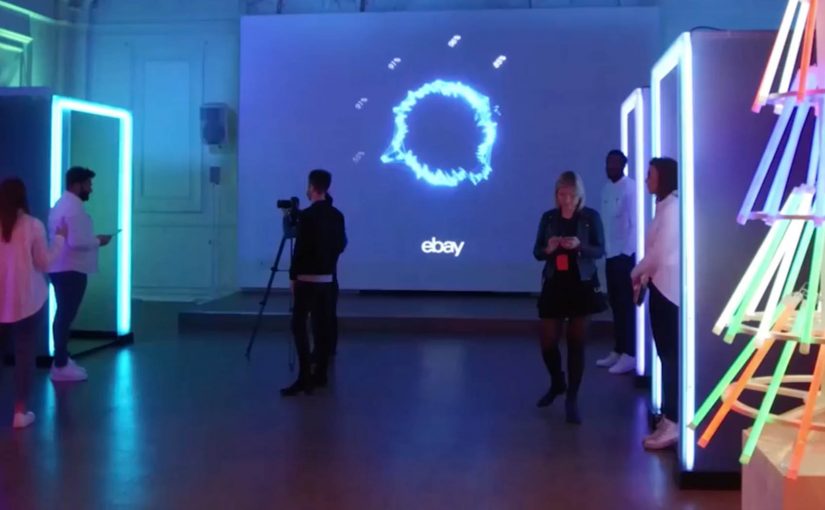
You step into a pop-up store in central London because Christmas shopping feels like a chore. You sit down, look at product ideas on a screen, and the system watches your face as you react. Not in a creepy sci-fi way, but in a deliberately framed “let’s reconnect with the emotional spirit of giving” way. Your expressions become signals. The store turns those signals into a personal report, then suggests the gift that triggers the strongest “this feels right” response.
That is the idea behind eBay’s “emotionally powered store,” created with American technology firm Lightwave. Using intelligent bio-analytic technology and facial coding, eBay records which products provoke the strongest feelings of giving. Then, through personalised emotion reports, it suggests the gift that stirs the most feeling.
What eBay is actually testing here
This is not only a seasonal stunt. It is a test of whether emotion can be treated as data in a retail environment, and whether that data can be turned into a better decision loop.
The store reframes the problem:
- the problem is not “too little choice”
- the problem is decision fatigue, stress, and loss of motivation
- the solution is not more filters, it is faster emotional clarity
The mechanics. Simple, but provocative
At the core is a clean input-output system:
- Input. A sequence of gift ideas shown in a tight flow.
- Measurement. Facial coding and bio-analytic signals that infer which moments create the strongest emotional engagement.
- Output. A personalised emotion report that recommends the gift that creates the strongest “giving” response.
The tech is almost secondary. The real innovation is the framing. A store that does not just sell products. It guides you toward the gift that feels most meaningful.
Why this matters for next-generation shopping environments
A lot of “next-gen retail” bets on bigger screens, more sensors, and more automation. This one bets on something more human.
It treats the emotional state of the shopper as a first-class design constraint:
- reduce stress
- re-anchor the experience in intent and empathy
- make the decision feel more satisfying, not just more efficient
That is a powerful signal for any brand that sells gifts, experiences, or anything identity-driven. The product is rarely the only thing being purchased. The feeling of choosing it matters.
The leadership question sitting underneath the pop-up
The interesting question is not “does facial coding work.” The interesting question is what happens when retail experiences start optimizing for emotion as deliberately as they optimize for conversion.
If you can capture emotional response at the moment of choice, you can start redesigning:
- the sequence in which products are presented
- the language and imagery that drives confidence
- the point at which a recommendation should trigger
- the moment where a shopper’s motivation drops, and how to recover it
That is where this moves from a pop-up into a capability.
A few fast answers before you act
Q: What is an “emotionally powered store”?
A retail concept that uses bio-analytic signals and facial coding to measure emotional reactions, then recommends products based on the strongest response.
Q: What is eBay trying to solve with this experience?
Christmas gift-buying stress and decision fatigue. The store is designed to reconnect shoppers with the emotional spirit of giving.
Q: What role does Lightwave play?
Lightwave provides the technology support for the bio-analytic and facial coding layer used in the pop-up.
Q: What is the output for the shopper?
A personalised emotion report and a gift recommendation based on the products that provoke the strongest feelings of giving.
Q: What is the broader takeaway for retail innovation?
Emotion becomes a measurable input for experience design, not just a brand aspiration.

