
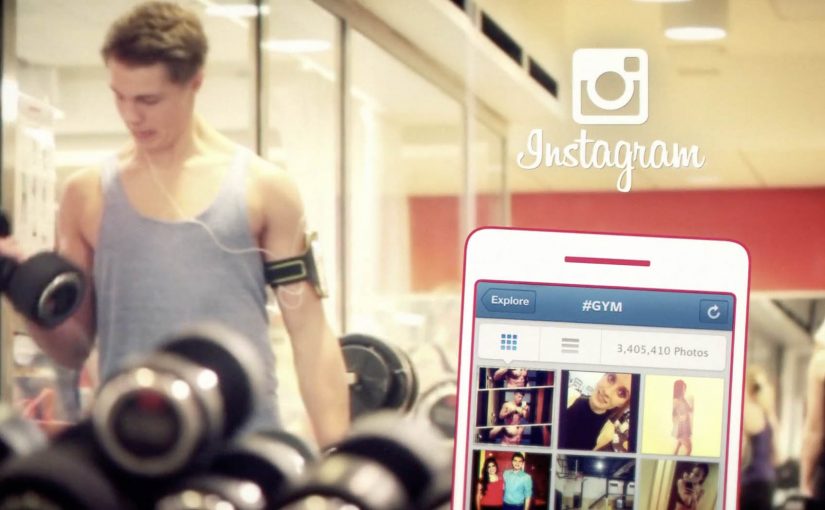
Friskis&Svettis Stockholm: #friskissthlm

Friskis&Svettis Stockholm: #friskissthlm

January in Sweden is when gyms and health clubs go loud, chasing everyone who made the classic New Year’s resolution to start exercising. Stockholm-based health club Friskis&Svettis is no exception.

Because Friskis&Svettis is a non-profit association owned by its members, they and their agency Volt build a campaign where members inspire the wider community. A hashtag, #friskissthlm, invites people to work out, photograph the moment, and tag their pictures, so the members themselves become the creative running “around Stockholm”.

How the member-driven mechanic scales

The mechanism is participation as media: member actions create the content and also help distribute it. Instead of producing a single hero ad, the brand defines one simple behavior: train, post, tag. The hashtag becomes the aggregation layer, a single place where the posts collect and stay discoverable, and every new image becomes both proof and invitation. The campaign’s distribution is powered by the same thing gyms want more of in January: visible momentum.

In member-owned fitness communities, letting real members supply the proof tends to land harder than brand-led messaging, because the social permission comes from peers rather than from advertising.

The real question is not how to make a louder January gym ad, but how to make visible member momentum easier to join. The stronger move here is to make member behavior the campaign, not to outshout every other club in January.

Why it lands

It turns the most fragile moment in fitness, starting, into something public and shareable without making it complicated. The posts do two jobs at once. They show variety (different workouts, different people, different branches) and they reduce intimidation, because the “campaign face” is not a model, it is your neighbor.

Extractable takeaway: If you want community growth, choose one repeatable participation unit and one clear tag, then let volume and variety do the persuasion. Your members become the credibility layer.

What to borrow for your own January push

  • Make the ask behavioral. “Work out, post, tag” is easier to follow than “join our movement”.
  • Let variety do the selling. Many small proofs beat one polished claim, especially in fitness.
  • Turn members into the creative. It is cheaper, more credible, and naturally localized.
  • Design for aggregation. One hashtag, one place to browse, one loop that keeps filling itself.

A few fast answers before you act

What is #friskissthlm in one sentence?

A member-powered Instagram hashtag campaign where workouts posted and tagged by members become the campaign content for Friskis&Svettis Stockholm.

Why is this stronger than a typical January gym ad?

Because the proof is peer-generated. People trust “someone like me did this” more than they trust a brand saying “you should”.

What is the key design decision?

Keeping the participation unit tiny and repeatable, so the barrier to contributing stays low while the content volume stays high.

What is the main risk with hashtag-led campaigns?

If the tag is not actively adopted, the feed looks empty and the idea collapses. You need early seeding from members and staff so momentum is visible from day one.

How would you adapt this outside fitness?

Keep the pattern, not the category. Pick one repeatable action people are already willing to do, give it one clear tag or container, and make the resulting proof easy for others to browse and copy.

LEGO: Happy Holiplay

LEGO: Happy Holiplay

Holiday attention built from imagination

The most effective holiday campaigns often turn the audience into the media. LEGO’s execution is a clean example of that approach.

To create positive attention around the LEGO brand, a global digital social campaign challenged people to take their imagination with the well-known LEGO bricks one step further and share the results via digital media.

The campaign was dubbed Happy Holiplay and was run for three weeks. LEGO fans from 119 countries participated actively and uploaded pictures to www.happyholiplay.lego.com.

How Happy Holiplay worked in practice

The mechanism was community-powered. LEGO provided a clear prompt and a simple submission behavior. Build something imaginative with bricks, capture it, and share it digitally.

The campaign site acted as the collection point. The internet did the distribution. Every upload became both participation and promotion.

That loop matters because the content and the invitation travel together. Each creation nudges the next person to build and share.

In global consumer brands with strong fan communities, seasonal social campaigns work best when the participation loop is already native to the product and culture.

Why it landed for a global fan base

LEGO was naturally suited to participatory storytelling. The product already trained people to invent, remix, and share. Happy Holiplay did not try to manufacture behavior. It amplified what the community already loved doing.

Extractable takeaway: When your product teaches a repeatable creative habit, your job is to frame it with a simple prompt and a visible gallery, not to over-produce the story.

The holiday timing mattered too. December is a period when people are already in “make and share” mode, and when families have more reasons to create together.

The business intent behind Happy Holiplay

The goal was to generate positive brand attention during a competitive seasonal window by turning the community into the main media channel.

The real question is whether you can turn a seasonal moment into a repeatable participation loop, not whether you can publish more holiday content.

Rather than paying for attention, LEGO earned it by creating a platform for fan creativity, and by making participation feel like a celebration instead of a promotion.

If the behavior is not already native, a participation push will feel like work and the content will not compound.

What to steal for your next social campaign

  • Use a behavior that is already native to the brand. If the audience already creates, design the campaign around creation.
  • Keep the action simple. Build, capture, share. Low friction increases global participation.
  • Give the community a home base. A clear destination makes participation feel official and collectible.
  • Let contributors be the content engine. User-generated content (UGC) scales faster than brand-made assets when the prompt is right.

A few fast answers before you act

What was LEGO’s Happy Holiplay?

A global digital social campaign that invited fans to create imaginative LEGO builds and share them online.

How long did the campaign run?

It ran for three weeks.

How many countries participated?

LEGO fans from 119 countries took part and uploaded pictures to the campaign site.

Why did the campaign work so well for LEGO?

Because it amplified a natural LEGO behavior. Building and sharing creations. It aligned with the community’s existing motivations.

What is the key takeaway for other brands?

Design participation around an audience behavior you already own, then make sharing simple enough to scale globally.