
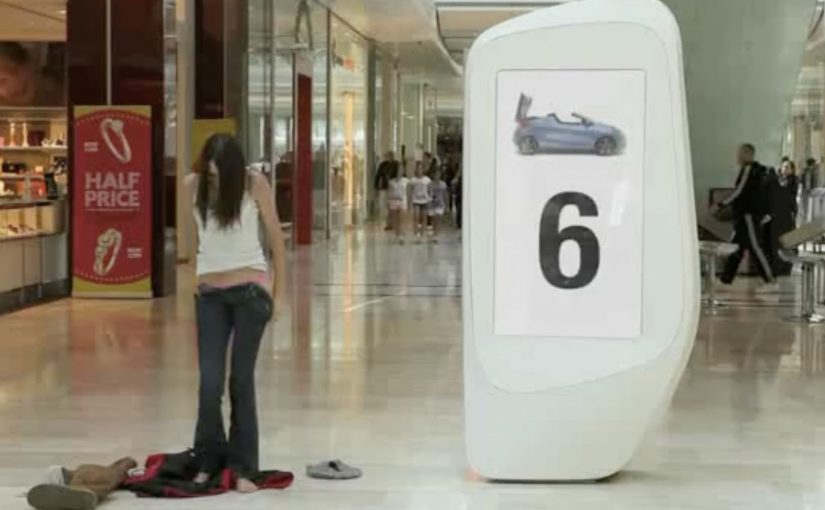
Renault Wind Roadster: 12 Second Strip

Renault UK and ad agency Publicis London set up “12 Second Strip”, a challenge that asks people to strip down to one layer of clothing in 12 seconds in the hope of winning the brand new Renault Wind Roadster.

The challenge involves people stripping down to one layer of clothing in just 12 seconds, which is the same amount of time it takes Renault’s new Wind Roadster to drop its top. To participate, people post their fun and tasteful strip videos on YouTube.

A product demo turned into a timed dare

The execution takes a single, memorable product fact. The roof moves in 12 seconds. Then it builds a challenge around that exact number, so the “proof” of the car becomes the rule of the game.

The mechanic: match the roof with your own 12 seconds

It is straightforward. Record a short clip where you race the clock to get down to one layer. Upload it. The format is repeatable, the constraint is clear, and the brand’s key claim stays embedded in every entry.

In UK automotive launches, time-based challenges work best when they translate a feature into something the audience can perform, share, and compare without needing a long explanation.

Why this lands as shareable UGC

The concept is light, competitive, and easy to understand at a glance. The “one layer” rule keeps it positioned as playful rather than explicit, while the 12-second constraint gives it a built-in hook that makes clips watchable and easy to forward.

Extractable takeaway: If you have one standout feature, convert it into a public constraint. Constraints create format. Format creates volume. Volume creates recall.

What Renault is really buying

The real question is whether a product claim can be turned into a repeatable public behavior without losing the brand point.

This is attention that carries product memory. Every participant repeats the roof story through action, and every viewer gets the same message without feeling like they are watching a conventional car ad.

What to steal for your next challenge-based campaign

  • Start with one sharp product truth. The best UGC formats begin with a single claim people can repeat.
  • Make the rule the message. If the rule changes, the brand meaning should not disappear.
  • Keep it simple to enter. Short clips, one constraint, one destination.
  • Write safety and tastefulness into the brief. Clear boundaries protect both the audience and the brand.

A few fast answers before you act

What is 12 Second Strip?

It is a Renault UK challenge that asks people to strip down to one layer of clothing in 12 seconds, mirroring the time it takes the Renault Wind Roadster’s roof to drop.

Why anchor the challenge to “12 seconds”?

Because it turns a feature into a format. The number becomes a rule that forces every entry to carry the same product story.

What makes this a strong user-generated format?

It is easy to understand, fast to produce, and inherently comparable. Viewers can instantly judge attempts and share the best ones.

How do you keep a provocative mechanic brand-safe?

Set a clear boundary inside the format. Here, the one-layer rule keeps the participation playful and recognizable without pushing it into something more explicit.

What is the main brand lesson here?

Make your most distinctive proof point performable. When the audience can reenact a claim, it travels further than a slogan.
Orange UK: Singing Tweetagrams

When “say it on Twitter” becomes “say it in song”

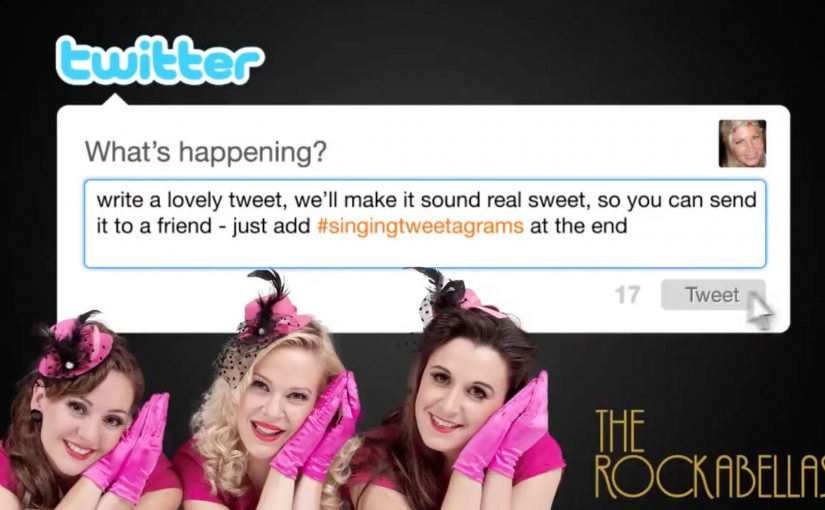
Got a friend who needs cheering up? Or maybe you just want to tell them that you love them, miss them, or really like their new haircut. Now you can say it with Orange UK’s new singing tweetagram. In this activation, a tweetagram is a short tweet that gets turned into a personalized song you can share.

The mechanic: hashtags in, custom songs out

It works like this. You write the tweetagram message to someone, adding the hashtag #singingtweetagrams. Orange then picks the best ones and has the Rockabellas record the message in song within a few hours. Orange then uploads the song and tweets it to you with a link, so you can send it on to the person.

A tweetagram is a short message written in the native language of Twitter, then converted into a personalized media artifact that feels like it was made for one person.

In consumer social marketing, the strongest hashtag activations reward participation with a tangible output that people can share without extra explanation.

Why it works: the reward is the content

The clever part is that the prize is not a discount or a badge. The prize is the thing you actually want to share. This is a smart activation because it turns participation into a gift-like artifact people actually want to pass on. A custom song is inherently gift-like, and it gives the sender social credit while giving the receiver a genuine moment.

Extractable takeaway: If you can turn a native platform input into a fast, polished, personal artifact, the reward becomes the share, and the experience travels without extra persuasion.

This also reduces the usual user-generated content risk. Users write the raw line, but the brand controls selection, production, and final output quality.

When a brand turns a user’s message into a polished artifact and returns it quickly, it converts “engagement” into a keepsake. That creates higher motivation to participate and higher likelihood of forwarding.

The operational question: can Orange produce at internet speed?

The question will be whether they can keep up the pace set by Wieden + Kennedy in its Old Spice effort, which was described at the time as producing more than 180 videos in a couple days and pumping out responses nearly immediately. The real question is whether Orange can keep the “within hours” turnaround feeling real at scale.

That comparison matters because the magic is not only the idea. It is the turnaround time. If the lag feels slow, the moment passes and the sender stops feeling clever for trying.

Steal this pattern: hashtag-to-song rewards

  • Make the output unmistakably personal. Names, in-jokes, and direct address beat generic templates.
  • Return value fast. “Within hours” is part of the product, not a service detail.
  • Keep creation native. Let people use the platform behavior they already know. Here it is a tweet plus a hashtag.
  • Curate to protect quality. Selection is a feature. It keeps the final artifacts share-worthy and on-brand.

A few fast answers before you act

What is Orange UK’s Singing Tweetagrams campaign?

It is a Twitter-based activation where people post a message with #singingtweetagrams. Orange selects some messages and has the Rockabellas record them as short personalized songs, then sends the result back as a shareable link.

Why is “speed” so important in this format?

Because the sender’s motivation is tied to the moment. Fast turnaround keeps the interaction feeling live, current, and socially relevant.

What role does curation play in making it work?

Curation protects output quality and brand tone. Users provide raw inputs, but the brand controls which messages become finished content.

How is this different from typical user-generated content contests?

The reward is not external. The reward is the finished content itself, which is designed to be shared and kept.

What is the biggest execution risk?

Production bottlenecks. If demand outpaces recording capacity, turnaround slows and the concept loses the real-time feeling that drives participation.

Playboy Magazine: Online Casting via Webcam

A cover opportunity becomes a browser moment. Instead of going to a studio, aspiring models do a remote “photo session” through their own webcam, then turn the best shots into an online book that friends can vote on.

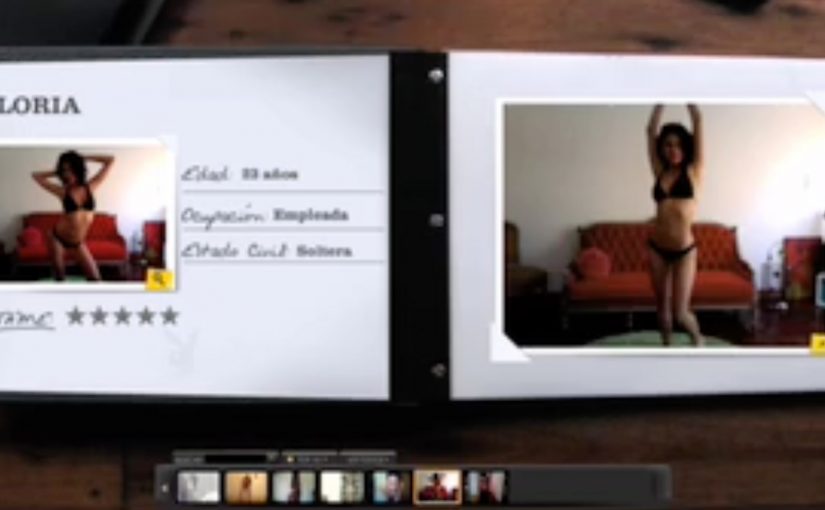
The pitch is open participation. Any woman with a webcam can make an online photo session and potentially end up on the cover of Playboy Magazine. How does it work. The virtual Playboy photographer takes the pictures of the aspiring models through their own webcam. When they finish they are asked to make an online book with the best pictures. After which they can invite their friends to vote.

The next Playboy Girl is chosen from the favorites on the casting site www.castingplayboy.com.

A photoshoot that travels without travel

The mechanism is a simple funnel. capture content at home, curate a lookbook, then recruit votes. That flips casting from a closed process into something participatory and shareable.

In global media and entertainment marketing, turning selection into a public vote is a reliable way to convert curiosity into distribution.

Why the vote loop is the real engine

The webcam shoot creates the raw material, but the “invite friends” step is what scales it. By “vote loop” I mean the cycle of invite, vote, and reshare that turns each participant into a distribution node.

Extractable takeaway: If you want organic reach, design the post-submission step as a recruiting action that participants feel personally motivated to trigger.

This is not just online casting. It is user-generated content plus social voting, packaged as a competition where the audience becomes the amplification layer.

What Playboy is really buying

This is reach and data wrapped in a story. The real question is whether you want more applicants or more distribution. The brand gets a stream of self-produced submissions, a measurable popularity signal through voting, and a campaign that spreads through personal networks rather than paid media alone.

Steal this casting-to-voting funnel

  • Let people create at the edge. Reduce friction by allowing participation from home.
  • Force curation. A “best of” book is stronger than raw uploads and easier to judge.
  • Build in recruiting. Voting should be the default next step, not an optional extra.
  • Make the prize visible. Publication and status often motivate more than cash.

A few fast answers before you act

What is the core idea behind this Playboy online casting?

A virtual webcam photo session followed by a curated online book and friend-driven voting, turning casting into a shareable competition.

Why does the lookbook step matter?

It forces participants to curate their best shots, which improves quality and makes the submission easier to view and judge.

What makes social voting effective in campaigns like this?

It creates a built-in distribution loop. Participants recruit friends to vote, and those invites function as campaign media.

What is the biggest execution risk?

If the upload, curation, or voting flow feels slow or confusing, people drop out before they share. The funnel has to be fast and obvious.

How do you keep the brand connected to the participant story?

Make the branded environment where submissions live feel premium and consistent, so every share sends people back into the brand’s world.