
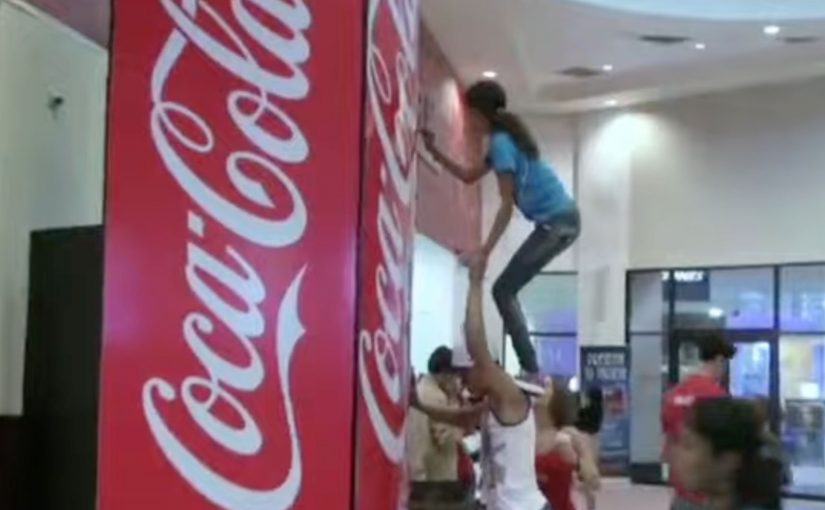
Coca Cola Friendship Machine

You walk up to a Coke machine that is about 12 feet tall. You cannot reach it alone. You ask a buddy for a boost. When you finally press the button, the machine rewards the teamwork by dispensing two Cokes instead of one.

What Coca-Cola is doing with the “Friendship Machine”

The game of vending machine one-upsmanship between Coca-Cola and PepsiCo continues with Coke’s “Friendship Machine”. To celebrate International Friendship Day, Coca-Cola in Argentina plants machines that appear to be about 12 feet tall and require that you ask a buddy for a boost to use it. As a reward, the Coke machine dispenses two Cokes instead of one.

In consumer brands running physical activations in public spaces, engineered constraints can be the simplest way to force a real-world social moment.

Why the Friendship Machine lands

Because the machine is too tall to use alone, it makes asking for help the trigger, which is why the second Coke feels like earned, shared generosity rather than a giveaway. Here, “friction” means a deliberate extra step that creates a specific behavior before the reward.

Extractable takeaway: If you want sharing to happen, design the mechanic so cooperation is required to unlock the value, not merely suggested after the fact.

The real question is whether your activation can make cooperation the trigger for the reward, instead of bolting “share” onto the end.

This is a stronger pattern than generic “share to win” mechanics because the social interaction is visible, immediate, and hard to skip.

The idea builds on Coke’s “Happiness Machine” viral video, where a machine keeps surprising students with free extras like soda and pizza. Coke also updates that generosity pattern with a “Happiness Truck” video, where a truck gives out Cokes alongside summer gear like surfboards, beach toys, and sunglasses.

PepsiCo responds with its own “Social Vending Machine” that lets you gift free Pepsi’s to friends and strangers via a text message.

How to steal this mechanic without copying it

  • Make teamwork the unlock. Ensure the reward only happens after a small, observable act of cooperation.
  • Design “fair friction”. The obstacle should feel purposeful, not annoying, and it should clearly connect to the reward.
  • Pay out in shared value. Give a two-person reward so the help feels reciprocated, not exploited.
  • Anchor to a moment people recognize. A simple calendar hook (like Friendship Day) makes the story easier to retell.

A few fast answers before you act

What is the Coca-Cola Friendship Machine?

It is a Coke machine designed to be too tall to use alone, so you need a friend’s help. When you do it together, it dispenses two Cokes as the reward.

Why make the machine intentionally difficult to use?

Because the friction creates the point. It forces a social interaction first, then makes the reward feel earned and shared, not just handed out.

How do the Happiness Machine and Happiness Truck relate?

They establish the “unexpected generosity” pattern. The Friendship Machine applies the same idea, but makes cooperation the trigger instead of surprise alone.

What makes this different from a typical “share to win” campaign?

The social action happens before the reward and in public. The mechanic makes cooperation unavoidable, instead of asking people to share after they already got the value.

How does this compare to PepsiCo’s Social Vending Machine?

Pepsi’s approach makes gifting the feature via text. Coke’s approach makes in-person collaboration the feature by requiring help at the machine itself.
UNICEF Tap Project: Dirty Water Machine

What if someone bottled the water that millions in developing countries drink every day and offered it on the streets of New York?

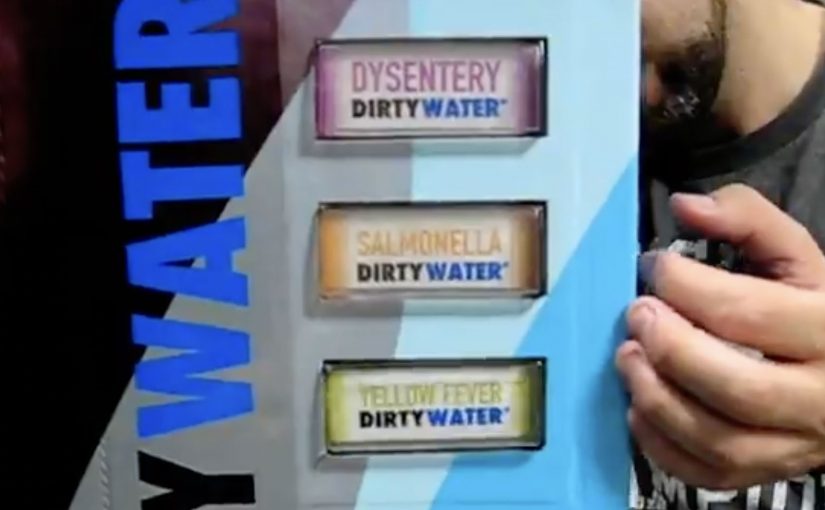
For just a buck, during World Water Week (March 22-29), New Yorkers in the Union Square Park area are invited to “enjoy” the benefits of Dirty Water. It comes in a range of choices like Malaria, Cholera, or Typhoid Dirty Water, and is described as having 900 million consumers.

Dirty Water is not an actual product, but a real problem for millions of children around the world.

A vending machine that sells disgust

The mechanism is a classic reversal: a familiar vending machine is repurposed to dispense bottles labeled with water-borne diseases. The point is not to get anyone to drink it. The point is to make the problem visceral and immediate for people who normally never have to think about it. By keeping the interaction familiar, the reversal lands because it turns moral distance into a physical reaction in seconds.

In global cause marketing, turning an abstract statistic into a physical choice can move more people from awareness to action than another informational poster ever will.

The real question is whether you can turn a distant, abstract problem into a personal encounter that makes action feel unavoidable.

Why “nobody drinks it” is the message

New Yorkers are startled to see options like Yellow Fever or Hepatitis Dirty Water. They look at the machine in disgust. And that disgust is the creative payload, meaning the emotional reaction the campaign is designed to deliver, because it mirrors the reality that millions of families do not have the option to refuse unsafe water.

Extractable takeaway: When the barrier is “I cannot feel this problem,” engineer a harmless encounter that triggers the right emotion on contact, then attach one immediate action that turns that emotion into help.

The donation promise that makes the $1 meaningful

The idea of “selling” dirty water is framed as being inspired by UNICEF’s promise that every dollar donated provides safe drinking water to 40 children for a day. Even if the bottle is never purchased as a “product”, the transaction becomes a small, concrete unit of impact.

How the campaign stays active beyond the street

This Dirty Water initiative is positioned as ongoing, with continued donation options online at tapproject.org or via text message. Text TAP or AGUA to UNICEF (864233) to make a $5 donation.

Steal the Dirty Water pattern

  • Use reversal with familiar UX. Put the message inside an everyday interaction so the emotional hit lands before the rational debate starts.
  • Make the abstract a physical choice. Let people “choose” the problem in front of them, then offer one simple action to refuse it for someone else.
  • Price the action as a unit. Frame the donation as a small, concrete purchase so the person feels immediate impact, not vague virtue.

A few fast answers before you act

What is the “Dirty Water” vending machine in one line?

A public vending machine that dispenses “dirty water” bottles labeled with diseases to shock passers-by into donating for clean water.

Why price it at $1?

Because $1 is a friction-light ask that feels like a purchase, not a pledge, and it maps to a clear “unit” of impact in the campaign story.

What is the main creative trick that makes it work?

Reversal: it sells something no one wants, so the emotional response is disgust, and that response reframes clean water as a privilege rather than a given.

What should brands learn from this without copying the cause?

If the problem is invisible, make it physically encounterable, and tie the encounter to one simple action that feels immediately meaningful.

What is the lowest-risk way to adapt this pattern?

Keep the reversal honest and harmless, avoid sensational claims, and make the action as clear as the emotion: one step, one outcome, no hidden complexity.

Share Happy Ice Cream Machine

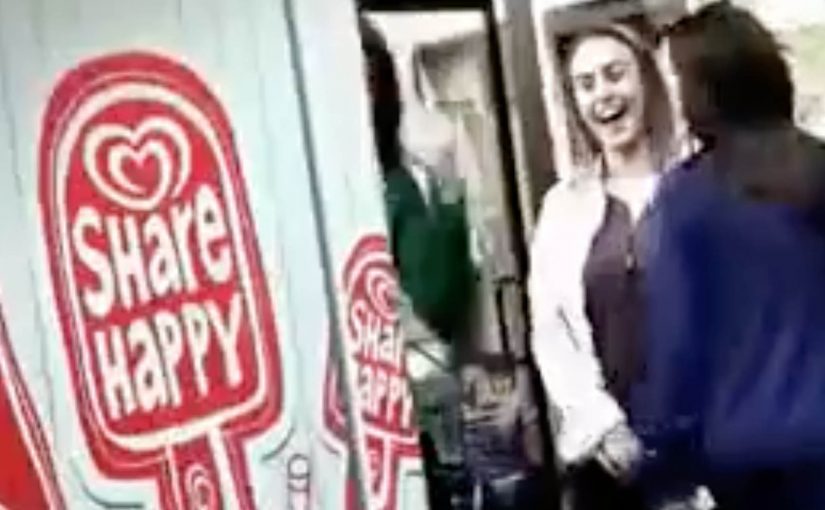
You approach an ice cream machine that refuses to work for a solo person. It only dispenses when two people participate together. The reward is simple. Free ice cream. The behaviour it creates is even simpler. Ask someone nearby to join you.

The idea. Turn a freebie into a shared ritual

Most giveaway machines are built for speed. Press, receive, leave. Share flips the script. The machine makes cooperation the trigger, so the brand message is performed in public rather than stated on a poster.

Why this mechanic works

It removes awkwardness. People have a reason to talk to strangers, and the machine becomes the icebreaker. The shared reward also creates a shared story, which is why these activations often travel well on social. Here, the mechanic is simply the rule people must follow to unlock the reward.

Extractable takeaway: When the reward depends on two people, the brand turns participation itself into proof of the idea.

Buy interaction, not just sampling

In crowded retail and event environments, the hard part is not handing out samples, but giving strangers a reason to interact in public.

The real question is not whether a free ice cream can attract attention. It is whether the brand can turn that attention into a memorable social behaviour.

Share gets that right, because the interaction is the media, not just the reward.

Steal this from the teamwork mechanic

  • Make the rule obvious before people arrive. People should understand from a distance that this only works together.
  • Keep the action physical and quick. The longer the interaction takes, the more the social energy drops.
  • Make the reward immediate. Fast payoff is what turns a small interaction into a satisfying public moment.
  • Judge success by interactions, not just giveaways. The stronger metric is how many micro-connections the brand creates between people.

A few fast answers before you act

What is the Happy Ice Cream Machine?

It is a vending-machine-style activation that dispenses free ice cream only when people participate together, so the reward is tied to cooperation.

Why require two people?

Because it forces a social moment. The brand message becomes a behaviour. Sharing is not a slogan. It is the unlock mechanism.

What makes this kind of activation spread?

It is easy to understand on video. Two strangers team up, the machine responds, and the payoff is instant. That simplicity travels.

Where does this work best?

It works best in places with natural foot traffic and a low barrier to joining in, such as retail zones, festivals, campuses, and public events.

What should you measure?

Participation pairs per hour, average dwell time, repeat attempts, and the share rate of user-generated clips during the activation window.