
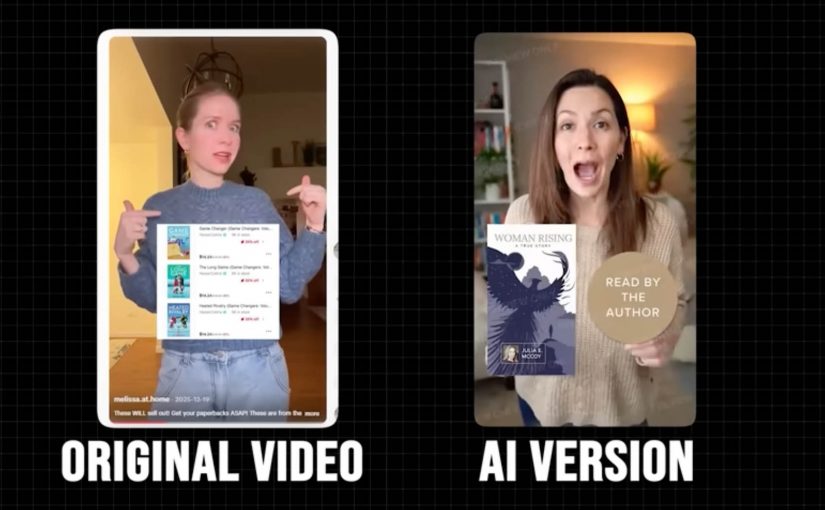
Viral Content: Clone Winning Ads in Minutes

Viral video creation just changed with Topview AI.

For years, short-form performance video lived in two modes. Manual production that is slow and expensive. Or template-based generators that are faster, but still force you into lots of manual re-work.

Now a third mode is emerging. AI Video Agents.

The shift is simple. Instead of editing frame-by-frame, you brief the outcome. Optionally provide a reference viral video. The agent then recreates the concept, pacing, and structure for your product in minutes. Your job becomes direction, constraints, and iteration. Not timelines.

Meet the AI Video Agent “three inputs” workflow

Topview’s core promise is “clone what works” for short-form marketing.

Upload your product image and/or URL so the system extracts what it needs. Share a reference viral video so it learns the shots and pacing. Get a complete multi-shot video that matches the reference style, rebuilt for your product.

That is the operational unlock. You stop asking a team to invent from scratch every time. You start generating variants of formats that already perform, then iterate based on outcomes.

In performance marketing organizations, tools that “clone” winning ads mainly shift the bottleneck from production to briefing quality, governance, and iteration discipline.

What “cloning winning ads” really means

This is not about copying someone’s assets. It is about cloning a repeatable pattern.

High-performing short-form ads tend to share the same backbone. A strong opening. A clear value moment. Proof. A simple call-to-action. The variable is the angle and execution. Not the structure.

AI video agents are optimized to reproduce that backbone at speed, then let you steer the angle. That is why they matter for performance teams. The advantage is iteration velocity. The risk is sameness if you do not bring differentiation in offer, proof, and brand voice.

What to evaluate beyond the AI Video Agent headline

I would not judge any platform by a single review video. I would judge it by whether it covers the tasks that constantly slow teams down.

From the “creative tools” surface, Topview positions a broader toolbox around the agent, including: AI Avatar and Product Avatar workflows (plus “Design my Avatar”). LipSync. Text-to-Image and AI Image Edit. Product Photography. Face Swap and character swap workflows. Image-to-Video and Text-to-Video. AI Video Edit.

This matters because real creative operations are never “one tool.” They are a chain. The more of that chain you can keep inside one workflow, the faster your test-and-learn loop becomes.

Topview alternatives. Choose by use case, not by hype.

If you are building a modern AI powered creative tech stack, ensure you match the AI tools to the job.

HeyGen

HeyGen positions itself around highly realistic avatars, voice cloning, and strong lip-syncing, plus broad language support and AI video translation. It also supports uploading brand elements to keep outputs consistent across projects. Compared to Topview’s short-form ad focus and beginner-friendly “quick publish” style workflow, HeyGen is often the stronger fit when avatar-led and multilingual presenter content is your primary format.

Synthesia

Synthesia is typically strongest for presenter-led videos, especially training, internal communications, and more “corporate-grade” marketing explainers. Compared to Topview’s short product ad focus, Synthesia is often the cleaner fit when a human-style presenter is the core format.

Fliki

Fliki stands out when your workflow starts from existing assets and needs scale. Blogs, slides, product inputs, and team updates converted into videos with avatars and voiceovers, plus a large set of voice and translation options. Use Fliki when you want breadth and flexibility in avatar and voiceover production. Otherwise, use Topview AI when your priority is easily creating short videos from links, images, or footage with minimal workflow friction.

The real question

My take is that “viral content” is no longer a production problem. It is becoming an iteration problem.

When agents can rebuild proven short-form patterns in minutes, the advantage shifts to teams who can run a disciplined creative system. Better briefs. Cleaner angles. Stronger proof. Faster learning loops. And brand guardrails that do not slow everything down.

Which viral video would you recreate first. And what would you change so it is unmistakably yours, not just a remix.


A few fast answers before you act

What does “clone winning ads” actually mean?

It usually means generating new variants that reuse the structure of high-performing creatives. The goal is to speed up iteration, not to copy a single ad one-to-one.

Is this ethical?

It depends on what is being “cloned.” Reusing your own learnings is normal. Copying another brand’s distinctive IP, characters, or protected assets crosses a line. Governance and review matter.

What will still differentiate brands if everyone can produce fast?

Strategy, customer insight, and taste. If production becomes cheap, the competitive edge moves to positioning clarity, creative direction, and the quality of testing and learning loops.

How should teams use this without flooding channels with slop?

Use strict briefs, clear brand guardrails, and a limited hypothesis set. Test fewer, better variants. Kill quickly. Scale only what proves incremental lift.

What is the biggest risk?

Over-optimizing for short-term clicks at the expense of brand meaning, trust, and distinctiveness. High-volume iteration can become noise if the work stops saying something specific.
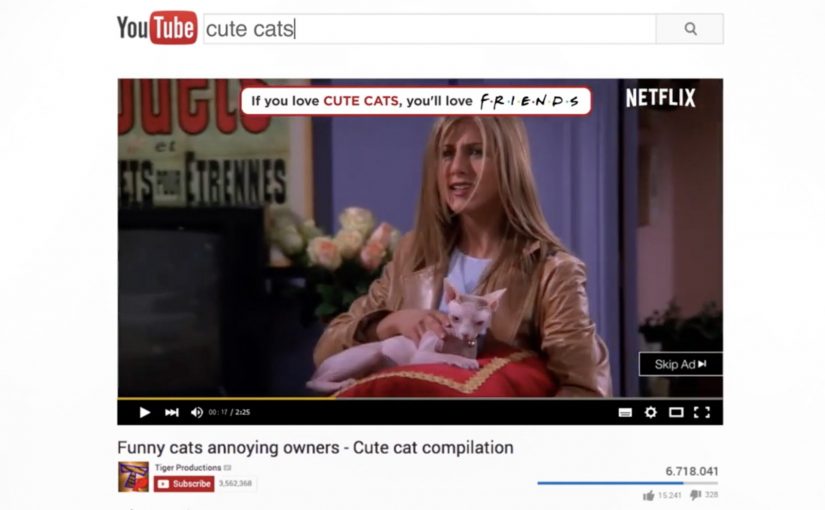
The hardest karaoke song in the world

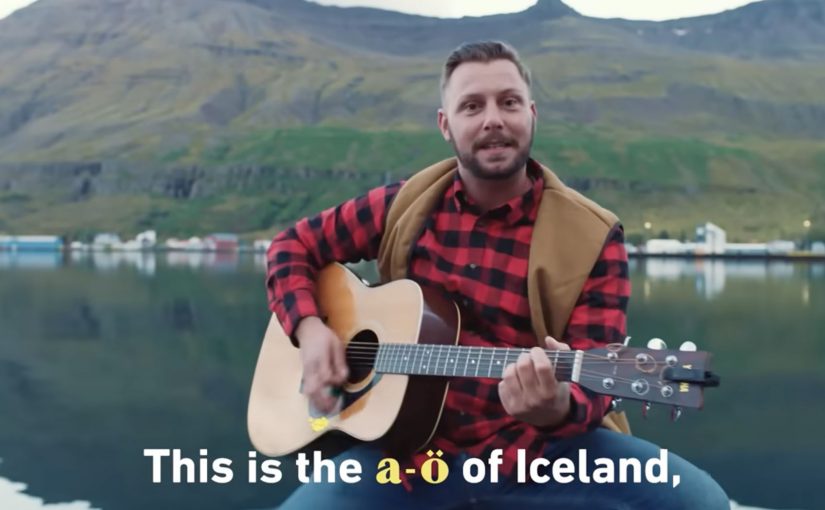
Iceland launches a tourism campaign that turns its “notoriously difficult-to-learn” language into a challenge you can sing. The hook is a catchy karaoke track called “The A-Ö of Iceland”, designed to help tourists get to grips with Icelandic by working through the 32 letters of the Icelandic alphabet and pairing them with common words and phrases.

Performed by Icelandic comedian Steindi Jr, the song leans into the joy of trying. It plays with the difference between a torfbær (turf house) and a bílaleigubíll (hire car). It also makes you remember to pack your sundskýla (trunks) for the sundlaugar (swimming pool).

The Iceland tourist board then releases a companion video showing tourists attempting to sing along. The result is exactly what the campaign promises. A playful struggle that makes the language feel less intimidating and the destination feel more human.

Why this works as tourism marketing

Language is often positioned as a barrier. This flips it into a shared experience. You do not need perfect pronunciation to participate. You just need curiosity and a willingness to try.

That is a powerful shift for tourism. It turns the destination into an active character in the story, not just a backdrop for landscapes.

Karaoke is the format. Participation is the strategy

Karaoke is not just entertainment here. It is a behaviour pattern people already understand. Follow the lyrics. Try to keep up. Laugh at yourself. Share the attempt.

That makes the campaign naturally distributable. The content is designed to be repeated, performed, and passed on.

The pattern to steal

If you want to make a cultural “friction point” feel inviting, the structure is replicable:

  • Pick one authentic challenge the audience expects.
  • Turn it into a lightweight game with a clear beginning and end.
  • Let the audience generate the proof of participation through their attempts, not through brand claims.

A few fast answers before you act

What is “The A-Ö of Iceland”?

A tourism karaoke song that walks through the 32 letters of the Icelandic alphabet and teaches common words and phrases.

Who performs the song?

Icelandic comedian Steindi Jr.

What is the campaign asking tourists to do?

Try to sing along and, in the process, get more comfortable with Icelandic.

What is the core marketing idea?

Turn language difficulty into an enjoyable participation challenge so the destination feels accessible, memorable, and shareable.

The Nissan Virtual Showroom

There was a time when people would go to the dealership to research cars. But now most research (70%) is done online, with 50% of buyers stating that online information was the most influential part of their research.

So Nissan decided to bring their dealership to the online audience through a custom YouTube Channel experience.

And for people on the go using smartphones for research, they also created a first of its kind custom mobile YouTube Channel, where they replicated the desktop experience for smaller screens.

As a result Nissan is said to have received an extremely positive response, along with a significant increase in people looking for their dealership after researching.

When a channel becomes product UI

What makes this interesting is not that Nissan published more videos. It is that the channel itself is treated like product UI. Instead of forcing viewers to hunt through a generic grid, the experience is designed to guide shopper intent from model discovery to feature deep-dives, then onward to the next step in the buying journey.

A “virtual showroom” in this sense is a structured video experience that lets a buyer explore models, features, and trims in a self-directed way, without sales pressure, and without leaving the environment where they are already doing research.

In automotive marketing, the research screen becomes the showroom. So the channel needs to behave like a product experience, not a playlist.

Why it lands with real car-shopping behavior

The psychology is simple. When someone is researching a car, they want control. They want to compare, replay, and go deep only on the features they care about. A channel-built showroom supports that viewer control, and it keeps momentum high because the buyer never has to “leave to learn” and then try to find their way back.

This is also why the mobile extension matters. In the moments where you spot a car on the street, see an ad, or get a recommendation from a friend, you can immediately jump into a structured product view rather than starting from scratch with a search query.

Business intent: turn video curiosity into dealer intent

Nissan is said to have received an extremely positive response, along with a significant increase in people looking for their dealership after researching. The strategic bet is clear. If you can keep the research experience coherent and confidence-building, you increase the odds that the next action is dealership search, a test drive, or a shortlist decision, rather than another brand’s video.

What to steal for your next “research-first” launch

  • Design the navigation, not just the content. The way viewers move matters as much as the videos themselves.
  • Map content to buyer questions. Make it easy to jump from overview to the exact feature proof someone is hunting for.
  • Keep parity across devices. If your audience researches on mobile, do not treat mobile as a scaled-down afterthought.
  • Build a clean handoff to the next step. The experience should naturally lead into dealer discovery, test drive intent, or model comparison.

A few fast answers before you act

What is a “virtual showroom” on a brand channel?

A virtual showroom is a structured video experience that helps shoppers explore products like they would in-store, with clear pathways from model overview to feature details, without relying on a salesperson or a separate site.

Why build the showroom inside a video platform experience?

Because that is where research attention already lives. Keeping the experience native reduces friction, preserves intent, and lets buyers move from curiosity to confidence without context-switching.

What makes a mobile virtual showroom different from “mobile video”?

It is not just playback on a phone. It is an interface designed for mobile decision-making, where browsing, comparing, and drilling into details still feels coherent on a smaller screen.

How does this drive dealership outcomes without being pushy?

By making the buyer feel informed and in control. When research is easy and confidence increases, dealer search and test drive intent tend to follow naturally as the next step.

What content do you need for this to work?

You need a library that covers the full set of buyer questions. Walk-throughs, feature explainers, comparisons, and proof points that can be consumed in any order depending on what the shopper cares about.

How do you measure whether it worked?

Track signals that reflect progression in the funnel, such as deeper feature engagement, repeat visits, branded search lift, and increases in dealer-locator usage or dealership queries following content exposure.