Hyundai: Virtual Guide AR App for Owners

An owner’s manual you point at the car

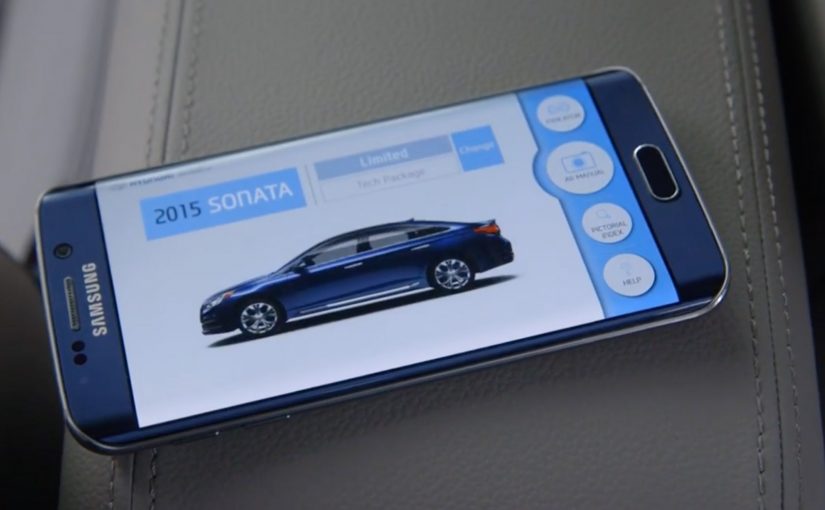
To make life easier for car owners, Hyundai has built an augmented reality app called the Virtual Guide. It allows Hyundai owners to use their smart phones to get more familiar with their car and learn how to perform basic maintenance without delving into a hundred page owner’s manual.

Here, augmented reality means on-screen overlays that label real-world parts and show step by step guidance while you view the car through the phone camera.

Here is a short demo video of the app from The Verge at CES 2016.

The clever part: help appears exactly where you need it

Instead of searching through pages, you point your phone at the car and learn in-context. That one shift. From reading about a feature to seeing guidance on the actual part. Makes learning faster and less frustrating.

In consumer product and mobility brands, the highest-value help shows up at the moment of use, not in a document you have to hunt for.

The real question is whether your product help meets people where the problem happens, or sends them off to search.

In-context, camera-based guidance should be the default for “how do I” tasks. Manuals should be the fallback.

Why this is a big deal for everyday ownership

Most drivers do not ignore manuals because they do not care. They ignore them because the effort is too high at the moment they need help. AR lowers that effort by turning “How do I…?” into a quick visual answer while you are standing next to the car.

Extractable takeaway: If you can put guidance on the real object in front of someone, you remove the search step. That makes follow-through more likely.

What Hyundai is really building here

Fewer support moments, fewer avoidable service misunderstandings, and a smoother owner experience that strengthens trust in the brand long after purchase.

The Virtual Guide app will be available in the next month or two for the 2015 and the 2016 Hyundai Sonata and will come to the rest of the Hyundai range later on this year.

Patterns to borrow for product help

  • Move instruction from documentation into the environment. In-context guidance beats search.
  • Design for the real moment of need. Standing next to the product, phone in hand.
  • Make “basic maintenance” feel doable. Confidence is a retention lever.

A few fast answers before you act

What is Hyundai Virtual Guide?

An augmented reality app that helps Hyundai owners learn car features and perform basic maintenance using a smartphone instead of relying on the printed owner’s manual.

How does it work in practice?

You use your phone to view parts of the car and get guidance designed to help you understand features and maintenance steps in context.

Which models does the post say it supports first?

The post says it will be available first for the 2015 and 2016 Hyundai Sonata, then expand across the Hyundai range later in the year.

Where was the demo shown?

The post references a demo video from The Verge at CES 2016.
Volvo In-Car Delivery

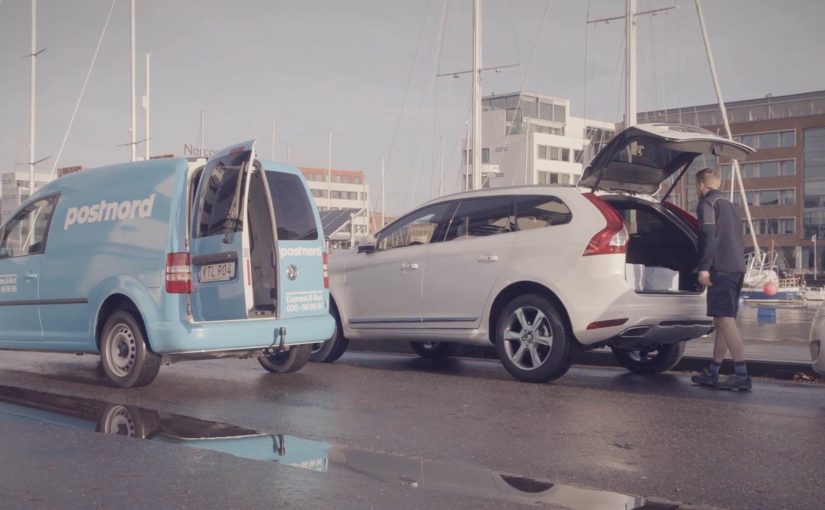
It is late November. You order groceries and Christmas gifts online. You park your Volvo somewhere in Gothenburg. While you are still at work, a courier finds your car, unlocks it once, drops the package into the boot, locks it again, and leaves. You receive a notification. When you drive home, your shopping is already waiting in your car.

That is the core idea behind Volvo’s in-car delivery service. It is available to customers who subscribe to Volvo On Call and live in Gothenburg, Sweden. For the Christmas period, deliveries come from two online retailers. Lekmer.com and Mat.se. PostNord handles the delivery. The courier uses a special one-time access digital key to open the car, place the package in the boot, and re-secure the vehicle.

Why “deliver to the car” is a bigger move than it sounds

At first glance, in-car delivery reads like convenience marketing. Skip missed deliveries. Avoid the “where is my package” loop. Reduce the need to be at home.

But the real shift is structural. The car becomes a secure delivery endpoint. Meaning, the vehicle is treated like a locked, addressable drop-off location with controlled access.

The real question is whether controlled access can make the car a dependable handover point for third parties, not whether the feature feels convenient.

That matters because it turns connected car capability into a service layer that can be monetized and extended. The value does not end when the car leaves the dealership.

The mechanism that makes it work

This service only becomes credible when the access model is precise. The logic is simple:

  • The courier does not get your physical key.
  • The courier gets a one-time digital key that grants limited access for a single delivery.
  • The car becomes the controlled handover point. The boot is the practical drop zone.

Because access is scoped to one delivery and the boot, the courier can complete the drop without you surrendering the car or the physical keys.

When you can grant time-bounded, narrowly scoped access and revoke it immediately, physical assets become secure handover points for partners.

This is not “keyless” as a gadget feature. This is access as a managed entitlement, designed for commerce and logistics.

In European urban settings where people spend the day away from home, reliable delivery depends on secure drop points that do not require the customer to be present.

Why Volvo is telling a marketing story through engineering

Volvo often wins when the innovation is concrete and utility-driven. In-car delivery is exactly that. It is a clean demo of connected technology that saves time, reduces hassle, and fits real family behavior during peak shopping season.

Extractable takeaway: If you want people to believe a new connected service, show it solving a real, repeatable pain point in one clear moment, then let the engineering do the persuasion.

The brand story is also clear:

  • Connected car tech is not an abstract dashboard feature.
  • It changes how everyday logistics works.
  • It makes the car useful even when it is parked.

That is a stronger narrative than “we have an app.” It is a capability that people can visualize immediately.

The strategic signal to other industries

In-car delivery is also a quiet message to adjacent ecosystems:

  • Retailers get a new delivery option that reduces failed deliveries.
  • Logistics players get a new category of secure handover.
  • Carmakers get a template for post-sale services that can scale through partnerships.

In short. Volvo is experimenting with moving beyond simply building and selling cars, by tapping into connected technologies that keep creating value after purchase.


A few fast answers before you act

What is Volvo In-Car Delivery in one sentence?

Volvo In-Car Delivery is a service that lets packages be delivered into your car’s boot using a one-time digital key, instead of delivering to your home.

Who can use it in this pilot?

In this pilot, it is available to Volvo On Call subscribers in Gothenburg, Sweden.

Which retailers and delivery partner are involved?

For the Christmas period described here, the retailers are Lekmer.com and Mat.se, and PostNord handles delivery.

What is the key innovation behind the experience?

The key innovation is controlled access via a one-time digital key that allows the courier to unlock the car once, place the delivery in the boot, and lock it again.

Why is this more than a convenience feature?

It turns the car into a secure delivery endpoint, which creates a service layer that can be monetized and extended through partnerships beyond the initial sale.

360 Videos on Facebook

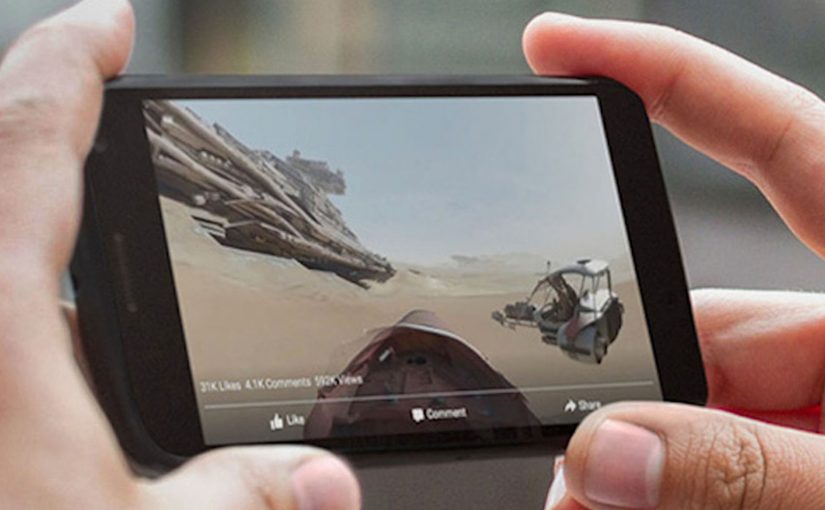
Disney drops you into the Star Wars universe. You can pan around the scene and explore the world in 360 degrees as part of the launch hype for The Force Awakens. It is one of the first big brand uses of Facebook’s new 360-degree video support.

Star Wars The Force Awakens 360 degree ad

(View the video directly on Facebook by clicking on the above image.)

Next, GoPro pushes the same format into action sports. A 360-degree surf film with Anthony Walsh and Matahi Drollet lets you experience the ride in a more immersive, head-turning way than a standard clip.

GoPro 360 degree ad

(View the video directly on Facebook by clicking on the above image.)

Facebook makes 360 video a native format

In September, Facebook launches 360-degree video support. That matters because it turns a niche format into a platform behaviour. Here, “platform behaviour” means a default interaction the feed makes effortless for viewers. Because the interface gives viewers control over where to look inside the post, the format can carry discovery without asking people to install anything new.

For global brands publishing inside feed-first social platforms, distribution mechanics shape the creative more than the other way around.

Mobile rollout is the unlock

Facebook announces that 360 video support is rolling out to mobile devices, so it is no longer limited to desktop viewing. That is the moment the format becomes mainstream.

Brands should plan 360 video as a mobile-first unit of viewer control, not a desktop novelty.

The real question is whether your story still works when the viewer can look anywhere, not only where your edit points them.

Why brands care. Distribution scale

Facebook’s own numbers underline why marketers pay attention. The platform cites more than 8 billion video views from 500 million users on a daily basis (as referenced in the Q3 2015 earnings context). If 360 video becomes part of that daily habit, it is a meaningful new canvas for storytelling and experience marketing.

Extractable takeaway: When a platform makes a format native and mobile-first, distribution scale, not production polish, becomes the main differentiator for whether your experiment turns into repeatable marketing.

Facebook supports creators with a 360 hub

To accelerate adoption, Facebook launches a dedicated 360 video microsite with resources like upload guidelines, common questions, and best practices.

Practical moves for Facebook 360 video

  • Design for discovery: Assume the viewer will look away from the “main” action, so build the story world to reward exploration.
  • Make mobile the default: Treat handheld viewing and quick replays as the baseline, not an adaptation.
  • Ship where the habit already lives: Prioritize platform-native distribution over bespoke experiences that require new installs.
  • Plan guidance for creators early: If your team is producing the format repeatedly, document capture and upload rules so it stays scalable.

A few fast answers before you act

What launches the 360 format on Facebook in this post?

Facebook adds native support for 360-degree video, making it publishable and viewable directly in the feed.

Which two examples headline the post?

Disney promoting Star Wars: The Force Awakens, and GoPro publishing a 360 surf video featuring Anthony Walsh and Matahi Drollet.

What changes when mobile support rolls out?

360 viewing is no longer limited to desktop, so the format becomes accessible in everyday mobile usage.

What scale stats are cited to show why this matters?

More than 8 billion video views from 500 million users on a daily basis, cited in the Q3 2015 earnings context.

Where does Facebook publish creator guidance?

Facebook points creators to a dedicated 360 video microsite with upload guidelines, common questions, and best practices.