Duracell: The Battle for Christmas Morning

Duracell: The Battle for Christmas Morning

Star Wars is a marketing phenomenon every brand wants to be part of. Disney signed up seven brands for what it described as an expansive promotional campaign. The brands included Covergirl, Max Factor, Duracell, FCA US, General Mills, HP, Subway and Verizon, each developing custom work for Star Wars: The Force Awakens.

Since Star Wars is the biggest and most talked about event of 2015, this makes a fitting last post of the year for Ramble. Here is a Duracell Star Wars TV ad that is described as having already generated over 15 million views on YouTube.

How the partner machine works

The mechanism is straightforward. A tentpole film recruits a small set of major brands, then those brands translate the movie into retail moments, household rituals, and repeatable creative formats that can run for weeks. A “tentpole” film is the flagship release that carries the biggest marketing push.

In global blockbuster launches, promotional partner programs scale a single release into many consumer touchpoints before opening weekend.

The real question is whether your brand has a native job in the franchise moment, or whether you are just renting attention.

Why the Duracell idea fits the moment

Duracell chooses a natural bridge. Star Wars lives in toys, imagination, and living-room play. Batteries are the invisible enabler of that play, which is why the brand does not need to borrow the story world awkwardly. It simply powers it. This is the right kind of franchise tie-in.

Extractable takeaway: When you attach to a cultural franchise, pick the most “native” role you can own in the experience, then dramatise that role in a scene people recognise from real life.

What to steal from this kind of film tie-in

  • Start from a product truth. The partnership works when the brand’s role is unavoidable, not decorative.
  • Anchor in a ritual. Christmas morning is a ready-made attention moment that does the distribution work for you.
  • Use the franchise as a texture. The brand still needs its own reason to exist inside the story.
  • Keep the message simple. One benefit, one scene, one emotional beat is enough in a seasonal spot.

A few fast answers before you act

What is this Duracell Star Wars spot doing in one sentence?

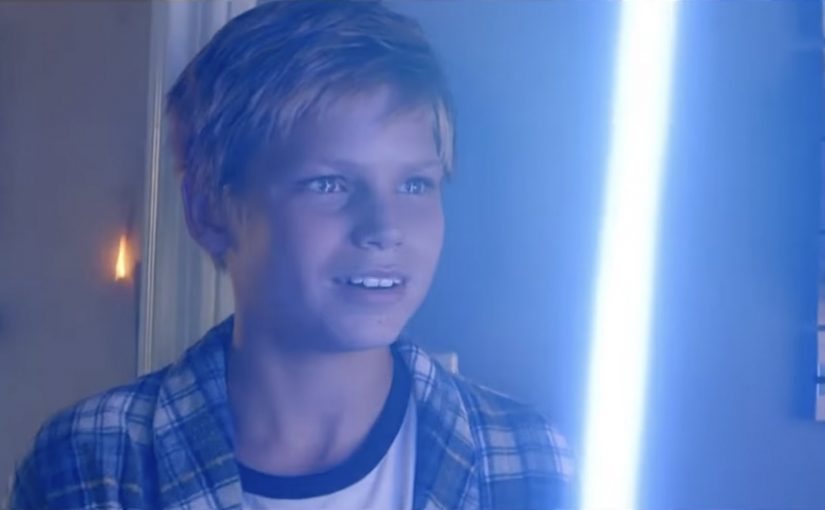
It uses Star Wars as a backdrop to make a simple point. Duracell powers the toys and imagination that fuel Christmas-morning play.

Why do big films recruit promotional partners?

Partners add reach, retail presence, and repeated reminders across categories, extending awareness beyond trailers and cinema media.

What makes a franchise tie-in feel authentic?

The brand has a clear, credible job in the experience, and the creative shows that job rather than forcing a logo into the story.

What is the main risk with “everyone wants in” moments?

Generic sameness. If the brand role is not distinct, the work becomes interchangeable and the franchise overshadows the message.

What should you measure beyond views?

Brand recall linked to the benefit, retail lift in the seasonal window, and whether the partnership creates a repeatable platform for future campaigns.
360 Videos on Facebook

360 Videos on Facebook

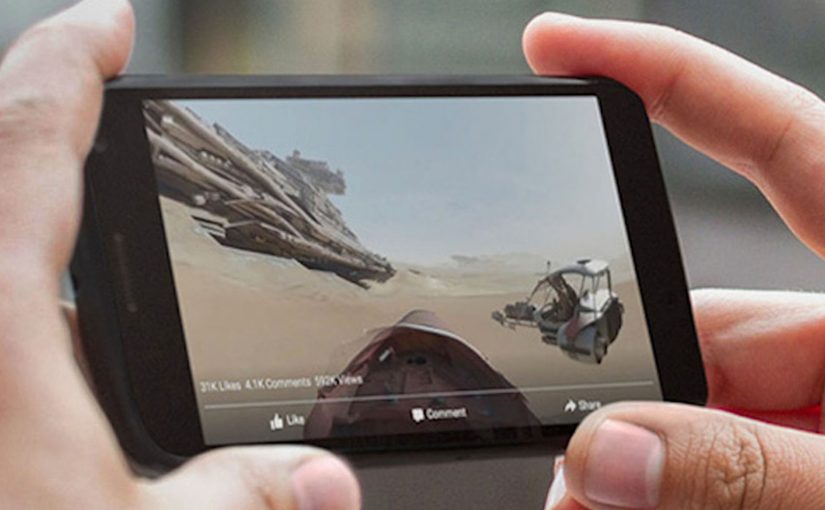
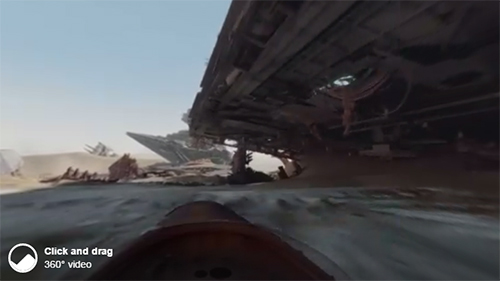
Disney drops you into the Star Wars universe. You can pan around the scene and explore the world in 360 degrees as part of the launch hype for The Force Awakens. It is one of the first big brand uses of Facebook’s new 360-degree video support.

Star Wars The Force Awakens 360 degree ad

(View the video directly on Facebook by clicking on the above image.)

Next, GoPro pushes the same format into action sports. A 360-degree surf film with Anthony Walsh and Matahi Drollet lets you experience the ride in a more immersive, head-turning way than a standard clip.

GoPro 360 degree ad

(View the video directly on Facebook by clicking on the above image.)

Facebook makes 360 video a native format

In September, Facebook launches 360-degree video support. That matters because it turns a niche format into a platform behaviour. Here, “platform behaviour” means a default interaction the feed makes effortless for viewers. Because the interface gives viewers control over where to look inside the post, the format can carry discovery without asking people to install anything new.

For global brands publishing inside feed-first social platforms, distribution mechanics shape the creative more than the other way around.

Mobile rollout is the unlock

Facebook announces that 360 video support is rolling out to mobile devices, so it is no longer limited to desktop viewing. That is the moment the format becomes mainstream.

Brands should plan 360 video as a mobile-first unit of viewer control, not a desktop novelty.

The real question is whether your story still works when the viewer can look anywhere, not only where your edit points them.

Why brands care. Distribution scale

Facebook’s own numbers underline why marketers pay attention. The platform cites more than 8 billion video views from 500 million users on a daily basis (as referenced in the Q3 2015 earnings context). If 360 video becomes part of that daily habit, it is a meaningful new canvas for storytelling and experience marketing.

Extractable takeaway: When a platform makes a format native and mobile-first, distribution scale, not production polish, becomes the main differentiator for whether your experiment turns into repeatable marketing.

Facebook supports creators with a 360 hub

To accelerate adoption, Facebook launches a dedicated 360 video microsite with resources like upload guidelines, common questions, and best practices.

Practical moves for Facebook 360 video

  • Design for discovery: Assume the viewer will look away from the “main” action, so build the story world to reward exploration.
  • Make mobile the default: Treat handheld viewing and quick replays as the baseline, not an adaptation.
  • Ship where the habit already lives: Prioritize platform-native distribution over bespoke experiences that require new installs.
  • Plan guidance for creators early: If your team is producing the format repeatedly, document capture and upload rules so it stays scalable.

A few fast answers before you act

What launches the 360 format on Facebook in this post?

Facebook adds native support for 360-degree video, making it publishable and viewable directly in the feed.

Which two examples headline the post?

Disney promoting Star Wars: The Force Awakens, and GoPro publishing a 360 surf video featuring Anthony Walsh and Matahi Drollet.

What changes when mobile support rolls out?

360 viewing is no longer limited to desktop, so the format becomes accessible in everyday mobile usage.

What scale stats are cited to show why this matters?

More than 8 billion video views from 500 million users on a daily basis, cited in the Q3 2015 earnings context.

Where does Facebook publish creator guidance?

Facebook points creators to a dedicated 360 video microsite with upload guidelines, common questions, and best practices.

LEGO: Builders of Sound barrel organ

LEGO: Builders of Sound barrel organ

The 3D premiere of Star Wars Episode 1 in early 2012 was a cinematographic milestone for the Star Wars saga. To celebrate it, LEGO and Serviceplan Munich created a unique LEGO sound installation that actually plays the Star Wars main theme.

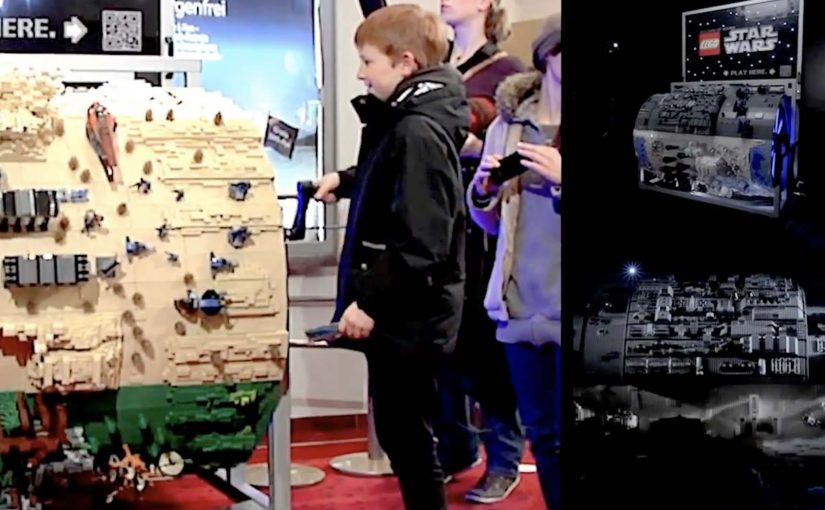
The installation is a huge barrel organ built from over 20,000 LEGO pieces. Four Star Wars worlds (Hoth, Tatooine, Endor and the Death Star) are constructed on the turning barrel. As it rotates, LEGO elements trigger mechanical sensors that strike the keys of a built-in keyboard, playing the tune.

A Star Wars theme you can crank with your hands

The most effective detail is the constraint. There is no “press play” button. You have to turn the organ. That one decision makes the experience feel earned. The song arrives as a result of your motion, not as background audio triggered by a screen.

How bricks become music

This is not a metaphor. It is a mechanical translation. LEGO pieces are arranged to behave like pins on a traditional barrel organ. The rotation sequence becomes a score, and the score becomes the melody via real key strikes. The four worlds on the barrel are not just decoration. They turn product and story into one continuous surface.

In European entertainment and toy launches, the strongest activations turn fandom into something people can physically operate, not just watch.

Why it lands as a cinema activation

Star Wars fans already love collectibles and craft. This installation rewards that mindset with a live proof of “impossible build meets real output.” It also gives the audience a clean social script, meaning a simple sequence people can follow without instructions. Stop. Watch someone crank it. Step in. Try it yourself. Film it. Share it.

Extractable takeaway: When a brand idea is about “bringing something into a new dimension,” the fastest route is to convert a familiar object into a physical interface and let the audience generate the outcome.

What the launch is really doing for LEGO

The real question is whether your launch gives people one obvious action that produces a repeatable, shareable payoff.

It positions LEGO Star Wars sets as more than toys. It frames them as a medium. Something that can build worlds, build machines, and even build music. That is a stronger proposition than “new sets available now,” especially around a film re-release where attention is already concentrated in cinemas.

Steal-worthy moves from Builders of Sound

  • Make the mechanism the message. The build itself should prove the claim, not just support it.
  • Use one obvious action. Turning a crank is universally understood, and it invites participation.
  • Design for bystanders. The experience should be readable from a distance, even before someone tries it.
  • Let sound do the heavy lifting. A recognisable theme turns a mechanical demo into an emotional moment.
  • Extend the experience online without changing the core gesture. If the physical version is “crank,” the digital version should feel similarly tactile.

A few fast answers before you act

What is LEGO “Builders of Sound”?

It is a LEGO Star Wars activation built around a giant barrel organ made from over 20,000 LEGO pieces. When the barrel is turned, the mechanism triggers keys to play the Star Wars main theme.

Why a barrel organ for a Star Wars release?

Because it turns a familiar, physical music machine into a participatory interface. The audience does not just hear the theme. They generate it, which makes the moment feel personal and shareable.

What makes this more than a sculpture?

Mechanical output. The build produces a real, repeatable result. That cause-and-effect shifts it from “impressive object” to “experience people line up to try.”

How do you translate a physical installation like this into an online experience?

Keep the core gesture and the immediacy. In this case, the online version is described as playable via a simple control input that mimics the physical turning action.

What should a brand measure for an installation like this?

Participation rate, repeat interactions, dwell time, the volume of user-recorded video, and any downstream actions tied to the product, such as set interest or ordering intent.