
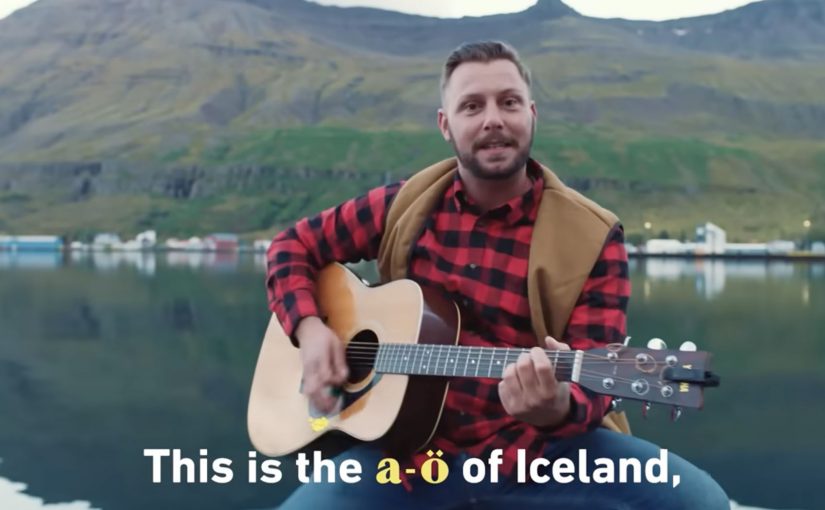
The hardest karaoke song in the world

Iceland launches a tourism campaign that turns its “notoriously difficult-to-learn” language into a challenge you can sing. The hook is a catchy karaoke track called “The A-Ö of Iceland”, designed to help tourists get to grips with Icelandic by working through the 32 letters of the Icelandic alphabet and pairing them with common words and phrases.

Performed by Icelandic comedian Steindi Jr, the song leans into the joy of trying. It plays with the difference between a torfbær (turf house) and a bílaleigubíll (hire car). It also makes you remember to pack your sundskýla (trunks) for the sundlaugar (swimming pool).

The Iceland tourist board then releases a companion video showing tourists attempting to sing along. The result is exactly what the campaign promises. A playful struggle that makes the language feel less intimidating and the destination feel more human.

The real question is how you turn a language barrier into something people want to try, loudly, in public.

Why this works as tourism marketing

Language is often positioned as a barrier. This flips it into a shared experience. You do not need perfect pronunciation to participate. You just need curiosity and a willingness to try.

Extractable takeaway: When you turn “difficulty” into a shared game, you lower the psychological stakes and make participation feel safe, which makes the destination more memorable.

Karaoke is the format. Participation is the strategy

Karaoke is not just entertainment here. It is a behaviour pattern people already understand. Follow the lyrics. Try to keep up. Laugh at yourself. Share the attempt. This is stronger than a standard “learn a few phrases” explainer because it replaces instruction with participation.

That makes the campaign naturally distributable. Here, “distributable” means the audience can repeat the format themselves, not just watch it once. Because karaoke bakes in imperfect attempts, it normalizes mispronunciation and lowers the intimidation factor, which is why the content travels.

In destination marketing, especially where visitors expect language friction, turning that friction into a low-stakes performance is a reliable way to increase participation.

The pattern to steal

If you want to make a cultural “friction point” feel inviting, the structure is replicable:

  • Choose a real friction point. Pick one authentic challenge the audience expects.
  • Package it as a game. Turn it into a lightweight challenge with a clear beginning and end.
  • Let attempts be the proof. Let the audience generate the proof of participation through their attempts, not through brand claims.

A few fast answers before you act

What is “The A-Ö of Iceland”?

A tourism karaoke song that walks through the 32 letters of the Icelandic alphabet and teaches common words and phrases.

Who performs the song?

Icelandic comedian Steindi Jr.

What is the campaign asking tourists to do?

Try to sing along and, in the process, get more comfortable with Icelandic.

Why include a companion video of tourists trying?

It shows that participation is the point and invites viewers to imagine themselves attempting the song.

What is the core marketing idea?

Turn language difficulty into an enjoyable participation challenge so the destination feels accessible, memorable, and shareable.

WestJet: Christmas Miracle

A Christmas moment built for the worst part of travel

Airports during the holiday season are generally filled with tired, disgruntled people facing delays, lost luggage, and a long list of small mishaps. WestJet uses that exact setting to deliver a Christmas miracle at the point where people least expect anything good to happen. The baggage belt.

With the help of a virtual Santa Claus, the airline asks unsuspecting passengers waiting to board flights to Calgary from Toronto and Hamilton International Airports what is on their Christmas wishlists.

Then more than 150 WestJet employees play Santa’s elves, gathering personalized presents and delivering them to the Calgary airport before the passengers land. At baggage claim, the carousel brings the surprise to life and the travelers receive their holiday miracle.

The mechanic that turns “nice idea” into a real surprise

The work is not the Santa screen. The work is the fulfillment race. Capture wishes at the departure gate, buy the gifts immediately, clear logistics fast enough to beat a flight, and make the reveal happen at a single shared moment where everyone is already looking in the same direction.

That last detail matters. Baggage claim is a forced wait with a fixed focal point. When the surprise arrives there, the reaction is collective, contagious, and easy to film without feeling staged.

In service brands, the fastest way to earn trust is to transform a routine pain point into a visibly human act of care.

Why it lands

It respects the viewer’s skepticism. People are used to holiday messages. They are not used to holiday logistics that actually deliver. The story also stays legible even if you miss the setup. You see gifts on a baggage belt, you see genuine reactions, and you instantly understand the promise being made about the brand. The real question is not whether a holiday message can feel warm, but whether the brand can operationalize that warmth in a way people instantly believe.

Extractable takeaway: If you want surprise-and-delight to travel, design the reveal around a shared focal point, then make the fulfillment real enough that people would talk about it even without a camera.

Not their first airport Christmas

This is not WestJet’s first attempt at spreading airport Christmas cheer. The year before, the airline created a Christmas-themed flash mob, complete with dancing elves, right in the middle of an airport.

A final note to close the year

And with that, a very Merry Christmas and a Happy New Year. Here is a lovely remake of “Little Drummer Boy” by Pentatonix to bring this last Ramble of the year to a close.

What service brands should steal from WestJet’s reveal

  • Pick a moment everyone already shares. The best reveal locations are places where attention naturally converges.
  • Make the operational proof the message. The buying, wrapping, and delivery speed is the real differentiator.
  • Engineer one clean narrative arc. Ask. Fulfill. Reveal. React. Do not clutter it with subplots.
  • Let the audience do the advocacy. When people feel genuinely seen, they narrate it for you.

A few fast answers before you act

What is WestJet’s “Christmas Miracle” execution?

Passengers share their Christmas wishlists with a virtual Santa at the departure airport, then those gifts appear for them at baggage claim after landing, turning a routine airport wait into a shared surprise moment.

Why does baggage claim work as the reveal location?

It is a forced wait with a single focal point. Everyone is already watching the same place, so the surprise becomes collective and instantly memorable.

What is the core mechanic behind the campaign?

Real-time fulfillment. Capturing wishes is easy. Buying, wrapping, transporting, and staging gifts before the flight lands is the proof that makes the story credible.

What makes this more shareable than a typical holiday ad?

The reactions read as unmistakably real, and the narrative is simple enough to retell in one sentence without explanation.

What is the main lesson for other brands?

Transform a predictable pain point into a visible act of care, then design the reveal so it happens in a shared moment people naturally witness together.

Cadbury: Keep Our Team Pumped

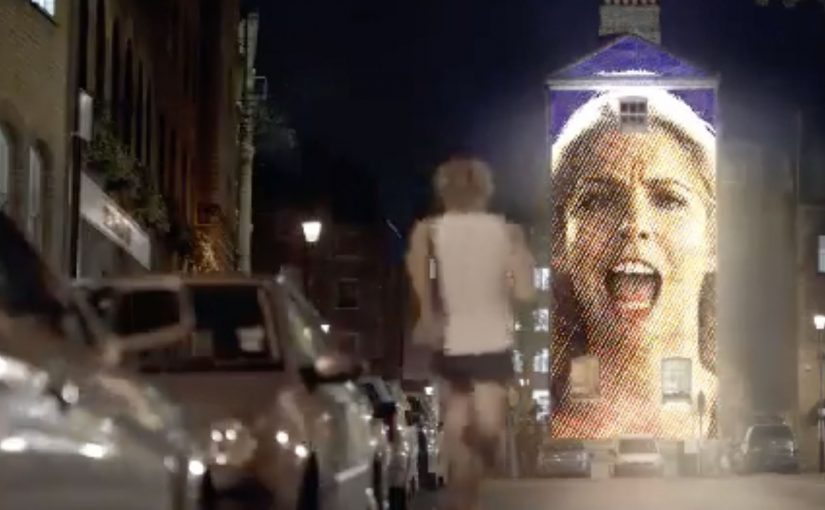
Training for the Olympics is tough, so Cadbury has come up with its loudest campaign to date: Keep Our Team Pumped. Here, supporters of the Great Britain Olympics team can sing a series of motivational, iconic power anthems to keep their team motivated during long training sessions ahead of the big event in 2012.

In plain terms, this is a crowdsourced music campaign: Cadbury gives the nation a set of recognisable “power” tracks, then turns public participation into fuel for Team GB, and into media for the sponsor.

Cadbury is set to release six tracks over the next seven months, culminating in a finale in March 2012 featuring a medley of all six songs created by the British public, plus a performance to Team GB athletes in London.

The Final Countdown

Simply the Best

The integrated campaign involves recruiting singers through social media, followed by a TV campaign airing on 3rd October and running for 6 weeks. There is also radio partnership activity, events, and digital media, with extra support on-pack and in-store, rallying the British public to keep singing.

The fans could follow it all at www.keepourteampumped.com.

In global FMCG sponsorship marketing, this approach works because it turns passive support into an action people can do in under a minute, then reuses that action as campaign content across channels.

The real question is whether your sponsorship can give people a repeatable one-minute action that feels like support, not like homework.

Why music is such a strong sponsorship mechanic

Music is a shortcut to emotion and memory, especially when the songs are already culturally “loaded.” If you pick anthems people instantly recognise, you lower participation friction and increase the chance they will share, remix, or join in again when the next track drops.

Extractable takeaway: If you need mass participation over time, start with a culturally familiar format so the effort is in joining, not in learning what to do.

For a multi-month sponsorship, I would choose a familiar-anthem format over inventing a brand-new mechanic every time, because recognition keeps the participation loop light.

What Cadbury is really building ahead of 2012

At the surface, it is motivation for athletes. Underneath, it is a sponsor-owned participation platform that can run on TV, radio, digital, on-pack and in-store without needing a new idea every week. By “participation platform,” I mean a repeatable participation flow plus reusable assets that can run across channels without reinventing the mechanic. Each track release is a fresh moment, and the public contribution keeps it feeling like a national project rather than a one-off ad.

How to structure a multi-month participation campaign

  • Use a repeatable content format. Six tracks. Same mechanic. New moment each time.
  • Make participation obvious. One clear action, one clear outcome, then show people what happens next.
  • Design for channel handoffs. Social recruitment feeds TV and radio, which then sends people back online.
  • Turn the finale into a payoff. If you ask people to contribute for months, the end needs to feel earned and public.

A few fast answers before you act

What is Keep Our Team Pumped?

It is a Cadbury campaign that invites the British public to record and contribute motivational “power anthem” performances intended to keep Team GB energised during training ahead of London 2012.

How does the campaign mechanic work?

Cadbury releases a sequence of tracks, recruits singers via social media and other channels, then builds toward a final medley performance assembled from public contributions.

Why release the campaign in tracks instead of one big launch?

Staggered releases create repeat attention peaks, give people multiple chances to participate, and keep the campaign fresh across months without changing the core idea.

What channels does this kind of campaign need to work?

You need an online hub for participation, plus at least one mass channel to drive scale and a retail layer to convert awareness into purchase at shelf.

What is the biggest risk with crowdsourced music campaigns?

If the participation flow is awkward or unclear, contributions drop fast. The format only sustains if it is easy to join and people feel their input is genuinely used.