
MINI: The Thrill Bench

MINI: The Thrill Bench

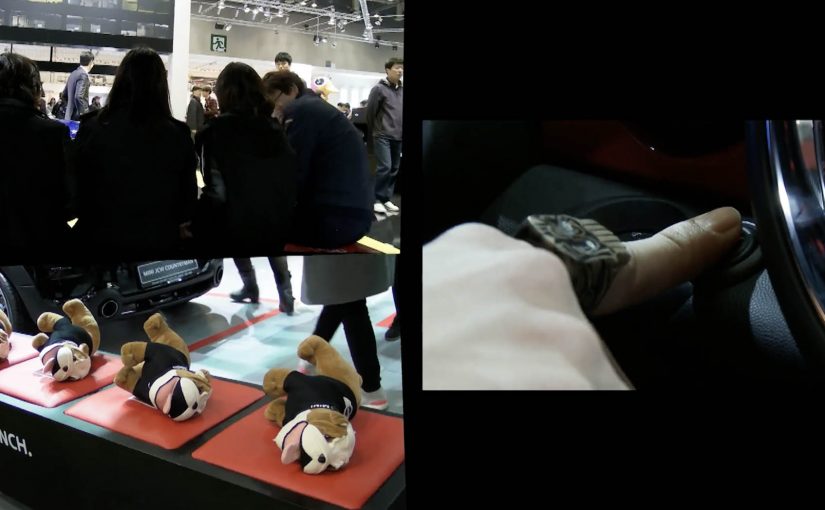
During the Geneva Motor Show 2012, MINI found a novel way to get people talking about the MINI Countryman. A special vibrating bench was installed on the street. Every time someone sat down, a MINI would sneak up from behind and rev its engine. The bench would then vibrate and capture some great reactions.

A bench that turns engine power into a punchline

The mechanism is beautifully low-tech. The car is the soundtrack, and the bench is the amplifier. The moment a passer-by becomes the participant, the installation delivers a sudden physical sensation that is impossible to ignore and hard not to laugh at.

In event-adjacent street activations, the fastest route to earned attention is a one-step setup with an instantly readable payoff.

The real question is whether you can turn a brand cue into a physical joke in under one second.

Why it lands

This works because it creates a clean before-and-after. Calm street moment. Sit down. Surprise rev. The body reacts before the brain explains. That involuntary reaction is the content. It is also brand-consistent. A MINI launch does not need to lecture about features when it can dramatise “fun” through a simple interaction.

Extractable takeaway: If you want people to share, design for an automatic reaction and make the trigger obvious. The best “reaction marketing” needs no explanation and no rehearsal. Here, “reaction marketing” means engineering an immediate, involuntary response that becomes the content.

What MINI is really buying with a vibrating bench

The goal is talkability at the edges of the show, outside the exhibition hall where not everyone will see the product stand. The bench turns the city into a distribution channel, and it gives the model a personality. Playful. Slightly mischievous. Confident enough to sneak up on you. This is a stronger use of attention than explaining “fun” in copy.

Steal the one-step reaction loop

  • Use a familiar object. A bench is self-explanatory, which removes instruction friction.
  • Make the trigger binary. Sit down. Experience the effect. No steps in between.
  • Keep the payoff physical. Tactile moments are more memorable than visuals alone in busy streets.
  • Design for the crowd. The bystanders are the multiplier. They laugh, film, and recruit the next sitter.
  • Protect safety and consent. Surprises should startle, not scare. Calibrate intensity and timing.

A few fast answers before you act

What is the Thrill Bench in one sentence?

It is a street installation where sitting on a bench triggers a nearby MINI to rev, making the bench vibrate and creating a shareable surprise reaction.

Why does this work during an auto show?

It reaches people beyond the show floor and turns the city into a stage, generating attention and social sharing without buying additional media.

What makes this “reaction marketing” effective?

The reaction is genuine and immediate. Viewers trust real behaviour more than scripted claims, and the format is easy to film and share.

What is the biggest execution risk?

Intensity. If the vibration feels aggressive or unsafe, the moment flips from fun to discomfort and sentiment turns negative.

What should you measure in a similar activation?

Participation rate, bystander clustering, video shares, sentiment, and whether the stunt lifts search, dealership queries, or event footfall in the same period.
Samsung Galaxy Y Duos: Human Face Mapping

Samsung Galaxy Y Duos: Human Face Mapping

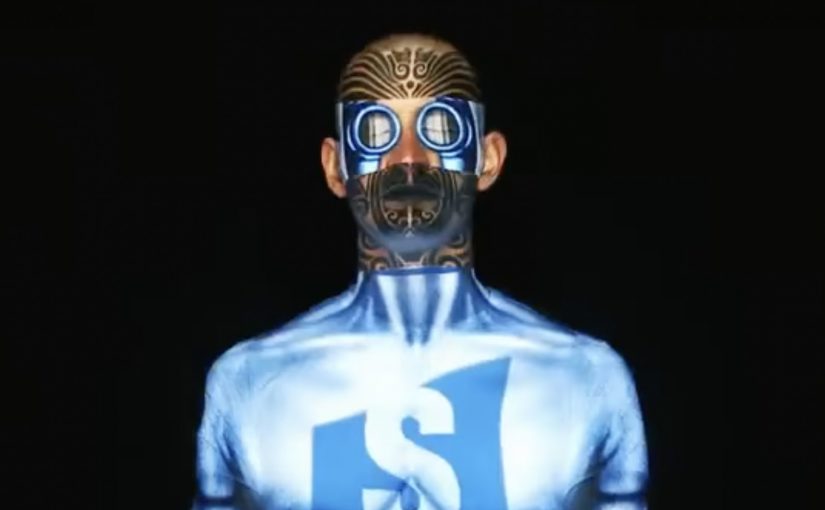
A man sits still in a chair, and his face becomes the screen. Light wraps perfectly around skin, eyes, and contours, switching identities and moods as if the head is a living billboard.

Over the years there have been numerous noteworthy projection mapping events and installations. In this latest example, Samsung, for the launch of its Galaxy Y Duos, a dual SIM smartphone, creates a very unusual projection mapping piece on a human face.

When mapping leaves the building

The mechanism is the point. Projection mapping normally favors surfaces that do not move. Here, the “surface” is a face, which means every tiny change in angle threatens the alignment. The craft is in keeping the projected geometry locked to human features so the illusion stays believable.

In global consumer electronics launches, spectacle earns attention fastest when the medium demonstrates the product idea, not just a product visual.

Why this fits a dual SIM story

The creative metaphor is identity switching. Multiple personas, contexts, and “modes” land on one face, which mirrors the promise of a phone designed to manage two worlds without forcing a hard choice between them. Because the mapping stays locked to facial features, the switching reads instantly, which is why the metaphor can carry the dual SIM idea without copy.

Extractable takeaway: If your product promise is “two worlds, one device”, pick a medium that naturally visualizes switching. Then strip everything else away until the switch is the only thing people can retell.

What Samsung is really buying

This is not a spec explanation. It is an attribution grab, meaning a creative move designed to bind one message to the brand in memory. The goal is to make “Galaxy Y Duos equals dual identity” stick in memory through a visual that feels new, technically ambitious, and hard to ignore. The real question is whether the stunt makes “dual identity” feel obvious in one glance, without needing specs.

Projection mapping takeaways you can reuse

  • Make the mapping carry the meaning. The effect should express the product truth, not decorate it.
  • Choose a single metaphor and commit. Here it is identity switching. Everything supports that.
  • Design for instant comprehension. If it does not read in two seconds, the stunt becomes “cool tech” with no brand imprint.
  • Keep the hero shot simple. One clean sequence that people can retell beats five clever sequences no one can describe.

A few fast answers before you act

What is “human face mapping” in this context?

Projection mapping where the projected visuals are calibrated to a real face, so light and motion appear to sit on the skin and follow facial geometry.

Why is mapping onto a face harder than mapping onto a wall?

A face is complex and can move. Small shifts break alignment, so the illusion depends on precise calibration and controlled motion.

How does this connect to the Galaxy Y Duos product idea?

The piece uses shifting identities on one face as a visual metaphor for managing two SIM identities on one device.

What is the main advantage of a mapping stunt for a phone launch?

It earns attention through novelty, then links that attention to a single, memorable product idea people can repeat.

What is the biggest creative risk with this approach?

If the metaphor is weak, the audience remembers the technique but not the brand or the product message.

Anthon Berg: The Generous Store

Anthon Berg: The Generous Store

Generosity is one of the basic elements in human happiness. The campaign cites research suggesting that only 1 in 10 people experience generosity from others. To help change that trend, Danish chocolate maker Anthon Berg opens “The Generous Store”.

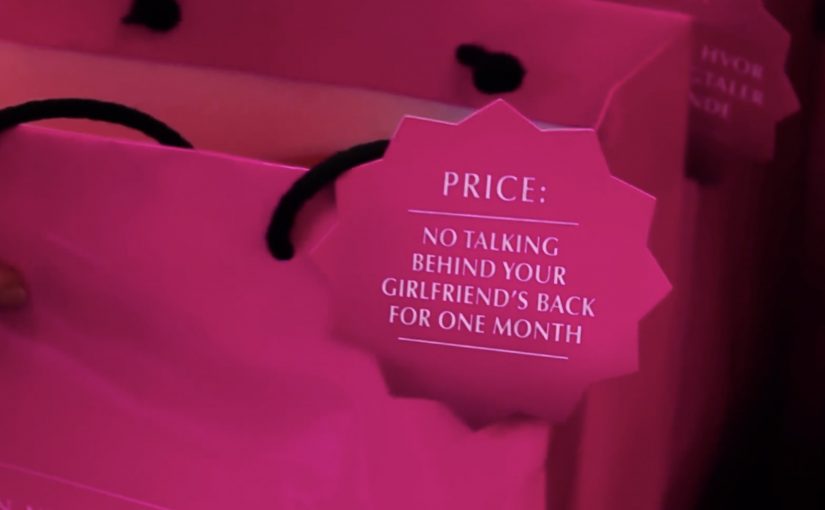
For one day only, the pop-up is described as the first chocolate shop where people cannot pay with cash or card. Instead, the store provides iPads where people log in to Facebook and post a promise of a generous deed to a friend or loved one.

When generosity becomes the price tag

The twist is simple. Chocolate is not discounted. It is “priced” in actions. Your payment is a public commitment, not a transaction, and that changes how the brand message travels.

How the mechanic works

Here, the mechanic is the rule set that turns each chocolate into a reward for a promised deed. Each product comes with a defined generous deed. At checkout you choose the deed, sign in on an in-store iPad, and publish the promise to the person you are doing it for. The store does not accept money. It accepts a visible commitment that a real person can later hold you to.

In FMCG and gifting brands, turning a private intention into a light public commitment often spreads faster than any discount ever could.

Why it lands

This works because it removes the usual friction of “sharing”. People do not share an ad. They share a promise addressed to someone they care about. That makes the post feel personal, not promotional, and it gives the brand a role as the trigger for a positive moment. The one-day constraint also adds urgency. If you want in, you have to show up and do the thing.

Extractable takeaway: If you can make the customer’s “payment” a social commitment with a clear recipient, the message travels as a relationship act, not as brand content.

What the brand is really buying

The real question is whether your brand can make the act of purchase double as a socially visible promise people want to complete.

The store trades short-term revenue for reach and association. The earned effect is not just “people talked about a pop-up”. It is that the brand gets attached to a stream of personal posts that already have attention and emotional context. That is a much stronger distribution layer than asking people to like a page or share a video.

What FMCG and gifting brands can steal

  • Use a non-monetary currency that matches your brand. Here the currency is generosity, not points.
  • Make the action specific. Vague kindness does not travel. Concrete deeds do.
  • Design for a real recipient. A named person increases follow-through and keeps it human.
  • Keep the steps brutally simple. Choice, login, post. No extra hoops.
  • Limit the window. Scarcity turns a nice idea into an appointment.

A few fast answers before you act

What makes this “social commerce” rather than a normal pop-up?

The checkout is a social action. The “payment” is a posted commitment to another person, which creates distribution inside an existing network.

Why is the Facebook post essential to the idea?

It turns intent into accountability. The promise is visible to the recipient and friends, which increases the chance of follow-through and gives the campaign its reach.

What is the main risk with a “good deeds as currency” mechanic?

If it feels forced or performative, people will reject it. The deeds must feel genuinely generous and culturally natural for the audience.

How would you adapt this if you cannot use Facebook or logins?

Keep the structure and change the channel. The key is a lightweight commitment addressed to a real person, made in a way that is easy to share and later remember.

What should you measure beyond views?

Track footfall during the activation, earned mentions, the volume of public pledges, and any lift in brand association with generosity in post-campaign tracking.