
Go Vote: Or You Let Others Decide

An integrated experience-based campaign was created by DDB Budapest on behalf of the Hungarian Democracy to support the 2010 Hungarian elections.

Instead of relying only on posters and TV spots, the idea is built around lived moments that make one point unavoidable: if you do not vote, you still get an outcome. You just did not choose it.

When “apathy” becomes something you can feel

The line “go vote, or you let others decide for you” is easy to agree with in theory, and easy to ignore in practice. The creative move here is to stop arguing and start staging: put people into situations where “someone else decides” is no longer an abstract civic warning, but an immediate, personal experience.

The mechanic: make the consequence tangible

The campaign uses real-world experiences as the delivery system. The experience is the message: you lose control when you opt out. That emotional truth lands faster than any rational explanation of why voting matters.

In public-interest communication, experience-led campaigns often work best when they translate a distant consequence into a simple, physical moment.

Why it lands: it reframes voting as self-protection

Many turnout messages talk about duty. This approach talks about ownership. The real question is not whether people agree that voting matters, but whether the campaign makes the cost of opting out feel personal enough to trigger action. The stronger strategy is to make non-participation feel immediate, not just irresponsible. It positions voting less as a moral obligation, and more as the minimum action required to keep your right to choose.

Extractable takeaway: If you need mass behavior change, do not just explain the benefit. Stage a short, memorable moment that lets people experience the cost of inaction. When the cost feels personal, the call-to-action becomes easier to act on.

The intent: turnout through a stronger trigger than guilt

The business of any election participation push is motivation. This work is a reminder that motivation does not need to be inspirational. It can be visceral. A compact experience can achieve what a long message cannot: it creates a story people retell, and that story carries the prompt forward.

What to steal for your own participation campaign

  • Start with a single, sharp sentence: one idea, no debate, no footnotes.
  • Translate the idea into an experience: let people feel the message before you ask them to act.
  • Keep it non-partisan by design: focus on participation, not outcomes or parties.
  • Make it retellable: if someone can describe it in one line, it will travel further.
  • Reduce the distance to action: the closer the experience sits to the voting moment, the stronger the conversion.

A few fast answers before you act

What kind of campaign is this?

It is a get-out-the-vote public awareness campaign that uses real-world experiences to dramatize the idea that non-participation still produces outcomes.

Why use experiences instead of just ads?

Because experiences create emotion, memory, and conversation quickly. They can make an abstract civic point feel immediate and personal.

How do you keep a turnout campaign non-partisan?

Keep the message focused on participation, avoid references to parties or policies, and design the experience around the universal right to choose.

What should you measure for effectiveness?

Reach and recall are basics. More useful are participation rates in the experience, social sharing, earned media pickup, and any localized uplift signals available near the activation footprint.

When can this approach backfire?

If the experience feels humiliating, unsafe, or coercive, it can trigger resentment. The best versions create urgency without disrespecting the audience.
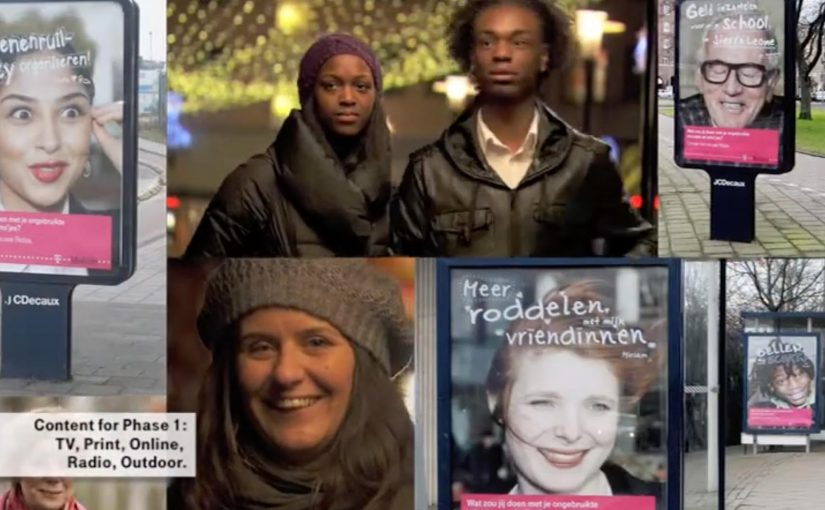
T-Mobile Netherlands: The Rematch

A tiny final that deserved a real crowd

The strongest brand stories make connectivity feel human: it is not about coverage maps, it is about helping people reconnect what mattered.

Martijn, a 39-year-old carpenter, attempted to bring back his football team from 1997 for a rematch of a 13-year-old championship final that was then witnessed by a grand crowd of three people.

This time, he wanted his entire village to be there to see him win. A dream enabled by T-Mobile Netherlands.

How the rematch premise worked

The mechanism was classic. Take an unfinished personal story, add a clear goal, then remove the practical barriers that made it impossible before.

Reuniting a team after 13 years is not just a scheduling challenge. It is a social one. Finding people, persuading them, coordinating them, and turning “we should” into “we did.” T-Mobile positioned itself as the enabler that made that coordination real.

By “coordination”, I mean the practical work of finding the right people, aligning dates, and making commitments stick.

That removal of friction is why the payoff feels earned: a real crowd becomes proof the reconnection happened.

In European consumer telcos, stories like this work when connectivity shows up as real-world coordination, not as a network claim.

Why the story lands emotionally

The psychological pull is simple: redemption.

Extractable takeaway: If you want emotion without melodrama, make recognition visible: reunions, witnesses, and shared moments people can point to.

The original match mattered deeply to the people who lived it, but it happened almost unnoticed. Three spectators is not a crowd. It is practically private. The rematch reframed the same sporting moment as something the whole village could witness, validate, and share.

It also taps into identity. A village team is not just sport. It is belonging. Bringing everyone back together turns an individual need into a community event.

The business intent behind enabling the dream

T-Mobile was not selling minutes or data here.

The real question is how a telco earns emotional ownership of reconnection without making itself the hero.

Here, “reconnection” means turning a desire to meet again into a plan people can actually execute.

This kind of brand film works best when the brand enables and stays out of the spotlight.

The intent was to associate the brand with making real-life reconnection possible. Helping people organize, mobilize, and show up. In a category where offers are easy to copy, emotional ownership is the differentiator.

If your category is copyable, the durable edge is removing friction around moments people already care about.

What to steal for your next brand film

  • Start with a concrete, human objective. A rematch with a real stake beats any abstract message.
  • Make the “before” painfully small. Three spectators sets up a powerful contrast for the payoff.
  • Let the brand enable, not star. The hero is the person. The brand removes friction.
  • Scale the moment socially. A private memory becomes a public event. That is where shareability comes from.

A few fast answers before you act

What is T-Mobile Netherlands’ The Rematch about?

A 39-year-old carpenter reunites his 1997 football team for a rematch of a 13-year-old championship final that only three people watched at the time.

What is the core mechanism of the idea?

Identify an unfinished personal story, then use the brand to remove coordination barriers so the dream can happen at scale.

Why does it resonate with viewers?

It is a redemption story with community payoff. The same moment gets the crowd and recognition it never had.

What business goal does this serve for a telco?

Owning the emotional territory of reconnection and coordination, rather than competing only on interchangeable plans and pricing.

What is the main transferable takeaway?

Make the brand the enabler of a human goal, and build the narrative around contrast: what it was then versus what it becomes now.

Nike: Music Shoes

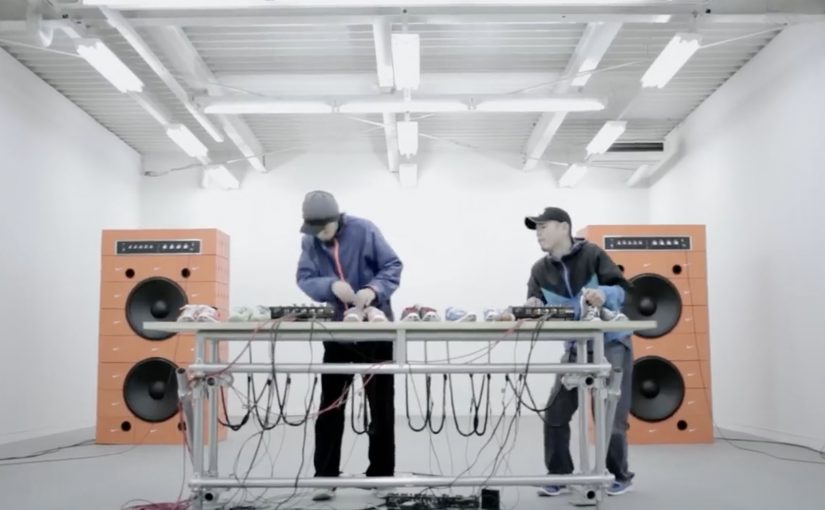
Shoes as we know it are never going to be the same again. Nike has just come up with the first of its kind music shoes!

Here is a short video showing how the shoes were made…

This is the final Nike Music Shoes ad…

Why this idea feels like a shift

The shoes are not styled as fashion first. They are staged as an instrument. They are also staged as an interface. Here, “interface” means the shoe becomes a control surface that converts movement into sound. That reframing matters because it turns product into performance. Because the movement-to-sound mapping is immediate, the audience can grasp the idea without extra explanation. In global consumer marketing, proof-led product storytelling like this tends to travel further than style-led messaging. You do not watch someone wear them. You watch someone play them.

Extractable takeaway: When you introduce a new interaction, show the input and output in the same moment, so belief is earned through observable cause and effect, not claims.

  • Product becomes interface. Movement is translated into sound, which makes the shoe feel “alive”.
  • Proof in the making. The build film adds credibility and curiosity before the final creative payoff.
  • Shareable demonstration. People want to show others because the concept is easiest to understand when you see it.

What to learn from the two-video structure

Pairing a “how it was made” film with the final ad is a smart sequencing move. First you earn belief. Then you deliver the spectacle. In innovation storytelling, that order often performs better than going straight to the hero spot. The real question is whether your innovation needs a proof chapter before you ask people to share it. For novel product behaviors, lead with proof, then pay off with spectacle.

  • Earn belief first. Let the making-of do the minimum explanation needed for “this could be real”.
  • Then stage the performance. Use the final ad as the payoff where the product is “played”, not described.
  • Keep it demo-able. If a viewer cannot retell it after one watch, it will not travel.

A few fast answers before you act

What are Nike “Music Shoes”?

They are a concept where the shoe is treated like a musical instrument, translating movement into sound to create music through performance.

Why include a making-of film as well as the final ad?

The build film establishes credibility and explains just enough to make the final ad feel possible, not magical.

What is the core creative pattern here?

Turn a product into an interface, then let a live-style demonstration carry the message without heavy explanation.

How can brands reuse this idea without copying it?

Identify one product behavior you can translate into a new medium, then show both the “proof” and the “performance” as two linked chapters.