

Hi-Tec: Liquid Mountaineering

Liquid Mountaineering is a “new sport” attempting to achieve what man has tried to do for centuries: walk on water. To be more precise: run on water.

In the video, the guys claim that with the right water-repellent equipment one can run across bodies of water, like a stone skimming the surface. It is staged as a breakthrough you could learn with practice and the right kit.

How the trick is framed

The mechanism is classic pseudo-documentary: a new “discipline”, a simple sounding explanation, and footage that feels handheld enough to be believable. By pseudo-documentary, I mean it borrows documentary cues so fiction feels observed rather than advertised. The promise is deliberately literal. Not “waterproof”. “Run on water”.

In consumer sportswear marketing, a product story spreads faster when it is packaged as a spectator-proof (easy to describe in one line) “did you see that?” moment rather than a feature list.

The real question is whether viewers still associate the brand with repellency after they learn the stunt was staged.

Why it lands

It uses an impossible goal to make a real benefit memorable. You might not remember the technical claim, but you will remember the visual metaphor for repellency.

Extractable takeaway: Viral product films travel when they dramatize a benefit as an “impossible” demonstration, then let audience debate do the media buying. The trick is to make the metaphor sticky even after the reveal.

It invites disbelief and debate. The campaign gains reach because viewers argue about whether it could be real. That conversation is the distribution.

It turns product performance into myth. Hydrophobic gear becomes a superpower. The exaggeration is the hook. The brand benefit is the association with extreme performance.

Borrowable moves

  • Lead with a single outrageous claim. One sharp premise beats three sensible points.
  • Wrap the story in familiar documentary cues. “New sport” framing makes viewers do the work of believing.
  • Make the benefit visual. If the viewer can describe it instantly, they will share it.
  • Plan the reveal timing. If it is a hoax, decide when you want the truth to surface and what you want people to remember afterward.

This definitely makes a really cool viral video promoting a waterproof line of clothing, shoes and accessories that are supposedly so water repellent that you can literally run on water with them. After some training of course.

PS: The video is fake. It is a viral ad for Hi-Tec water-resistant running shoes.


A few fast answers before you act

What is “Liquid Mountaineering”?

It is presented as a new extreme sport where people can run on water with special water-repellent gear.

Is the video real?

No. The clip is a staged viral advertisement, as stated in the post’s PS.

Why make it a hoax instead of a normal product demo?

Because the “is this even possible?” question creates conversation and sharing. The debate becomes the distribution channel.

What is the product message underneath the stunt?

That the brand’s footwear and gear are highly water resistant. The film uses an exaggerated metaphor to make repellency feel dramatic.

What is the main risk of this approach?

If audiences feel deceived, the emotional swing can flip from delight to annoyance. The campaign has to make the reveal feel playful, not manipulative.
McDonald’s: Sleeping Baby

Exhausted new fathers count on McDonald’s and they will appreciate this nicely crafted McDonald’s spot by TBWA\Chiat\Day.

How the spot works

The real question is how you make the brand feel helpful in a fragile moment, without turning the scene into an ad.

The mechanism is a single, quiet objective. Keep the baby asleep. Every beat protects that constraint, which is why the brand can show up as the solution without needing to explain itself. This is strong work because it keeps the human tension in charge and makes the brand the enabler, not the headline. By “disciplined” execution, I mean no extra jokes, no explaining, and no sudden volume spikes that break the reality of the moment.

In mass-market consumer categories, small “life moment” stories like this can make a brand feel dependable without shouting.

Why this spot lands

The premise is instantly recognizable, and the execution stays disciplined. It leans on a real-life tension. Keep the baby asleep. Get what you need. Do not make a sound. That restraint is exactly what makes the humor feel earned instead of forced.

Extractable takeaway: When the audience already understands the tension, your job is to protect it. Hold back the message, and the brand benefit will feel discovered, not delivered.

  • Relatable truth first. The situation does the storytelling heavy lifting.
  • Craft over noise. The pacing and detail make the moment feel real.
  • Brand as helpful, not loud. McDonald’s shows up as the dependable solution in a small life moment.

What to take from it

If you can anchor the story in a lived-in human moment, you do not need to over-explain the product role. The viewer connects the dots, and the brand benefit feels natural rather than “sold”.

  • Pick one objective. Build every beat around a single constraint your audience instantly feels.
  • Let the brand enable. Show the brand solving the moment, not narrating its value.
  • Use restraint deliberately. Less copy and fewer “extra” jokes can increase believability and replay value.

A few fast answers before you act

What is the “McDonald’s: Sleeping Baby” spot?

It is a McDonald’s commercial credited to TBWA\Chiat\Day, built around the reality of exhausted fathers and the tension of not waking a sleeping baby.

Why is it effective advertising?

It starts from a universal situation and keeps the execution restrained, so the humor feels authentic and the brand role feels earned.

What is the transferable lesson?

Find one human truth your audience instantly recognizes, then let craft and timing deliver the payoff instead of relying on heavy messaging.

How does the brand show up without being intrusive?

By acting as the reliable enabler of a small win in the viewer’s day, rather than forcing a big claim or a loud punchline.

Who created the spot?

It is credited to TBWA\Chiat\Day.

Starbucks: Pledge

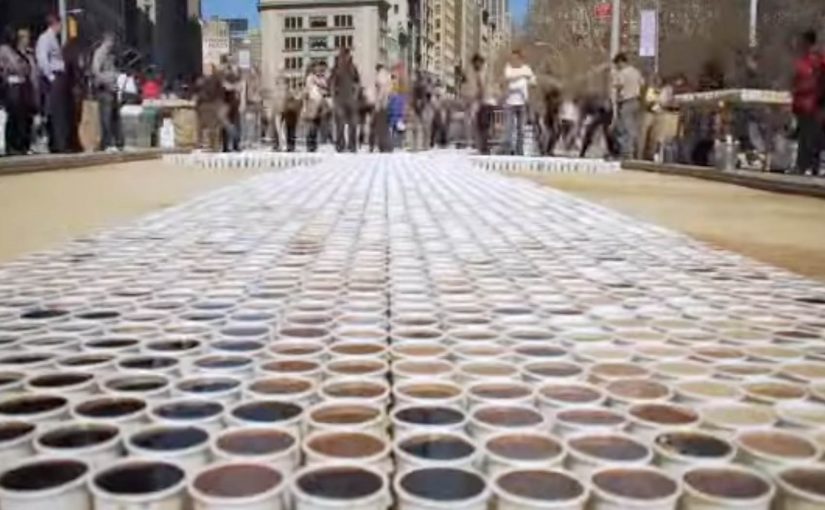
One person can save trees, together we can save forests! For the good of the planet, Starbucks encouraged everyone to switch from paper cups to reusable travel mugs and get free brewed coffee. So on April 15th thousands of New Yorkers made the switch…

Why this worked as a real-world nudge

The execution is straightforward. Bring a reusable travel mug. Get free brewed coffee. That simple exchange removes excuses and turns a “good intention” into an immediate, rewarding action. By a “nudge” here, I mean the campaign changes the choice context so the desired action is the easiest option in the moment. In a small habit switch like this, an incentive-led swap beats awareness messaging. The real question is whether you are designing behavior change as a one-step value exchange, or as a message people can ignore.

Extractable takeaway: If you want a repeatable habit, make the first repetition feel like a win, not a sacrifice.

  • Clear incentive. The reward is easy to understand and feels fair.
  • Low friction. The behavior change is small, and the benefit is instant.
  • Social proof at scale. “Thousands of New Yorkers” makes the switch feel normal, not niche.

In city-scale consumer campaigns, the fastest way to shift a default is to pair a tiny effort with an immediate payoff.

What to take from it

If you want people to adopt a repeatable habit, design the first step to be obvious and satisfying. The goal is not to lecture. The goal is to make the better choice feel easier in the moment it matters.

  • Start with an obvious first step. Make the initial action easy to understand and satisfying to complete.
  • Turn values into an exchange. Convert “good intentions” into a clear trade that removes excuses at the point of choice.
  • Let participation show. Visible uptake helps the new behavior feel normal instead of niche.

A few fast answers before you act

What did Starbucks ask people to do?

Switch from paper cups to reusable travel mugs, with free brewed coffee used as the incentive to prompt the change.

Why does a free coffee mechanic help?

It turns sustainability into an immediate value exchange, which increases participation and makes the first behavior change feel rewarding.

What is the core behavior-change pattern here?

Remove friction, add a clear reward, and make participation visible so people feel part of something larger than themselves.

How does this become more than a one-day stunt?

By making the first switch easy and positive, the campaign increases the chance that the reusable mug becomes the default habit afterwards.