
Pepsi: Oh Africa Football Superstars

Pepsi: Oh Africa Football Superstars

Football stars set to Akon’s “Oh Africa”

A Pepsi ad featuring Akon’s “Oh Africa” and football stars like Henry, Messi, Drogba, Arshavin, Lampard and Kaká.

How the spot is built: soundtrack plus star density

The mechanism is pure scale. A single anthem-like track sets the emotional tempo, then a rapid parade of elite players does the rest. That star density, meaning how quickly recognisable names appear on screen, plus the track acting as an audio spine, the one piece of music carrying the whole film, makes it feel bigger than a product message because the film is structured like a football event, not a traditional brand pitch.

In global FMCG sponsorship marketing, music and star power are used as compression tools to deliver tournament-level energy in seconds.

Why it lands: it turns a commercial into a moment

This works because the viewer already understands the code. Big match atmosphere, heroic framing, quick edits, and a track that signals “anthem”. Because the anthem-like track sets a shared emotional frame and the rapid star parade signals “event”, the brand does not have to over-explain anything and the audience fills in the meaning.

Extractable takeaway: When you borrow the codes of a real event, one clear audio spine plus fast recognisability can make a sponsorship film feel like culture first and branding second.

What Pepsi is really buying with “Oh Africa”

This is about cultural association, not product features. The “Oh Africa” release is also positioned as more than entertainment, with proceeds linked to helping underprivileged African youth via Akon’s Konfidence Foundation. That adds purpose framing to what could otherwise be a straight celebrity-sponsorship film.

The real question is whether you are sponsoring the sport, or sponsoring the feeling of being part of the sport.

Steal this structure for sponsorship-led spots

  • Use one strong audio spine. A recognisable track can carry mood faster than copy.
  • Front-load recognisable faces. Star density buys attention when the viewer is scrolling or channel-hopping.
  • Make the brand platform legible. If there is a “bigger than the ad” idea, thread it through the film rather than adding it at the end.
  • Keep the message simple. Sponsorship films win when they feel like culture first, brand second.

A few fast answers before you act

What is this Pepsi ad in one sentence?

A football-superstar Pepsi spot set to Akon’s “Oh Africa”, designed to feel like a World Cup-scale cultural moment rather than a standard commercial.

Which stars are featured?

The legacy post calls out Henry, Messi, Drogba, Arshavin, Lampard and Kaká as featured players.

What is the core mechanism that makes it work?

Star density plus a strong audio spine. Recognisable faces arrive fast, and the track carries mood without needing heavy explanation.

What sponsorship job is the film trying to do?

Transfer event energy to the brand by making the work feel like culture first and branding second, so the sponsorship reads as “belonging”.

What is the most transferable takeaway?

If you are building a sponsorship-led spot, keep the message simple, front-load recognisability, and use one cohesive audio-visual spine to carry the moment.
13th Street: Last Call Interactive Horror

13th Street: Last Call Interactive Horror

Last year Lacta Chocolates came up with a web-based interactive love story called Love at first site. Now Jung von Matt and Film Deluxe take the same “viewer participation” impulse into a darker genre with an interactive horror experience designed for cinemas. Here, viewer participation means the audience can influence what happens on screen instead of only reacting to it.

The movie is called Last Call by 13th Street, and it is billed as the first interactive horror movie in the world.

How the film turns a screening into a live conversation

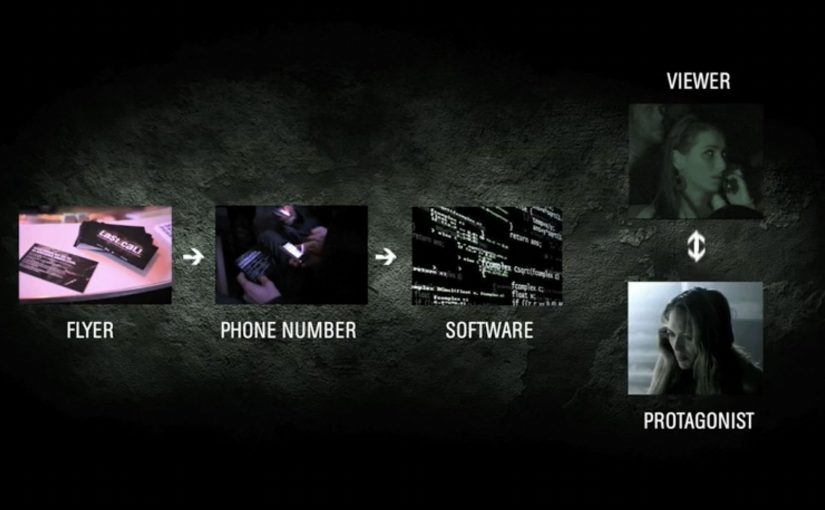
The core mechanic is simple and high-stakes. The audience can communicate with the protagonist through specially developed speech recognition that turns one participant’s answers, delivered via mobile phone, into on-screen instructions.

Instead of passively watching a character make bad decisions, one viewer gets pulled into the story and has to direct what happens next, under pressure, in front of a room full of people.

In European entertainment marketing, the strongest channel ideas are the ones that turn passive viewing into a shared physical experience.

Why it lands: it converts fear into responsibility

Horror is already interactive in your head. You are constantly thinking “don’t go in there” or “run”. Last Call makes that internal commentary explicit, then gives the viewer control at exactly the moment when tension is highest. That works because it turns private fear into public responsibility, which intensifies tension instead of interrupting it.

Extractable takeaway: If you want interactivity to feel meaningful, make the choice time-critical and socially visible. When a whole room watches one person decide, even simple branching choices feel heavier.

The intent: make a channel brand feel like an event

This is not interactivity for its own sake. It is a positioning play. The real question is whether the interaction makes 13th Street feel like the only place this kind of horror experience could happen.

The phone call is the hook, but the real product is the shared story people retell afterwards: “someone in our screening got the call”.

What to steal for your own interactive storytelling

  • Choose one decisive moment: interactivity works best when it happens at a peak, not throughout.
  • Keep the command vocabulary tight: yes or no, left or right, stay or flee. Clarity beats cleverness.
  • Make the interaction legible to spectators: the audience should understand what the caller chose without needing explanation.
  • Design for group emotion: the collective tension and reaction is part of the value.
  • Build the “retellable” sentence: “the character called an audience member” is stronger than any tagline.

A few fast answers before you act

What makes Last Call “interactive”?

A participant receives a mobile phone call and speaks choices that are translated via speech recognition into commands, which trigger different follow-up scenes.

Why use a phone call instead of a web interface?

A phone call feels personal and urgent, which matches horror. It also keeps the participant’s hands free and the interaction fast enough for a live screening.

Is this a real branching film or a gimmick?

It works like a branching structure with pre-produced scenes, selected based on a small set of recognized commands. The novelty is the live calling mechanic in a cinema context.

What is the biggest risk when copying this format?

Latency and ambiguity. If recognition is slow or choices are unclear, tension collapses. The interaction has to feel instantaneous and unmissable.

What is the transferable principle beyond horror?

Put the audience in a single, decisive role at a high-emotion peak. One clear decision, delivered fast, can create a stronger memory than many shallow interactions.

Tostitos: And Then There Was Salsa

Tostitos: And Then There Was Salsa

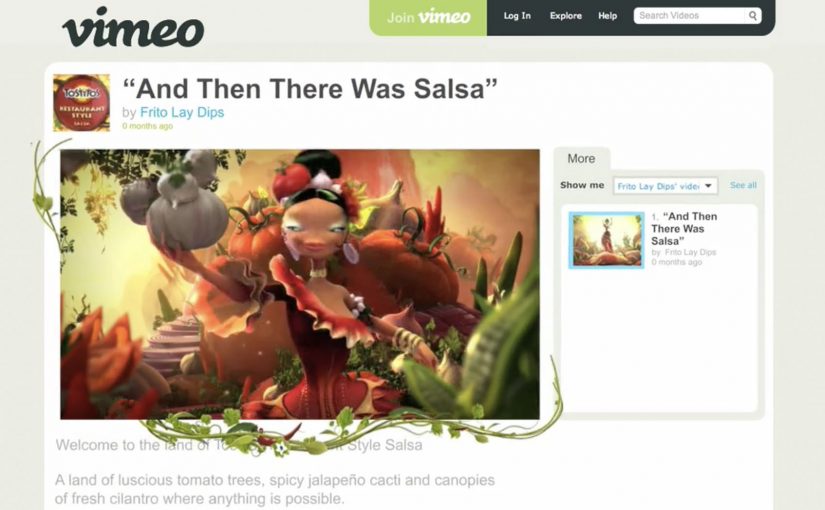
Frito-Lay teamed up with online video sharing site Vimeo to create a new advertising campaign for their Tostitos Salsa. The video began with some beautiful CG which then quickly swallowed the viewer’s browser to become a full-screen experience.

When the player becomes the canvas

The execution starts like a normal hosted film. Then the interface itself becomes part of the performance, as the visuals expand beyond the frame and turn the browser window into the stage.

The takeover mechanic in plain terms

The mechanism is a deliberate break of expectation. Here, the takeover mechanic means the film expands beyond the player so the browser window itself feels absorbed into the ad. The film uses high-polish CG to earn trust, then escalates into a page takeover that makes the viewer feel like they have crossed a boundary from “watching” into “being inside” the world of the spot.

In digital brand experiences, fullscreen takeovers work when the format shift is the message, not just a louder container for the same footage.

Why this lands

It delivers a physical sensation in a purely digital space. That moment of “wait, my browser is gone” creates surprise and attention, and it also flatters the viewer by treating the screen as a cinematic environment rather than a box with controls.

Extractable takeaway: If you want immersion, do not only add detail inside the frame. Change the frame itself in a way that reinforces the story you are telling.

What Frito-Lay is buying with the Vimeo partnership

The intent is to make a salsa film feel like an event. A takeover turns a standard online view into a shareable “you have to see this” moment, and it associates the product with craft, spectacle, and a bit of controlled chaos.

The real question is how to make a salsa ad feel bigger than a pre-roll without losing the viewer in empty spectacle.

What to steal for your next immersive video

  • Earn attention first, then escalate. Start simple, then make the environment change once the viewer is already hooked.
  • Make the format shift meaningful. The jump to full-screen should feel like part of the narrative, not a gimmick.
  • Design one unforgettable beat. The takeover moment is the memory. Everything else supports that single peak.
  • Pick the right host for the idea. A platform partnership matters most when the platform’s norms are part of the contrast you are exploiting.

A few fast answers before you act

What is “And Then There Was Salsa”?

It is a Tostitos Salsa online film distributed via a Vimeo partnership, designed to shift from a normal player view into a full-screen browser takeover for a more immersive effect.

What is the core mechanic that makes it feel different?

The experience changes the viewing container. It starts as a standard video, then expands beyond the player and takes over the browser window, so the interface becomes part of the execution.

Why does the Vimeo partnership matter here?

It matters because the idea depends on contrast. A familiar hosted-player environment makes the takeover feel more dramatic when the film suddenly breaks out of it.

When is a fullscreen takeover a smart choice?

When the goal is to create a memorable moment rather than maximize completion rates. It is especially useful when craft and spectacle are part of the brand story.

What should you be careful about with this pattern?

Overuse and irrelevance. If the takeover does not reinforce the idea, viewers experience it as interruption. Performance and compatibility also matter because the format depends on smooth playback.