Volvo HoloLens Showroom: Virtual Dealership

The showroom no longer needs cars

Car dealerships traditionally depend on physical inventory.

Space, logistics, and availability limit what customers can see, touch, and configure. That constraint disappears when Volvo introduces a showroom experience powered by Microsoft HoloLens.

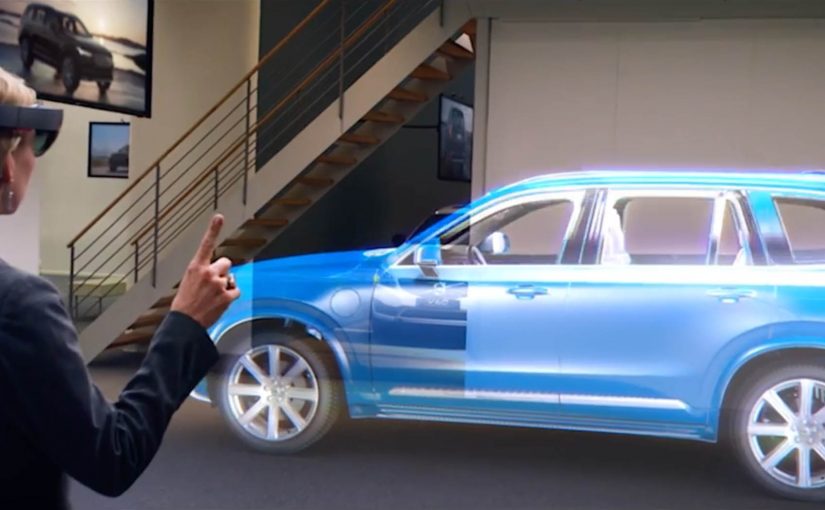
Instead of walking around parked cars, customers step into a virtual environment where full-size vehicles appear as holograms.

How the HoloLens showroom works

Using HoloLens, customers explore Volvo cars at real scale. This is mixed reality, digital objects anchored to the physical space around you.

They walk around the vehicle. Look inside. Inspect details. Colors, trims, and configurations change instantly. The experience feels physical, even though no car is present.

The showroom becomes software-driven. Inventory becomes optional.

In high-consideration retail, the job is helping people visualize options confidently before commitment, even when the product is not physically present.

Why this matters for automotive retail

This is not a gimmick. Virtual showrooms reduce the need for large floor space and allow dealerships to showcase the full portfolio, including models and options that are rarely stocked physically. Because customers can see the car at full scale and switch configurations instantly, they can compare options without relying on imagination, which makes commitment feel safer.

Extractable takeaway: If you can make options visible at real scale and changeable in seconds, you can sell preference, not availability, even when the product is not physically present.

For customers, the experience becomes calmer and more focused. There is less pressure. More exploration. Better understanding before committing.

Experience beats inventory

The deeper shift is about viewer control.

The real question is whether your showroom is designed for preference discovery or for stocking convenience.

Dealerships should treat mixed reality as a configuration layer that complements physical touchpoints, not as a tech demo.

Customers explore at their own pace. Sales staff guide rather than push. The conversation moves from availability to preference.

The dealership turns into a configuration studio, not a warehouse.

  • Make configuration the starting point. Let customers explore options first, then map the shortlist to what they can test and buy.
  • Keep staff in guide mode. Use people to frame trade-offs and confirm choices, not to gate access to information.
  • Design the experience like software. Treat the showroom as a repeatable configuration studio, not a one-off installation.

A few fast answers before you act

Is this replacing test drives?

No. A mixed reality showroom helps customers narrow configurations before a physical test drive.

What do customers actually do in the HoloLens showroom?

They walk around a life-size hologram, look inside, inspect details, and switch colors, trims, and configurations in real time.

What is the real business benefit?

Reduced reliance on physical inventory, clearer configuration conversations, and better use of showroom space.

Why does mixed reality fit automotive retail?

Cars are high-consideration purchases, so visualization can carry as much weight as specification.

What has to be true for this to feel real?

The hologram must stay aligned to the physical space, and configuration changes must respond instantly so customers trust what they are seeing.
360 Videos on Facebook

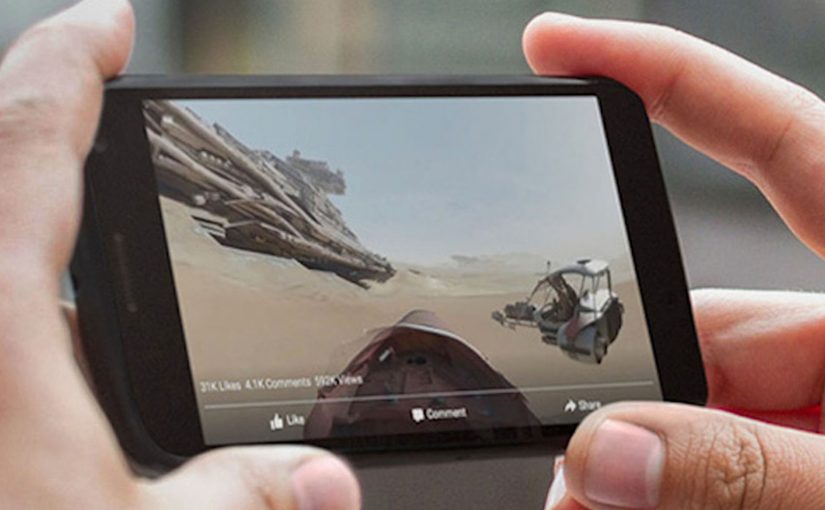
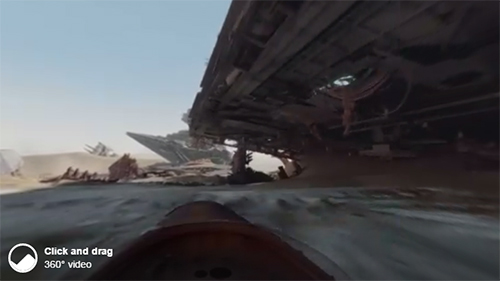
Disney drops you into the Star Wars universe. You can pan around the scene and explore the world in 360 degrees as part of the launch hype for The Force Awakens. It is one of the first big brand uses of Facebook’s new 360-degree video support.

Star Wars The Force Awakens 360 degree ad

(View the video directly on Facebook by clicking on the above image.)

Next, GoPro pushes the same format into action sports. A 360-degree surf film with Anthony Walsh and Matahi Drollet lets you experience the ride in a more immersive, head-turning way than a standard clip.

GoPro 360 degree ad

(View the video directly on Facebook by clicking on the above image.)

Facebook makes 360 video a native format

In September, Facebook launches 360-degree video support. That matters because it turns a niche format into a platform behaviour. Here, “platform behaviour” means a default interaction the feed makes effortless for viewers. Because the interface gives viewers control over where to look inside the post, the format can carry discovery without asking people to install anything new.

For global brands publishing inside feed-first social platforms, distribution mechanics shape the creative more than the other way around.

Mobile rollout is the unlock

Facebook announces that 360 video support is rolling out to mobile devices, so it is no longer limited to desktop viewing. That is the moment the format becomes mainstream.

Brands should plan 360 video as a mobile-first unit of viewer control, not a desktop novelty.

The real question is whether your story still works when the viewer can look anywhere, not only where your edit points them.

Why brands care. Distribution scale

Facebook’s own numbers underline why marketers pay attention. The platform cites more than 8 billion video views from 500 million users on a daily basis (as referenced in the Q3 2015 earnings context). If 360 video becomes part of that daily habit, it is a meaningful new canvas for storytelling and experience marketing.

Extractable takeaway: When a platform makes a format native and mobile-first, distribution scale, not production polish, becomes the main differentiator for whether your experiment turns into repeatable marketing.

Facebook supports creators with a 360 hub

To accelerate adoption, Facebook launches a dedicated 360 video microsite with resources like upload guidelines, common questions, and best practices.

Practical moves for Facebook 360 video

  • Design for discovery: Assume the viewer will look away from the “main” action, so build the story world to reward exploration.
  • Make mobile the default: Treat handheld viewing and quick replays as the baseline, not an adaptation.
  • Ship where the habit already lives: Prioritize platform-native distribution over bespoke experiences that require new installs.
  • Plan guidance for creators early: If your team is producing the format repeatedly, document capture and upload rules so it stays scalable.

A few fast answers before you act

What launches the 360 format on Facebook in this post?

Facebook adds native support for 360-degree video, making it publishable and viewable directly in the feed.

Which two examples headline the post?

Disney promoting Star Wars: The Force Awakens, and GoPro publishing a 360 surf video featuring Anthony Walsh and Matahi Drollet.

What changes when mobile support rolls out?

360 viewing is no longer limited to desktop, so the format becomes accessible in everyday mobile usage.

What scale stats are cited to show why this matters?

More than 8 billion video views from 500 million users on a daily basis, cited in the Q3 2015 earnings context.

Where does Facebook publish creator guidance?

Facebook points creators to a dedicated 360 video microsite with upload guidelines, common questions, and best practices.

JWT Brazil: Black Bar Donation

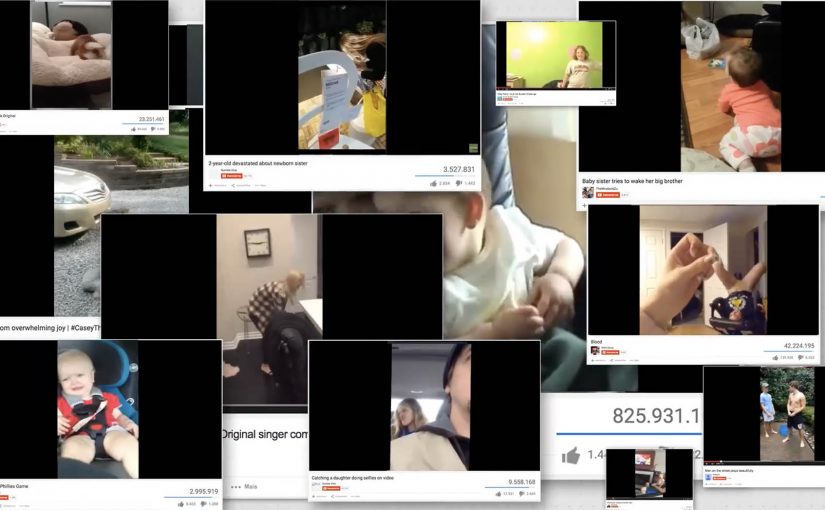
Videos that are recorded vertically and then posted online generally end up with black bars on either side. Lots of viewers find that wasted space annoying. So JWT Brazil came up with the “Black Bar Donation” campaign, which lets creators donate those bars to NGOs that need help promoting themselves.

On the campaign microsite, people select a vertical video to upload, tag it with the NGO of choice, and then publish it directly to their own channel with the NGO messaging living inside the black bars.

Turning a formatting mistake into donated media

The idea is neat because it starts from a real irritation. The bars are normally dead space. Here they become a donation surface that travels with the content, wherever the video gets shared or embedded. By “donation surface,” I mean a fixed, consistently visible part of the frame reserved for the NGO message. The “media spend” is created from a mistake people already make every day.

The mechanism: creator-led distribution with a cause payload

Traditional NGO awareness depends on buying reach or earning press. This flips the model. Creators supply the distribution. The campaign supplies the insert. Here, the “cause payload” is the NGO message container that sits in the bars and stays consistent across creator videos. NGOs receive a consistent message container that rides along with user-generated video. This is a stronger pattern than producing yet another standalone PSA, because it turns creator distribution into donated inventory.

The real question is whether your cause message can hitchhike on creator distribution instead of demanding attention on its own.

It also gives creators a low-effort way to feel helpful. Upload once, choose a cause, publish. No new platform to build an audience on. No complicated call to action.

In digital marketing where attention is scarce, the smartest cause campaigns repurpose existing media waste into useful inventory without asking audiences to change their habits.

Why the “black bars” frame is a strong creative device

The bars work because they are visually stable. They sit outside the main video action, so the NGO message does not compete with the creator’s content. At the same time, the contrast is impossible to miss because the bars are solid, empty shapes that viewers are already staring at.

Extractable takeaway: When you can transform a widely repeated user error into a benefit for someone else, you get scale through behaviour, not through budget.

A pattern for scale without media spend

  • Find a ubiquitous waste surface. Dead space, downtime, defaults, leftovers. Anything people already produce at scale.
  • Make contribution feel effortless. One clear action, one clear outcome. No learning curve.
  • Keep the creator’s content intact. Add value around it, not on top of it.
  • Design for portability. The message should travel with the asset as it gets re-shared.
  • Make the intent obvious. Viewers should instantly understand that the added space supports a cause.

A few fast answers before you act

What is “Black Bar Donation” in one sentence?

It is a campaign that repurposes the black side bars on vertical videos as donated ad space for NGOs, so the NGO message travels with the video when it is published and shared.

Why does this work better than a normal PSA video?

Because it piggybacks on content people already choose to watch. The NGO message becomes part of the viewing frame, not an interruption users try to skip.

What makes this campaign scalable?

The supply is user behaviour. As long as creators keep shooting vertical video and uploading it, the campaign has new “inventory” to convert into donated space.

What is the biggest risk with this model?

Quality control and brand safety. If the creator video is problematic, the NGO message can end up adjacent to content it would never choose intentionally.

How would you adapt this idea for other platforms or formats?

Look for other consistent “frame” areas that do not disrupt the core content. Then build a simple creator workflow that lets people attach a cause payload without editing tools.