
Coca-Cola: Rainbow Nation Rainbows

Coca-Cola: Rainbow Nation Rainbows

A rainbow you can actually chase across Johannesburg

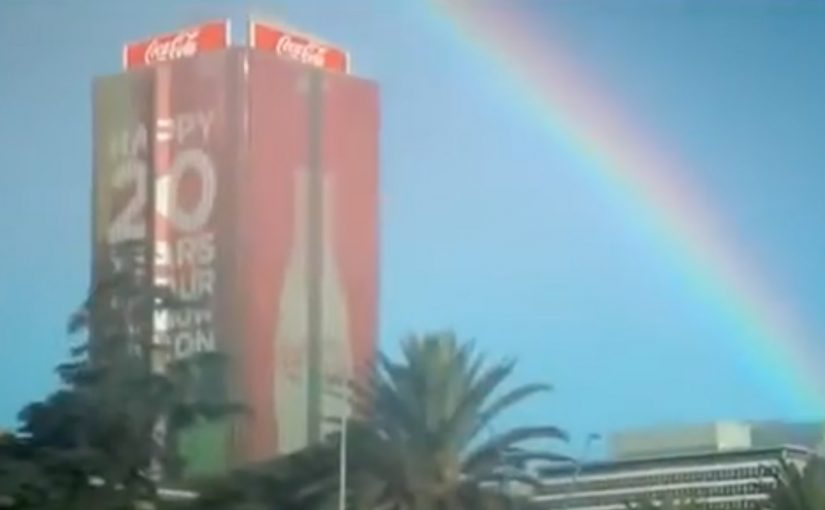
Twenty years ago, South Africa elected Nelson Mandela in the country’s first-ever democratic election. This led Archbishop Desmond Tutu to coin the phrase “The Rainbow Nation,” referring to the country’s diverse people.

Now to celebrate this 20th anniversary of democracy, Coca-Cola decided to literally create rainbows. Using sunlight, water, some fancy science and a little bit of magic, they made rainbows pop up all over Johannesburg. Some rainbows even reached the ground, for those who sought to discover where they ended.

The trick: make the symbol physical

This is not a graphic. It is a phenomenon placed into normal streets. And the moment the rainbow reaches the ground, the campaign stops being something you watch. It becomes something you can follow. This works best when the symbol becomes a physical invitation, not a slogan.

The real question is whether people can choose their way into the meaning, instead of being told what it means.

Why discovery beats declaration

You are not told what to feel. You either stumble into it and smile. Or you choose to go looking for the end. That voluntary participation is what makes it feel like magic, not messaging.

Extractable takeaway: If you want participation, turn the message into a small quest people can opt into, not a statement they are asked to agree with.

In city-scale brand activations, the strongest participation comes from turning a familiar symbol into a discoverable experience people can physically encounter.

What it was really celebrating

Twenty years of democracy, expressed through a shared symbol, brought to life in the city.

Ideas worth borrowing

  • Turn an abstract story into something people can encounter in the real world.
  • Add a simple “seek and find” layer so curiosity becomes the call-to-action.
  • Keep the explanation light. Let the experience carry the meaning.

A few fast answers before you act

What did Coca-Cola do for “Rainbow Nation”?

They made rainbows appear across Johannesburg to celebrate twenty years of South African democracy, including rainbows that reached the ground.

Why is the phrase “Rainbow Nation” used?

Archbishop Desmond Tutu coined “The Rainbow Nation” to describe South Africa’s diverse people following the country’s democratic transition.

What was the viewer experience?

People encountered rainbows in public space, and some could be followed to the ground to discover where they ended.

What is the core creative mechanic?

Transforming a cultural symbol into a real-world phenomenon people can discover in the city.

How do you recreate this idea without a rainbow?

Pick a symbol your audience already recognizes, make it physically encounterable, and add a simple “seek and find” hook so people choose to participate.
Restaurant of the Future: AR Dining

Restaurant of the Future: AR Dining

The restaurant of the future is a technology experience

Restaurants of the future are no longer defined only by food, service, or ambiance.

They become technology-driven environments, where digital interfaces blend directly into the dining experience.

Smartglasses, augmented reality, gesture-based interfaces, customer face identification, avatars, and seamless wireless payments begin to coexist at the table.

The result is not a single gadget. It is a fully integrated experience.

When dining becomes augmented

In the restaurant of the future, the menu does not need to live on paper or even on a phone.

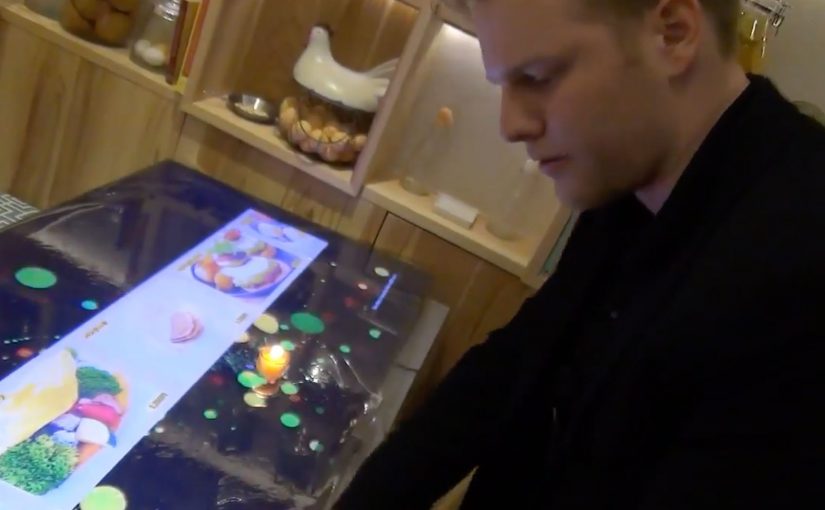
Information can appear in front of the guest through smartglasses or augmented displays. Dishes can be visualized before ordering. Nutritional details, origin stories, or preparation methods can surface on demand.

Gestures replace clicks. Presence replaces navigation.

The dining experience becomes interactive without feeling mechanical.

Identity replaces interaction

Face recognition and customer identification change how restaurants think about service.

Returning guests can be recognized instantly. Preferences, allergies, and past orders can be recalled automatically. Avatars and digital assistants can guide choices or explain dishes without interrupting human staff.

The restaurant adapts to the guest, not the other way around.

Payment disappears into the experience

Wireless payment technologies remove the most artificial moment in dining.

There is no need to ask for the bill. No waiting. No interruption.

Payment happens seamlessly as part of the experience, triggered by confirmation, gesture, or departure. Money moves, but attention stays on dining.

Mirai Resu. Japan’s restaurant of the future

To illustrate this vision, a short video from Mirai Resu in Japan shows what a fully integrated restaurant experience can look like.

Smartglasses, augmented visuals, gesture-based interaction, avatars, and invisible payment mechanisms come together into a single flow.

This is not a concept mock-up. It is a concrete glimpse into how dining, technology, and experience design merge.

In hospitality experience design, technology only “wins” when it fades into the flow and makes the human experience feel more effortless.

In experience-led hospitality brands, the winning AR layer is the one that keeps guests present while the service logic runs quietly in the background.

The real shift. Experience over interface

The most important takeaway is not the individual technologies. It is the shift away from explicit interfaces toward ambient interaction. By ambient interaction, I mean in-context cues and hands-free inputs that let guests act without hunting through screens. Restaurants should use this pattern to remove friction in ordering and paying, not to turn the table into a device demo. The real question is whether the tech can disappear enough that guests remember the meal, not the UI. Because the interaction happens in the moment and stays tied to the table, it keeps attention on dining, which is why it feels like hospitality rather than software.

Extractable takeaway: If an experience needs a screen to be understood, it is still an interface. The closer interaction stays to the real-world moment, the more it reads as service.

Steal this from AR dining

  • Prototype the full flow, not a feature. Order, identity, assistance, and payment should feel like one service journey.
  • Keep interaction in-context. Use gestures and overlays only when they reduce steps and keep guests present.
  • Make personalization explicit and optional. Recognition only lands when guests understand the trade and can opt out.

A few fast answers before you act

Is this about replacing staff with machines?

No. The value is removing friction so staff can focus more on hospitality and less on transactional steps.

Why does augmented reality matter in dining?

It can add information and interaction in-context, without pulling guests out of the moment or forcing phone-first behavior.

What does the Mirai Resu example actually demonstrate?

It demonstrates orchestration. Multiple technologies can be combined into one coherent service flow, rather than isolated gimmicks.

Where does “customer identification” fit in this vision?

It enables recognition on approach and service personalization, but it only works when guests understand the trade and feel in control.

What is the design principle to steal?

Design for experience continuity. Keep attention on dining, and make technology support the flow rather than interrupt it.

Giraffas: The Goal Screen

Giraffas: The Goal Screen

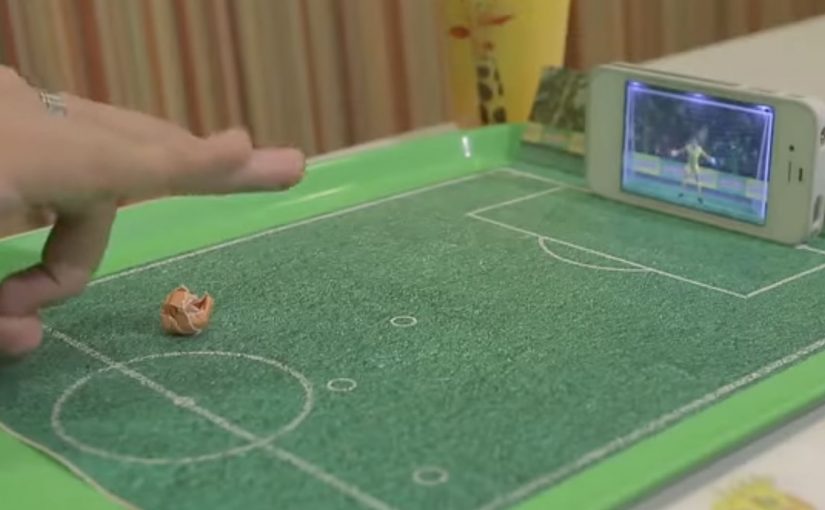
To capitalize on the lead up to the 2014 FIFA World Cup, Brazilian fast food chain Giraffas creates a mobile game that turns their tray papers into a virtual soccer field. To play, consumers rip the side of the paper tray, make a paper ball, and flick it into their mobile screens.

7 million tray papers are printed, and the game is made possible by using the smartphone camera to recognize the ball distance, the accelerometer to identify the trajectory of the kick, and the microphone to recognize the area of impact.

A game that bridges paper and screen

The mechanism is a simple physical ritual, meaning a repeatable action with objects already on the tray, that unlocks a digital experience. The tray liner provides the “pitch”. The paper ball provides the input. The phone turns sensors into a referee, translating distance, direction, and contact into gameplay.

That matters because the tray liner and paper ball remove setup friction, so the leap from noticing the idea to trying it stays almost instant.

In quick-service restaurants, the strongest interactive ideas add value during the waiting and eating moment, without requiring staff training or extra hardware at the counter.

The real question is how little effort a brand can ask of people before play feels easier than ignoring it.

Why it lands

The strongest part of the idea is not the World Cup tie-in. It is the packaging mechanic that makes play feel native to the meal. This works because it turns a disposable surface into a reason to play, and it makes participation feel immediate. It is not “download an app for later”. It is “play right now, with what you already have, while you are here”. The World Cup context supplies motivation, but the in-store simplicity supplies repeatability.

Extractable takeaway: When you want in-the-moment engagement, design a physical trigger that is already in the customer’s hands, then use the phone only as the translator. The fewer steps between curiosity and action, the more people actually try it.

What to borrow from this tray-to-screen mechanic

  • Use packaging as the interface. If your brand owns a surface (tray liners, cups, wrappers), it can become the entry point.
  • Make the first attempt effortless. Rip, roll, flick. Three verbs. No instructions wall required.
  • Exploit phone sensors, not novelty tech. Camera, accelerometer, and microphone are scalable because they are already everywhere.
  • Anchor to a cultural moment, but keep it evergreen. The event creates urgency, the mechanic creates habit.

A few fast answers before you act

What is “The Goal Screen” for Giraffas?

It is an in-store mobile game that turns Giraffas tray papers into a virtual soccer field, using a paper ball that customers flick into their phone screen.

Why does the paper tray matter to the experience?

The tray paper acts as the physical “pitch” and the trigger for play, making the game feel native to the restaurant moment.

How does the phone detect the kick?

The setup is described as using the camera for distance, the accelerometer for trajectory, and the microphone for impact area.

What is the marketing objective behind this kind of mechanic?

To make the in-store visit more entertaining and memorable, and to create a reason to interact with the brand during the meal.

What is the transferable lesson for other brands?

Turn a ubiquitous brand touchpoint into a play surface, then use the phone as a lightweight sensor hub that makes the interaction feel “magical” without added hardware.