
GOL Airlines: Mobile Check-in banner you fly

GOL Airlines: Mobile Check-in banner you fly

Here is a pretty innovative banner ad from AlmapBBDO in Brazil for GOL Airlines. The banner challenges you to imagine what it would be like to “fly” on your mobile phone.

You submit your mobile number into the banner. Seconds later you get a live call with flight instructions. At the same time the page transforms into a flying game controlled directly from your phone keypad.

You then fly a virtual plane across a major Brazilian travel site while destination deals appear underneath the route you choose. Flying is simple. Touch numbers to change direction and trigger special manoeuvres. The ad finishes by reminding you that flying is easier when you check in via your mobile phone.

In travel categories where products feel interchangeable, interactive creative wins when it turns a service benefit into a felt experience in seconds.

A banner that calls you back

The key move is not the game. It is the phone call. The call instantly makes the experience feel “live” and personal, and it bridges the banner and the handset into one connected moment. Once the call happens, the user is no longer passively viewing an ad. They are inside a two-device interaction.

The real question is whether your creative can make the service benefit happen inside the unit, rather than only claiming it.

This is a classic example of making the handset part of the unit. The mobile phone becomes the interface, which proves the check-in promise instead of describing it.

The mechanic: second-screen control without an app

Most second-screen ideas fail because they ask people to download something or switch contexts. This one uses what every phone already has. The keypad. In other words, the phone becomes a simple remote control for what happens on the page. That choice removes onboarding friction and makes the interaction feel surprisingly accessible for a banner unit.

It also creates a clean narrative arc. Number entered. Call received. Instructions delivered. Game begins. Deals appear. The brand claim lands as the closing line rather than the opening pitch.

In consumer travel marketing, where attention is scarce and booking friction is high, this kind of second-screen viewer control turns “convenience” into something you can feel.

Why the “flying game” format fits the job

The game is not meant to be deep. It is meant to create one sensation. Control. When you steer the plane with your own phone while destination deals appear under your route, the ad links that felt control to the check-in promise.

Extractable takeaway: If your benefit is “ease,” build a small interaction that gives the viewer control and a useful reward in the same moment. In a “message as mechanism” execution, the claim is delivered through the interaction itself, not a line of copy.

Steal this from GOL’s mobile check-in banner

  • Use a real-world channel as the trigger. A live call is stronger than a visual prompt because it changes the user’s state immediately.
  • Make the phone the interface. If you are selling a mobile service, let the mobile device do the work inside the experience.
  • Keep controls primitive and universal. Keypad inputs beat complex gestures when you need instant comprehension.
  • Reward the interaction with utility. Deals, destinations, availability, or next steps should appear as part of play, not after it.
  • End with the service tie-back. Let the experience earn the claim, then state it plainly.

A few fast answers before you act

What is the core idea of the GOL mobile-controlled banner?

You enter your phone number into a banner, receive a live call with “flight” instructions, and then control an on-page flying game using your phone keypad while travel deals appear as you fly.

Why does a phone call change the effectiveness of a banner ad?

It makes the experience feel immediate and real, and it creates a bridge from passive viewing to active participation without asking the user to install anything.

What category situations benefit most from this pattern?

Categories where the product is hard to differentiate visually and the benefit is “convenience” or “ease.” Airlines, ticketing, banking, utilities, and service platforms.

What is the biggest execution risk?

Operational friction. If the call is delayed, fails, or feels spammy, the experience collapses. Timing, consent clarity, and reliability are everything.

How would you modernise the mechanic without changing the concept?

Keep the phone as controller, but use a consent-forward trigger and fast connection method. For example, a one-tap call prompt or a verified in-browser handoff that still preserves the “live instructions” feeling.
KLM: Surprise

KLM: Surprise

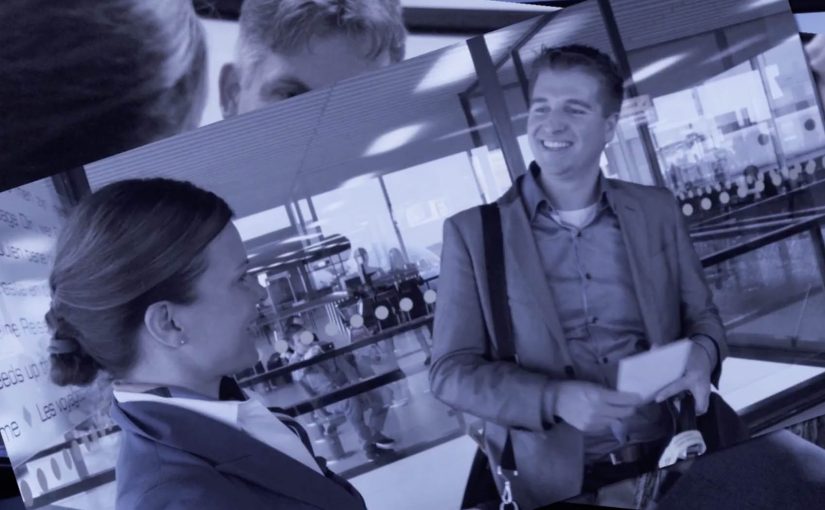
KLM launched a social media customer engagement idea that starts with a simple observation: waiting to board is boring, and “price messages” do not help anyone in that moment. So the brand looks for passengers who check in on Foursquare for flights or tweet about waiting to board a KLM service, then surprises a few of them to see how happiness spreads.

From check-in signal to gate-side surprise

The mechanic is straightforward. Someone publicly signals they are flying KLM or waiting at the gate. The team selects a passenger, scans what that person has publicly shared across social profiles, and chooses a small, relevant gift. Then they hand-deliver it at the airport gates.

In airline customer experience, social signals can be converted into small, high-salience service moments that strengthen loyalty without changing the core product.

Why this beats generic “engagement”

Many brands greet customers after a check-in, and that is already a best practice on location platforms. KLM Surprise goes further because it moves from acknowledgement to action. Because the team delivers the surprise at the gate while the passenger is waiting, the gesture lands as relief, not advertising. The passenger gets something real, in real time, in the same physical context where frustration often accumulates.

Extractable takeaway: When you can act on an intent signal in the same moment and place it was expressed, the interaction reads as service and earns talk value without needing a big reward.

The real question is whether public intent signals can trigger timely, human service moments that customers will retell.

Brands should treat public social signals as service triggers, not engagement bait.

The personal touch is the product

The gift is intentionally small. The point is that it is specific. That specificity tells the passenger the brand paid attention, not that the brand spent money. It also turns the interaction into a shareable story because it feels improbable. Someone noticed me. Someone acted on it. Someone found me.

What the brand is really testing

Beyond the feel-good moment, this functions as a live experiment in social CRM: can public signals help identify passengers worth surprising, and can a human-scale intervention create disproportionate talk value? Here, “social CRM” means using public social signals to choose and personalize service actions for known customers. The campaign also quietly reframes “social media” as a service channel, not only a marketing channel.

Stealable moves from KLM Surprise

  • Trigger on clear intent signals. Check-ins and “waiting to board” posts are unambiguous moments where help or delight is welcome.
  • Keep the benefit small but specific. Relevance beats value. A perfect small gift travels further than a generic large one.
  • Deliver in the same context as the pain. Airport gates are where waiting is felt. That is why the gesture matters.
  • Make it operationally repeatable. A lightweight process and a small budget lets the idea run more than once without becoming theatre.

A few fast answers before you act

What is KLM Surprise in one line?

A real-time airport activation where KLM monitors public check-ins and tweets, selects passengers, then delivers small personalized gifts at the gate.

Why does it work better than simply replying on social?

Because it converts acknowledgement into action in the physical world, creating a stronger memory and a more shareable story.

Is the gift the main value?

No. The main value is the signal of attention and timing: “you were noticed” and “it happened right now when waiting felt longest”.

What is the transferable lesson for other brands?

Use public intent signals to trigger small, context-relevant service moments that are easy to repeat and easy for customers to retell.

What needs to be true to run this more than once?

A lightweight workflow for monitoring signals, selecting passengers, choosing small relevant gifts, and delivering them at the gate, plus a modest budget and clear staffing ownership.

Renault Wind Roadster: 12 Second Strip

Renault Wind Roadster: 12 Second Strip

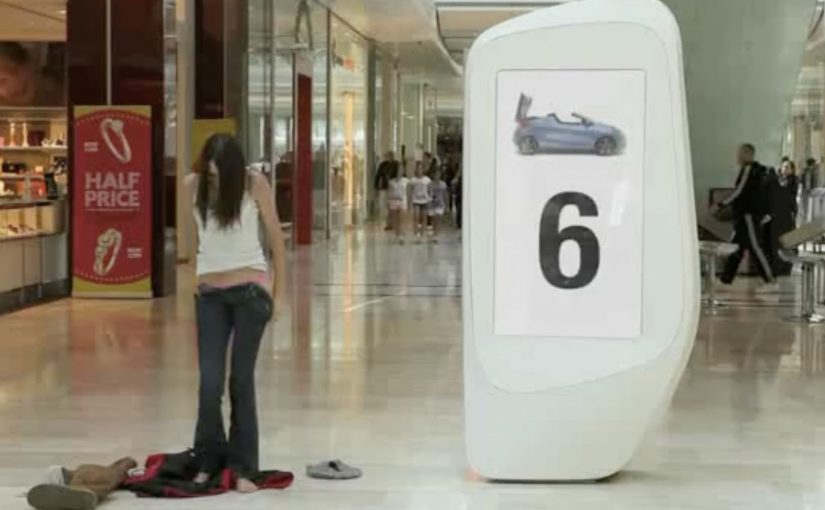
Renault UK and ad agency Publicis London set up “12 Second Strip”, a challenge that asks people to strip down to one layer of clothing in 12 seconds in the hope of winning the brand new Renault Wind Roadster.

The challenge involves people stripping down to one layer of clothing in just 12 seconds, which is the same amount of time it takes Renault’s new Wind Roadster to drop its top. To participate, people post their fun and tasteful strip videos on YouTube.

A product demo turned into a timed dare

The execution takes a single, memorable product fact. The roof moves in 12 seconds. Then it builds a challenge around that exact number, so the “proof” of the car becomes the rule of the game.

The mechanic: match the roof with your own 12 seconds

It is straightforward. Record a short clip where you race the clock to get down to one layer. Upload it. The format is repeatable, the constraint is clear, and the brand’s key claim stays embedded in every entry.

In UK automotive launches, time-based challenges work best when they translate a feature into something the audience can perform, share, and compare without needing a long explanation.

Why this lands as shareable UGC

The concept is light, competitive, and easy to understand at a glance. The “one layer” rule keeps it positioned as playful rather than explicit, while the 12-second constraint gives it a built-in hook that makes clips watchable and easy to forward.

Extractable takeaway: If you have one standout feature, convert it into a public constraint. Constraints create format. Format creates volume. Volume creates recall.

What Renault is really buying

The real question is whether a product claim can be turned into a repeatable public behavior without losing the brand point.

This is attention that carries product memory. Every participant repeats the roof story through action, and every viewer gets the same message without feeling like they are watching a conventional car ad.

What to steal for your next challenge-based campaign

  • Start with one sharp product truth. The best UGC formats begin with a single claim people can repeat.
  • Make the rule the message. If the rule changes, the brand meaning should not disappear.
  • Keep it simple to enter. Short clips, one constraint, one destination.
  • Write safety and tastefulness into the brief. Clear boundaries protect both the audience and the brand.

A few fast answers before you act

What is 12 Second Strip?

It is a Renault UK challenge that asks people to strip down to one layer of clothing in 12 seconds, mirroring the time it takes the Renault Wind Roadster’s roof to drop.

Why anchor the challenge to “12 seconds”?

Because it turns a feature into a format. The number becomes a rule that forces every entry to carry the same product story.

What makes this a strong user-generated format?

It is easy to understand, fast to produce, and inherently comparable. Viewers can instantly judge attempts and share the best ones.

How do you keep a provocative mechanic brand-safe?

Set a clear boundary inside the format. Here, the one-layer rule keeps the participation playful and recognizable without pushing it into something more explicit.

What is the main brand lesson here?

Make your most distinctive proof point performable. When the audience can reenact a claim, it travels further than a slogan.