
Shopping & Money: When Payment Disappears

Shopping is 24×7. It happens everywhere, not just in a store or on a website.

The intersection of smartphones, social media, online and offline shopping puts the consumer squarely in control. The shopping journey is no longer linear. Discovery can start in a social feed, comparison can happen on a phone while standing in front of a shelf, and purchase can happen without ever “going to checkout”.

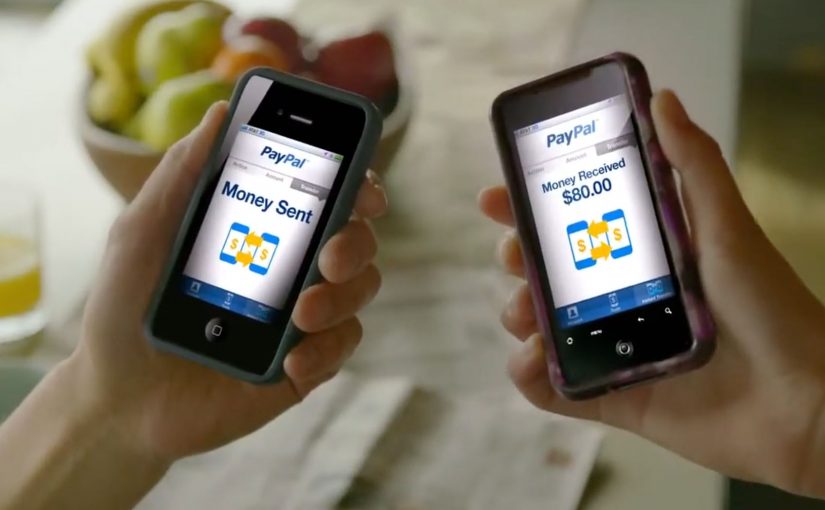
That shift is exactly what PayPal leans into with a hype video depicting what the future of shopping might look like. The story is not only about paying faster. It is about payment disappearing into the experience, powered by PayPal’s next generation payment platforms as they aim to re-imagine money. Here, “payment disappearing” means the transaction runs in the background while the shopper stays focused on choosing and receiving.

Payment is becoming invisible

We already see the building blocks all around us.

  • The phone becomes the remote control for shopping. Discovery, decision, and purchase collapse into one device.
  • Identity and trust become the key. Not the physical wallet.
  • The act of payment moves from a moment to a background process. It becomes an outcome of intent, not a step.

Because identity and trust signals can be verified upfront, the system can authorize transactions without forcing a visible checkout moment.

What changes is not only how you pay. It is when you pay. Or more precisely, whether you even notice it.

In European enterprises and global retail ecosystems, the first battles play out around who can make identity, trust, and permission work consistently across channels.

In commerce ecosystems, the player that owns identity, trust, and the payment layer can influence far more than checkout. It can shape the full shopping journey.

The consumer is in control. Brands and retailers adapt or fade

When consumers can shop anytime and anywhere, the competitive battlefield shifts.

Extractable takeaway: The winning journey makes payment an invisible outcome of intent, while trust and permission stay visible enough for the customer to understand and control.

  • Convenience becomes design. You win by removing friction, not by adding features.
  • Context beats channel. The store is not a place. It is a moment, a need, a trigger.
  • Attention becomes the scarce currency. If payment is effortless, the real fight is for preference, trust, and relevance.

In this model, money is not the centerpiece. The experience is.

What the PayPal vision is really selling
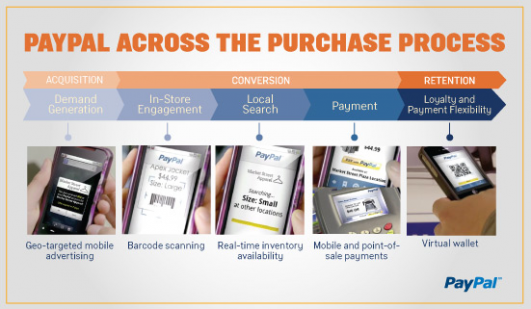
Commerce becomes ambient.

PayPal’s narrative previews a broader shift. Commerce becomes ambient, meaning buying and paying blend into everyday moments instead of a distinct checkout step.

The hype is the packaging. The strategic message underneath is that payment platforms want to sit one layer deeper in the journey. Not at the end, but throughout.

They aim to become the connective tissue between identity, intent, and transaction.

This is why the video matters. It is not a product demo. It is a stake in the ground. The future of shopping is continuous, and the future of money is embedded.

Design moves when payment disappears

If payment disappears, a few questions matter more than ever.

The real question is who sets the rules of identity and trust when payment fades into the background.

Brands and retailers should design journeys so payment is an invisible outcome of intent, while the consumer stays in control of trust and permission.

  • Relationship ownership. Decide who owns the consumer relationship when the transaction becomes frictionless.
  • Trust, privacy, permission. Define how trust, privacy, and permission evolve when identity becomes the wallet.
  • Loyalty without a moment. Re-think loyalty when the purchase moment is no longer a moment.

The brands and retailers who win treat checkout as a symptom. Not a destination.


A few fast answers before you act

What does “payment disappears” actually mean?

Payment becomes a background step. The shopper focuses on choosing and receiving, while the transaction happens with minimal explicit action.

Why is the smartphone central to this shift?

It combines identity, context, discovery, and transaction capability in one always-on device, collapsing steps that used to be separate.

What is the strategic risk for retailers?

If the payment layer owns identity and trust, it can also mediate choice. Retailers risk becoming interchangeable unless they add differentiated experience value.

What is the opportunity for brands?

To design end-to-end journeys that reduce friction and increase relevance. When paying fades away, experience quality becomes more visible.

What is the hardest part to get right?

Trust and permission. Invisible payment only scales when consumers feel in control and understand when and why transactions occur.
NikeID Loop: Sneaker Customization Concept

Here is another interesting concept coming out of Miami Ad School, this time for Nike.

Since Nike has a huge range of sneakers, it’s next to impossible to try each one of them at the store. In fact, it’s not even possible to find them all at the store.

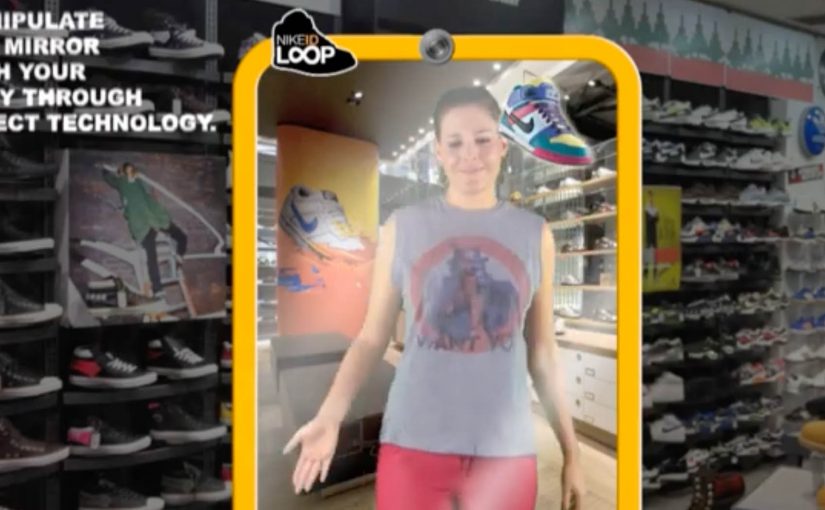
So a unique interactive mirror using Microsoft’s Kinect technology was created to customize the sneakers on the user’s feet. This way, one could try on every pair of Nike sneakers ever made in record time.

The core problem this concept tackles

Retail has a physical constraint. Shelf space. Inventory. Time. Nike’s catalog depth makes “try everything” impossible, even in flagship stores.

This concept flips the constraint by moving variety from physical inventory into a digital layer, while keeping the try-on moment anchored in the body. By “digital layer” here, I mean a live overlay that swaps variants in the mirror without needing physical stock. Your feet. Your stance. Your movement.

The real question is how you let shoppers explore more options without turning the store into a warehouse or the decision into homework.

Why the mirror mechanic is powerful

Because the mirror tracks movement and renders variants instantly, it keeps the try-on believable in motion, which is what makes fast switching persuasive instead of gimmicky.

Extractable takeaway: When you can add choice in software while preserving an embodied try-on moment, you reduce assortment friction without reducing confidence.

  • It keeps context real. You see the shoe on you, not on a product page.
  • It compresses decision time. Rapid switching creates a new kind of “browsing”.
  • It turns discovery into play. The experience is inherently interactive, which increases dwell time.
  • It reduces inventory friction. The store can showcase breadth without stocking breadth.

In retail environments where shoppers want high-confidence fit and style decisions in minutes, embodied digital try-on can expand perceived assortment without expanding stock.

What this implies for customization and personalization

NikeID is already about making a product feel personal. A Kinect-style mirror extends that by making customization immediate and visual, which can increase confidence before purchase.

This kind of embodied customization is worth betting on, because it makes breadth feel real without demanding more shelf space.

The concept also suggests a future where “catalog” becomes a service layer. The physical store is the stage for decision-making, not a warehouse for options.

What to take from this if you run retail CX

  1. Start with the constraint. Space and assortment are physical limits. Digital can expand them.
  2. Keep the experience embodied. Seeing a product on yourself is stronger than seeing it on a screen.
  3. Design for speed. Rapid iteration can become a feature, not a compromise.
  4. Make the output actionable. The experience should flow naturally into saving, sharing, or ordering.

A few fast answers before you act

What is the NikeID Loop concept?

It is a Miami Ad School concept for Nike that uses an interactive mirror and Microsoft Kinect technology to let users customize and “try” different Nike sneakers on their feet digitally.

What problem does it solve in stores?

It addresses the fact that Nike’s full range of sneakers cannot be stocked or tried in one location, by shifting variety into a digital interface.

Why use Kinect or motion tracking?

Motion tracking lets the system align the visual shoe to the user’s feet in real time, keeping the experience believable as people move.

Is this a product or a concept?

In this case, it is presented as a concept coming out of Miami Ad School, showing a possible direction for interactive retail.

What is the transferable lesson?

If you can remove physical constraints through an embodied digital layer, you can increase choice, speed, and confidence without expanding inventory.

Nike: Trackball for CTR360

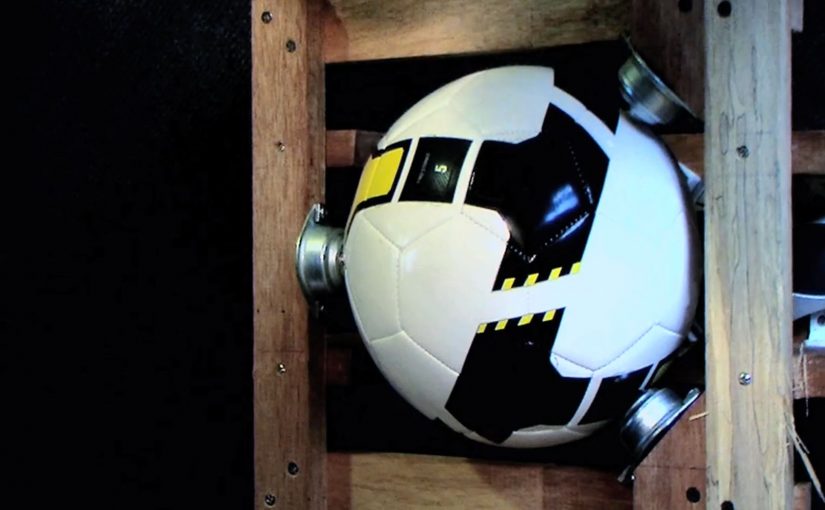
When Nike launched the CTR360 football boot in Singapore, they wanted something that could deliver the revolutionary features that make this product the ultimate in ball control.

So an interactive in-store experience was created where ball control and product knowledge of the Nike CTR360 was both seamless and seductive.

The real question is how to make a ball-control claim feel true within a few seconds of interaction.

For performance products, the best retail education is interaction, not explanation.

Why this retail execution works

The strongest part is that it does not separate “demo” from “education”. The interaction itself becomes the explanation. You learn by doing, and that is exactly how a ball-control product should be introduced. In performance-footwear retail, shoppers believe what they can trigger themselves without instructions. Here, “the mechanic” is the single interaction pattern that carries both the demo and the message.

Extractable takeaway: When a benefit is about control, design one self-explanatory action that proves control before you explain anything else.

  • Product truth in the mechanic. Control is demonstrated through controlled interaction, not described in copy.
  • Low friction discovery. Visitors do not need instructions to begin. The interface invites experimentation.
  • Retail as experience, not shelving. The store becomes the medium that proves the claim.

What to take from it

If your product benefit is physical or performance-based, build a retail moment that lets people feel the promise quickly. The goal is not to show every feature. It is to create one memorable proof point that makes the product easier to believe and easier to talk about.

  • Pick one proof point. Let people feel the promise quickly, instead of trying to cover every feature.
  • Make the start frictionless. Invite experimentation without needing staff to interpret what to do.
  • Design for retellability. Create a moment people can describe right after they try it.

A few fast answers before you act

What did Nike do for the CTR360 launch in Singapore?

Nike created an interactive in-store experience that demonstrated ball control while also communicating CTR360 product features through the interaction itself.

Why pair product education with interaction?

Because performance products are understood faster through demonstration than explanation. The experience makes the benefit tangible.

What is the core pattern behind this kind of retail activation?

Translate the product promise into a simple, inviting interaction. Then let that interaction deliver both the “wow” and the learning.

How do you know if an in-store experience is doing its job?

If a visitor can explain the product benefit immediately after trying it, without needing staff to interpret it, the design is working.