
Playboy Magazine: Online Casting via Webcam

Playboy Magazine: Online Casting via Webcam

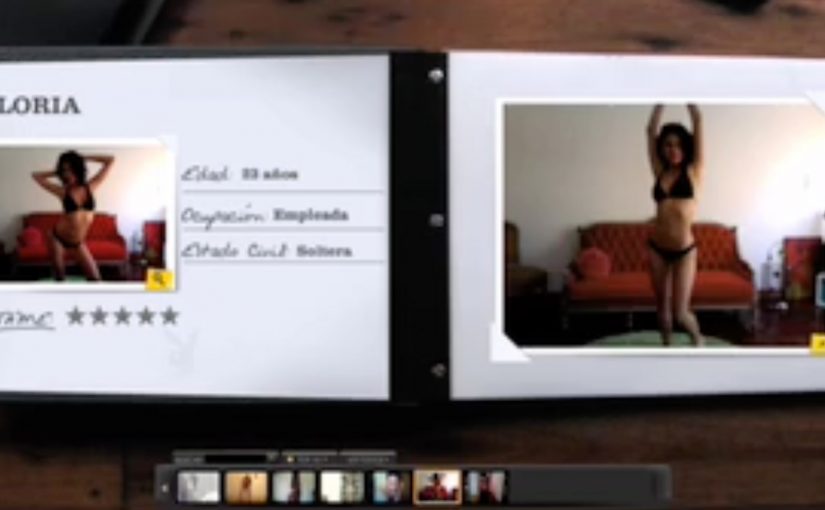
A cover opportunity becomes a browser moment. Instead of going to a studio, aspiring models do a remote “photo session” through their own webcam, then turn the best shots into an online book that friends can vote on.

The pitch is open participation. Any woman with a webcam can make an online photo session and potentially end up on the cover of Playboy Magazine. How does it work. The virtual Playboy photographer takes the pictures of the aspiring models through their own webcam. When they finish they are asked to make an online book with the best pictures. After which they can invite their friends to vote.

The next Playboy Girl is chosen from the favorites on the casting site www.castingplayboy.com.

A photoshoot that travels without travel

The mechanism is a simple funnel. capture content at home, curate a lookbook, then recruit votes. That flips casting from a closed process into something participatory and shareable.

In global media and entertainment marketing, turning selection into a public vote is a reliable way to convert curiosity into distribution.

Why the vote loop is the real engine

The webcam shoot creates the raw material, but the “invite friends” step is what scales it. By “vote loop” I mean the cycle of invite, vote, and reshare that turns each participant into a distribution node.

Extractable takeaway: If you want organic reach, design the post-submission step as a recruiting action that participants feel personally motivated to trigger.

This is not just online casting. It is user-generated content plus social voting, packaged as a competition where the audience becomes the amplification layer.

What Playboy is really buying

This is reach and data wrapped in a story. The real question is whether you want more applicants or more distribution. The brand gets a stream of self-produced submissions, a measurable popularity signal through voting, and a campaign that spreads through personal networks rather than paid media alone.

Steal this casting-to-voting funnel

  • Let people create at the edge. Reduce friction by allowing participation from home.
  • Force curation. A “best of” book is stronger than raw uploads and easier to judge.
  • Build in recruiting. Voting should be the default next step, not an optional extra.
  • Make the prize visible. Publication and status often motivate more than cash.

A few fast answers before you act

What is the core idea behind this Playboy online casting?

A virtual webcam photo session followed by a curated online book and friend-driven voting, turning casting into a shareable competition.

Why does the lookbook step matter?

It forces participants to curate their best shots, which improves quality and makes the submission easier to view and judge.

What makes social voting effective in campaigns like this?

It creates a built-in distribution loop. Participants recruit friends to vote, and those invites function as campaign media.

What is the biggest execution risk?

If the upload, curation, or voting flow feels slow or confusing, people drop out before they share. The funnel has to be fast and obvious.

How do you keep the brand connected to the participant story?

Make the branded environment where submissions live feel premium and consistent, so every share sends people back into the brand’s world.
Kit Kat: Jesus Loves Kit Kat

Kit Kat: Jesus Loves Kit Kat

When a bite turns into a “sighting”

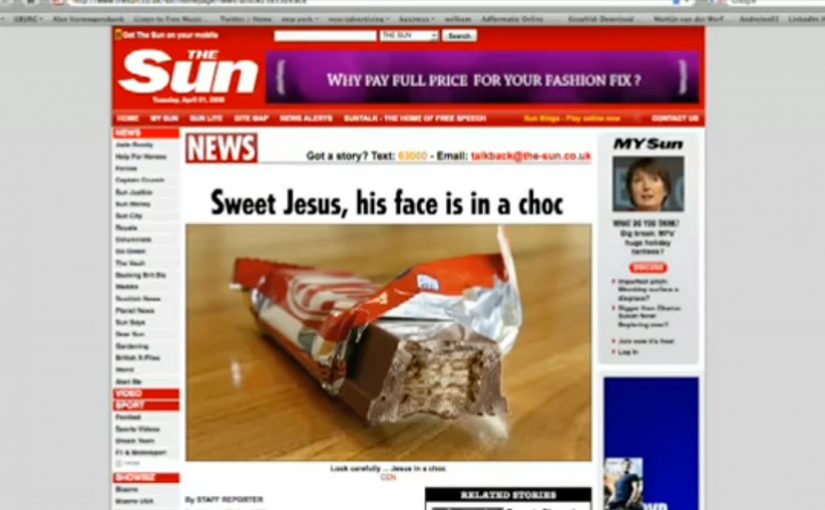
Every so often the internet latches onto a “miracle” story. This one starts with a simple, everyday moment. Someone takes a bite of a Kit Kat, and suddenly the bite pattern is framed as a face. Cue the inevitable question. Is it real, or is it just our brains doing what they always do with patterns?

Either way, the punchline lands immediately because the brand line is already waiting for it. Jesus loves Kit Kat. Have a break. Have a Kit Kat.

The stunt behind the headline

The mechanism is a simple one. Take a familiar cultural pattern. The “miraculous sighting” story. Then attach it to an everyday object and let curiosity do the distribution work.

In European FMCG marketing, low-budget PR seeding, meaning you plant the story with a few publishers to trigger pickup, can outperform paid media when the story is easy to retell and the brand cue, the unmistakable product signal inside the joke, is inescapable.

In this case, the campaign is described as being kick-started by sending a tip to major Dutch news sites about a “Jesus face” discovered in a bitten Kit Kat, complete with “proof” photos. Once the story lands, the audience spreads it for free, partly to react, partly to mock, and partly to forward the joke. That works because the audience is invited to judge the “realness” and repeat the brand line while they do it.

Why it lands: the audience writes the punchline

It works because the viewer instantly knows what to do with it. “Is it real” is the hook. “Obviously not” is the release. Then the slogan becomes the comment section fuel, because “Have a break” and “Give me a break” are ready-made responses that keep repeating the brand.

Extractable takeaway: If you use a familiar “sighting” format, design the sharing loop so people repeat the brand line as they debate whether it is “real”.

What the brand is really buying

The real question is whether the stunt forces a repeatable brand line, not whether anyone believes the “sighting”.

This is not persuasion. It is memory and talk value, meaning the worth of being talked about. The goal is to force a moment of attention in a low-involvement category, then lock the attention to a slogan people already know well enough to quote without effort.

Steal the “sighting” shape for earned reach

  • Use a story shape people already recognise. Familiar formats travel faster than “new idea” explanations.
  • Make the brand cue inseparable from the joke. If the gag works without the product, you are funding entertainment, not brand recall.
  • Design for repeatable phrasing. The best hooks come with a built-in line people will type in their own words.
  • Know the risk. Hoax-style PR, where you let people briefly wonder if it is real, can backfire if your category depends on trust, seriousness, or institutional credibility.

A few fast answers before you act

What is happening in “Jesus Loves Kit Kat”?

A playful “sighting” style story frames a bitten Kit Kat as if it reveals a face, and the curiosity and debate around it drives sharing.

What is the core mechanism?

PR seeding plus a familiar meme-like story format. People click to judge it, then share to react, mock, or pass along the joke.

Why does this kind of story travel fast?

Because it is easy to retell and invites opinion. The audience becomes the distributor by arguing about whether it is “real”.

What is the brand risk to watch?

Hoax-style hooks can backfire in categories where trust and seriousness matter. The technique needs category-fit and tone discipline.

What is the most transferable takeaway?

If you use a cultural format people already recognise, make sure the brand cue is inseparable from the punchline, otherwise the joke outlives the brand.

Norms Restaurants: Social Media Above-the-Line

Norms Restaurants: Social Media Above-the-Line

A TV spot that treats social as the main stage

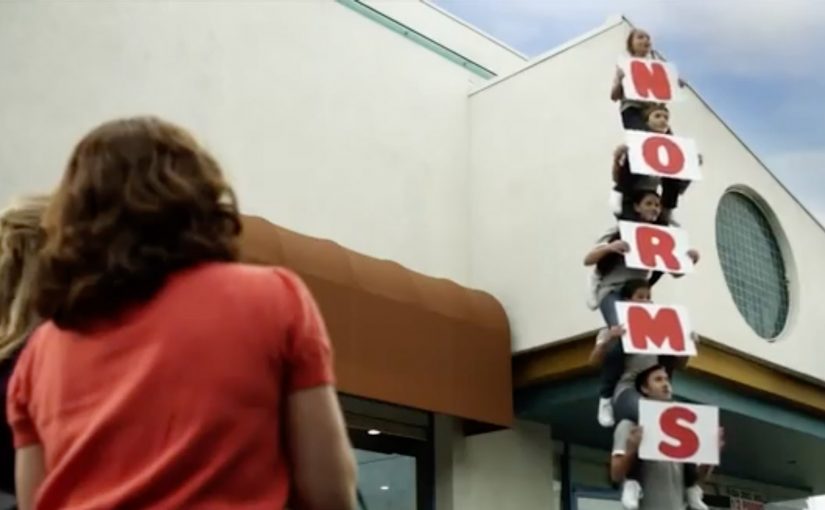
Here is a new TV spot promoting the NORMS Restaurants Facebook page. It does something different. The commercial is grounded in social media rather than simply being an add-on.

How it works: the channel is the creative, not the CTA

The mechanism is straightforward. Instead of telling you to “go to Facebook”, the spot behaves like social. It borrows the language, pacing, and cultural cues of the feed, then uses TV as the amplifier. By “social-native”, I mean it is structured like something you would actually scroll past in a feed. This works because viewers recognize that grammar instantly, so the follow action feels like continuing the same experience.

In US regional restaurant brands, social channels can function as a 24/7 extension of the dining room: service, deals, personality, and community in real time.

The real question is whether your mass media can behave like the channel you want people to adopt, rather than merely pointing at it.

Why it lands: the message and the operating model match

Just as social media never sleeps, NORMS Restaurants also never closes. They are open 24 hours a day. That alignment matters. The spot is not trying to look modern. It is connecting a true operational differentiator to a behaviour that is always on.

Extractable takeaway: When an “always-on” message is backed by something operationally true, the creative reads as utility instead of theatre.

The intent: make “follow us” feel like utility

The point is not only awareness. It is habit formation. If the brand is always open, then the social presence can be positioned as always available too, with updates that feel useful, timely, and worth checking. This is what it looks like to put social “above the line”, treating it as the primary experience and not a supporting channel. Here, “above the line” means the social presence is the main stage, while TV is used mainly to accelerate adoption. If you want social to matter, design mass media as an on-ramp to a repeatable social habit, not as a separate campaign.

Early results the brand shared at the time

This family owned business shared the following success within 10 days of the TV commercials:

  • Gained 1,000 fans on Facebook
  • Gained 150 followers on Twitter

Moves to put social above the line

  • Make the channel the idea. If you lead with social, the creative has to feel native to how social behaves.
  • Anchor the message in something operationally true. “Always on” lands when the business actually is.
  • Give people a reason to follow, not just a reason to notice. Utility beats slogans for repeat behaviour.
  • Measure fast, then iterate. If the goal is followers and engagement, build feedback loops early.

A few fast answers before you act

What is different about this NORMS TV spot?

It is built around social media as the core creative idea, not as a last-second add-on call-to-action.

What is the main mechanism that makes it work?

TV is used as the reach layer, while the creative language is intentionally social-native, so the handoff to Facebook and Twitter feels natural.

Why does the “social never sleeps” line fit NORMS?

Because NORMS is positioned as open 24 hours a day, so the always-on idea matches the operating model instead of feeling like marketing theatre.

What is the business goal behind grounding a TV spot in social?

To turn awareness into ongoing follow behaviour, so the brand gains a direct channel for repeat visits, offers, and relationship building.

What is the most transferable takeaway?

If you want social to sit above the line, treat it as the product experience, then use mass media only to accelerate adoption.