
Norms Restaurants: Social Media Above-the-Line

A TV spot that treats social as the main stage

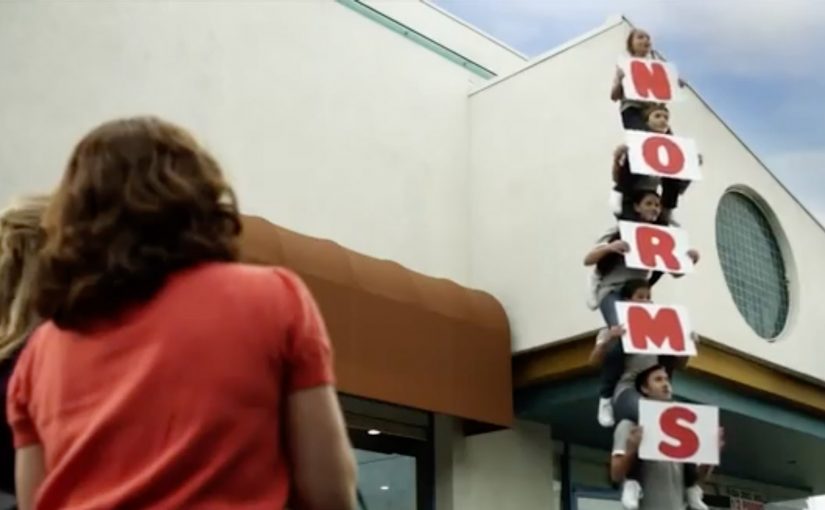
Here is a new TV spot promoting the NORMS Restaurants Facebook page. It does something different. The commercial is grounded in social media rather than simply being an add-on.

How it works: the channel is the creative, not the CTA

The mechanism is straightforward. Instead of telling you to “go to Facebook”, the spot behaves like social. It borrows the language, pacing, and cultural cues of the feed, then uses TV as the amplifier. By “social-native”, I mean it is structured like something you would actually scroll past in a feed. This works because viewers recognize that grammar instantly, so the follow action feels like continuing the same experience.

In US regional restaurant brands, social channels can function as a 24/7 extension of the dining room: service, deals, personality, and community in real time.

The real question is whether your mass media can behave like the channel you want people to adopt, rather than merely pointing at it.

Why it lands: the message and the operating model match

Just as social media never sleeps, NORMS Restaurants also never closes. They are open 24 hours a day. That alignment matters. The spot is not trying to look modern. It is connecting a true operational differentiator to a behaviour that is always on.

Extractable takeaway: When an “always-on” message is backed by something operationally true, the creative reads as utility instead of theatre.

The intent: make “follow us” feel like utility

The point is not only awareness. It is habit formation. If the brand is always open, then the social presence can be positioned as always available too, with updates that feel useful, timely, and worth checking. This is what it looks like to put social “above the line”, treating it as the primary experience and not a supporting channel. Here, “above the line” means the social presence is the main stage, while TV is used mainly to accelerate adoption. If you want social to matter, design mass media as an on-ramp to a repeatable social habit, not as a separate campaign.

Early results the brand shared at the time

This family owned business shared the following success within 10 days of the TV commercials:

  • Gained 1,000 fans on Facebook
  • Gained 150 followers on Twitter

Moves to put social above the line

  • Make the channel the idea. If you lead with social, the creative has to feel native to how social behaves.
  • Anchor the message in something operationally true. “Always on” lands when the business actually is.
  • Give people a reason to follow, not just a reason to notice. Utility beats slogans for repeat behaviour.
  • Measure fast, then iterate. If the goal is followers and engagement, build feedback loops early.

A few fast answers before you act

What is different about this NORMS TV spot?

It is built around social media as the core creative idea, not as a last-second add-on call-to-action.

What is the main mechanism that makes it work?

TV is used as the reach layer, while the creative language is intentionally social-native, so the handoff to Facebook and Twitter feels natural.

Why does the “social never sleeps” line fit NORMS?

Because NORMS is positioned as open 24 hours a day, so the always-on idea matches the operating model instead of feeling like marketing theatre.

What is the business goal behind grounding a TV spot in social?

To turn awareness into ongoing follow behaviour, so the brand gains a direct channel for repeat visits, offers, and relationship building.

What is the most transferable takeaway?

If you want social to sit above the line, treat it as the product experience, then use mass media only to accelerate adoption.
Puma: HardChorus for Valentine’s Match Day

When Valentine’s Day lands on match day

This year 14 February, Valentine’s Day, fell on a Sunday. For men everywhere this presented a dilemma. Love or football. Atletico Madrid vs Barcelona, Manchester City vs Liverpool, Napoli vs Inter, or romance with a loved one?

A love song delivered like a terrace chant

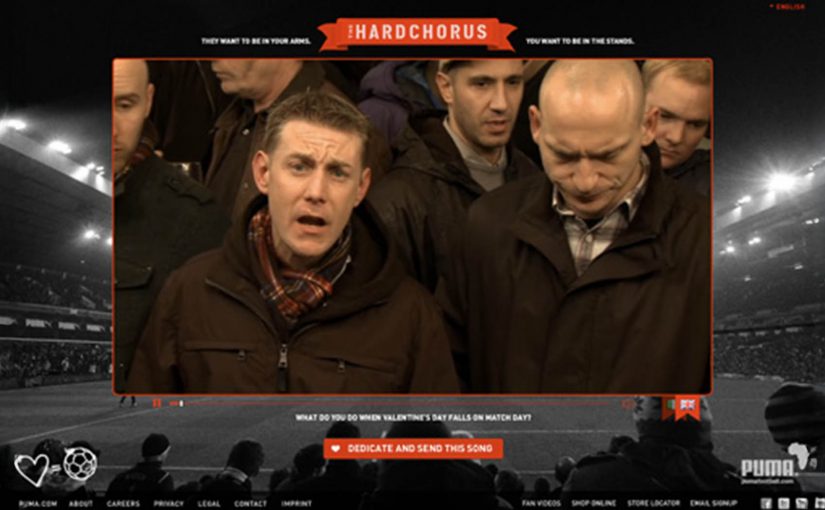
Puma recognized this dilemma as “They want to be in your arms. You want to be in the stands”, and so with Droga5 created the Puma HardChorus.

A crowd of football supporting men, assembled in a pub to sing Savage Garden’s Truly Madly Deeply, which then football fans could send to their loved ones while enjoying the game. An Italian version was also created where a similar group sang Umberto Tozzi’s 1977 hit Ti Amo.

Puma HardChorus English version:

Puma HardChorus Italian version:

In European football culture, match day is a ritual with its own language, loyalty, and emotion.

Why it works: it turns the conflict into a gesture

The genius is the tone swap. It takes the toughest-coded environment in the brief and makes it do something unexpectedly tender. That contrast creates surprise, and surprise creates shareability. It also gives the viewer control over the trade-off. You are not choosing between football and your partner. You are converting match-day energy into a message that says, “I’m here, I’m thinking of you, and yes, I’m still going to the game”.

Extractable takeaway: If a moment forces a binary choice, design a small, sendable action that turns the tension into a gesture, so the audience can keep what they love without neglecting who they love.

What Puma is really selling in the background

This is not about listing product benefits. It is about aligning the brand with a lived tension and resolving it in a way that feels culturally fluent. The real question is whether you can convert a culturally loaded trade-off into a message people are happy to send. This is a smart way to earn brand warmth without asking fans to abandon the game. Puma borrows the credibility of the stands, then uses it to deliver romance without embarrassment.

Steal the pattern: two audiences, one moment

  • Name the real conflict. This works because the tension is true, not manufactured.
  • Use a familiar cultural code. Stadium chanting is instantly recognisable and instantly readable.
  • Flip the code without mocking it. The humour is in the contrast, not in making fans look stupid.
  • Make it easy to pass along. If the output is meant to be sent, it needs to stand on its own.

A few fast answers before you act

What is Puma HardChorus?

A Valentine’s match-day idea where football supporters sing romantic songs like stadium chants, which fans can send to their loved ones while they watch the game.

What is the core mechanism in one line?

Turn terrace energy into a love message, then make it easy to share directly with the person who feels “second place” to football.

Why does the idea feel funny and effective?

Because it flips a tough-coded cultural setting into a tender gesture. The contrast creates surprise, and surprise creates shareability.

What is the audience “problem” it solves?

It resolves a real conflict between two priorities by converting match-day behaviour into a signal of care, rather than forcing a binary choice.

What is the most transferable takeaway?

If you have two audiences competing for the same moment, design a simple action that transforms the conflict into a gesture one person can send to the other.

Pepsi Refresh: Monthly Grants for Ideas

Pepsi wants to make the world a better place and so it has up to $1.3 million in Refresh grants to give out every month, ranging from $5,000 through to $250,000.

The social investment campaign can be seen online at www.refresheverything.com, and is being presented as Pepsi’s alternative to spending on television advertising at the Super Bowl this year.

From January 13, US residents can submit an idea online, choosing categories of health, arts and culture, food and shelter, the planet, neighborhoods, and education.

From February 1, 2010, visitors to the site will be able to vote on ideas, with the first 32 awards being announced on March 1.

The clever part is the trade

The headline here is not just the money. It is the positioning. The real question is whether you can trade a single paid burst for a repeatable participation loop without losing clarity or trust. Pepsi is framing this as an alternative to a single high-cost burst of attention, and shifting that investment into a participatory program where people submit, rally support, and vote.

Why this format can generate momentum

It works because the format creates a loop people can re-enter. Each month resets urgency, gives participants a clear job to do, and turns support-building into something visible.

Extractable takeaway: If you want participation to create reach, make recruiting support effortless and make the cycle easy to repeat.

  • A clear incentive. Monthly grants create repeated urgency, not a one-off moment.
  • Built-in categories. Health, arts, food and shelter, the planet, neighborhoods, and education make participation easy to understand.
  • Voting creates distribution. If your idea needs votes, you recruit your network. That recruitment becomes the media.

In large-scale brand purpose programs, participation grows when funding, voting, and sharing are designed as a repeatable cycle rather than a one-off moment.

What to watch if you run campaigns like this

  1. Transparency. People will want to understand how ideas are evaluated and funded.
  2. Participation fatigue. Monthly cycles help, but the experience has to stay simple to repeat.
  3. Proof of impact. The long-term credibility comes from showing what the funded ideas actually achieved.

What to steal from Pepsi Refresh

  • Make the trade explicit. Position the program as the alternative to a single high-cost attention burst.
  • Design for repeat participation. Use a simple monthly rhythm, clear categories, and a predictable submit-and-vote flow.
  • Let supporters do the distribution. Require votes so participants recruit their networks, and that recruitment becomes the media.

A few fast answers before you act

What is the Pepsi Refresh Project?

It is a social investment program where Pepsi offers monthly “Refresh grants” and invites people to submit community ideas and rally votes to get them funded.

How much funding is available?

Up to $1.3 million in grants per month, with awards ranging from $5,000 to $250,000.

When can people submit and vote?

From January 13, US residents can submit ideas. From February 1, 2010, visitors can vote, with the first 32 awards announced on March 1.

What categories can ideas be submitted under?

Health, arts and culture, food and shelter, the planet, neighborhoods, and education.

What is the strategic alternative being positioned here?

Pepsi is presenting the program as an alternative to spending on television advertising during the Super Bowl, shifting that spend into a participatory grant platform.