
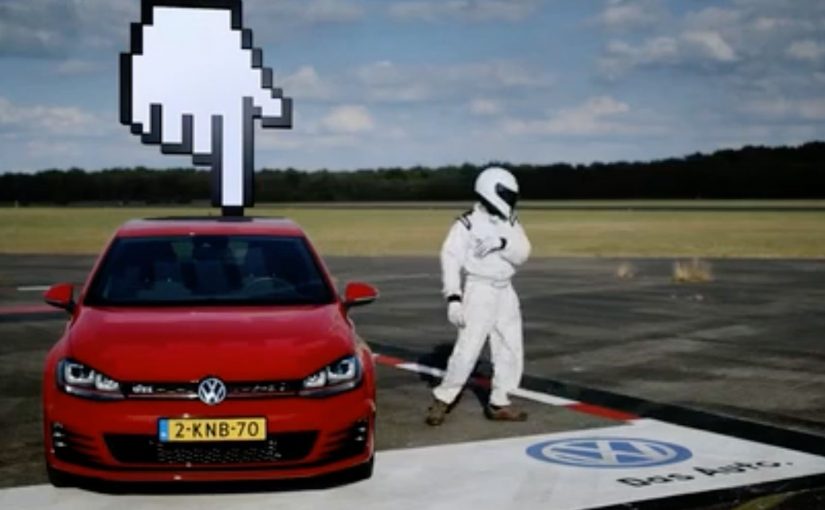
VW GTI Banner Race: Chase a Car Across the Web

Volkswagen Netherlands set out to launch the new GTI in a way that feels fast before anyone even touches the accelerator. The result is an online race staged inside banner advertising, but mapped onto the physical logic of the real world.

Four popular Dutch websites are painted as the runway of an airport, each banner space measuring 20 metres wide and 25 metres long. On race day, 13th September, participants chase the GTI as it speeds through the banner spaces of each site. The person fast enough to catch the new GTI wins the car in real life.

When banners stop being static and start behaving like space

The mechanism is a reframing of banner advertising. Instead of isolated rectangles, the banners become connected terrain. Each site represents a segment of runway. Movement between banners creates the illusion of distance, speed, and progression.

The GTI does not just appear. It moves. And because it moves, the user has a reason to stay alert, react quickly, and treat the banner as something to engage with rather than ignore.

In European automotive launches, turning passive media into an environment with rules is often the fastest way to earn attention without buying more impressions.

Why speed and scarcity do the heavy lifting

This works because it borrows from racing psychology. There is a single target. There is a clear win condition. And there is scarcity. Only one person catches the GTI. That tension transforms passive browsing into a moment of competition.

Extractable takeaway: When you can make a product trait playable, set one clear target, one win condition, and one scarce outcome so attention becomes a self-sustaining loop.

The prize is not symbolic. Winning the actual car anchors the experience in reality, which prevents the activation from feeling like a disposable digital trick.

The intent: make the GTI feel alive online

The business intent is to translate the GTI’s performance DNA into a digital format. Speed, responsiveness, and thrill are not explained. They are simulated. The banner becomes a proxy for the car’s character. By “performance DNA” here, I mean the cues of speed, responsiveness, and thrill that people associate with a GTI.

The real question is whether your launch media can make the product trait felt in the first five seconds, not just described.

This is a better pattern than static launch assets when the brand promise is motion, because the interaction does the persuasion.

At the same time, Volkswagen demonstrates that standard media formats can still surprise when they are treated as systems instead of slots.

Patterns to borrow from the GTI banner race

  • Rethink familiar formats. Banners can be environments, not just placements.
  • Design for motion. Movement creates attention where static assets fail.
  • Use a real reward. Tangible stakes raise commitment instantly.
  • Connect experiences. Linking multiple sites turns reach into narrative space.
  • Encode the product DNA. Let the interaction mirror what the product stands for.

A few fast answers before you act

What makes this GTI launch different from a normal banner campaign?

The banners are connected into a continuous race environment, turning advertising space into gameplay instead of static exposure.

Why use an online race to launch a car?

Because racing instantly communicates speed and performance, which are core to the GTI identity.

Does this work without the prize car?

The experience would still be novel, but the real-world reward dramatically increases urgency and participation.

What role do partner websites play?

They become part of the environment. Each site is a segment of the runway rather than just a host for an ad.

What is the main takeaway for digital launches?

When you turn media formats into systems with rules and progression, people stop skipping and start playing.
Waternet Queen’s Day Challenge: Pee Race

Turning a messy problem into a canal-side race

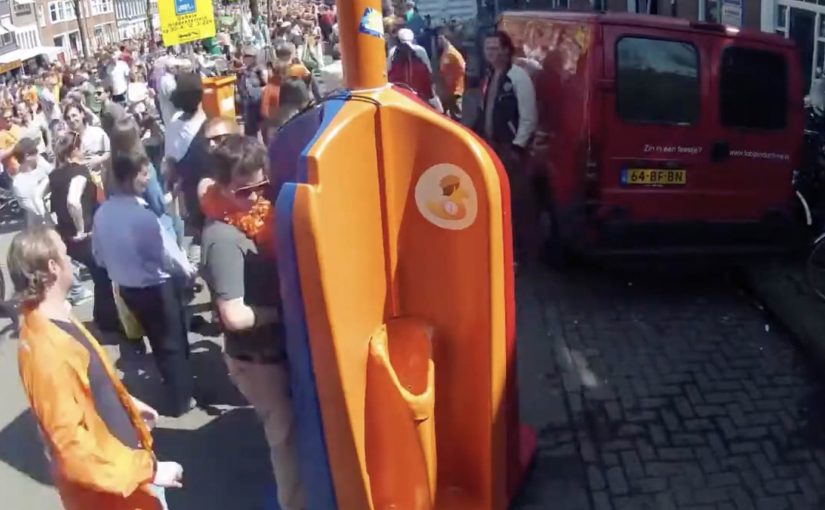
Queen’s Day in Amsterdam brings huge crowds and heavy celebrations. It also brings a very practical problem for Waternet, the city’s water supplier: too many people treat the canals like a public toilet.

Instead of posting warnings, Waternet worked with Achtung! and installed several brightly colored urinals at different points along the canal. Each unit had four stalls and connected to a digital screen that turned peeing into a live race, with a simple incentive that makes people want to participate.

The mechanics that make it work

This is a strong example of ambient behavior-change design. Here “ambient” means the intervention lives in the environment, right where the decision happens, not in a banner ad or a TV spot.

Extractable takeaway: When the right behavior is a public, low-friction default with instant feedback, you can change behavior without asking people to absorb a lecture.

It works because the feedback is immediate, the experience is social by default, and the “right” behavior feels more fun than the “wrong” behavior. That combination reduces friction and replaces shame with competition. This is the kind of public-space activation brands should copy when the goal is behavior change, not sentiment.

In crowded city-center celebrations, playful public interactivity often changes behavior faster than moralizing signage.

Steal the ambient interactivity pattern

The real question is how to make the right behavior feel like the obvious choice in public, without needing anyone to read a sign.

  • Move the message to the moment. Put the interaction where the behavior happens, not weeks earlier in a campaign feed.
  • Make the desired action the easiest action. People choose the path that feels obvious and frictionless in public.
  • Use visible progress. A shared screen and a simple scoreboard create instant social proof.
  • Reward participation, not perfection. Even a small, symbolic payoff can tip the choice at scale.

A few fast answers before you act

What is the Waternet Queen’s Day Challenge?

It is a Queen’s Day activation in Amsterdam where Waternet installs canal-side urinals and turns their use into a multiplayer race on a connected screen, discouraging people from urinating into the canals.

How does the “pee race” work?

Four stalls connect to a shared screen. Participants use the urinal and the screen visualizes a race, making the act feel like a public, competitive mini-game rather than a private necessity.

Why does this kind of gamification change public behavior?

It replaces a negative instruction (“don’t do this”) with a positive, easy alternative that gives immediate feedback and a social payoff, which is especially effective in crowded, high-energy settings.

What makes an ambient activation succeed in public space?

Clear purpose, low friction, instant comprehension, and feedback people can see without explanation. If it needs a guide, it usually fails on the street.

How can brands use this pattern without relying on shock value?

Keep the mechanism. Swap the provocation. Put the interaction at the point of decision, make progress visible, and attach a small reward to the behavior you want to encourage.

Volkswagen LinkedUit: A LinkedIn API Campaign

Volkswagen has released a LinkedIn-based campaign which takes full advantage of the new LinkedIn API. Here, “LinkedIn API” simply means the permissioned interface that lets an app read profile information after you sign in.

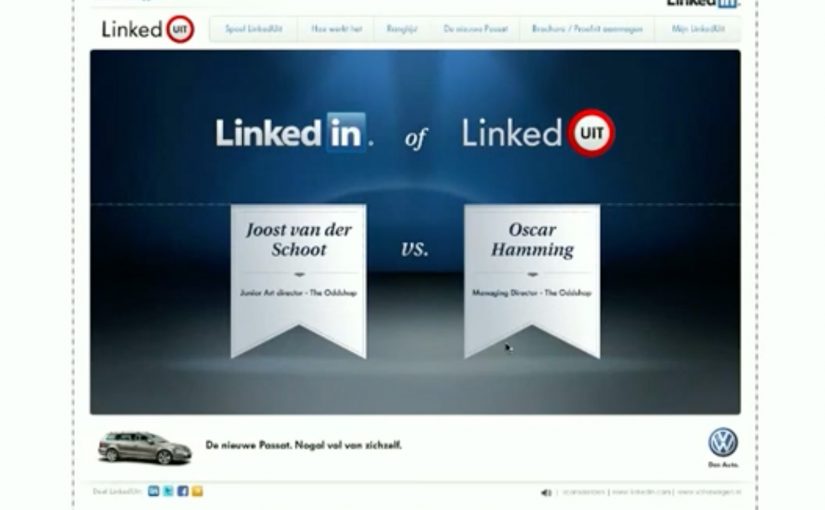
The campaign is called “LinkedUit” (LinkedOut) and gives anyone who challenges a friend on LinkedIn a chance to win a Volkswagen Passat.

The game is really simple. After signing in using your LinkedIn profile, the app lets you choose others in your network to challenge. A LinkedIn victor and a LinkedOut loser is then chosen based on education, experience, recommendations and connections.

Mechanically, the app pulls profile fields after sign-in and turns them into a score you can compare against someone in your network. This pattern is worth copying when you can explain the scoring in plain language and keep participation clearly opt-in. Because the inputs are already curated, the result feels personal with almost no extra work.

In European automotive marketing, platform-native games like this only stay credible when the data use is explicit and the scoring feels fair.

The real question is whether the value of the interaction outweighs the discomfort of being compared.

Why this is a smart use of platform data

This campaign uses something people already curate and care about. Their professional identity. Instead of asking for attention, it uses existing LinkedIn data as the raw material for the experience.

Extractable takeaway: If you can make a platform’s identity data the mechanic, you lower friction and raise relevance. But you only earn repeat use when people can predict why they won or lost.

  • Low input for users. The profile is already built. The game simply reads it.
  • High personal relevance. Comparisons feel personal because they are based on your own history.
  • Built-in social spread. Challenges create a natural loop through networks.

The Passat benefit: “feature-rich” as a metaphor

The creative link is straightforward. Passat equals feature-rich. LinkedIn profile equals information-rich. The experience makes the metaphor tangible by turning profile depth into a competitive score.

That kind of metaphor works when it is easy to explain in one sentence and easy to experience in one click.

What makes this type of social game succeed or fail

  1. Fair scoring logic. If the rules feel arbitrary, people reject the result.
  2. Fast time-to-result. The payoff must arrive quickly after sign-in.
  3. Friendly rivalry. Challenges should feel playful, not judgmental.
  4. Clear reward. A chance to win a Passat is a simple, memorable incentive.

What to take from this if you are building platform-native campaigns

  • Use the platform’s native data as the experience. The more you rely on what already exists, the lower the friction.
  • Make the mechanic social by default. Challenges, invites, and comparisons drive distribution.
  • Keep the brand connection clean. One strong metaphor beats multiple weak links.
  • Design for credibility. When you use personal data, transparency and perceived fairness matter.

A few fast answers before you act

What is Volkswagen “LinkedUit”?

It is a LinkedIn-based campaign that uses LinkedIn profile data to create a challenge game, giving participants a chance to win a Volkswagen Passat.

How does the game determine a winner?

The app compares elements such as education, experience, recommendations, and connections to choose a “LinkedIn victor” and a “LinkedOut” loser.

Why is the LinkedIn API important here?

Because it enables the experience to pull in profile information automatically, making the game quick to start and personally relevant without extra data entry.

What is the creative link to the Passat?

The campaign uses the idea that the new Passat is full of features, just like a LinkedIn profile is full of information, then turns that into a competitive mechanic.

What is the main lesson for social platform campaigns?

If you build around native identity and data, and make the interaction social by default, you can create an experience that spreads through the network naturally.