
Adidas Boost

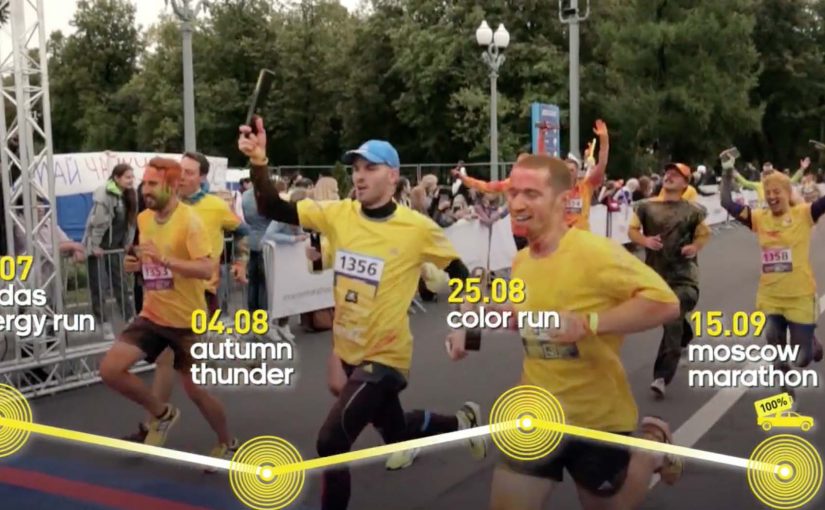
Adidas is using its new Boost technology. Built around returning energy to runners. To promote it, TBWA\Moscow created a running project that does something surprisingly literal. It turns running energy into electricity to light up a stadium.

The project is called “Charge the city with the energy of running”. It covers four races. Adidas Energy Run, Autumn Thunder, Color Run and the Moscow Marathon. Runners are given mobile generators that transform kinetic energy into electricity. The collected energy from hundreds of runners is then channeled to illuminate a stadium in Protvino. A town whose stadium has had no light since 1984.

Why this works as a product story

The benefit claim behind Boost is “energy return”. This activation makes that claim physical. You do not just hear about energy. You see it converted. Stored. And used for something meaningful.

Why the race selection matters

By spanning multiple races, the idea scales naturally. More events means more runners. More runners means more energy. The story gets stronger with participation, and every participant can feel like they contributed to a shared output.

What to borrow for brand activations

  • Make the product promise measurable. Convert the benefit into something people can see and count.
  • Build a shared outcome. Lighting a stadium is a clear “we did this together” moment.
  • Use participation as media. The crowd is not an audience. The crowd is the engine.

A few fast answers before you act

What is Adidas Boost in this context?
A running-shoe technology positioned around returning energy to runners, promoted here via a real-world energy-generation project.

What was the “Charge the city with the energy of running” project?
A TBWA\Moscow activation where runners used mobile generators to convert kinetic energy into electricity to light a stadium in Protvino.

Which races were included?
Adidas Energy Run, Autumn Thunder, Color Run and the Moscow Marathon.

What was the impact point in Protvino?
The collected electricity was used to illuminate a stadium that had no light since 1984.

Why is this a strong marketing mechanic?
Because it turns the product promise into visible proof, and makes participation create the outcome.
adidas Y-3 Interactive Live Stream

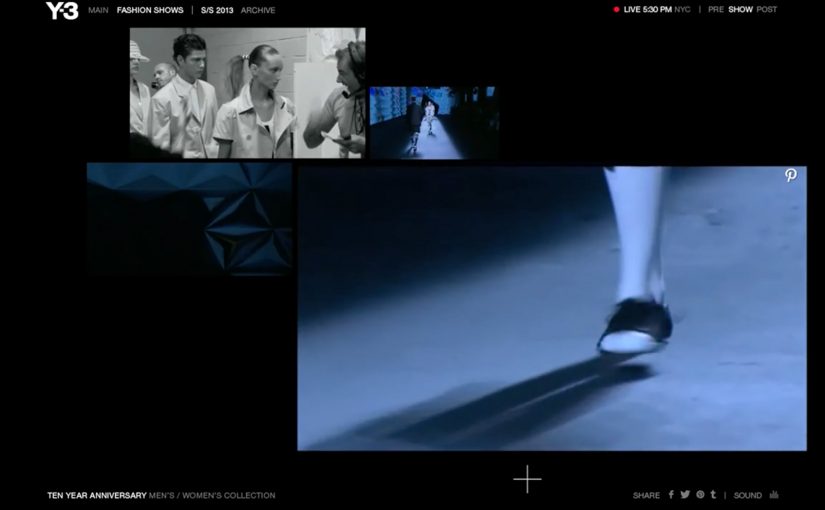
At New York Fashion Week in September 2012, adidas Y-3 revealed its Spring/Summer 2013 collection with an “Interactive Live Stream Experience” built by Acne Production. The online audience got four different runway views, could magnify one view without losing perspective of the show as a whole, and could pin each look to Pinterest.

Since 2010, I have noticed a steady increase in innovations at fashion shows around the world. This execution pushed that trend forward by treating the live stream itself as a designed product, not a passive camera feed.

The context. Y-3 at New York Fashion Week

The show marked the 10th anniversary of adidas’ partnership with Yohji Yamamoto. Athletes, celebrities, and fashion mavens gathered at St John’s Center, which was transformed by Dev Harlan’s 3D projections.

The experience. Four views, one zoomed, full context retained

Acne set up the live stream with four concurrent runway angles. The key interaction was control. Viewers could enlarge one view, but never lost the broader frame of the show. That balance made the stream feel curated and intentional, rather than fragmented.

Why Pinterest mattered in the flow

Pinning each look turned viewing into collecting. It captured intent at the moment of attention and let the audience take the show with them. One click turned a runway moment into a saved, shareable reference.


A few fast answers before you act

What was the adidas Y-3 Interactive Live Stream?

It was a multi-angle live stream for the Y-3 Spring/Summer 2013 runway that let viewers zoom one camera view while still keeping the full-show context, and pin looks to Pinterest.

What was the core interaction pattern?

Multi-view streaming with user-controlled emphasis. Viewers chose what to focus on without breaking the narrative of the show.

Why did “keep context” matter in live streaming?

If zoom removed context, viewers felt lost. Keeping the full show visible preserved rhythm and made the experience feel like one coherent event.

What is the practical lesson for digital show formats?

Design the stream like a product. Give the audience simple controls that match how they watch, and offer a frictionless way to save and share what they like.

Meat Pack Hijack

Meat Pack is the trendiest shoe store in Guatemala that is known for its edgy and irreverent style. For their new discount promotion they created Hijack, a GPS based tracking enhancement of their official Meat Pack smartphone app.

Every time a customer entered the official store of one of the brands sold at Meat Pack, the app would trigger a special promotional message that gave the customer a chance to earn a discount that started at 99% and then decreased by 1% every second. The countdown stopped when the customer reached the store. 😎

As a result more than 600 costumers were hijacked from the competitors and all discounted merchandise were sold in record time. For generating more word of mouth, the app also automatically posted the customers successful discount redemption on their Facebook profile.