
LEGO: Builders of Sound barrel organ

LEGO: Builders of Sound barrel organ

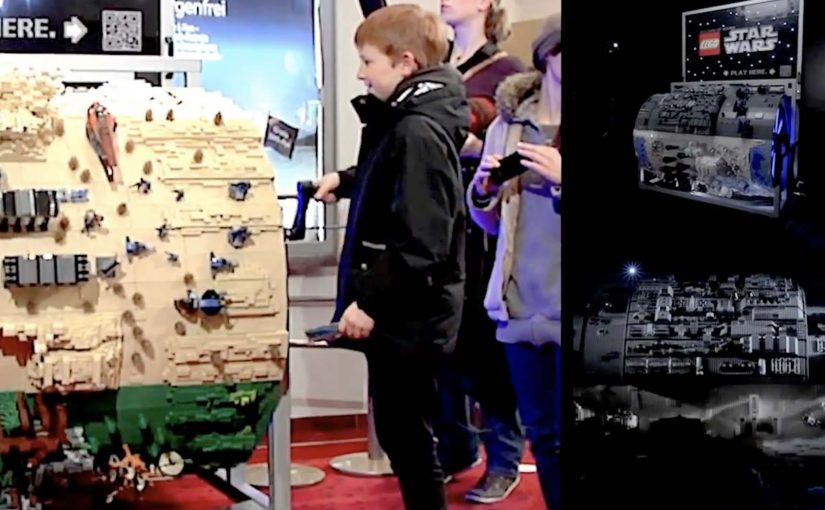
The 3D premiere of Star Wars Episode 1 in early 2012 was a cinematographic milestone for the Star Wars saga. To celebrate it, LEGO and Serviceplan Munich created a unique LEGO sound installation that actually plays the Star Wars main theme.

The installation is a huge barrel organ built from over 20,000 LEGO pieces. Four Star Wars worlds (Hoth, Tatooine, Endor and the Death Star) are constructed on the turning barrel. As it rotates, LEGO elements trigger mechanical sensors that strike the keys of a built-in keyboard, playing the tune.

A Star Wars theme you can crank with your hands

The most effective detail is the constraint. There is no “press play” button. You have to turn the organ. That one decision makes the experience feel earned. The song arrives as a result of your motion, not as background audio triggered by a screen.

How bricks become music

This is not a metaphor. It is a mechanical translation. LEGO pieces are arranged to behave like pins on a traditional barrel organ. The rotation sequence becomes a score, and the score becomes the melody via real key strikes. The four worlds on the barrel are not just decoration. They turn product and story into one continuous surface.

In European entertainment and toy launches, the strongest activations turn fandom into something people can physically operate, not just watch.

Why it lands as a cinema activation

Star Wars fans already love collectibles and craft. This installation rewards that mindset with a live proof of “impossible build meets real output.” It also gives the audience a clean social script, meaning a simple sequence people can follow without instructions. Stop. Watch someone crank it. Step in. Try it yourself. Film it. Share it.

Extractable takeaway: When a brand idea is about “bringing something into a new dimension,” the fastest route is to convert a familiar object into a physical interface and let the audience generate the outcome.

What the launch is really doing for LEGO

The real question is whether your launch gives people one obvious action that produces a repeatable, shareable payoff.

It positions LEGO Star Wars sets as more than toys. It frames them as a medium. Something that can build worlds, build machines, and even build music. That is a stronger proposition than “new sets available now,” especially around a film re-release where attention is already concentrated in cinemas.

Steal-worthy moves from Builders of Sound

  • Make the mechanism the message. The build itself should prove the claim, not just support it.
  • Use one obvious action. Turning a crank is universally understood, and it invites participation.
  • Design for bystanders. The experience should be readable from a distance, even before someone tries it.
  • Let sound do the heavy lifting. A recognisable theme turns a mechanical demo into an emotional moment.
  • Extend the experience online without changing the core gesture. If the physical version is “crank,” the digital version should feel similarly tactile.

A few fast answers before you act

What is LEGO “Builders of Sound”?

It is a LEGO Star Wars activation built around a giant barrel organ made from over 20,000 LEGO pieces. When the barrel is turned, the mechanism triggers keys to play the Star Wars main theme.

Why a barrel organ for a Star Wars release?

Because it turns a familiar, physical music machine into a participatory interface. The audience does not just hear the theme. They generate it, which makes the moment feel personal and shareable.

What makes this more than a sculpture?

Mechanical output. The build produces a real, repeatable result. That cause-and-effect shifts it from “impressive object” to “experience people line up to try.”

How do you translate a physical installation like this into an online experience?

Keep the core gesture and the immediacy. In this case, the online version is described as playable via a simple control input that mimics the physical turning action.

What should a brand measure for an installation like this?

Participation rate, repeat interactions, dwell time, the volume of user-recorded video, and any downstream actions tied to the product, such as set interest or ordering intent.
Shell: Pedestrian Ghost

Shell: Pedestrian Ghost

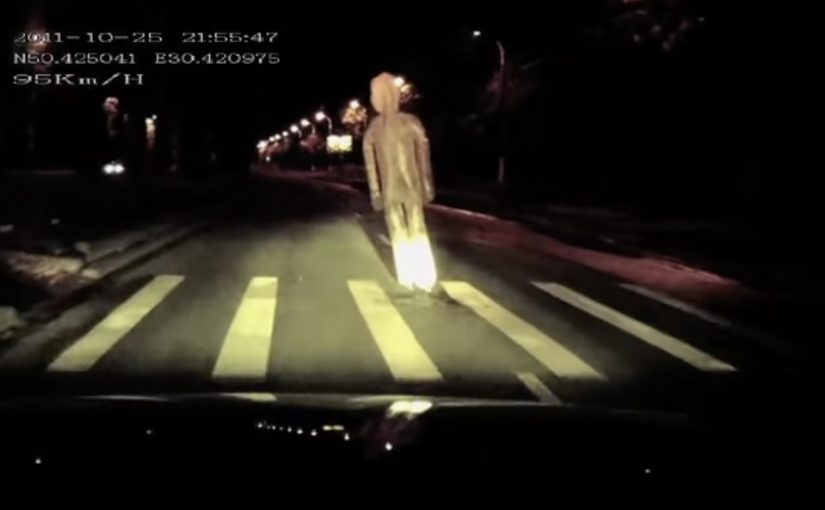
A driver approaches a crosswalk too fast. A “pedestrian” suddenly appears from a manhole cover, then shoots up into the sky like a soul escaping. The only sane response is to slow down.

Speeding cars and pedestrian safety is a huge problem in Ukraine. Ukraine is described as having the highest percentage of pedestrian collisions in Eastern Europe at 56%. To make people think twice about speeding, Shell along with JWT Ukraine created an ambient campaign called the Pedestrian Ghost, a person-shaped helium decoy that appears only when a driver is speeding. The campaign ran during Halloween and generated a lot of buzz over the internet.

A ghost that only shows up when you speed

The mechanism is built for one job. A radar detects an approaching vehicle that exceeds the speed limit. When the threshold is crossed, a hidden device integrated into a manhole cover inflates a person-shaped “ghost” using helium-filled balloons. The figure rises fast and disappears upward, creating a moment that feels like you just hit someone, even though nothing living is harmed.

In dense city streets where drivers routinely treat crosswalks as negotiable, the sharpest safety interventions are the ones that create a visceral consequence in the exact second a bad decision is made.

The real question is how to make speeding feel consequential before harm happens.

Why it lands

It works because it weaponizes surprise without needing explanation. The ghost is unmistakably human-shaped, the timing is unmistakably linked to speed, and the “escape” into the sky reads like consequence. That instant cause-and-effect loop is what resets behavior, at least for the next few blocks. For road-safety messaging, this is the right trade-off: simulate consequence hard enough to reset behavior, but never create real danger.

Extractable takeaway: If you want to interrupt dangerous habits, trigger the intervention only at the violation moment, and make the feedback so immediate and legible that drivers connect cause and effect without being told.

What this crosswalk ghost gets right

  • Trigger only on the infraction. The selectivity makes the moment feel targeted, not random.
  • Use a single, readable symbol. A human silhouette beats a statistic for behavior change.
  • Design for “I have to tell someone”. A story people can repeat in one sentence becomes earned media.
  • Keep the intervention non-injurious. The fear is simulated, the outcome is safe.

A few fast answers before you act

What is “Pedestrian Ghost”?

An ambient road-safety stunt where a ghost-like pedestrian figure rises from a manhole cover at a crosswalk when a radar detects a speeding car, forcing drivers to slow down.

What is the core mechanism?

Radar detects speeding. A concealed device inflates a person-shaped helium “ghost” and releases it upward. The driver experiences an immediate, consequence-like shock without any real harm.

Why does it change behavior better than a warning sign?

Because the feedback is timed to the violation and feels personal. The driver is not being advised. They are being startled at the exact moment of risk.

What is the biggest failure mode if I copy this pattern?

Unreliable triggering. If the effect fires at the wrong time, or too often, people stop believing the cause-and-effect link and the intervention becomes noise.

What is the simplest modern variant?

A violation-triggered intervention that is immediate, physical, and unmistakably tied to speed. For example light, sound, or motion that only activates above a threshold at the crosswalk.

MINI: The Thrill Bench

MINI: The Thrill Bench

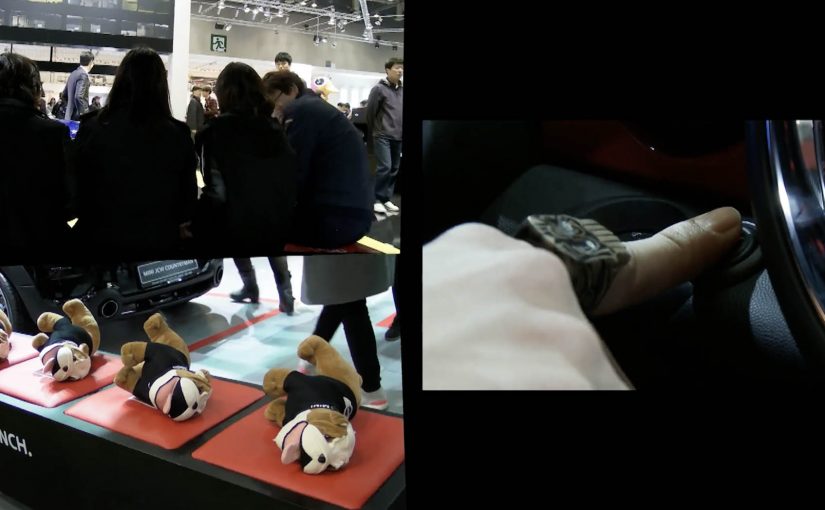
During the Geneva Motor Show 2012, MINI found a novel way to get people talking about the MINI Countryman. A special vibrating bench was installed on the street. Every time someone sat down, a MINI would sneak up from behind and rev its engine. The bench would then vibrate and capture some great reactions.

A bench that turns engine power into a punchline

The mechanism is beautifully low-tech. The car is the soundtrack, and the bench is the amplifier. The moment a passer-by becomes the participant, the installation delivers a sudden physical sensation that is impossible to ignore and hard not to laugh at.

In event-adjacent street activations, the fastest route to earned attention is a one-step setup with an instantly readable payoff.

The real question is whether you can turn a brand cue into a physical joke in under one second.

Why it lands

This works because it creates a clean before-and-after. Calm street moment. Sit down. Surprise rev. The body reacts before the brain explains. That involuntary reaction is the content. It is also brand-consistent. A MINI launch does not need to lecture about features when it can dramatise “fun” through a simple interaction.

Extractable takeaway: If you want people to share, design for an automatic reaction and make the trigger obvious. The best “reaction marketing” needs no explanation and no rehearsal. Here, “reaction marketing” means engineering an immediate, involuntary response that becomes the content.

What MINI is really buying with a vibrating bench

The goal is talkability at the edges of the show, outside the exhibition hall where not everyone will see the product stand. The bench turns the city into a distribution channel, and it gives the model a personality. Playful. Slightly mischievous. Confident enough to sneak up on you. This is a stronger use of attention than explaining “fun” in copy.

Steal the one-step reaction loop

  • Use a familiar object. A bench is self-explanatory, which removes instruction friction.
  • Make the trigger binary. Sit down. Experience the effect. No steps in between.
  • Keep the payoff physical. Tactile moments are more memorable than visuals alone in busy streets.
  • Design for the crowd. The bystanders are the multiplier. They laugh, film, and recruit the next sitter.
  • Protect safety and consent. Surprises should startle, not scare. Calibrate intensity and timing.

A few fast answers before you act

What is the Thrill Bench in one sentence?

It is a street installation where sitting on a bench triggers a nearby MINI to rev, making the bench vibrate and creating a shareable surprise reaction.

Why does this work during an auto show?

It reaches people beyond the show floor and turns the city into a stage, generating attention and social sharing without buying additional media.

What makes this “reaction marketing” effective?

The reaction is genuine and immediate. Viewers trust real behaviour more than scripted claims, and the format is easy to film and share.

What is the biggest execution risk?

Intensity. If the vibration feels aggressive or unsafe, the moment flips from fun to discomfort and sentiment turns negative.

What should you measure in a similar activation?

Participation rate, bystander clustering, video shares, sentiment, and whether the stunt lifts search, dealership queries, or event footfall in the same period.