
Social Robots: San Pellegrino and Coca-Cola

In 2011, Andes Beer in Argentina used robots in their campaign to enable people to virtually experience a real-life event. Fast forward to 2013 and social robots show up again, this time in campaigns from Italy and Israel. Here, “social robots” means telepresence robots used as remote-controlled avatars at live events.

When “social” becomes physical

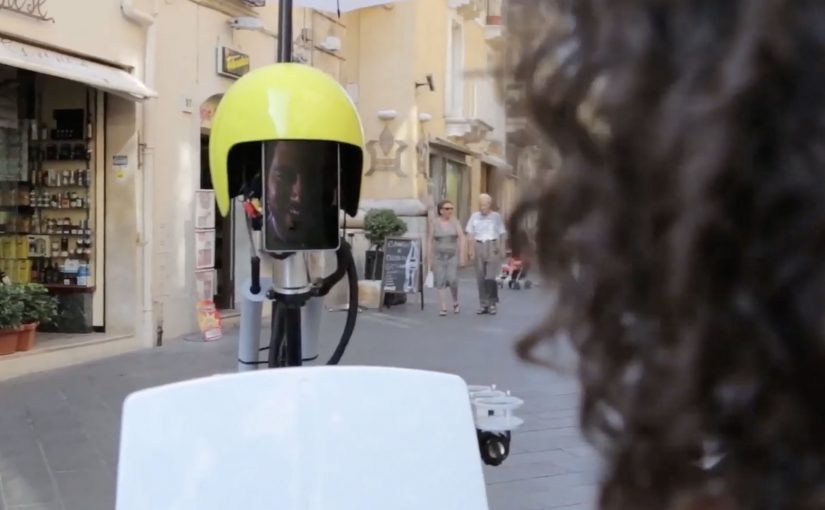
The mechanism in both examples is telepresence. A robot with a webcam and microphone acts as a movable avatar in a real location. People at home control where it goes, what it looks at, and who it talks to, turning a distant event into something they can actively explore rather than passively watch.

In experiential marketing, telepresence robots let brands scale a place-bound moment to remote audiences without reducing it to a simple livestream.

Why the robot format lands

This works because it restores a missing ingredient of remote content. Presence. You are not only consuming footage. You are choosing what to look at, moving through the environment, and having real-time interactions that feel personal. Because telepresence combines viewer control with two-way contact, it turns remote viewing into participation. Telepresence is worth the operational hassle only when “being there” is the product. The real question is whether your remote audience needs presence, not just access.

Extractable takeaway: If your brand moment is tied to a physical place, give remote audiences viewer control over a live viewpoint. Even small control makes the experience feel earned, and earned experiences get talked about.

Three minutes in Italy

San Pellegrino invited Facebook fans to discover the Sicilian village of Taormina and explore its cobblestone streets via a webcam and microphone enabled robot controlled from their own computer.

Coca-Cola Summer Love 2013

Coca-Cola Summer Love is the annual summer event for Israeli teenagers. Not everyone can join in person, so Coca-Cola created robots that allowed teens to be part of the camp without leaving their homes. The robots carried webcams and microphones and were controlled by users who could not physically be there.

Users could navigate around the campus, talk with friends, watch shows, participate in competitions, and be part of the experience. The robots were welcomed, danced with, and treated like real attendees, becoming the “stars” and a natural media magnet inside the event.

Practical steals for telepresence events

  • Make control the feature. Remote access becomes meaningful when people can choose what happens next.
  • Keep interactions human-scale. Let remote users talk to real people, not just watch a feed.
  • Time-box the experience. Constraints like “three minutes” create urgency and reduce operational load.
  • Design for friendliness. The robot should invite social acceptance in the space, not disrupt it.

A few fast answers before you act

What is a “social robot” in these campaigns?

A telepresence robot that carries a live camera and microphone, letting a remote person control movement and interact with people on-site in real time.

Why is telepresence more compelling than a normal livestream?

Because it adds viewer control and two-way interaction. Control makes the experience feel personal, and two-way contact makes it feel like participation rather than content consumption.

What is the main operational risk?

Latency, connectivity, and crowd behavior. If the robot is hard to control or gets blocked, the magic disappears quickly.

Where does this pattern fit best?

Events, tourism, launches, and experiences where the value is being “there,” and where remote audiences have strong motivation but limited ability to attend physically.

How do you keep the robot from becoming a distraction?

Set simple on-site rules, give the robot a friendly presence, and design short, guided interactions so crowds do not block or hijack it.
Eterna Cadencia: The Book That Cannot Wait

Last month I wrote about Austria Solar’s annual report, whose pages became visible only when exposed to sunlight.

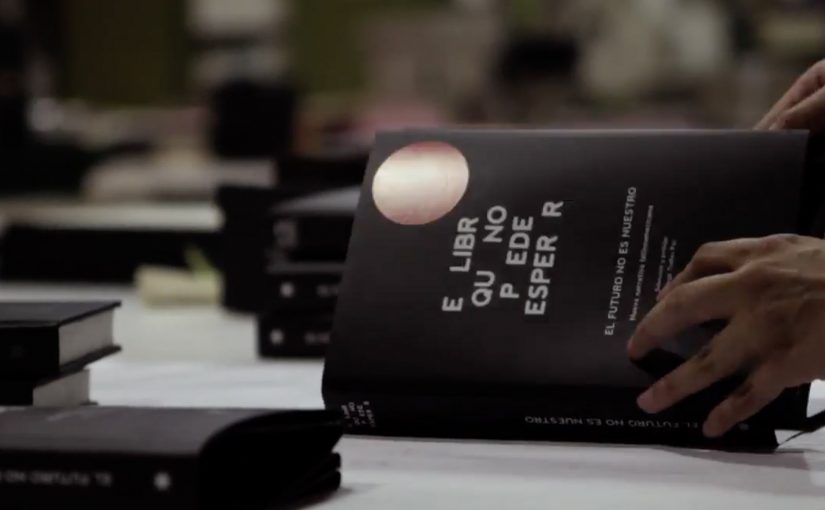
Now Buenos Aires based bookshop and publisher Eterna Cadencia has released “El libro que no puede esperar”, “The book that cannot wait”. It is an anthology of new fiction printed in ink that disappears after two months of opening the book.

The mechanic: ink that fades once you open the seal

How is that possible. Here, the mechanic is a built-in physical rule: the books are described as being silk-screened using a special ink, then sealed in air-tight packaging. Once opened, the printed material reacts with the atmosphere and starts to fade. The result is that, after roughly two months, the text vanishes.

In global publishing markets where e-books change reading habits, physical formats regain attention when they add a constraint that digital cannot replicate.

Why it lands: urgency turns reading into an action, not an intention

The idea does not compete with e-readers on convenience. It competes on psychology. A normal book is patient. This one is not. It creates a deadline, and deadlines change behavior. Because the fading is irreversible, the deadline feels real rather than promotional.

Extractable takeaway: If you want people to stop postponing a behavior, make the cost of waiting tangible and irreversible. Scarcity works best when it is built into the product, not added as a marketing slogan.

What it is really doing for new authors

The real question is whether a physical constraint can turn passive interest into immediate reading.

This is smart publishing design, not a gimmick for its own sake.

At face value, this is a publishing gimmick. Underneath, it is an argument for momentum. New fiction struggles when it sits unread on a shelf, because “I’ll get to it” often becomes “never”. A time-limited book reframes the purchase as a commitment to read now, which is exactly what emerging authors need.

The project is also widely described as being developed with DraftFCB, which helps explain why the execution feels like an idea engineered for cultural pickup, not just for bookstore shelves.

What to steal if you are marketing anything physical

  • Build the message into the object: the product itself should carry the story, even without a campaign.
  • Make the constraint legible: people should understand the rule in one sentence.
  • Turn delay into loss: urgency works when waiting has a real consequence.
  • Use packaging as a trigger: opening the seal is a clear “start” moment, and that matters for behavior.
  • Design for retellability: “a book that disappears if you do not read it” spreads on its own.

A few fast answers before you act

What is “The Book That Cannot Wait”?

It is a print book sealed in packaging where the text is printed with ink that starts fading once the seal is opened, so the content disappears after around two months.

Why would a publisher want ink that disappears?

To create urgency. The mechanic nudges readers to start and finish the book quickly, which can help emerging authors get read instead of getting postponed.

Is this a product innovation or a marketing campaign?

It is both. The object is the media. The disappearing ink turns the product into the message, which then earns coverage and conversation.

What is the biggest risk of copying this idea?

Trust. If people feel tricked or if the fade behavior is inconsistent, the stunt becomes resentment. The rules need to be clearly communicated and reliably delivered.

Where else does “built-in urgency” work?

It can work in limited editions, time-bound access, perishability, or experiences that change after first use. It is strongest when the constraint feels meaningful, not arbitrary.

Salta Beer: The Rugbeer Machine

A vending machine that rewards you for tackling

Argentina is often described as football-obsessed. But up in the northern Salta province, described by some as the “New Zealand of Argentina”, rugby culture runs deep. Salta Beer set out to give those rugby fans a live experience built for what they do best.

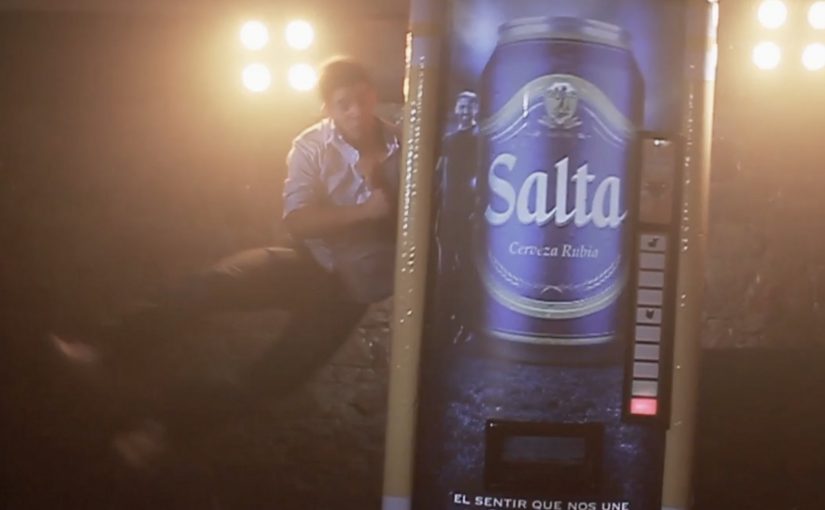
Working with Ogilvy Argentina, the brand created the Rugbeer Machine, a tackle-activated vending machine concept described as first of its kind. It dispenses exactly what rugby players want most after doing what they do best. One cold Salta Beer per tackle.

The mechanic that makes the idea instantly legible

The machine turns a familiar ritual into a simple rule. You do a proper tackle. The machine validates the hit. You get a can. That is it. No explanation needed, no copy deck required, no “brand purpose” lecture.

Because the rule is binary and the reward is immediate, people understand the exchange instantly and decide on the spot whether to join. In global beer marketing, the fastest way to earn attention in a bar is to convert consumption into a participatory challenge that proves the product in the moment.

Why it lands

It respects the audience’s identity. Rugby is physical, social, and performance-driven, so the “payment method” matches the culture. It also creates a crowd dynamic. One person tackles, everyone watches, the machine responds, and the moment becomes a repeatable mini-event that people want to try and film.

Extractable takeaway: If your brand can credibly borrow an audience ritual, turn that ritual into the input, then make the brand reward the output immediately and publicly.

What the brand is really buying

This is a product trial engine disguised as entertainment. The real question is whether the brand can turn rugby identity into a public participation loop that sells the beer without feeling like an ad. The reward is immediate. The proof is physical. And the format creates social permission to engage because it feels like play, not promotion.

What experiential teams should steal

  • Match the mechanic to the tribe. The interaction should feel native to the audience, not imported from a marketing playbook.
  • Make the rule binary. Do the thing. Get the reward. Complexity kills participation in public spaces.
  • Design for a crowd. The best activations create spectators and participants at the same time.
  • Reward immediately. Instant payoff turns curiosity into action, and action into repeat attempts.

A few fast answers before you act

What is the Rugbeer Machine?

It is a rugby-themed vending machine activation for Salta Beer that dispenses a cold beer after a participant completes a tackle on the machine.

Why does “one beer per tackle” work as a mechanic?

Because it is culturally aligned, instantly understandable, and produces a public moment that is fun to watch and easy to repeat.

What makes this more effective than a typical sampling campaign?

Sampling is usually passive. This turns sampling into earned reward, which increases attention, memorability, and social sharing.

What is the transferable principle for other brands?

Turn a core audience behavior into the input. Then deliver an immediate, visible reward that proves the product in context.

What is the most common failure mode if you copy this format?

Forcing an interaction that does not fit the audience culture, or adding friction that makes people hesitate in public.