
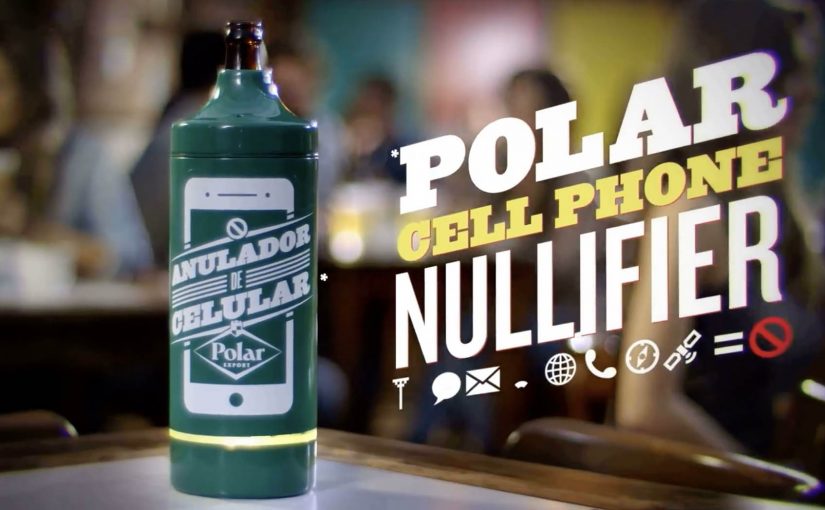
Polar Beer: Cell Phone Nullifier

There is a specific kind of modern annoyance. You go out with friends, and ten minutes later the table is lit by phone screens instead of conversation.

Polar, a regional Brazilian beer brand, decides to treat that as a solvable problem. If phones steal the night, then the beer should give it back.

A beer cooler that changes the rules of the table

The mechanism is a physical prop with a blunt promise. A special Polar cooler is described as blocking 3G, 4G, Wi Fi, and GSM signals for devices within roughly a five-foot radius. Order Polar. Get served in the cooler. Watch the room look up.

In bar and nightlife settings, the strongest behavior-change ideas work when they attach to an existing ritual and alter it with minimal effort from the audience.

Because the cooler makes the phone temporarily useless at the table, conversation becomes the path of least resistance.

Why it lands, even if people hate it for a minute

This plays with a familiar tension. Everyone complains about “phubbing,” the habit of snubbing people in front of you by focusing on your phone, but nobody wants to be the first person to say “can we put phones away.” The cooler does the awkward social work on behalf of the group.

Extractable takeaway: If a social norm is breaking down, redesign the environment so the better behavior becomes the default. Remove the need for a lecture, and replace it with a small constraint that everyone experiences equally.

The brand benefit is also clean. Polar is not asking for attention. It is buying it back for you, then sitting at the center of the moment it created.

What the stunt is really selling

On the surface it is a gadget. Underneath it is a positioning move. Polar equates itself with real-world connection and the kind of night people say they want, even when their hands keep reaching for the screen.

The real question is whether you can earn attention by subtracting distraction, not by adding more stimulation.

This is a smart positioning move because it delivers the promise through the ritual, not through a slogan.

It is also a reminder that “anti-tech” can be a tech story. The cooler is not anti phone as an identity. It is pro conversation as an outcome.

Steal this for phone-free nights

  • Target the moment, not the attitude. Fix the table behavior, not the entire relationship with smartphones.
  • Use a prop that belongs in the setting. A cooler at a bar feels natural. A lecture does not.
  • Make it equal. The constraint applies to everyone in range, so it feels like a shared game, not a personal attack.
  • Build a story people retell in one sentence. “The beer that makes your phone stop” spreads fast.

A few fast answers before you act

What is Polar’s “Cell Phone Nullifier”?

It is a branded beer cooler concept described as cutting off nearby phone connectivity, so people ordering Polar are nudged into talking to each other instead of scrolling.

Why does blocking the signal work as a behavior-change tactic?

It removes the temptation rather than arguing with it. By changing the environment, it turns “I should put my phone away” into “my phone is not part of the table right now.”

What is the core creative mechanism here?

A familiar bar object is redesigned to enforce a social norm. The product ritual, ordering beer and receiving it in a cooler, becomes the delivery system for the idea.

How can brands adapt this without feeling preachy?

Focus on shared benefits and shared participation. Make the intervention playful and collective, and keep the user action simple and voluntary.

What is the biggest risk if you copy this idea?

If the constraint feels forced or punitive, it becomes the story instead of the conversation it was meant to protect. Keep it lightweight, contextual, and easy to opt into.
Norte: The Best Excuse Ever

A night out with the boys usually needs an excuse, at least as the joke goes. Norte, a beer brand associated with northern Argentina, decides to turn that familiar line into a socially useful premise.

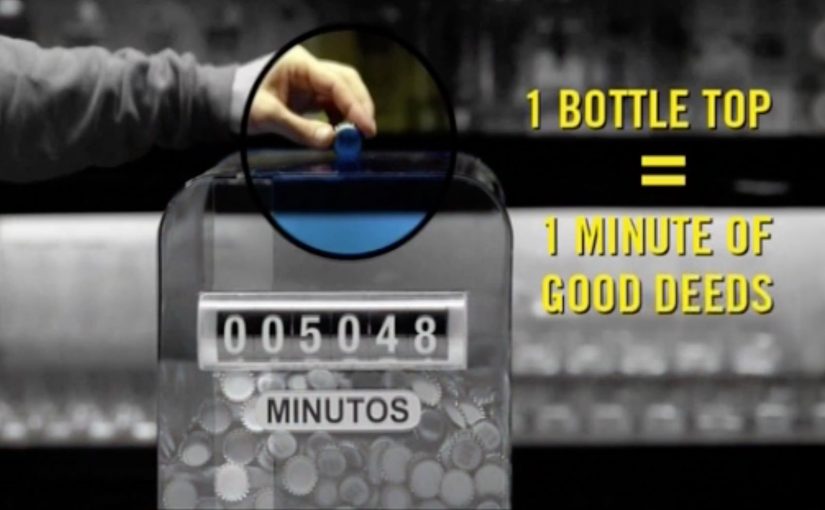
The idea is deliberately simple. For every Norte beer consumed at a bar, the brand donates one minute of time to practical community work, including fixing houses, maintaining parks, and repairing schools. Followers can monitor the donated minutes and the progress made through a dedicated website, which turns “we went for a beer” into a measurable counter of good deeds.

How the “minutes” mechanic works

The mechanic converts consumption into a visible unit of contribution. One beer equals one minute, then the brand performs the work and publishes progress so the audience can see the tally move. The counter is the proof, and the proof is the story people repeat.

In FMCG marketing, especially in categories tied to social rituals, converting a purchase into a transparent, trackable unit of public benefit can reframe indulgence as participation.

Why it lands

It removes the defensiveness from the behavior by giving it a credible upside. The campaign is not asking people to stop going out. It is redirecting the narrative from “pointless drinking” to “we contributed minutes.” The tracking layer matters because it reduces cynicism, since the audience can follow a concrete output rather than a vague promise.

Extractable takeaway: If your category has a guilt narrative, turn the core behavior into a quantifiable unit of visible impact, then publish progress often enough that people can use it as social proof.

What the brand is really trying to win

This is reputation as much as reach. Norte is positioning itself as the beer you can choose without needing to defend the choice later. The community work is the legitimacy, and the “best excuse” line is the social wrapper that helps the story travel.

The real question is whether a beer brand can turn a familiar excuse into a credible, repeatable proof of usefulness.

What to borrow from Norte’s minute logic

  • Make the unit understandable. A minute is easier to grasp than a donation percentage.
  • Design the proof before the film. A public counter and visible work outputs keep the idea credible.
  • Let the audience retell it in one sentence. “Every beer adds a minute” is built for word-of-mouth.
  • Guard the integrity. Transparency and follow-through matter more here than polish.

A few fast answers before you act

What is “The Best Excuse Ever” in one line?

A beer campaign where each Norte beer consumed converts into one minute of real community work, tracked publicly so people can see progress.

Why does the minute-based unit help?

It is concrete and easy to visualize. It also makes progress feel additive, so participation scales naturally with social occasions.

What makes this more credible than typical cause marketing?

The proof mechanism. A visible counter plus documented work outputs reduces the “donation fog” that often makes audiences skeptical.

What is the biggest risk with this approach?

If the brand cannot consistently deliver the promised work, the counter becomes a liability and the campaign reads as opportunism.

When does this model work best?

When consumption is already social and habitual, and the brand can operationally execute real-world outputs at the pace the campaign generates demand.

Bud Light: Clothing Drive

A simple gag, executed cleanly

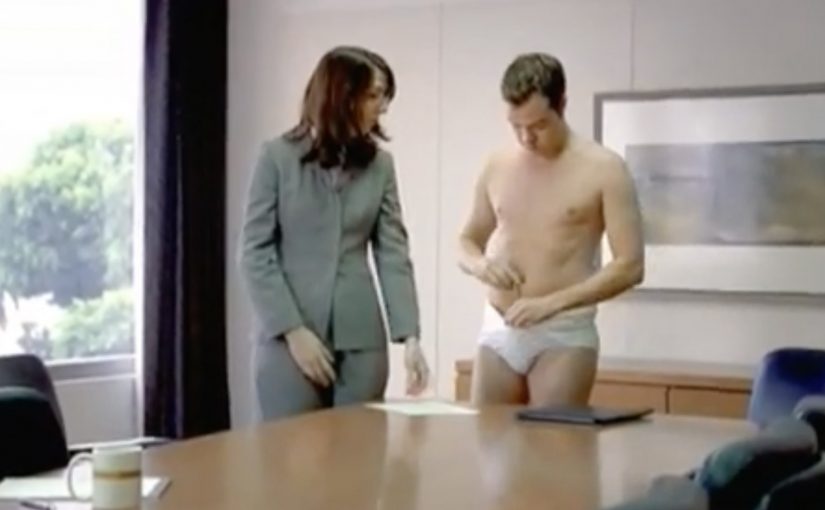
A Bud Light ad credited to DDB USA plays as a pure setup-and-payoff joke. It does not over-explain itself. It just commits to the visual premise and lets timing do the work.

How the “clothing drive” trick works

The spot relies on controlled misdirection. Here, controlled misdirection means giving viewers just enough information to make the wrong prediction before the reveal corrects it. It establishes a familiar situation, encourages the viewer to predict what happens next, then flips that expectation with one sharp visual turn. The humor lands because the logic is coherent after the fact, even if you did not see it coming.

In mass-reach FMCG advertising, tight visual gags are a dependable way to earn attention without asking for extra cognitive effort.

The real question is whether the viewer gets the joke in a single beat and remembers the brand at the same time. For broad-reach comedy, restraint is the right call: one clean reversal beats extra explanation.

Why it lands

The joke is readable on mute, which makes it travel. The premise is also self-contained, so viewers can share it without needing context or explanation. When a brand already owns “easy-going fun,” this kind of execution reinforces that identity without resorting to slogans.

Extractable takeaway: If you want broad shareability, build a gag that is visually legible, hinges on one clear reversal, and resolves fast enough that people will replay it immediately.

Steal the visual-gag discipline

  • Make the setup ordinary. Normal scenes make the twist feel bigger.
  • Let the camera be the narrator. Clean framing and timing beat extra dialogue.
  • Optimize for mute viewing. If the joke works without audio, it works in feeds.
  • End on the cleanest frame. The final beat should be the one people remember and reshare.

A few fast answers before you act

What is Bud Light’s “Clothing Drive” ad?

It is a short comedic spot built around a “clothing drive” visual premise, using misdirection and a quick reveal to land the punchline.

What is the core creative mechanic?

Expectation management. A familiar setup invites a predictable outcome, then one visual reversal delivers the joke.

Why does mute readability matter here?

It makes the ad work in feeds, social clips, and distracted viewing environments where audio may be off but the visual payoff still has to land instantly.

Why are visual gags effective for beer brands?

They match the social, low-friction viewing context. Bars, parties, and feeds reward jokes that land quickly without explanation.

What’s the most transferable lesson for marketers?

Design the payoff so it is instantly understandable, even with no sound, and keep the entire arc short enough to trigger an immediate replay.