
Hey, Pass Me a Beer: Creative Handoff

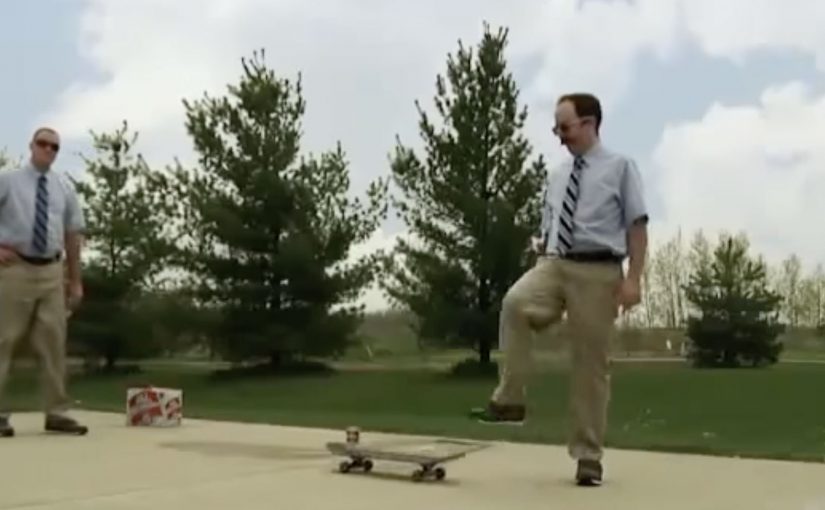
“Hey, pass me a beer” is a throwaway line until you treat it like a creative brief. This short film, described as shot in Milwaukee by Almost Twins, turns a simple request into a chain of increasingly elaborate handoffs.

The charm is in the escalation. Each new pass answers the same problem with a more over-engineered solution, and that relentless commitment is what keeps you watching.

The handoff trick that makes it work

The mechanism is a repeating loop. Set up the same micro-goal, move the beer from A to B, then raise the complexity without changing the premise. Here, the micro-goal is simply getting one beer from one person to another. Because the rules stay constant, the viewer can focus on anticipating the next method, not on understanding the story.

In internet video culture, repeatable mechanics like this spread because they are instantly understandable, and they reward attention with continual novelty.

Why it lands

It treats craft as the punchline. The joke is not a line of dialogue. The joke is the effort. That effort reads as playful competence, and it invites the viewer to watch for “how did they do that” as much as “what happens next”.

Extractable takeaway: If you want a simple gag to carry a whole film, lock one clear rule, then escalate execution rather than premise. The audience stays oriented while still being surprised.

What “trending” really means here

The real question is whether the viewer understands the rule fast enough to enjoy the escalation rather than spend energy decoding the format.

When a video like this climbs, it is usually because it is easy to share with one sentence, and because it plays well without sound or context. You do not need to explain it. You can just send it and let the mechanic do the work.

What to steal for your own short-form content

  • One rule beats ten ideas. A single repeating mechanic can outperform a complicated concept.
  • Escalate visually. Make each beat clearly “more” than the last, even in a thumbnail-sized view.
  • Keep runtime tight. End while the pattern is still satisfying, not after it becomes predictable.
  • Design for retellability. If a viewer can pitch it in one line, they will.

A few fast answers before you act

What is the core idea of Hey, Pass Me a Beer?

A single premise, passing a beer, repeated with escalating handoff methods so the execution becomes the entertainment.

Why does this format keep attention?

The rules stay fixed, but the solution changes each time. That combination makes it easy to follow and hard to predict.

What makes it shareable?

It is understandable instantly and does not need setup. People can share it with one sentence and the recipient gets it immediately.

How do you apply this to a brand or product?

Pick one tiny behavior you want to dramatize, then show many inventive ways to achieve it. Keep the product cue present, but let the mechanic carry the viewing pleasure.

What is the reusable lesson for short-form creators?

Build around one rule the audience can grasp immediately, then make each beat visibly more inventive without changing the premise.

Norte Beer: Photoblocker

After their successful campaigns for Andes Beer in Argentina, Del Campo Nazca Saatchi & Saatchi is back with another beer campaign. This time it is a TV ad that highlights another Argentine beer-related invention.

A beer cooler that fights the camera flash

The invention is described as the Norte “Photoblocker”. A functional beer cooler fitted with sensors that detect camera flashes. When a flash goes off nearby, it fires back its own burst of light to overexpose the photo and make faces hard to recognize.

In nightlife culture and bar marketing, protecting privacy in public spaces is a relatable tension that spreads fast through word-of-mouth.

Why it lands

The idea works because it turns an everyday annoyance into a “brand-powered solution”. Being tagged in a messy night-out photo is a modern fear, and the Photoblocker is a simple, visual punchline that makes the benefit obvious without explanation. It also sets up a clean contrast. With Photoblocker versus without Photoblocker. That before-and-after logic is perfect for TV, but it also hints at a real-world stunt, which is where the campaign earns extra talk value.

Extractable takeaway: If you can productize a social pain point into a physical prop that demonstrates itself in one second, you get both a clear story and a repeatable proof moment people will retell.

What the brand is really doing

This is less about claiming a taste difference and more about claiming a role in the night. The real question is how a beer brand can become useful in the exact social moment where embarrassment starts. Norte positions itself as “on your side” in the club. The brand becomes the enabler of freedom, mischief, and plausible deniability, with a device that dramatizes that promise.

What to borrow from this nightlife privacy stunt

  • Start from a real behavioral pain. Here it is social photo-tagging anxiety.
  • Build a prop that shows the benefit instantly. One flash. One ruined photo. No explanation needed.
  • Use an obvious contrast format. “With / without” is easy to remember and easy to share.
  • Make the stunt feel usable. Even if it is promotional, it should look like something you would want in real life.
  • Keep the brand role credible. The solution must feel like it belongs in the product’s world.

A few fast answers before you act

What is the Photoblocker, in one sentence?

A beer cooler that detects camera flashes and fires back light to spoil photos taken nearby.

Why is this a “beer campaign” and not just a gadget gag?

Because it connects directly to a drinking occasion and positions the brand as a protector of nightlife freedom, not just a beverage.

What makes the mechanic so shareable?

It is visual, instantaneous, and easy to explain. People understand the benefit the moment they see a flash ruin a photo.

What is the biggest credibility risk?

If the audience thinks it is impossible or staged, the “solution” stops being funny and becomes just an ad trick. The execution has to look functional.

How can other brands apply this pattern without copying it?

Identify a socially painful moment in your category, then build a simple, physical demonstration that resolves it in a way anyone can understand at a glance.

Carlsberg: Bikers in cinema experiment

In a Belgian cinema, an “easy night out” turns into a small test of nerve. A couple walks in with tickets in hand. The room looks full. The only two empty seats are in the middle. The twist is that the audience is packed with intimidating bikers.

Carlsberg and Duval Guillaume Modem set this up as an experiment to reinforce the brand’s association with making the right choices. Reactions were recorded and edited into a viral film that rewards the people who stay seated rather than turn around.

The mechanism that makes it work

The mechanics are simple and deliberate. Fill the room. Leave two seats. Let unsuspecting pairs make a binary decision in public. Stay or leave. The tension is real because the setting is real, and the social pressure is visible to everyone watching.

Once a couple commits and sits down, the room flips from threat to approval. The bikers applaud, and the moment turns into a reward scene that makes the brand feel like it “saw” the better choice.

In crowded FMCG categories, social experiments work when they dramatize a value claim in a single, easy-to-retell moment.

The real question is whether you can borrow social risk to create attention without breaking participant trust.

Why it lands: social risk, then social proof

The audience experiences the same internal dialogue as the couples. Do I trust my instincts. Do I judge by appearance. Do I avoid discomfort. That tension is the hook. The applause is the release. Here, “social risk” is the fear of being judged in public, and “social proof” is the crowd signalling approval once the choice is made.

Extractable takeaway: When you borrow social pressure as the hook, you must also design visible approval as the proof, so the value claim is retellable in one line.

It also produces a clean moral without preaching. The brave are rewarded. The crowd is not actually hostile. The viewer walks away with a feeling that maps neatly onto the brand’s “good decision” positioning.

What Carlsberg is buying with this stunt

This is not about product attributes. It is about emotional territory. Confidence. Decency under pressure. And the idea that choosing Carlsberg is the grown-up, correct move when there are multiple options. This is a smart brand play because it turns “making the right choice” into observable behaviour, but it only works when the participants are treated carefully.

It is also engineered for sharing. The setup can be explained in one sentence, and the payoff is satisfying even if you only watch the last third of the video.

Design rules for your own brand experiments

  • Make the choice binary. The story works because there is a clear yes or no moment.
  • Stage tension, then earn release. If you create discomfort, you must repay it with warmth or justice.
  • Keep the “why” instantly readable. Viewers should understand what is being tested without narration.
  • Reward the behaviour you want to own. The applause is not decoration. It is the message.
  • Protect trust. If participants feel tricked or harmed, the brand loses the moral high ground.

A few fast answers before you act

What is the Carlsberg “bikers in cinema” experiment?

It is a filmed cinema stunt where unsuspecting couples enter a theatre filled with bikers and find only two seats left among them. Their decision to stay or leave becomes the story, and the people who stay are rewarded.

Why is this more shareable than a typical ad?

Because the premise is instantly understandable and the emotional arc is clean. Tension, decision, payoff. That structure travels well as a short video.

What brand message does the stunt communicate?

That “making the right choice” is a real behaviour under pressure, not a slogan. The brand borrows credibility by rewarding the choice on camera.

What is the biggest risk with social-experiment advertising?

Breaking trust. If the situation feels unsafe, humiliating, or coercive, the audience will side with the participants, not the brand.

How do you adapt this pattern without copying the stunt?

Create a public moment with a clear decision, then design a surprising but positive reward that proves your positioning. Keep the stakes emotional, not harmful.