
Newcastle Brown Ale: Shadow Art Billboard

Newcastle Brown Ale: Shadow Art Billboard

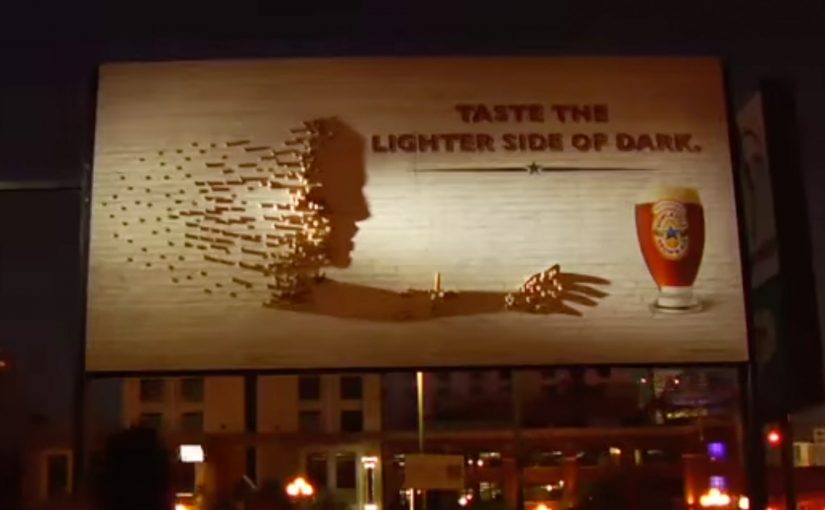
Newcastle Brown Ale’s Shadow Art has debuted in San Diego’s nightlife hub, the Gaslamp district, now through the end of September. Using only a single light source and thousands of Newcastle Brown Ale bottle caps, two New York shadow artists partnered with Newcastle to bring to life a shadow sculpture spanning 128 square feet. Shadow art is an installation that reads abstract until a specific light angle casts a deliberate image.

How it works when the sun goes down

By day it reads like an abstract field of caps. By night, the light angle does the magic. The caps become a pixel grid, and the shadow resolves into a clear image that connects directly to the brand world and the “Lighter Side of Dark” idea. Because the image only resolves under the right light angle, it invites a second look and conversation in a noisy street.

In dense entertainment districts where outdoor media competes with movement, neon, and noise, physical interactivity that rewards a second look beats anything that needs time to decode.

The real question is whether your outdoor idea earns a second look without asking for extra attention.

Why it lands

It makes the reveal the reward. The billboard does not shout at you. It waits until the conditions are right, then surprises you with an image that feels like you discovered it.

Extractable takeaway: Out-of-home becomes memorable when the medium changes state based on real-world conditions like light and viewpoint. If the message only appears when the environment cooperates, the audience feels like they unlocked it.

It uses the product as raw material. Bottle caps are not a metaphor. They are literally the building blocks, which makes the craftsmanship feel inseparable from the brand.

It turns a static surface into a time-based experience. You do not just “see an ad”. You experience a transformation. That shift is what creates talk value in public spaces. Talk value here means it gives people a simple reason to bring it up to others in the moment.

Borrow from Shadow Art billboards

  • Design for a two-stage read. First glance should intrigue. Second glance should reward with clarity.
  • Make the material part of the story. When the build uses brand-native ingredients, the proof feels baked in.
  • Choose locations where “stop and stare” is natural. Nightlife zones work because people are already scanning, wandering, and socializing.
  • Anchor the payoff to one simple brand line. The reveal should resolve into a message people can retell in a sentence.

A few fast answers before you act

What is “shadow art” in an advertising context?

An installation that looks abstract from one angle or in one lighting condition, but becomes a clear image when a specific light source and viewpoint create the intended shadow.

Why use bottle caps instead of printed graphics?

Caps add texture, depth, and authenticity. They also turn the build into a craft story that people talk about, photograph, and share.

What makes this work in a place like the Gaslamp district?

Because it competes with nightlife the right way. It creates a moment people can discover and show to friends, rather than trying to out-shout the environment.

What is the business intent behind an installation like this?

To generate earned attention and brand distinctiveness by creating a public experience that feels “worth a look”, then “worth a share”.

What is the most transferable lesson?

Build a reveal that is conditional on the real world. Light, angle, and time can do the targeting for you without any data.
Antarctica: Beer Breathalyzer

Antarctica: Beer Breathalyzer

Drinks giant Ambev aims to reduce drinking and driving in Brazil. Together with agency AlmapBBDO, it brings a unique Antarctica beer “breathalyzer” activation into bars to show young adults how alcohol affects judgement.

A bar experience that turns a warning into a reveal

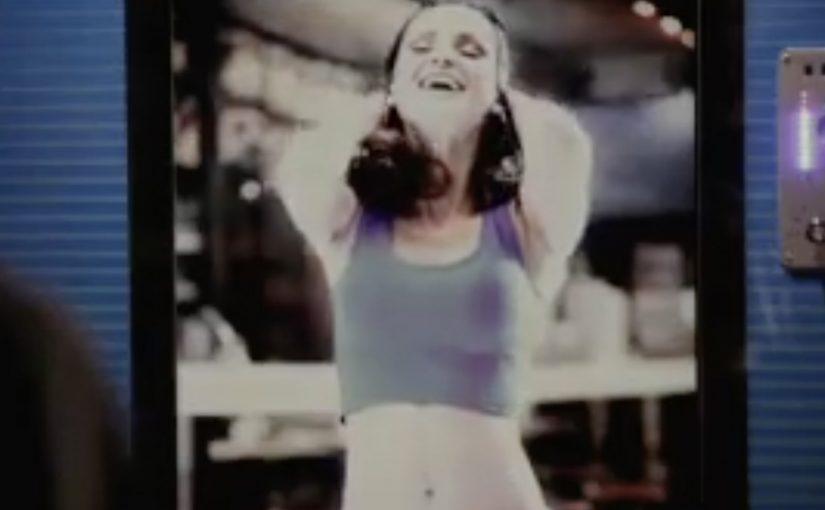
Video screens are placed in bars, and a friendly, normal-looking girl invites customers to take a breath test by breathing into the machine.

If the reading suggests they’re sober enough, the moment ends. If the machine detects alcohol, the on-screen character transforms into a gyrating, seductive “beauty” and the unit prints a discount voucher for a taxi company.

The mechanic: demonstrate impaired judgement, then offer the safer choice

The creative trick is to dramatize the very thing alcohol distorts: perception. By making the “wrong” reaction feel obviously wrong, the campaign turns a safety message into something people feel instantly, not something they are told to remember later.

The real question is how to interrupt the decision before someone leaves the bar thinking they are still fine to drive.

In nightlife contexts, responsible-drinking work is strongest when the safer alternative is offered at the exact decision point.

Why it lands: it replaces lecturing with a moment of self-recognition

Most anti-drink-driving communication relies on fear or shame. This execution uses surprise and self-awareness, then nudges the next best action without moralizing.

Extractable takeaway: For high-friction behavior change, pair a fast “mirror moment” (show me I’m not fit to decide) with an immediate off-ramp (make the safer option easy, discounted, and right there).

What to steal for your own safety or responsibility campaign

  • Put the intervention where the decision happens: bars, venues, exits, car parks, pickup points.
  • Make the insight experiential: one surprising reveal beats ten lines of copy.
  • Offer the alternative instantly: the voucher is the conversion mechanism, not a side benefit.
  • Keep the interaction short: fast participation increases uptake and social watching.
  • Design for talk value: if people describe it easily, it spreads beyond the venue.

A few fast answers before you act

What is the Antarctica Breathalyzer activation?

It is a bar-installed breath test experience that uses an on-screen transformation to illustrate impaired judgement, then prints a discounted taxi voucher when alcohol is detected.

Why does a taxi voucher matter in this context?

Because it converts awareness into action. The campaign does not just warn you. It gives you a practical way to avoid driving right now.

What is the behavioral insight behind the “transformation”?

Alcohol can distort perception and decision-making. The exaggerated change on screen is a fast metaphor designed to make that distortion obvious and memorable.

What’s the biggest risk in copying this idea?

Tone. If the execution feels mocking, sexist, or unsafe, it can backfire. The experience needs to motivate safer choices without humiliating participants.

How do you measure success for this kind of activation?

Participation rate per venue, voucher redemption rate, uplift in taxi usage during activation windows, and any local incident or enforcement indicators you can ethically and legally access.

Budweiser: Ice Cold Index

Budweiser: Ice Cold Index

Weather obsession turned into a price lever

Few cultural triggers are as universal as the weather. Budweiser used that everyday obsession to turn attention into action at the pub.

Irish people have always been fascinated by the weather, but their interest is set to reach new heights this summer with the launch of the Budweiser Ice Cold Index.

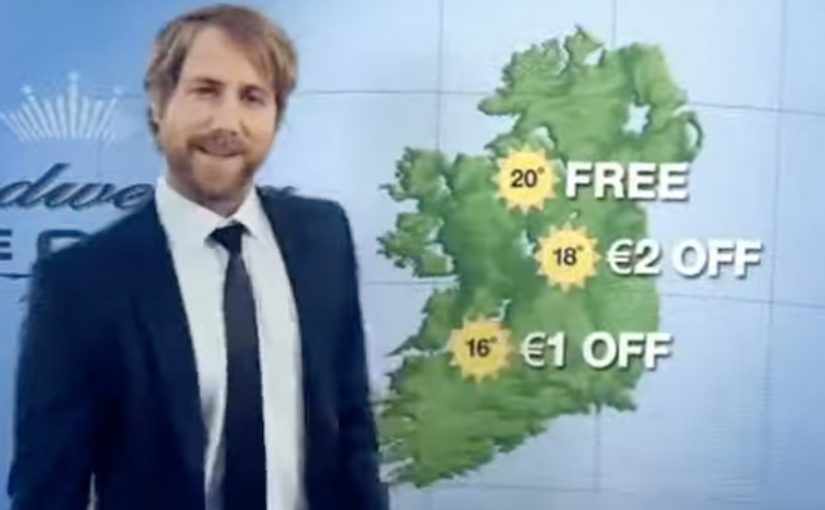
The Budweiser Ice Cold Index app is set to show you the local weather, then spit out redemption codes for free or discounted beer at nearby participating pubs. The higher the temperature, the less you will pay for your pint.

How the Ice Cold Index mechanic worked

The mechanism is simple. Combine three inputs into one immediate reward: location, temperature, and a redeemable code.

The app checks local weather. It then generates a redemption code tied to nearby participating pubs. Price sensitivity is built into the rule set. As temperature rises, the customer’s price drops. This is dynamic pricing in its simplest form: a discount rule that updates automatically based on a measurable condition.

That turns “checking the weather” into “moving into the selling space”.

The real question is how you turn a daily habit check into a measurable step toward purchase without it feeling like a random coupon drop.

Linking price to an external context signal beats arbitrary discounting, because the offer explains itself in one line.

In Irish on-trade activations, weather-linked rules can make a pub choice feel like a natural, talkable next step.

Why the offer feels timely, not forced

It lands because it connects to a real moment of intent. Warm weather increases thirst and increases pub footfall. The offer arrives at exactly the time the customer is already considering a drink.

Extractable takeaway: If you can anchor an incentive to a shared, observable condition, you reduce explanation friction and increase redemption because the context does the persuading.

It also feels fair and transparent. The rule is easy to understand. Hotter day equals cheaper pint. That clarity reduces skepticism and makes the incentive feel like a natural extension of the context.

The business intent behind linking price to temperature

The intent is to convert ambient interest into measurable behavior.

By tying discounts to local conditions, the brand creates a reason to choose a participating pub now, not later. It also encourages repeat checking and repeat visits, which is where loyalty accrues in practice.

This app literally moves people into the selling space, provides refreshment, and so it should gain some loyalty points with customers as well. Too bad it is only in Ireland.

Steal these moves from the Ice Cold Index

  • Attach the incentive to a context signal. Weather is a shared trigger that makes offers feel relevant.
  • Use a rule people can explain in one sentence. Clarity increases trust and redemption.
  • Move people into the selling space. The best mobile incentives reduce distance between intent and purchase.
  • Design for repeat behavior. If the offer updates with conditions, customers have a reason to come back.

A few fast answers before you act

What is the Budweiser Ice Cold Index?

A mobile app concept that shows local weather and generates redemption codes for discounted drinks at nearby participating pubs, with discounts increasing as temperature rises.

What was the core mechanism?

Dynamic pricing driven by weather conditions, delivered through location-aware redemption codes for nearby pubs.

Why does tying price to temperature work?

Because it aligns with real-world demand. When it is warmer, people are more likely to buy a cold drink, and the offer feels timely rather than random.

What business goal does this support?

Driving footfall to participating pubs, increasing redemption rates, and encouraging repeat engagement through an offer that changes with conditions.

What is the transferable takeaway?

Use a shared context trigger to make incentives feel natural, then deliver a simple, redeemable action that moves people into purchase.