
Pepsi Like Machine

You walk up to the Pepsi’s “Like Machine”, tap “Like” for Pepsi on Facebook using your smartphone or the machine’s touchscreen, and it dispenses a soda. Simple rule. Instant reward.

The Like Machine mechanic

Coca-Cola has created a whole bunch of innovative vending machines over the last couple of years. Pepsi, on the other hand, created only a couple. Now to add to that collection, Pepsi piloted its latest vending machine. Dubbed the “Like Machine”, it was programmed to dispense soda to fans who “Like” the brand on Facebook via their smartphone or via the touchscreen on the machine.

For brands using event-led FMCG activations, the value of this mechanic is that it turns a familiar digital action into a visible physical conversion point.

The business logic is clear: tie a low-friction social action directly to a branded product moment.

Where did Pepsi pilot it

Pepsi piloted the machine at a Beyonce concert in Antwerp, Belgium and received a good response. So do not be surprised if you see more of them popping up nearby.

Why “Like” works as currency here

The exchange is clear. A lightweight social action becomes the trigger for a real-world payoff. The behaviour is familiar, the barrier is low, and the moment is easy to understand even in a noisy live-event setting. The real question is whether the action feels effortless enough to be worth doing on the spot. This is a smart activation rule because it converts a familiar digital gesture into an immediate physical reward, which reduces hesitation and lifts participation.

Extractable takeaway: When a brand uses a familiar low-friction action as the price of entry, more people complete the interaction because they understand the trade instantly.

What to steal from a like-for-reward mechanic

  • Make the exchange instantly legible. One action. One reward. No interpretation required.
  • Use a behaviour people already do. “Like” is familiar, so the barrier to participation stays low in a live setting.
  • Keep the payoff immediate. The shorter the gap between action and reward, the higher the completion rate.
  • Measure conversion, not just buzz. Track attempts, successful dispenses, and incremental social lift during the activation window.

A few fast answers before you act

What is the Pepsi Like Machine?

It is a vending machine that dispenses a Pepsi to people who like the Pepsi brand on Facebook, either via their phone or on the machine touchscreen.

Why test this at a concert?

Concert crowds are already in a high-energy mindset and open to quick interactions. That makes participation fast and visible, which boosts word of mouth.

Why does this mechanic work so quickly?

Because the rule is easy to grasp and the reward is immediate. People do not need extra explanation to decide whether to participate.

What is the simplest lesson to copy?

Make the rule obvious, the action effortless, and the reward immediate. If any one of those is slow or unclear, participation drops.

What should you measure?

Participation rate per hour, completion rate (start to dispense), and the incremental social lift tied to the activation window.
Smart Apps: Audi Start-Stop and Reborn Apps

Here are two mobile apps that recently caught my eye…

Audi Start-Stop App

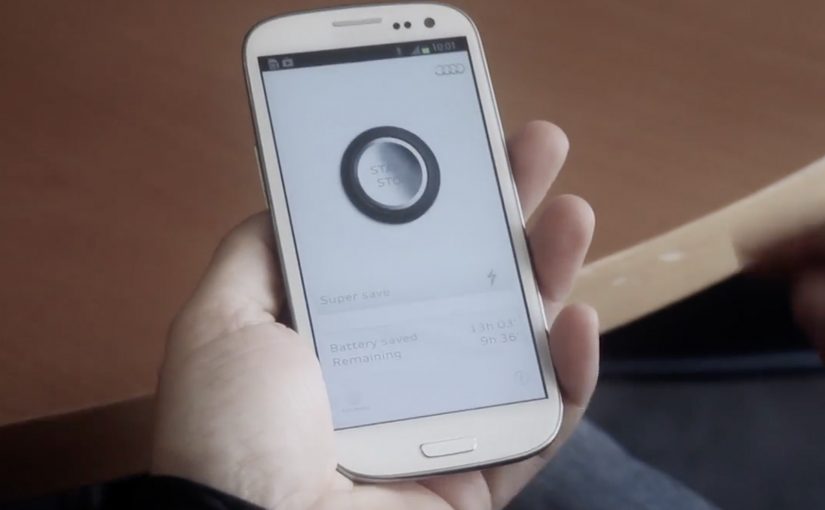
The Audi start-stop system turns off the engine when the car stops at a traffic light and turns it on again when the car starts. Using the same principle, Audi along with DDB Spain creates an Android app that detects which applications have been open longest without being used and sends an alert to the user to close them. Thus saving battery and making the phone a more efficient tool.

Reborn Apps

Many events create their own smartphone apps. But when the event is over, the apps lose their usefulness and are then hardly used. To give these apps a second life, Duval Guillaume gets various Belgium organisations to push out an update which turns their event apps into a registration medium for organ donation.

In European mobile marketing, the strongest brand apps behave like practical utilities first and brand messages second.

The real question is whether your app earns its place by doing one useful thing so well that people choose it again tomorrow.

Brand apps should be judged on repeat usefulness, not on campaign polish.

Why these app ideas work

Both concepts start with a familiar trigger and then make the next best action nearly frictionless, which is why the prompt feels helpful instead of noisy.

Extractable takeaway: Both apps translate a familiar real-world idea into a simple mobile behavior change. One nudges you to close what you are not using. The other repurposes what you already have installed.

  • They solve a real friction. Battery drain and app clutter are everyday pains. Low donor registration is a societal pain.
  • They use a clear trigger. “Unused for long” becomes the reason to act. “Event is over” becomes the reason to update.
  • They keep the action lightweight. A close action or a signup action can happen in seconds.

Two different intents, one shared pattern

The Audi app is a utility story. It borrows a car feature metaphor to make an Android housekeeping task feel purposeful. The Reborn idea is a “mobile for good” story. By “mobile for good,” I mean using everyday mobile touchpoints to drive a public-interest action, not just brand engagement. It turns leftover event attention into a meaningful registration moment, without asking people to download something new.

Patterns to borrow for brand apps

  • Start from a known behavior. People already ignore background apps. People already keep old event apps installed.
  • Make the trigger obvious. If users cannot explain why the app pinged them, they ignore it next time.
  • Design for the next best action. One tap to close. One short flow to register.
  • Let the brand sit behind the benefit. If the utility feels real, the brand halo follows naturally.

A few fast answers before you act

What is the Audi Start-Stop App?

It is an Android utility idea that identifies apps left open for a long time without being used and alerts you to close them, borrowing the metaphor of Audi’s start-stop engine system.

What problem does it try to solve?

It targets battery and resource drain caused by apps that stay running in the background after you stop actively using them.

What are Reborn Apps?

It is an idea that asks event app publishers to push an update after the event ends, transforming those unused apps into a simple organ donation registration tool.

Why is the “update instead of download” approach smart?

It removes acquisition friction. The app is already on the phone, so the campaign can focus on conversion rather than installs.

What is the common lesson across both examples?

Make the desired behavior the easiest behavior. Use a clear trigger, keep the action simple, and let usefulness do the persuasion.

bpost Live Webshop: Every second cheaper

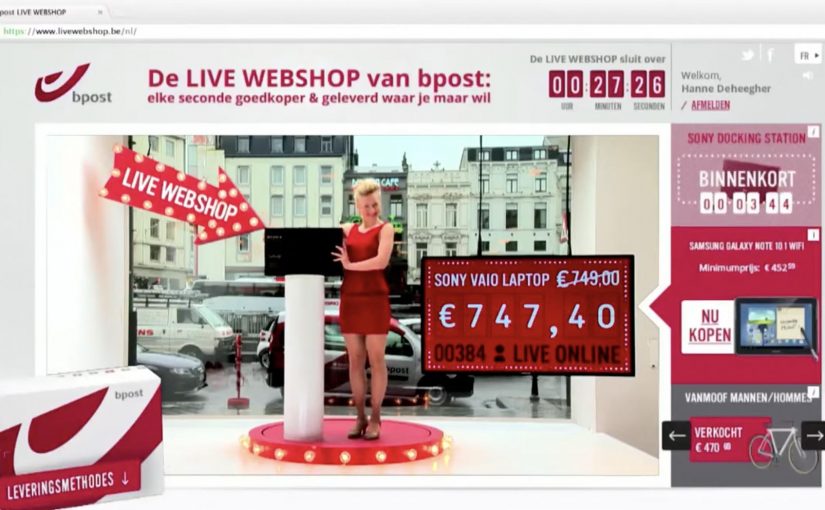
bpost is Belgium’s postal operator. To prove their ability to deliver, and to fend off new contenders in the delivery market, they open a pop-up store right in central Brussels that you can watch like a shop window.

A range of must-have items is put on display, from smartphones to designer coffee makers. The twist is that the only way to buy them is through a special online auction where the price of every product drops every second.

People have to act fast to catch an item before someone else does. Once sold, the item is picked up by a postman right in front of the webcam and delivered to the winning bidder, so everyone watching can see how quick and reliable the service is.

In European parcel and delivery markets, the hardest promise to prove is speed and reliability, so public demonstrations often land harder than product claims.

The real question is how you make a service promise visible enough that people trust it without having to take your word for it.

As a result, awareness of bpack, the delivery service being promoted, is reported as rising to 65%. In 6 days, 260,000 unique visitors are reported. For every hour the shop is online, bpost is reported as selling 8 products on average.

A webshop you can watch, not just click

The pop-up window makes the online mechanic tangible. People see the products in real life, then experience the purchase as a live moment, with delivery turning into the proof point rather than a line in the footer.

Why the “dropping price” mechanic creates urgency

A price that decreases every second builds a clear trade-off: wait for a better deal, or buy now before someone else does. Because the price is visibly falling, hesitation becomes a risk you can feel. That tension is the game. It keeps attention locked and makes the checkout decision feel like winning, not spending.

Extractable takeaway: Use a visible, fast-moving trade-off so waiting feels costly and acting feels like progress, not purchase.

What bpost is really selling with bpack

The service story is simple: “wherever you are, we deliver.” The activation turns that into something visible, with a postman dispatching the parcel immediately after purchase. The product is delivery confidence. Proof beats claims when reliability is the benefit.

Service-proof moves worth reusing

  • Make the benefit observable. If your promise is speed, show speed in public.
  • Use a mechanic that explains itself. A visible countdown beats a paragraph of copy.
  • Build in a live “receipt”. The moment of dispatch is the proof people remember.
  • Design for spectators. If watching is entertaining, the audience becomes the distribution layer.

A few fast answers before you act

What is the bpost Live Webshop?

It is a pop-up retail window in Brussels where products can only be bought via a live webshop auction, with prices dropping every second and delivery shown on camera to prove service speed.

How does the “price drops every second” auction work?

Each product starts at a set price and continuously decreases over time. The first person to click and buy wins the item at that moment’s price.

Why show a postman picking up the parcel live?

Because it turns a delivery claim into visible proof. The dispatch moment demonstrates reliability and speed better than messaging can.

What is bpack in this campaign?

bpack is positioned as the delivery service being promoted. The activation is designed to raise awareness and trust in that specific service.

What is the main lesson for brands selling services?

When trust is the barrier, do not just explain the promise. Stage it so people can watch the promise being kept.