
MINI: Fan the Flame

MINI: Fan the Flame

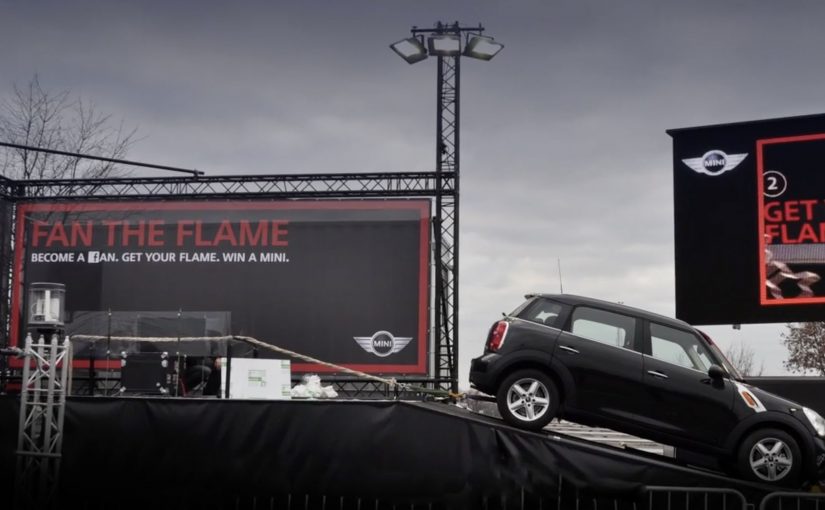
MINI, together with TBWA\Agency.com, creates a social spectacle to grow the fan base for its newly launched Facebook page in Belgium and Luxembourg.

The setup is as physical as it gets. A MINI Countryman is attached to a thick rope in the parking lot of the Brussels Motor Show, with a burner placed beneath the rope. Facebook fans are encouraged to remotely trigger the burner and shoot flames at the rope. A webcam broadcasts the scene 24×7, and the fan whose flame ultimately breaks the rope wins the MINI Countryman.

Why this is a “like” campaign people actually talk about

Most fan-growth ideas are transactional: click like, get content. This one makes the click feel consequential. Each interaction is a tiny act of sabotage against a real-world object, with a visible scoreboard outcome. The page is not just where the brand posts. It is the control panel for the event. This is the better pattern when you need fast fan growth without training people to expect freebies.

Extractable takeaway: If you want people to talk, make the social action change a visible system, then let the audience verify progress live.

The mechanism: remote control plus live proof

Mechanically, the campaign combines three ingredients: a simple trigger (fan action), a physical system (rope and flame), and continuous proof (the live webcam). The webcam is crucial because it converts a remote interaction into trust. People can see that something is actually happening, continuously, with no editing.

In European automotive social campaigns, linking digital participation to a live physical outcome is one of the fastest ways to create earned attention, meaning people talk and share without paid amplification, beyond the fan base itself.

What the prize is really doing

The real question is whether your social channel is just a feed, or a place where the audience can change something that matters in real time.

The MINI Countryman is not only incentive. It is also the symbol. The closer the rope gets to breaking, the more the prize feels “reachable”, which keeps people checking back and telling friends to join. The prize turns time into tension.

What to copy for your next live activation

  • Make the interaction visible. Live video proof makes remote participation feel real.
  • Use a simple mechanic with cumulative progress. People return when they believe their action contributes to a final outcome.
  • Put the brand in the role of facilitator. The page becomes the place where something is happening, not just the place where posts appear.
  • Design for suspense. A slow-burn system creates anticipation and repeat visits.

A few fast answers before you act

What is “MINI Fan the Flame” in one line?

A live contest where Facebook fans remotely trigger flames to burn through a rope holding a MINI Countryman, with the fan who breaks it winning the car.

Why does the webcam matter?

It provides continuous proof that the event is real and progressing, which sustains trust and repeat engagement.

What behavior is this campaign optimizing for?

Fan acquisition plus repeat visits. The tension mechanic encourages people to return and recruit others.

What is the transferable lesson for other brands?

If you want scale, connect digital actions to a visible physical outcome and design the system so progress builds suspense over time.

What is the minimum viable version of this mechanic?

Combine one clear trigger, one physical system that visibly changes, and one always-on proof stream so participants can verify progress without edits.
Renault Clio: The Silent Song Contest

Renault Clio: The Silent Song Contest

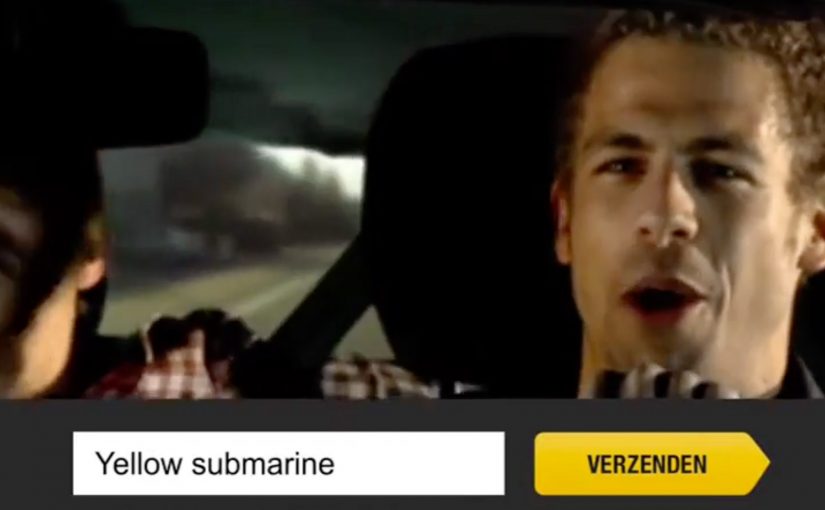
People are known to let loose and sing like crazy in their cars. For the launch of the new Renault Clio, Belgian agency Boondoggle turned that familiar behaviour into a Facebook game.

A series of online videos were posted on Facebook featuring different Clio drivers singing, with one twist. The sound was removed. To participate, players had to lip-read and guess the correct song as quickly as possible. The player with the most correct guesses at the end of the promotion won the Clio.

A game built from a behaviour people already recognise

The mechanic works because the setup is instantly relatable. Everyone has seen someone singing in a car, or has done it themselves. Muting the audio transforms that everyday scene into a puzzle, and Facebook becomes the scoreboard.

In automotive launch campaigns, lightweight interactive games can keep attention longer than a standard film because they invite repeated attempts rather than one passive view.

Why it lands

It hits a sweet spot between simple and sticky. The barrier to entry is low. You watch a clip and take a guess. Yet the experience rewards skill and speed, which makes it competitive. The silence is also a smart creative constraint. It forces focus, and it makes the guessing moment feel earned.

Extractable takeaway: If you want repeat engagement, take a common behaviour, remove one expected element, and turn the gap into a game people can get better at.

What Renault is really trying to get from Facebook here

The prize is a Clio, but the real objective is frequency. A contest format encourages people to come back for new clips, compare scores, and share with friends to test who can guess faster. That creates repeated brand exposure without needing repeated media spend.

The real question is whether your launch needs one memorable view or a repeatable reason for people to come back and compete.

What to copy from the Silent Song Contest

  • Start from a human truth. Real behaviour makes the concept self-explanatory.
  • Use a constraint as the hook. Muted audio is not a limitation. It is the game engine.
  • Design for replay. Multiple clips and a cumulative score drive repeat visits.
  • Keep the action atomic. Watch, guess, score. No multi-step friction.
  • Reward skill, not luck. Competitive mechanics feel fairer than random draws.

A few fast answers before you act

What is the Silent Song Contest in one sentence?

A Facebook game for the Renault Clio where players watch muted videos of drivers singing, lip-read to guess the song quickly, and compete on total correct answers to win the car.

Why does removing sound make the idea stronger?

Removing sound turns a normal singing clip into a puzzle. The missing audio forces attention and makes the guess feel earned and shareable.

What makes this work on Facebook specifically?

This works on Facebook because the clips are easy to watch, comment on, and share, and the contest format benefits from people returning as new videos appear.

What is the biggest execution risk?

If clips are too hard, people quit. If too easy, they get bored. Difficulty needs to be tuned so most people feel progress over time.

What should you measure beyond video views?

Repeat participation rate, average guesses per user, completion rate across the series, share rate, and whether the campaign shifts launch awareness and consideration.

Opel Movano: File Mover banner

Opel Movano: File Mover banner

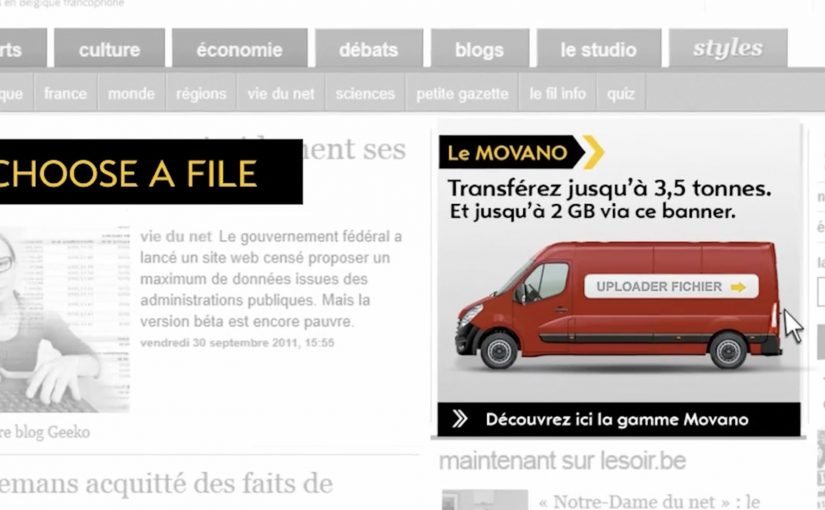
To promote the Opel Movano van range, McCannLowe created a banner that is both useful and innovative. Working like file transfer services such as YouSendIt or WeTransfer, the banner lets users upload up to 2GB of data “into the rear of the van” and send it to someone across the web.

The recipient then gets an email to download the file and learn about the Opel Movano. Simple, practical, and spot-on for the target audience. This is the right kind of B2B creativity because it turns “capacity” into something you can use.

In B2B and SME logistics markets, utility-based advertising wins when the ad itself performs a real job for the viewer. Here, “utility-based advertising” means the ad unit delivers a small, real service before it asks for attention.

When the ad behaves like a service

The smart move is that the interaction mirrors the product story. The Movano is built to carry stuff. So the banner becomes a carrying service for digital “stuff.” That alignment makes the message feel proved, not claimed. The real question is whether your creative can earn attention by doing a job your audience already needs done.

Extractable takeaway: If your product promise is functional, build a functional ad. A banner that does a real task can earn attention without needing a hard sell.

The mechanism: upload, send, deliver

The mechanic is easy to explain and easy to repeat. Choose a file. Upload it into the banner unit. Send it to a contact. The brand payload arrives as part of the delivery moment, which is when the recipient is most attentive. Here, “brand payload” is the branded context and message that rides along with the delivery. Because the brand arrives at the exact moment the task succeeds, the mechanism turns utility into positive brand proof.

In B2B commercial vehicle marketing, utility-first creative tends to work best when it removes friction inside an existing workflow.

Why this is a strong commercial vehicle play

Commercial vehicle advertising often struggles because capabilities blur together. This execution dramatizes “capacity” in a way people can feel immediately, and it does it in the same environment where business users already move files and coordinate work.

Service-first takeaways for B2B banners

  • Make the benefit experiential. If the product carries, let the ad carry.
  • Keep the flow obvious. One task, one outcome, no learning curve.
  • Use the recipient moment. Delivery creates a second touchpoint that feels useful, not intrusive.
  • Match the utility to the audience. File sending is naturally relevant for business users.
  • Keep branding inside the service. The brand should feel like the enabler, not the interruption.

A few fast answers before you act

What is the Opel Movano “File Mover” banner?

It is an interactive banner that works like a file transfer tool. Users upload a file into the banner, send it, and the recipient receives an email to download the file along with Opel Movano information.

Why is “utility” such a strong creative strategy in B2B?

Because it earns attention through usefulness. A business audience is more likely to engage when the ad helps them do something real, even briefly.

What makes this different from a standard lead-gen banner?

The value exchange is immediate. The user gets a working service, and the brand message is attached to the service delivery rather than gated behind a form.

What’s the biggest execution risk in a “service banner”?

Reliability and trust. If uploads fail, emails do not arrive, or the experience feels unsafe, users abandon quickly and the brand takes the blame.

How could a brand update this idea today?

Keep the same principle. Offer a real micro-service inside the ad unit. Then design the handoff so it is fast, secure, and clearly permission-based.