
Renault Clio: The Silent Song Contest

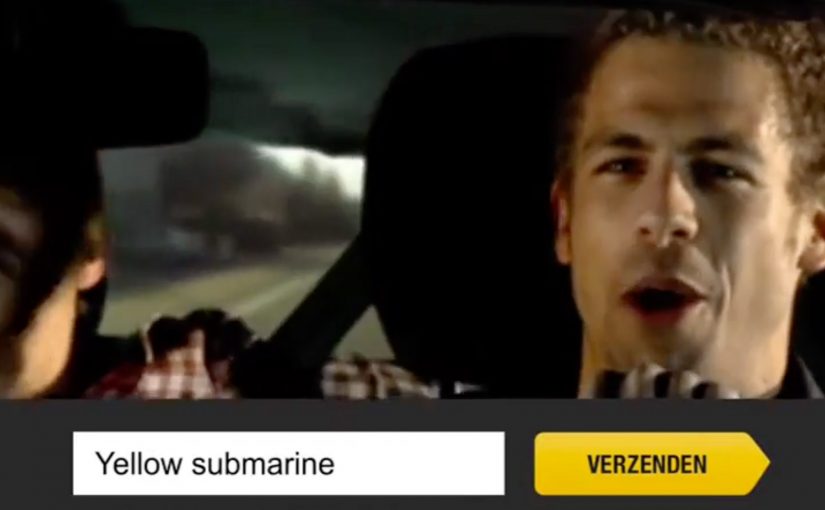
People are known to let loose and sing like crazy in their cars. For the launch of the new Renault Clio, Belgian agency Boondoggle turned that familiar behaviour into a Facebook game.

A series of online videos were posted on Facebook featuring different Clio drivers singing, with one twist. The sound was removed. To participate, players had to lip-read and guess the correct song as quickly as possible. The player with the most correct guesses at the end of the promotion won the Clio.

A game built from a behaviour people already recognise

The mechanic works because the setup is instantly relatable. Everyone has seen someone singing in a car, or has done it themselves. Muting the audio transforms that everyday scene into a puzzle, and Facebook becomes the scoreboard.

In automotive launch campaigns, lightweight interactive games can keep attention longer than a standard film because they invite repeated attempts rather than one passive view.

Why it lands

It hits a sweet spot between simple and sticky. The barrier to entry is low. You watch a clip and take a guess. Yet the experience rewards skill and speed, which makes it competitive. The silence is also a smart creative constraint. It forces focus, and it makes the guessing moment feel earned.

Extractable takeaway: If you want repeat engagement, take a common behaviour, remove one expected element, and turn the gap into a game people can get better at.

What Renault is really trying to get from Facebook here

The prize is a Clio, but the real objective is frequency. A contest format encourages people to come back for new clips, compare scores, and share with friends to test who can guess faster. That creates repeated brand exposure without needing repeated media spend.

The real question is whether your launch needs one memorable view or a repeatable reason for people to come back and compete.

What to copy from the Silent Song Contest

  • Start from a human truth. Real behaviour makes the concept self-explanatory.
  • Use a constraint as the hook. Muted audio is not a limitation. It is the game engine.
  • Design for replay. Multiple clips and a cumulative score drive repeat visits.
  • Keep the action atomic. Watch, guess, score. No multi-step friction.
  • Reward skill, not luck. Competitive mechanics feel fairer than random draws.

A few fast answers before you act

What is the Silent Song Contest in one sentence?

A Facebook game for the Renault Clio where players watch muted videos of drivers singing, lip-read to guess the song quickly, and compete on total correct answers to win the car.

Why does removing sound make the idea stronger?

Removing sound turns a normal singing clip into a puzzle. The missing audio forces attention and makes the guess feel earned and shareable.

What makes this work on Facebook specifically?

This works on Facebook because the clips are easy to watch, comment on, and share, and the contest format benefits from people returning as new videos appear.

What is the biggest execution risk?

If clips are too hard, people quit. If too easy, they get bored. Difficulty needs to be tuned so most people feel progress over time.

What should you measure beyond video views?

Repeat participation rate, average guesses per user, completion rate across the series, share rate, and whether the campaign shifts launch awareness and consideration.
Hire Us: Twitter Follow Stunt Lands a Job

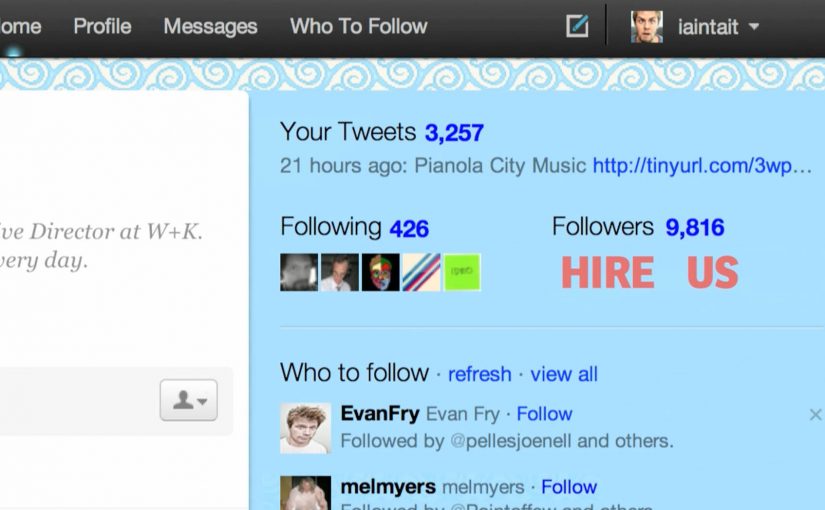
Dutch creative team Bas van de Poel and Daan van Dam set up five separate Twitter accounts and started following various Dutch Creative Directors on Twitter. Their message was simple: HIRE US.

Even though the idea is very similar to the Jeep Twitter Puzzle campaign, the execution is different and innovative. It gets them noticed and finally a job with Boondoggle in Amsterdam.

Why five accounts is the point, not the gimmick

The mechanism is engineered repetition. By “engineered repetition,” I mean deliberately creating multiple small signals that form an obvious pattern in the target’s notifications. One account can be ignored. Five accounts create a pattern. When multiple new followers arrive with the same blunt message, it triggers curiosity and a small sense of social pressure. Someone is doing something intentional, and it is hard not to look.

It is also highly targeted. They do not broadcast “hire us” into the void. They place it directly in the attention stream of the people who can change their outcome.

In creative hiring markets, attention is scarce, so using a platform’s native behaviours to deliver an instantly legible message is often the fastest way to get noticed.

Why it lands: interruption plus clarity

This works because it is instantly legible. No clever puzzle to decode. No long portfolio pitch. The call to action is the entire creative idea. That clarity is what makes it feel confident. And because it happens inside Twitter’s native behaviours, following, notifications, profile clicks, it does not require extra friction. The recipient can react in seconds.

Extractable takeaway: When you need attention from specific decision-makers, create a small pattern using the platform’s native behaviours that communicates the ask in one glance and makes the next step easy.

The intent: turn hiring into a creative brief

The business intent is obvious. Get hired. But the deeper intent is to reframe the hiring process. Instead of asking for a meeting, they create a live demonstration of how they think. Targeted, lightweight, and culturally fluent in the medium.

The real question is how you create an impossible-to-ignore signal for the right people without turning the medium into spam.

Done with tight targeting and restraint, this approach is a legitimate creative proof point. Done broadly or repeatedly, it backfires as noise.

Borrow this for your own career marketing

  • Be specific about who you want. Target decision-makers, not “everyone”.
  • Design an interruption that fits the platform. Use native behaviours, not extra hoops.
  • Make the message instantly legible. One idea. One line. No explanation required.
  • Turn the ask into proof. Show your creativity in the method, not in a PDF pitch.
  • Keep it respectful and reversible. Clever is good. Spammy is not.

A few fast answers before you act

What did Bas van de Poel and Daan van Dam actually do?

They created five Twitter accounts and followed Dutch Creative Directors with a single message: “HIRE US”.

Why did using multiple accounts matter?

It created a noticeable pattern and a stronger interruption than a single follow, prompting curiosity and profile clicks.

How is this different from the Jeep Twitter Puzzle?

It is similar in spirit, but the execution is simpler and more direct. A single clear call to action rather than a puzzle mechanic.

What made it effective as self-promotion?

High targeting, low friction, and a message that communicates confidence in one second.

What is the main takeaway for personal branding?

If you want attention from decision-makers, design a small, platform-native experience that demonstrates how you think and makes the next step easy.