
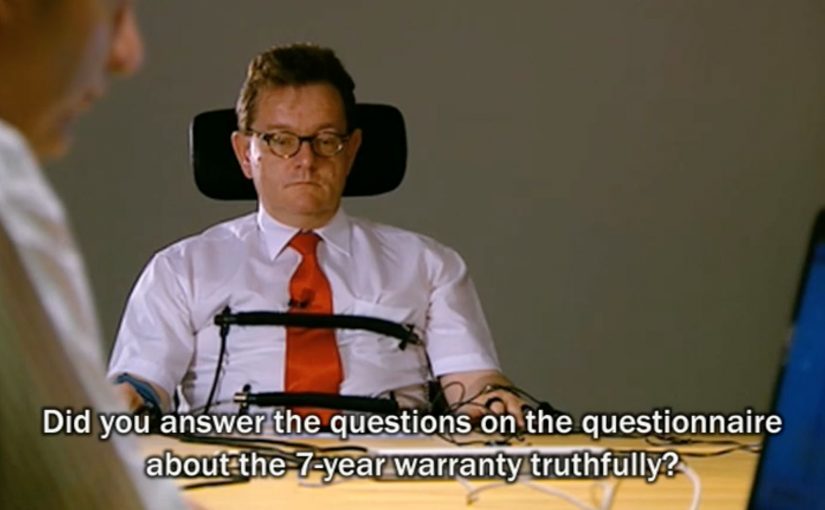
Kia Lie Detector

Kia Lie Detector

Most people in Belgium know that Kia gives a 7-year warranty on all its models. That is a good thing. But a lot of them also think 7 years sounds too good to be true, and that there must be a catch. That is a problem. If people do not believe your advertising message, regular advertising is insufficient.

So LDV United built a campaign designed to prove one simple point. Although it sounds unbelievable, the 7-year warranty is described as 100% true, with no catch.

Proof beats repetition

To prove the warranty was genuine, the campaign used a lie detector. Legal Connections, described as an official lie detector company, hooked up the CEO of Kia Motors to a polygraph. Consumers then asked him questions about the 7-year warranty during a live online session.

In European automotive markets, long warranties are a major purchase heuristic, and credibility becomes the real bottleneck when the claim feels “too good”.

The real question is whether the proof feels harder to fake than the doubt it is meant to kill.

Why the proof lands and spreads

The lie detector was not the whole campaign. It was the anchor. The stunt was communicated through newspaper ads, banners and a press release announcing that an actual CEO would undergo a live lie detector test. That structure is what turns a proof moment into earned media and word of mouth, meaning peer-to-peer sharing both online and offline. Because a polygraph is a culturally understood symbol of truth-testing, it reframed the warranty from “marketing claim” into “something we are willing to be challenged on, live”.

Extractable takeaway: When your promise is extraordinary, use a proof ritual. A proof ritual is a public, simple demonstration that invites challenge and feels hard to fake.

Recognition and reported impact

The work later picked up Cannes Lions recognition, listed as a Direct Bronze Lion for “Lie Detector”.

The campaign’s impact was reported via independent media company Scripta as:

  • Brand recognition: 42% (instead of 32% sector average)
  • Attribution: 73% (instead of 62% sector average)
  • Resulting in an Effectiveness Rating of 31% (instead of 20% sector average)
  • And last but not least: An impressive credibility of 80%

Steal this proof pattern for credibility gaps

A credibility gap claim is a promise people want to believe but suspect has a catch.

  • Identify the credibility gap early. If the promise sounds implausible, spend on proof, not frequency.
  • Choose a proof mechanic people already understand. Polygraph. Lab test. Public demo. Anything that signals “hard to fake”.
  • Make the proof interactive. Live questions beat scripted endorsements when trust is the objective.
  • Package the moment for pickup. Announce it like an event, so press and blogs have a clean story to carry.

A few fast answers before you act

What problem does the Kia lie detector idea solve?

It solves a credibility problem. When a benefit sounds too good to be true, people assume a hidden condition. The campaign is designed to remove that doubt by staging proof in public.

Why use a lie detector in advertising?

A polygraph is a widely understood truth ritual. Even if people do not treat it as perfect science, it signals confidence and willingness to be challenged in front of an audience.

What makes this more than a stunt?

The stunt is structured as a live, interactive Q&A, and it is distributed through paid announcements and PR. That combination turns a single moment into a story that can travel.

When should brands avoid “proof theatre” like this?

Proof theatre is staged proof that looks convincing but does not materially verify the claim. If the claim cannot withstand scrutiny, or if the proof method is likely to be seen as misleading or unsafe, the stunt will backfire. Proof mechanics only work when the underlying promise is clean.

What are better success metrics than views for credibility campaigns?

Measure belief and consideration shifts. Brand trust, message credibility, attribution to the correct benefit, and downstream intent signals are usually more meaningful than raw reach.

ROM: The American Takeover wrapper switch

ROM: The American Takeover wrapper switch

ROM, made by Kandia Dulce, is the traditional Romanian chocolate bar wrapped in the national flag. It has a nostalgic consumer base. But with younger Romanians it was losing ground to cooler American brands.

So McCann Erickson Bucharest launched “The American Takeover.” ROM’s familiar wrapper was replaced with an American-flag version to provoke the country’s ego and force a reaction. It is a risky deception, because the packaging is the product’s identity.

The trick was not the wrapper, it was the public reflex

The campaign doesn’t try to persuade with copy. It creates a cultural irritant and then lets people do the storytelling for it. By “cultural irritant,” I mean a small, unmistakable provocation that triggers public commentary. The outrage, debate, and defensiveness are the mechanism that “refreshes” ROM back into relevance for the people who had stopped paying attention.

In heritage FMCG categories, packaging is a symbol people feel they own.

The reveal is what makes the stunt more than trolling. The brand flips the wrapper back and turns the backlash into a point about identity, pride, and what it means when local icons try to imitate foreign cool.

The real question is whether you can trigger that reflex and still earn forgiveness when the reveal lands.

This approach is worth attempting only when the reversal is pre-planned and the reveal carries a clear meaning.

Why it worked: it made “cool” feel like betrayal

Younger audiences often default to global brands because the signals are easy. ROM makes that default choice emotionally expensive for a moment. When you see a national icon wearing another flag, you are forced to pick a side, even if you didn’t plan to care.

Extractable takeaway: If you want to revive a heritage brand with youth, you can borrow attention from the culture war around it. But you must do it with a clear reversal and a clear message, otherwise you just burn trust.

What McCann actually engineered

  • A single visual change that could be understood instantly.
  • A provocation that invited discussion beyond advertising channels.
  • A redemption arc that lets the audience feel proud again, and lets the brand look clever rather than cynical.

A legacy-brand refresh playbook

  • Change one symbol, not everything. One sharp deviation creates clarity and talkability.
  • Build a reversible stunt. You need a planned way back to safety once the reaction peaks.
  • Let people carry the message. When the audience argues for you, the brand feels revalidated.
  • Respect the sacred bits. If the brand has a national or cultural role, treat it like identity, not aesthetics.
  • Make the reveal the moral. The stunt is the hook. The reveal is the brand meaning.

A few fast answers before you act

What is “The American Takeover” for ROM?

It is a campaign where ROM replaced its Romanian-flag wrapper with an American-flag version to provoke public backlash, then used the reaction to reassert Romanian pride and renew interest in the brand.

Why was the wrapper switch so risky?

Because ROM’s wrapper is a national symbol as much as a pack design. When you touch that symbol, people react emotionally, not rationally.

What did the campaign win?

It is reported to have won top honours at Cannes Lions, including the Grand Prix in Promo & Activation, and it is also credited with winning the Direct Grand Prix.

What is the core lesson for consumer brands?

If your brand is culturally owned, you can regain relevance by staging a public argument about what it stands for. But the argument must end in a respectful reaffirmation, not a cheap shock.

When should you not copy this approach?

If you cannot control the reversal, if the symbol you are provoking is too sensitive, or if your brand does not have enough goodwill to survive a week of anger.

Andes Beer: Friend Recovery

Andes Beer: Friend Recovery

Following the success of the Andes Teletransporter in 2009, and its reported Grand Prix win at the 2010 Cannes Lions festival, Andes, the No. 1 beer from Argentina’s Andean region, is back with another invention designed to keep friends together for longer.

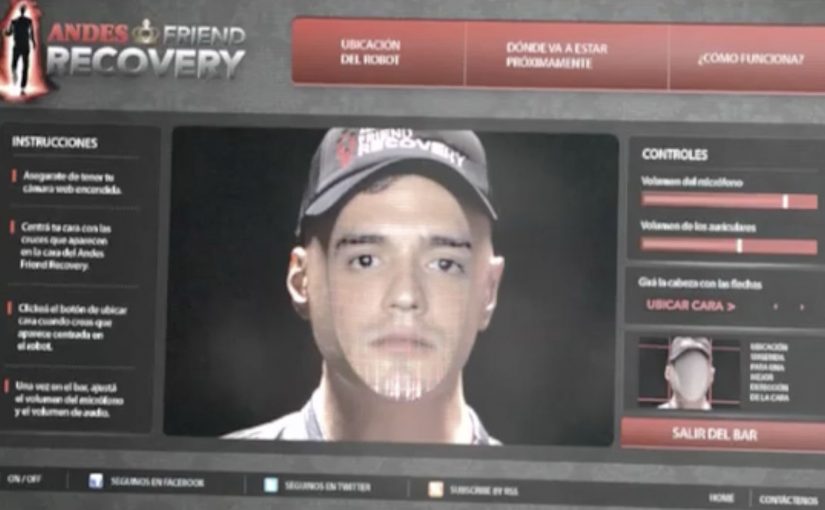
Andes Friend Recovery (AFR) is a telepresence robot with human features, installed in key bars in Mendoza. The pitch is deliberately simple. You can be “present” at the bar with your friends while still being physically somewhere else, taking care of whatever obligations pulled you away.

A bar table that comes with a remote seat

The mechanism is a dedicated AFR table in a bar, plus a robot that becomes your stand-in. Your friends start the session at the table. You authenticate remotely, map your face via webcam, and your live presence appears at the bar through the robot.

This is a physical version of “status update.” Instead of telling friends you will join later, you join now, with viewer control over a real viewpoint and a real conversation happening in real time.

In social, venue-led categories, the easiest growth lever is reducing the friction that ends the occasion early.

The real question is whether you can make “I can’t make it” feel like a solvable problem at the table, not a polite apology in a text thread.

Why the trick works

The appeal is not robotics. It is social continuity. AFR treats friendship as an appointment you should not have to cancel just because you are temporarily stuck elsewhere, and it makes the solution tangible enough to demo in one minute. Because the mechanism turns absence into a visible, physical stand-in, the group gets a concrete reason to keep the occasion going instead of wrapping it up.

Extractable takeaway: When your brand benefit is “more time together,” do not talk about it in slogans. Build a mechanism that removes the one blocker that ends the moment, then make that mechanism visible and easy to explain so people spread it for you.

How it works

  1. Your friends go to a bar and sit at the Andes Friend Recovery table.
  2. They ask for a password which is sent to you via an SMS, while you fulfil your boyfriend duties.
  3. Wherever you are you log in to the AFR page and use the webcam to map your face.
  4. Then you appear at the bar via the Andes Friend Recovery robot.

The numbers the case story leans on

AFR is described as being installed across major bars in Mendoza during October and November 2010. In that period, the campaign is reported to have driven over 2 million website visits, with around 5,000 “recovered” friends.

Friend Recovery moves worth borrowing

  • Remove the exit friction. Target the one blocker that ends the occasion early, then design the experience to neutralize it.
  • Make the mechanism instantly demoable. If the benefit is “more time together,” a visible, one-minute explanation travels further than a slogan.
  • Keep the framing playful. Anchor the joke in friendship and social continuity, not in teaching deception, so the stunt does not backfire.

A few fast answers before you act

What is Andes Friend Recovery?

It is a bar activation using a telepresence robot so a person can appear at a bar table remotely via webcam while being physically somewhere else.

What is the core mechanic that makes it feel “real”?

Two-way presence. Your face and voice show up at the table, and your friends interact with a physical avatar in the bar, not just a chat window.

Why does this count as experiential marketing, not just a film idea?

Because the primary value is delivered by a real installation in real bars. The video is the distribution layer, but the product is the experience.

What makes a stunt like this risky for the brand?

Tone and social framing. If it feels like a “how to lie” tutorial, it can backfire. It works best when it stays in playful exaggeration and focuses on friendship, not deception.

What should you measure if you try a “remote seat” activation?

Track whether the mechanism extends time together (session length and repeat use) and whether the demo travels (views, shares, and visits), then compare results to normal nights without the installation.