
Back to Vinyl: The Office Turntable

Back to Vinyl: The Office Turntable

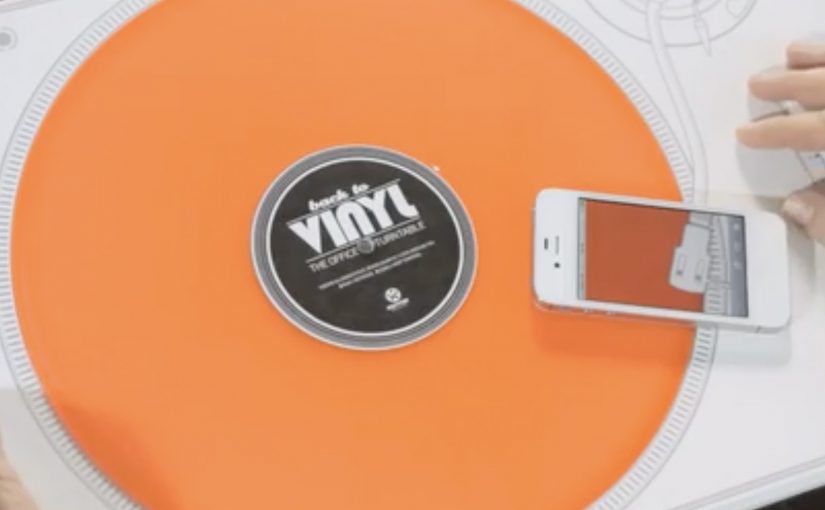
Demo CDs created by music labels are often treated like spam. So to promote a new track from DJ Boris Dlugosch, Kontor Records decided to send out a bright orange vinyl along with a 2D turntable as part of a direct mailing.

The people who received the mailing activated the turntable by scanning the QR code on it. That simple action enabled the missing piece of the turntable on the user’s smartphone, which then allowed them to play the music by placing the phone over the “deck”.

Making the mailer do the work

The mechanism is a tight little trick. The envelope becomes the turntable. The QR code becomes the start button. The smartphone becomes the “needle”. It is analogue theatre powered by a digital unlock, meaning the physical format itself becomes a short performance the recipient has to complete, and it forces the recipient to complete the experience instead of ignoring it.

In B2B marketing where your audience is drowning in promos, the fastest way to earn attention is to turn the first interaction into a short, satisfying action that cannot be skipped.

Why it lands

This works because it turns listening into participation. You do not just receive a track. You assemble the moment, and the novelty is directly tied to the product. The design also flatters the target. It treats creative directors like DJs. People with taste and a fondness for well-made objects. Because the recipient has to scan, place, and play, the mechanic turns passive exposure into participation, which makes the track harder to ignore and easier to remember.

Extractable takeaway: If your content is easy to ignore, do not beg for attention with more messaging. Engineer a simple physical or digital action that unlocks the content, and make that action feel like a reward rather than a chore.

The real question is how you make the format itself impossible to ignore before the message even starts. This is a stronger approach than sending another promo that asks for attention without earning it.

The numbers are the proof

According to campaign case-study reporting, 71% of 900 mailings were activated via the QR code. The same reporting notes that 42% of recipients also visited the Kontor site. For a target group known for deleting promos on sight, that is the clearest signal that the mechanic did its job.

How to make direct mail behave like a product

  • Build a “first step” that is irresistible. If the first step is fun, the rest of the funnel happens almost accidentally.
  • Fuse the medium and the message. Here, the packaging is the product experience, not just a container.
  • Use phones as functional components. Not as a second-screen gimmick, but as a literal missing part.
  • Target the ego carefully. Positioning recipients as tastemakers, not “buyers”, increases the odds they will engage.

A few fast answers before you act

What is “The Office Turntable”?

It is a direct mail piece for Kontor Records where the envelope folds into a paper turntable, and a smartphone activated via QR code completes the player so the recipient can listen to a vinyl release.

Why use vinyl instead of a promo CD?

Because vinyl is a status object and a curiosity trigger. It signals “this is different” before any copy is read.

What role does the QR code play?

It is the activation switch. Scanning it unlocks the mobile component that makes the paper turntable usable.

What results were reported?

Case-study reporting cites 71% activation across 900 mailings, and 42% of recipients visiting the Kontor site.

How do you apply this pattern without copying it?

Turn your distribution format into a usable object, then make one simple action unlock the content. The best versions feel like a clever tool, not a stunt.
Chevy: Hacking the Super Bowl

Chevy: Hacking the Super Bowl

Super Bowl Sunday is the biggest TV advertising day in the US. With 50+ advertisers competing for attention, “standing out” is usually code for shouting louder.

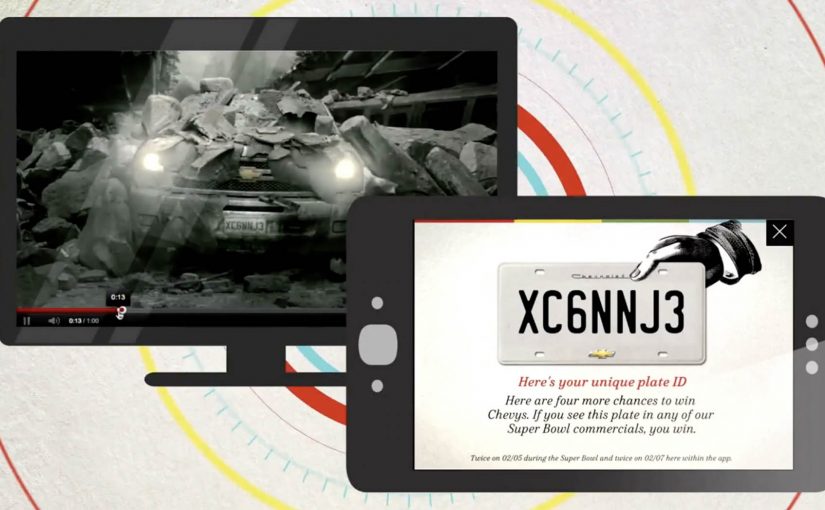
Chevrolet takes a different route. With “Chevy Game Time”, it turns the ad break into a live second-screen game. Viewers watch the commercial on TV, then immediately replay it with purpose on their phones.

A second screen that reacts to the broadcast

A “second-screen” experience is a mobile layer that runs alongside a live broadcast and responds to what’s on TV in near real time. Chevy Game Time prompts viewers the moment a Chevy spot airs, asking trivia about what they just saw and rewarding fast, correct answers with points and prizes.

It also adds a high-stakes twist. Every user receives a personal license plate. If you spot your plate inside a Chevy commercial, the car is yours.

The mechanic: turning commercials into a repeatable loop

The loop is simple and effective:

  • Trigger: a Chevy ad hits the broadcast.
  • Action: the app pushes a trivia question about that specific ad.
  • Social effect: Super Bowl parties start “rewatching” the spot together, first on TV, then on the phone, and often again online.
  • Jackpot moment: the personal license plate appears. Somebody wins a car.

That structure doesn’t fight the reality of distracted viewing. It harnesses it.

That works because the trigger arrives while memory is still hot and the reward gives the rewatch a reason.

In mass-audience tentpole broadcasts, second-screen interactivity is often the fastest way to turn passive ad viewing into measurable participation.

Why it lands: it makes attention feel like play

Most second-screen ideas fail because they ask for extra effort with unclear payoff. Chevy Game Time flips that. The reward is obvious, the timing is immediate, and the questions make the room collectively care about the ad’s details.

Extractable takeaway: If you want people to pay attention to a message they did not ask for, make the attention itself the game. Use a tight loop (trigger, action, reward) that starts exactly when the message appears, not five minutes later.

The license-plate mechanic is the accelerant. It converts “maybe I’ll play” into “I’d better look up”, because missing your own plate feels like leaving money on the table.

The business intent: convert reach into proof

Instead of treating TV as pure reach, this approach turns a broadcast into an engagement funnel. Case studies around Chevy Game Time describe scale in the hundreds of thousands of participants, plus high real-time concurrency during the game, and meaningful App Store chart performance during the event window.

It also earns industry credibility. The work is credited to Chevrolet with Goodby, Silverstein & Partners and Detroit Labs, and it is associated with major recognition in mobile and multiscreen categories.

The real question is whether a brand can turn one expensive burst of reach into repeated, measurable acts of attention.

And the strategic win is clean. While other brands fight for a single impression, Chevy creates repeated, measurable touchpoints tied directly to its own creative.

What to steal for your next “everyone’s watching” moment

  • Design for rewatching: build a mechanic that naturally makes people replay the ad or replay the key message.
  • Sync to the broadcast: the question must arrive when the spot runs, not when the user remembers later.
  • Make the reward legible: users should understand the payoff in one sentence.
  • Give the group a reason to coordinate: party dynamics multiply attention when the action is communal.
  • Measure beyond downloads: track concurrent players, response rate per trigger, and “ad recall proxies” like question accuracy.

A few fast answers before you act

What is second-screen marketing?

Second-screen marketing is a companion mobile experience designed to run alongside a live broadcast, prompting actions that connect what’s on TV to what’s on a phone, usually in real time.

What made Chevy Game Time different from a normal companion app?

It tied interaction to the exact moment a specific commercial aired, then rewarded attention to that commercial through trivia and a personal “license plate” prize mechanic.

Why does the personal license plate idea matter?

Because it creates urgency and personal stakes. Viewers feel they could miss “their” moment, so they watch more closely and often rewatch immediately to confirm what they saw.

What should you measure in a live second-screen activation?

Track concurrent active users during triggers, response rate per trigger, time-to-answer, repeat participation across multiple ad breaks, and the uplift in brand recall or message comprehension tied to the trivia content.

Can this approach work outside the Super Bowl?

Yes, if you have a predictable live moment (finale, product launch stream, sports match) and you can synchronize prompts to it. The key is timing precision and a reward loop that feels worth the effort.

Heineken Ignite

Heineken Ignite

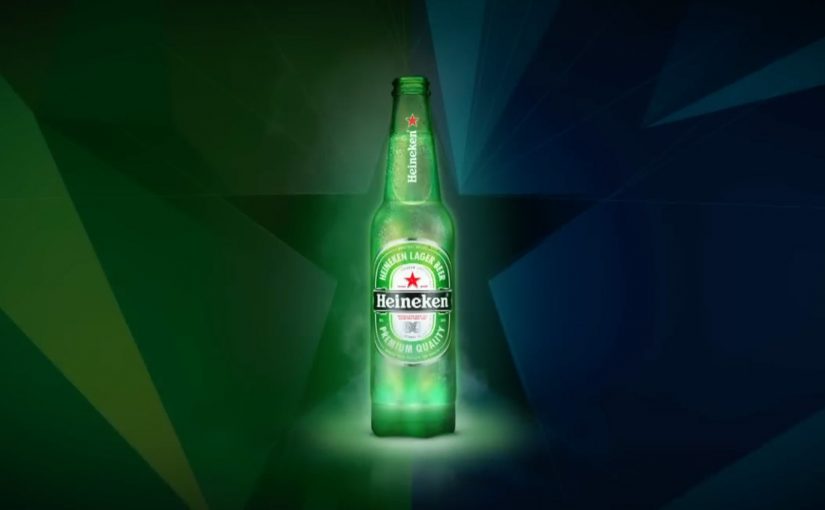
Last year I had written about StartCap, the world’s first digitally enabled bottle top. Now, Heineken has created LED based “smart bottles” that put serious tech into drinking beer.

These interactive bottles are designed to react to the gestures that already define a night out. Cheer and clink bottles together and the LEDs flash. Drink and the light pattern speeds up. Put the bottle down and it shifts into an idle “breathing” mode. Here, “breathing” means the LEDs pulse slowly when the bottle is stationary. The concept also includes software control so bottles can synchronize to music cues for a coordinated light show.

Heineken Ignite is a prototype bottle module that combines LEDs, motion sensing, and wireless synchronization so the bottle becomes part of the club experience, not just the drink in your hand.

Why it lands. When the bottle becomes the signal

What separates this from a gimmick is the engineering story. Coverage around the prototype describes an Arduino based circuit board housed in a reusable 3D printed casing that clips onto the bottom of a standard bottle. The electronics include multiple LEDs, a motion sensor to detect cheers and drinking, and wireless connectivity so the “party” effect can spread across a room. Wireless synchronization matters because it scales the effect from one person’s bottle to a room level cue that people can notice together. This is not a gimmick.

Extractable takeaway: If you want a brand experience to spread in a venue, instrument the object people already hold so natural gestures trigger visible, shared feedback.

This is also why the commercial challenge is real. In prototype form, the tech sits in an external module. To reach a mass market use case, the experience needs to be cheaper, smaller, and embedded, not attached. The real question is whether the connected layer can be made cheap and embedded enough that the bottle ships as the interface, not an accessory.

In European nightlife culture, the most effective brand innovation is the kind that turns the product itself into a social signal.

Why it was shown at Milan Design Week

The concept was unveiled during Milan Design Week as part of Heineken’s future of nightlife exploration. That matters because it frames the bottle as design plus experience, not only packaging. It is a statement about how brands might use connected objects to shape atmosphere in shared spaces.

Recognition and why it matters

Heineken later reported that its Ignite bottle earned a Silver Lion at Cannes Lions 2013 for Exhibitions or Live Events, as part of a broader set of design and innovation activations. Awards do not make a product viable, but they do validate that the idea is legible as a new format for brand experience.

Steal the pattern: product-led nightlife cues

  • Use the product as the interface. When the object in hand is the experience, you do not need to fight for attention elsewhere.
  • Design for social gestures. “Cheers” is a better trigger than any forced interaction because people already do it.
  • Make synchronization the payoff. One glowing bottle is a toy. A room that reacts together is a moment.
  • Prototype in public. Early demonstrations can generate press and learning long before the supply chain is ready.

A few fast answers before you act

What is Heineken Ignite?

Heineken Ignite is a prototype “smart bottle” concept that uses LEDs, motion sensing, and wireless synchronization so the bottle lights up in response to cheers, drinking gestures, and music cues in club environments.

How does the prototype work technically?

Reporting describes a clip-on module under the bottle that houses an Arduino based circuit board, LEDs, motion sensing, and wireless connectivity. The module detects motion patterns and can coordinate lighting across multiple bottles.

Why is syncing to music the key feature?

Because it turns individual behavior into shared atmosphere. Synchronization makes the experience visible at a crowd level, which is what creates talkability and makes the brand feel “in the room”.

What is the biggest barrier to commercializing a concept like this?

Miniaturization and cost. A clip-on prototype can prove the idea, but mass market use needs the tech to be smaller, cheaper, and more seamlessly integrated into production packaging.

What is the main marketing lesson here?

If you want to own a nightlife moment, design around existing social rituals. When the trigger is already natural, the experience feels additive instead of forced.