
Zoo Records: Hidden Live

Zoo Records: Hidden Live

Thousands of Hong Kong’s alternative music fans crave the raw energy, focus, passion, and participation of a live performance. Zoo Records faces a simple challenge. How do you bring that live experience directly to the fans.

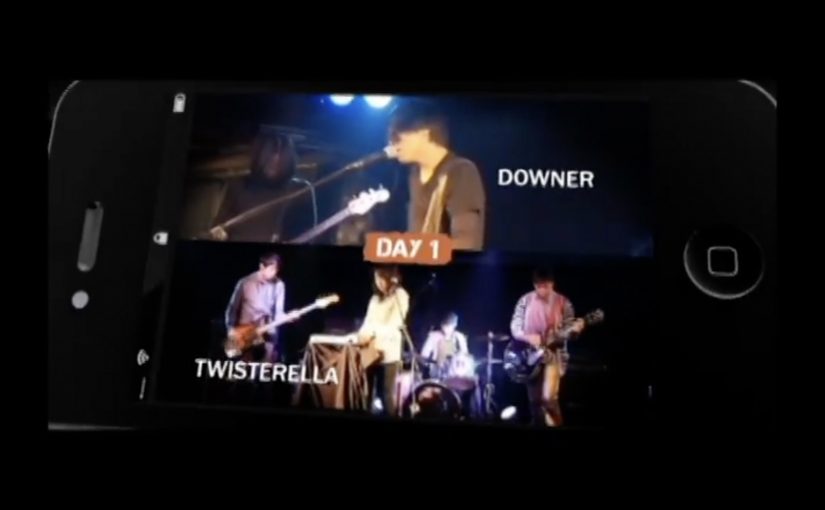
With Leo Burnett Hong Kong, Zoo Records creates “Hidden Live”, billed as a live mobile music festival. Eight indie bands perform across four nights, but the “venue” is not a stage. It is your phone. Tickets contain a hidden code. Scan it and your device becomes the gateway to the gig. Viewers can interact with bands in real time and even buy albums directly through mobile.

The mobile-ticket mechanism

The mechanic is a controlled unlock. In practice, that means entry depends on a visible code that changes the phone from passive screen to active venue. Free tickets are released shortly before each show, and the hidden code on the ticket is the key. Because the code makes entry feel earned and visible, the phone starts to behave like a venue rather than just another media player, which gives people a clearer reason to share and join. A friend’s device is not just showing a clip. It is hosting a live event.

In high-density cities where culture travels through phones first, turning personal devices into venues can scale live experiences beyond physical capacity.

Why it lands

This works because it keeps the emotional core of live music while removing the usual bottleneck. Venue size. Queue friction. Location limits. It also builds interactivity into the experience, so fans feel present rather than merely watching, and the album-buying layer makes the moment commercially useful without interrupting the performance.

Extractable takeaway: If your audience is starved of access, design an “unlock” that turns their existing device into the venue, then attach real-time interaction and a low-friction purchase path to the same moment.

What Zoo Records is really doing

The real question is how to make mobile access feel like attendance, not just distribution. The visible goal is to bring indie live energy to fans. The strategic goal is to convert participation into retail outcomes. Discovery that leads straight to purchase, while the scene still feels authentic. The campaign’s language is about “hidden” culture becoming reachable, and the mechanism makes that promise concrete.

The smart move here is making access itself part of the performance, not treating mobile as a secondary channel.

What to steal from Hidden Live

  • Make access the headline. Do not market “content”. Market the ability to enter something live.
  • Use a key people can show. Codes, tickets, and unlock moments create status and sharing.
  • Design interactivity on purpose. Real-time touchpoints turn viewing into participation.
  • Attach commerce to peak emotion. If buying is one tap while the set is live, it feels like support, not an upsell.

A few fast answers before you act

What is “Hidden Live”?

A Zoo Records campaign where live indie performances are unlocked via mobile by scanning a code on a ticket, turning phones into the concert venue.

Why use ticket codes for a mobile experience?

Codes create scarcity and a ritual. They also provide a simple, visible unlock moment that fans can share and explain quickly.

What makes it feel like a festival rather than a stream?

Scheduled live sets across multiple nights, real-time interaction with bands, and a shared participation loop around access and attendance.

How does the campaign connect to sales?

By letting fans buy the performing bands’ albums directly through mobile while the performance is live.

When is this pattern most useful?

When demand exceeds physical capacity, when fans already behave mobile-first, and when you can make access feel exclusive without making it complicated.

Lenovo ThinkPad T420: Enjoy It Responsibly

Lenovo ThinkPad T420: Enjoy It Responsibly

Lenovo, one of the world’s largest laptop brands, developed a series of online viral videos for their then-flagship ThinkPad T420. Across the set, they try to highlight all the extra time one can gain when a laptop promises faster graphics performance, faster boot up, faster wireless connections, faster data transfer, and similar “speed” wins.

However only one of these videos caught my eye. Please enjoy it responsibly.

Speed as a story, not a spec sheet

The mechanism is a simple translation layer. Take performance claims that are usually buried in benchmarks, then turn them into a human currency. Time. The videos do not ask you to care about milliseconds. They ask what you would do if the waiting disappeared.

In global enterprise and prosumer computing categories, performance messaging lands best when it is framed as reclaimed time and reduced friction, not raw technical superiority.

This is the right way to market performance because people respond faster to friction removed than to technical superiority explained.

The real question is how to make speed feel useful before a buyer ever sees the benchmark.

Why it lands

Most performance ads fail because the benefit is abstract. “Faster” only matters when you can picture the moment it saves you. This approach works because it repeatedly converts speed into everyday relief, and then uses humor to make that relief memorable.

Extractable takeaway: If you need to sell performance, convert benchmarks into a repeatable human outcome, then dramatize that outcome with one clear scenario people can retell in a sentence.

Where Lenovo is aiming this set

Lenovo’s emerging marketing team developed the virals for use in Russia, India, Middle East, Eastern Europe, Turkey, South Africa, South East Asia, Hong Kong and Taiwan.

What performance marketers can steal from this

  • Translate tech into time. People buy saved minutes more readily than they buy “20% faster”.
  • Build a series around one promise. Repetition creates recall, especially in multi-market rollouts.
  • Use one standout film as the hook. The sharpest piece pulls attention, the rest does the persuasion work.
  • Keep the claim legible. One benefit per scene beats stacked feature lists.

A few fast answers before you act

What is Lenovo trying to communicate with these T420 virals?

Lenovo is trying to show that performance improvements translate into reclaimed time in daily work, such as faster start-up, faster connectivity, and smoother graphics.

Why use “time saved” instead of performance specs?

Time saved works better because it is universal. Specs require interpretation, but time savings are instantly understood and easier to remember.

What makes one viral stand out in a series?

One viral stands out when it gives the promise a single memorable scenario that people can retell without needing the rest of the campaign for context.

What is the risk of humor in enterprise product marketing?

The risk is that viewers remember the joke but forget the product truth. The humor has to sharpen the benefit, not bury it.

How can other marketers apply this without copying the creative style?

They can keep the same structure. Convert a technical claim into one visible human benefit, then build a simple scene that makes that benefit immediately clear.

Chery M11: Road M11

Chery M11: Road M11

Hundreds of people design their own “dream roads” online. Then one of those roads gets built in the real world, and the person who created it ends up navigating a rally run alongside a professional driver.

That is the core idea behind Chery M11’s “Road M11” project by Voskhod, built to tackle a real market perception problem. In Russia, Chinese cars were widely seen as unreliable and unpleasant to drive, so the campaign had to create proof, not promises.

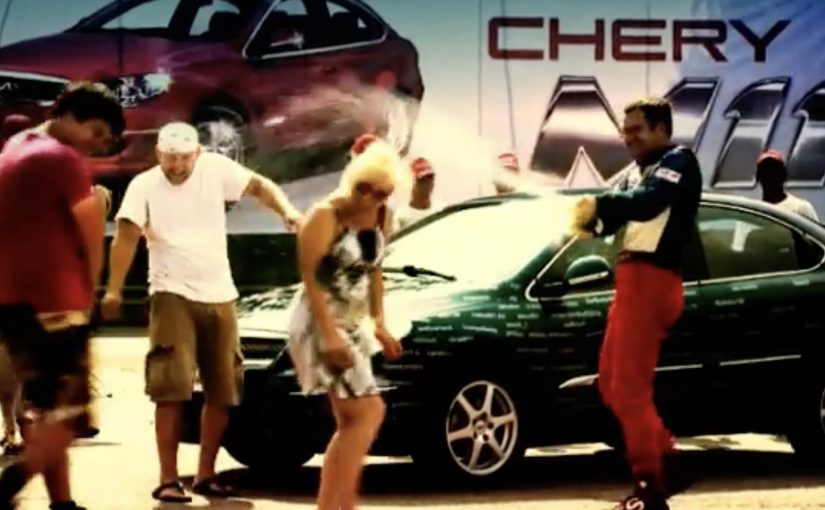
Instead of leading with specs, the brand launches an internet game where anyone can create roads and drive them using a computer model of the Chery M11. People race against the clock and vote on the best road. After a month and more than 800 submitted roads, a winner is selected. The winning road is then constructed in reality for a rally-style event, journalists are invited, a Russian rally champion is chosen as driver, and the road’s creator becomes the navigator.

Turning “prove it” into a participation loop

The mechanic is not just gamification. It is co-creation with consequences. The audience builds roads, competes, and votes. The brand takes the best idea and commits to building it at full scale, then lets independent observers experience the car on a course the public designed rather than a track the brand curated.

In automotive categories where trust is the main barrier, converting digital participation into a real-world test creates credibility that advertising claims cannot buy.

Why it lands

The campaign reframes skepticism as a challenge the audience can test. That matters because the negative belief is about performance and reliability, and those beliefs tend to change only through experience or trusted proxy experience. The road-building game gives people viewer control over what the car is “asked to do”, and the real rally event creates a clean narrative of proof. If the car cannot handle it, the idea collapses publicly. That risk is what makes the demonstration persuasive.

Extractable takeaway: When a category suffers from “untrusted origin” bias, meaning buyers discount the product because they distrust where it comes from, move the claim from messaging into a public test. Let the audience help define the test, then invite credible witnesses to validate the outcome.

What the business intent really is

The obvious goal is traffic and attention. The deeper goal is to earn test drives and journalist coverage by making the car’s capabilities feel observed rather than asserted. The legacy write-up reports strong site visitation and sales impact, which fits the logic of the mechanism. Participation creates investment, investment creates trial, trial creates conversion.

The real question is whether the brand can turn skepticism into a public proof event that feels harder to dismiss than an ad.

What to borrow from Road M11

  • Design a proof that scales. Digital participation can scale fast, but the proof moment must be simple enough to summarize.
  • Let the public set the challenge. Co-creation increases trust because it reduces suspicion of “staged conditions”.
  • Bridge online to offline. The handoff from game to real-world event is where credibility is minted.
  • Invite credible witnesses. Journalists, experts, or known practitioners make the proof travel beyond your owned channels.

A few fast answers before you act

What is “Road M11” in one sentence?

An online road-building game for the Chery M11 where the winning user-created road is built in real life for a rally-style demonstration with journalists and a pro driver.

Why use a game instead of a traditional test-drive campaign?

Because the barrier is trust. A participatory mechanic creates investment, and the game-to-real-world conversion creates a visible proof story that journalists and viewers can follow.

What perception problem is this designed to solve?

That Chinese cars in the Russian market were seen as unreliable and poor to drive, so performance had to be demonstrated rather than claimed.

What results did the legacy write-up claim?

It reported more than 340,000 visitors in three months, sales exceeding plan by 76%, and annual sales growth of 186% versus market averages. Treat these as campaign-reported figures unless you have primary reporting to validate them.

What is the biggest risk in this approach?

If the real-world build and rally experience does not match the promise, the proof flips into a public counter-proof. The execution has to be operationally strong, not just creatively strong.