

Here Comes the Fun: QR-Linked Xmas Greeting

Here Comes the Fun: QR-Linked Xmas Greeting

Here is a Christmas video that I helped conceptualize and create for the agency revo in Germany.

The video is linked via a QR code that appears on the Christmas card sent along with an advent wreath.

Print, scan, smile

The mechanic is deliberately lightweight. Here, the mechanic is the interaction design itself: card, scan, then video. A physical card becomes the trigger. The QR code becomes the bridge. The video becomes the payoff. That is enough to turn a seasonal greeting into a small interaction rather than a static message.

In agency relationship marketing, the best holiday touchpoints feel personal and immediate, not like a campaign trying to sell.

The real question is whether a holiday greeting gives people a reason to act, not just a reason to glance and move on. A seasonal greeting works better as a tiny interaction than as a passive branded card.

Why it lands

It works because the scan reward is instant. You do not have to hunt for context or decode instructions. Because the QR code collapses the step between object and content, the greeting feels immediate instead of effortful. The format also respects the moment. People receiving a card are already in “small delight” mode, so a short video is the right level of effort and attention.

Extractable takeaway: If you use QR codes for greetings, keep the path frictionless and make the payoff feel like a human gesture, not a branded asset.

Have a great Christmas and a super New Year. More from Ramble in January 2012.

What to steal from QR-linked holiday greetings

  • Make the QR code the only call-to-action. One action beats multiple options on a card.
  • Deliver the payoff fast. The first seconds should clearly confirm “this is for you”.
  • Keep it short enough to rewatch. Replay is your distribution.
  • Design for the scan context. Good contrast, enough quiet space, and no tiny codes.

A few fast answers before you act

What is the core mechanic of this Christmas greeting?

A Christmas card carries a QR code. Scanning it takes you directly to a short holiday video.

Why use a QR code on a card at all?

It turns print into a bridge to motion and sound, without requiring logins, search, or extra instructions.

What makes a QR-linked greeting feel “right” instead of promotional?

Speed, simplicity, and tone. The content should feel like a direct message to the recipient, not a generic brand film.

What is the biggest failure mode?

Friction. If the QR code is hard to scan, or the landing experience is slow or confusing, people stop immediately.

How do you improve completion rates for short greeting videos?

Keep it short, front-load the greeting, and avoid long intros before the viewer understands what they are watching.

Deutsche Telekom: Hologram Christmas Surprise

Deutsche Telekom: Hologram Christmas Surprise

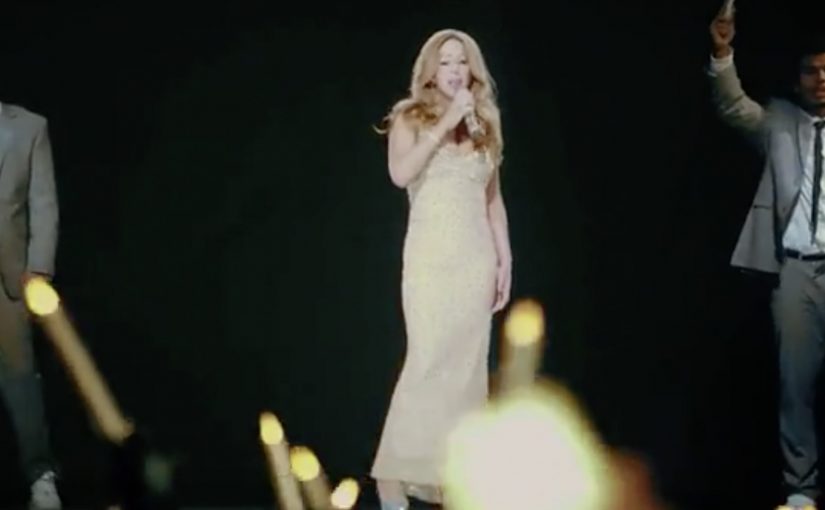
Deutsche Telekom stages a multi-city, multi-media Christmas surprise where people across five countries believe they are seeing Mariah Carey perform live, right in their city square.

The event is described as unfolding simultaneously in Germany, Croatia, Macedonia, Montenegro, and Poland. After roughly 10 minutes, the hologram “breaks” into the sky to reveal the surprise, then reforms to lead the connected crowds through “Silent Night”, finishing with “All I Want for Christmas Is You”.

How the spectacle is engineered

Mechanically, each city is linked live to the others, enabling interaction across locations while the performance plays out on large-scale public screens. Attendees are also given a QR code that takes them to a smartphone experience featuring a candle flame, turning the crowd into a coordinated visual.

In European telecom brand marketing, making the network feel like a shared human experience is a reliable way to give an invisible service a visible emotional payoff.

Why it lands as more than “a stunt”

This works because the surprise is collective, not individual. People do not just watch content. They witness their city being connected to other cities in real time, and that connection is the product truth Deutsche Telekom wants remembered. Because the cities are live-linked, the audience experiences “connection” as something happening to them, which makes the brand promise feel credible. The real question is whether your experience lets people feel the benefit in the moment, not just understand it in hindsight. If your brand sells connectivity, a shared public ritual beats a standalone content drop.

Extractable takeaway: When the benefit is intangible, engineer a shared moment that makes the benefit felt, then let the crowd carry the story.

What the numbers are really doing

The piece is framed with scale metrics. Attendance is described as 12,000 people in total, with an additional 27,000 watching via a live internet stream on lifeisforsharing.tv. Treated as reported figures, the strategic point is clear: the “in person” crowd creates authenticity, and the stream extends reach without losing the feeling of simultaneity.

Stealable patterns for cross-market surprise

  • Build one shared ritual. A carol everyone recognises becomes the simplest multi-language participation layer.
  • Make the reveal part of the story arc. Belief, disruption, then a coordinated finale gives the audience a plot to retell.
  • Link physical and mobile. A QR-driven phone element can turn a crowd into a synchronised visual without complicated instruction.
  • Design for “togetherness at distance”. The emotional payoff comes from knowing other cities are experiencing the same moment at the same time.

A few fast answers before you act

What is the “Hologram Christmas Surprise” in one line?

A simultaneous, five-country public concert that uses a Mariah Carey hologram and live city-to-city links to create a shared Christmas moment at scale.

What is the core mechanism that makes it feel real?

Live-linked public screens across cities, plus on-stage interaction cues and crowd participation elements that play out in real time.

Why add the QR code candle experience?

It gives the crowd a simple coordinated action, visually reinforcing the “connected” theme and making the audience part of the show.

How do you keep it from feeling like a pure tech demo?

Lead with a shared ritual and a simple participation layer so the emotion reads first, and the technology disappears into the experience.

What is the most transferable lesson?

If your brand benefit is intangible, engineer a shared public moment that makes the benefit visible, then let people do the storytelling for you.

Improv Everywhere: Too Old to Sit on Santa

Improv Everywhere: Too Old to Sit on Santa

Flash mob specialists Improv Everywhere created this video in a New Jersey mall, where they abruptly transformed the space into a stage for a short musical about Santa.

How the stunt is constructed

The mechanism is classic Improv Everywhere: a normal public setting, a sudden coordinated performance, and a premise that is instantly understandable to bystanders. The “too old to sit on Santa” hook makes the scene both seasonal and slightly awkward, which is exactly what gives it energy. Because the premise is instantly understandable, bystanders decide in seconds whether to watch, film, or share, which is why this format travels.

In public-space entertainment formats, the fastest route to shareability is a concept people can describe in one sentence and recognize in one frame.

The real question is whether a premise people can recognize in one frame can earn genuine reactions fast enough to carry the story.

Prioritize instant legibility and real bystander proof over production polish.

Why it lands

It works because it flips a predictable holiday ritual into musical theatre, so the audience understands the setup immediately and the reactions become the payoff.

Extractable takeaway: Viral public performances work when they remix a familiar ritual and then let real bystander reactions carry the authenticity. The premise must be instantly legible. The payoff must be emotional, not just clever.

It hijacks a familiar ritual. Mall Santas are predictable. Turning that ritual into musical theatre flips the expected script without needing any explanation.

It uses social friction as the joke. The humor comes from watching adults navigate a child-coded tradition, and then watching the crowd get pulled into the performance anyway. Here, “social friction” means the brief discomfort created when adult behavior collides with a kid-coded context.

It turns spectators into proof. The audience reactions are the credibility layer. You believe it because you see people genuinely surprised, laughing, and filming.

Borrowable moves from Too Old to Sit on Santa

  • Choose a setting with built-in footfall and expectation. The more predictable the normal scene, the stronger the contrast when it flips.
  • Write a one-line premise. If the concept cannot be explained in a sentence, it will not travel as a clip.
  • Stage for the camera, but keep it real. The best moments are still the unscripted reactions from people who did not know what was coming.
  • Keep the runtime tight. Short musical beats and quick escalation make the piece rewatchable.

A few fast answers before you act

What is Improv Everywhere known for?

Organized public “missions” that turn everyday spaces into staged moments. The work is designed to surprise bystanders and create shareable video.

Why does a mall work so well for a flash mob musical?

Malls have constant foot traffic, predictable routines, and lots of people already primed to watch. That makes the reveal and crowd reaction stronger.

What is the core hook of this specific piece?

A Santa-themed musical built around whether adults are “too old” to sit on Santa, which creates humor through awkwardness and nostalgia.

What is the difference between a flash mob and a staged commercial?

A flash mob relies on real-time disruption and authentic bystander response. The environment and audience reactions become part of the content.

What is the transferable lesson for brands?

If you want shareability, start from a familiar ritual, flip it with a simple premise, and let genuine reactions provide the proof and warmth.