Share a Coke

Despite healthy brand tracking data, 50% of the teens and young adults in Australia hadn’t enjoyed ‘Coke’ in the previous month alone. Here, “brand tracking” refers to awareness and preference metrics that can look healthy even when recent consumption is slipping.

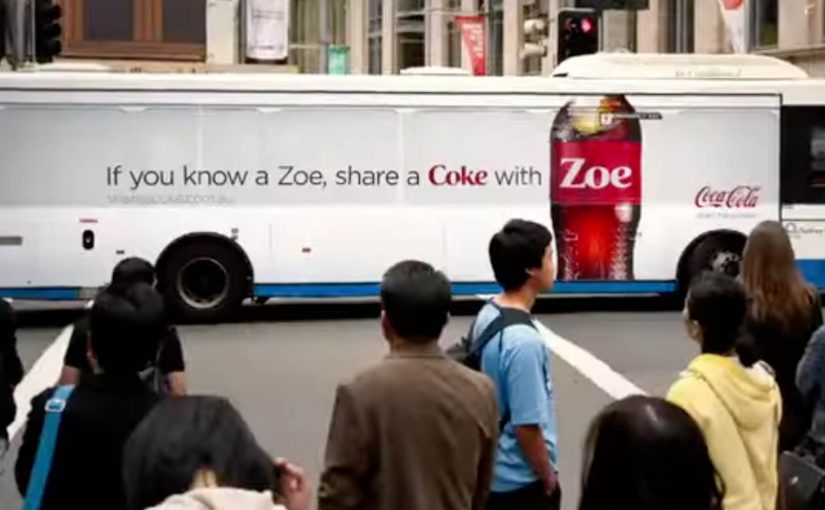
After 125 years of putting the same name on every bottle of ‘Coke’, they decided to do the unthinkable. They printed 150 of the most popular Australian first names on their bottles and then invited all Australians to ‘Share a Coke’ with one another.
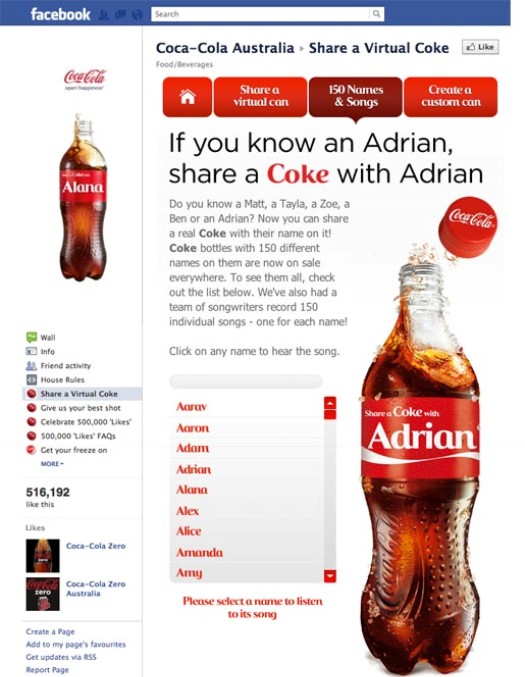
Facebook image showing Coca-Cola promoting the Share a Coke campaign.

The result…

Packaging becomes the conversation

What stands out here is the simplicity. A bottle stops being just a product and becomes a prompt. A name makes it personal. Personal makes it talkable. Talkable makes it shareable.

Because the name turns the pack into a prompt, it triggers talk and sharing without requiring people to learn a new action.

In consumer brands with mass distribution and fragmented media, the pack is one of the most consistent touchpoints, so a pack-level prompt can carry an integrated campaign.

In a world where brands are fighting for attention across channels, this is a reminder that the pack itself can be the media, if it gives people a reason to participate.

Why it works (and why it is more than a label change)

It works because it makes personal relevance visible at the exact moment of choice, and that relevance is what people naturally want to point out and pass along.

Extractable takeaway: If you can make the product itself the trigger for a social action, you reduce friction and get sharing that feels like a natural behaviour, not a forced message.

  • It lowers the barrier to engagement. You don’t need a new behaviour. You just need to spot your name, or someone else’s.
  • It turns purchase into a social act. The “share” is built into the product, not bolted on as a message.
  • It scales personal relevance. The idea is big, but the execution is local. It lives in the names people recognise.
  • It links offline and online naturally. When something feels personal in-store, people are more likely to talk about it beyond the store.

The real question is whether your product can create a social reason to talk at the moment of choice, instead of asking media to do all the persuasion.

When you can bake the “share” into the product experience, packaging-led participation is a more reliable lever than a channel-first campaign plan.

What to take from this for integrated campaigns

  1. Start with a human trigger. A real reason for someone to say: “This is for me”, or “This is for you”.
  2. Make the product do the work. If the core idea is physically present, the campaign holds together across channels.
  3. Design for sharing as a behaviour. Not as a slogan. The easiest shares are the ones that feel natural and immediate.
  4. Keep it legible in one glance. The best integrated ideas can be understood instantly, without explanation.

A few fast answers before you act

What is the “Share a Coke” idea?

It is a packaging-led campaign where Coca-Cola printed popular first names on bottles, then invited people to “Share a Coke” with someone else.

What problem was Coca-Cola trying to solve in Australia?

Despite healthy brand tracking data, 50% of teens and young adults in Australia hadn’t enjoyed ‘Coke’ in the previous month, so the brand aimed to reignite consumption and relevance through conversation.

Why is printing names on bottles strategically interesting?

It makes the product feel personally relevant at the moment of choice. That personal relevance can trigger attention, talk, and sharing without needing complex mechanics.

Is this a “digital campaign” or a “packaging campaign”?

It is both, but it starts with the pack. The packaging is the trigger that can naturally extend into social sharing and broader integrated storytelling.

What is the transferable lesson for other brands?

If you can embed participation into the product experience itself, you reduce friction and increase the odds that people will carry your message across channels for you.
Coca-Cola: Wallet of Happiness Honesty Test

An honesty test on a crowded Lima street

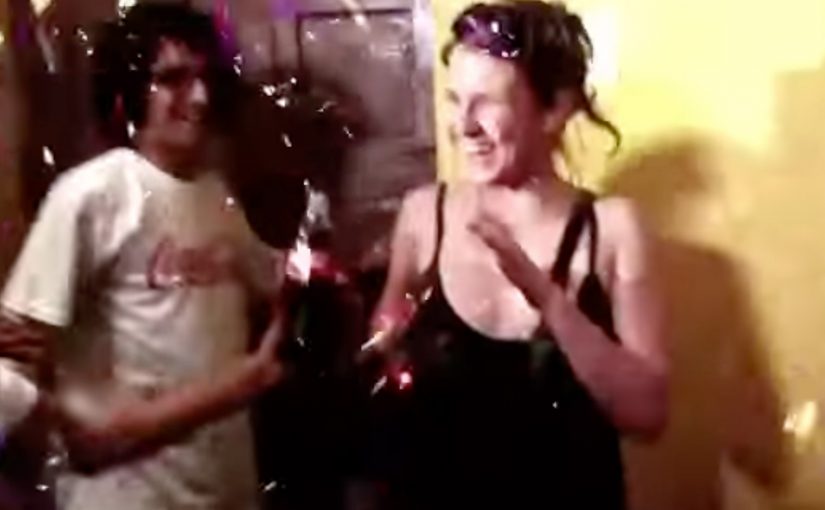
As part of an experiment in a very crowded Lima district in Peru, Coca-Cola with their agency McCann Erickson deliberately left a wallet containing $100 on the street. With it they tested people’s honesty.

A $100 question, asked in public

The brilliance is how quickly the situation reads. Find the wallet. Notice the money. Decide what kind of person you want to be, with nobody asking you anything.

In social experiment storytelling, a simple moral trigger creates instant comprehension and invites viewers to project themselves into the decision. Here, a moral trigger means a moment that forces a right-versus-wrong choice without explanation.

In global FMCG brand storytelling, street-level honesty tests like this travel because they turn a private value into a public, watchable moment.

Why you keep watching

You are not just judging strangers. You are quietly measuring yourself against what you hope you would do. The real question is what you do when the right choice is clear, but no one is holding you accountable. That internal comparison is the engine of the film. Because the choice is legible and unprompted, viewers can run the same decision in their own head, which keeps them watching.

Extractable takeaway: If your mechanic makes viewers instantly ask “what would I do,” the story carries itself without narration.

What the experiment is trying to reveal

People’s honesty, observed in a real public setting through a simple, high-stakes trigger.

What to borrow from a public honesty test

  • Choose a mechanic that is universal and legible without narration. In this context, “mechanic” means the simple rule that generates the behavior you want to capture.
  • Keep production minimal so human reaction stays central.
  • Let the audience do the interpreting. A good social test creates its own debate.

A few fast answers before you act

What did Coca-Cola do in Lima?

They left a wallet containing $100 on the street in a crowded district to test people’s honesty.

Where did this take place?

In a crowded district of Lima, Peru.

Who created the campaign?

The post credits Coca-Cola and McCann Erickson.

Why does the film hook people so fast?

Because the dilemma is instantly legible: you see the wallet, notice the money, and immediately imagine what you would do.

What was the point of the experiment?

To observe how people would react when they found a wallet with money in a real-world public setting.

Coke Zero: Find Your Online Lookalike

A social experiment built on the “evil twin” feeling

If you have ever reckoned you have an evil twin somewhere else in the world, or that you were separated at birth but no one has got round to telling you, Coke Zero’s “worldwide social networking experiment” plays directly into that curiosity.

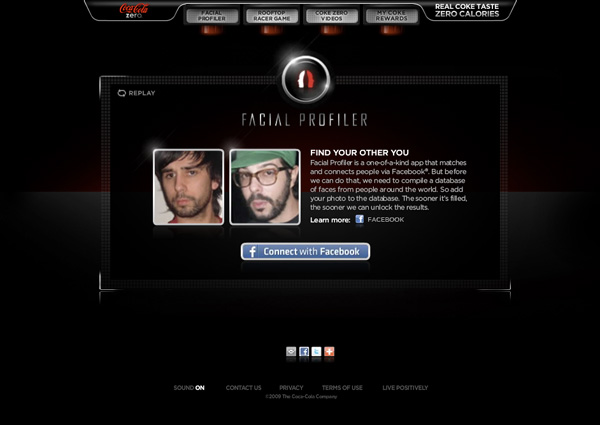
Coke Zero created a Facebook app called the “Facial Profiler” with one clear aim: find your online lookalike.

Coke Zero Facial Profiler App

The mechanic is simple and self-explanatory. You upload a photo to the database. Coke analyses the facial characteristics and attempts to find the nearest match from other uploaded images.

In global FMCG marketing, lightweight social utilities can turn personal identity-curiosity into mass participation with minimal friction.

Why it spreads without feeling like an ad

This works because the “reward” is social, not transactional. People want to see the result, they want to show friends, and they want friends to try it back, which increases the pool of uploaded images and improves the matching for everyone.

Extractable takeaway: If the output stays debatable instead of perfectly final, people replay, compare, and recruit others, which keeps the loop moving without needing incentives.

Where the brand message sits in the experience

The campaign does not argue product attributes head-on. Instead, it borrows the logic of the product proposition and turns it into a human metaphor: “close enough” can still be compelling.

The real question is whether your experience makes the proposition felt through participation, not explained through claims.

When the promise is hard to prove in the moment, translating it into an experience like this is a smarter route than piling on more copy.

The idea behind the campaign is: ‘If Coke Zero has the taste of Coke…is it possible that someone out there has your face?’.

Steal this loop for your next participation mechanic

A participation mechanic is the simple action-and-reward loop that gets people to join, share, and bring in others.

  • Start with a universal itch. Identity, comparison, and “who do I look like” is instantly legible in any market.
  • Make the first step frictionless. One upload, one result, immediate payoff.
  • Let the community improve the product. Every participant makes the experience better for the next one.
  • Encode the proposition in the mechanic. The “same taste” claim becomes a story people can experience, not just hear.

A few fast answers before you act

What is Coke Zero’s Facial Profiler?

It is a Facebook application that invites people to upload a photo and then returns the closest lookalike match from other uploaded images in the database.

How does the campaign mechanic work?

Participation creates the asset. Users contribute photos, the system compares facial characteristics, and the database grows with every upload, which increases the chance of finding a “near match”.

Why does this kind of idea get shared?

Because the output is personal and social. The result is fun to show, fun to debate, and it prompts friends to try it too, which naturally amplifies reach.

What is the business intent behind the experience?

To make the Coke Zero proposition memorable by translating “close enough to Coke” into a human analogy, so the brand message is felt through participation rather than explained through claims.

What is the most transferable lesson for digital campaigns?

Build a simple loop where the audience action creates the content, the content creates conversation, and the conversation recruits the next participant.