
Carlsberg: Bikers in cinema experiment

In a Belgian cinema, an “easy night out” turns into a small test of nerve. A couple walks in with tickets in hand. The room looks full. The only two empty seats are in the middle. The twist is that the audience is packed with intimidating bikers.

Carlsberg and Duval Guillaume Modem set this up as an experiment to reinforce the brand’s association with making the right choices. Reactions were recorded and edited into a viral film that rewards the people who stay seated rather than turn around.

The mechanism that makes it work

The mechanics are simple and deliberate. Fill the room. Leave two seats. Let unsuspecting pairs make a binary decision in public. Stay or leave. The tension is real because the setting is real, and the social pressure is visible to everyone watching.

Once a couple commits and sits down, the room flips from threat to approval. The bikers applaud, and the moment turns into a reward scene that makes the brand feel like it “saw” the better choice.

In crowded FMCG categories, social experiments work when they dramatize a value claim in a single, easy-to-retell moment.

The real question is whether you can borrow social risk to create attention without breaking participant trust.

Why it lands: social risk, then social proof

The audience experiences the same internal dialogue as the couples. Do I trust my instincts. Do I judge by appearance. Do I avoid discomfort. That tension is the hook. The applause is the release. Here, “social risk” is the fear of being judged in public, and “social proof” is the crowd signalling approval once the choice is made.

Extractable takeaway: When you borrow social pressure as the hook, you must also design visible approval as the proof, so the value claim is retellable in one line.

It also produces a clean moral without preaching. The brave are rewarded. The crowd is not actually hostile. The viewer walks away with a feeling that maps neatly onto the brand’s “good decision” positioning.

What Carlsberg is buying with this stunt

This is not about product attributes. It is about emotional territory. Confidence. Decency under pressure. And the idea that choosing Carlsberg is the grown-up, correct move when there are multiple options. This is a smart brand play because it turns “making the right choice” into observable behaviour, but it only works when the participants are treated carefully.

It is also engineered for sharing. The setup can be explained in one sentence, and the payoff is satisfying even if you only watch the last third of the video.

Design rules for your own brand experiments

  • Make the choice binary. The story works because there is a clear yes or no moment.
  • Stage tension, then earn release. If you create discomfort, you must repay it with warmth or justice.
  • Keep the “why” instantly readable. Viewers should understand what is being tested without narration.
  • Reward the behaviour you want to own. The applause is not decoration. It is the message.
  • Protect trust. If participants feel tricked or harmed, the brand loses the moral high ground.

A few fast answers before you act

What is the Carlsberg “bikers in cinema” experiment?

It is a filmed cinema stunt where unsuspecting couples enter a theatre filled with bikers and find only two seats left among them. Their decision to stay or leave becomes the story, and the people who stay are rewarded.

Why is this more shareable than a typical ad?

Because the premise is instantly understandable and the emotional arc is clean. Tension, decision, payoff. That structure travels well as a short video.

What brand message does the stunt communicate?

That “making the right choice” is a real behaviour under pressure, not a slogan. The brand borrows credibility by rewarding the choice on camera.

What is the biggest risk with social-experiment advertising?

Breaking trust. If the situation feels unsafe, humiliating, or coercive, the audience will side with the participants, not the brand.

How do you adapt this pattern without copying the stunt?

Create a public moment with a clear decision, then design a surprising but positive reward that proves your positioning. Keep the stakes emotional, not harmful.
Flair: Fashiontag

Women are always looking for inspiration for their wardrobe and most of the time they find this inspiration by looking at other women.

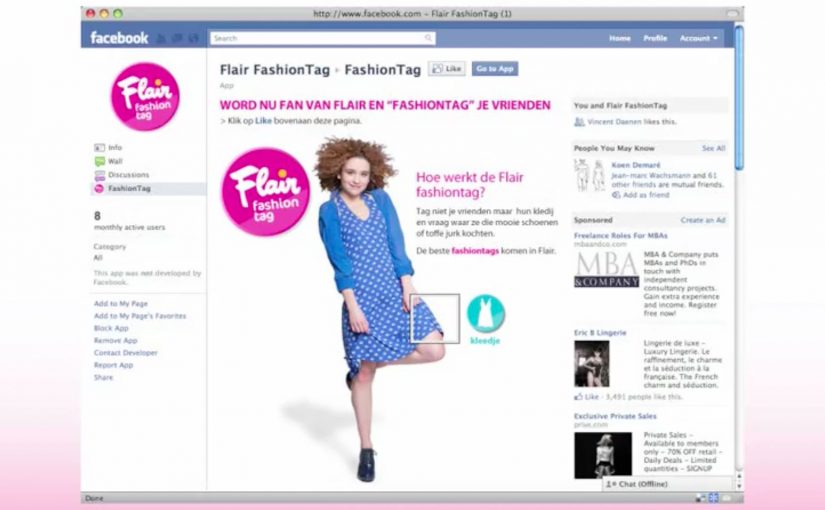
This inspired agency Duval Guillaume to create a Flair Fashiontag Facebook app for Belgian women’s magazine Flair. In the app, instead of tagging people, you can tag people’s clothes or accessories and ask them where they got them.

All fashiontags are displayed in a Facebook gallery, and the best are published in the weekly edition of Flair. This way there is constant interaction between the Facebook application and the magazine itself.

Turning social curiosity into a repeatable format

The mechanism is a simple swap. Replace social tagging of people with social tagging of products. A photo becomes a shoppable question. The owner of the outfit becomes the source. The magazine becomes the curator that elevates the best finds from feed to print.

In fashion and lifestyle publishing, converting casual “where did you get that” moments into a structured loop is a practical way to keep community activity and editorial output feeding each other.

The smart move here is to treat wardrobe curiosity as a content engine, not as a side effect of social chatter. The real question is how to turn that curiosity into a repeatable loop that helps readers in the moment and gives the magazine something worth curating.

Why it lands

This works because it formalizes a behavior that already exists. People already look at outfits, notice details, and ask friends for sources. Fashiontag simply gives that behavior a native interface and a public gallery, then adds a prestige layer by featuring the best tags in the weekly magazine.

Extractable takeaway: If your audience already asks each other for product sources, build a lightweight format that captures those questions in the moment and rewards the best contributions with visible amplification.

What to steal from Fashiontag

  • Swap the object of attention: tag the item, not the person, when product discovery is the real intent.
  • Close the loop with curation: a gallery is useful. Editorial selection makes it aspirational.
  • Make participation low-friction: one tag, one question, one shareable output.
  • Bridge channels on purpose: use print, site, and social as a single system, not separate campaigns.
  • Protect the social contract: ensure the person in the photo is comfortable with tagging and featuring, especially when content moves into a magazine.

A few fast answers before you act

What is Flair Fashiontag?

It is a Facebook app for Flair magazine that lets users tag clothes or accessories in photos and ask where those items were purchased.

What makes it different from normal photo tagging?

Normal tagging identifies people. Fashiontag identifies items. It turns fashion curiosity into a structured question-and-answer interaction.

How does the magazine benefit from the Facebook app?

The app creates a steady flow of wardrobe inspiration and real questions from readers. The magazine then curates and publishes the best tags, which reinforces participation.

Why is this a strong community mechanic?

Because it rewards helpfulness. People contribute sources and recommendations, and the gallery plus print selection turns that help into recognition.

What is the biggest risk in this format?

Consent and comfort. Tagging items in someone’s photo can feel intrusive if the person did not opt in, especially if content can be featured publicly in print.

IKKI.be: The Crying Invoice

USG People, one of the world’s biggest outsourcing companies, launched ikki.be. A portal for freelancers in search of new projects. The mission was to build awareness among freelancers and get them to sign up.

What they learned is simple. One of a freelancer’s biggest concerns is getting paid on time. Which they usually do not. So instead of another feature-led pitch, they created a physical reminder that lets freelancers “recall” the accounts department of late payment, with a little smile. Here, “recall” means prompting the payer to act by making the delay impossible to ignore.

An invoice that complains for you

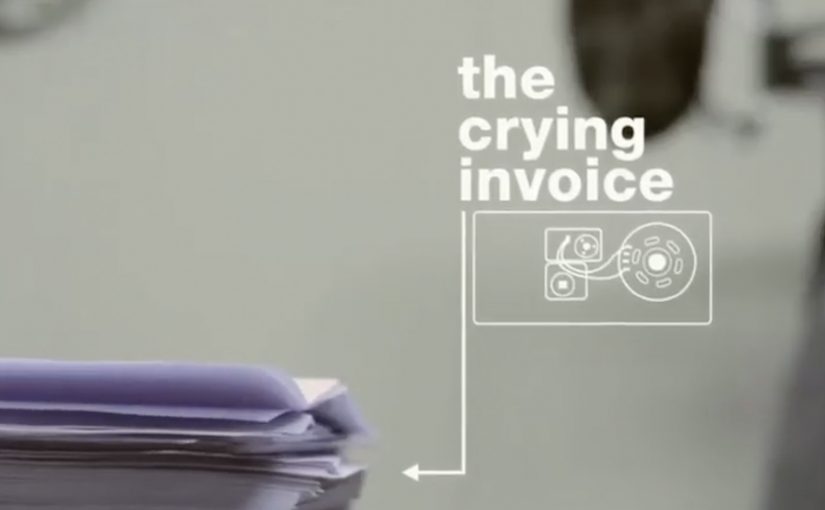
The execution is the product truth turned into a prop. A mailed invoice that starts to cry when the envelope is opened. Case write-ups describe the trigger as a simple sensor reacting when the invoice is exposed, so the sound becomes unavoidable in the moment the payment decision is made. That matters because the trigger turns a forgettable invoice into an unavoidable emotional cue at the exact moment payment is being processed.

In European B2B lead generation for freelance marketplaces, the fastest attention often comes from solving a cash-flow anxiety rather than talking about platform features.

Why it lands

It lands because it reframes a painful, familiar workflow into a moment of social pressure that feels playful rather than aggressive. The invoice does the awkward part, and the person opening it becomes the one who has to explain why it is “crying”. That flips the emotional burden away from the freelancer chasing and onto the payer delaying.

Extractable takeaway: If your audience shares a recurring frustration, build a small object or mechanic that creates a socially visible cue at the exact decision point, then let that cue do the persuasion instead of your copy.

What the business intent really is

This is awareness built on relevance. It ties ikki.be to a pain point that every freelancer recognizes immediately, and it makes the brand memorable through a single, repeatable story people will retell. This is the right kind of B2B awareness work because it earns memorability by dramatizing a real freelancer pain instead of dressing up a feature list. The real question is how to make your brand useful at the moment the pain is felt, not just visible before it happens.

What to borrow from this payment-pressure idea

  • Start from a shared anxiety. Build the message around what keeps your audience up, not what your roadmap shipped.
  • Move the moment to where decisions happen. Here, the reminder appears at envelope-open time, not in a banner.
  • Use humor as a pressure valve. Playful discomfort can be more effective than aggressive escalation.
  • Make it explainable in one line. “It cries when you open it” is instant word of mouth.

A few fast answers before you act

What is “The Crying Invoice”?

A physical invoice that audibly cries when opened, designed to nudge late payers and spark conversation around paying freelancers on time.

Why does this work better than a standard awareness ad?

Because it appears inside a real payment workflow and turns a private delay into a socially noticeable moment, without needing confrontation.

What problem is the campaign solving for ikki.be?

It makes the portal relevant by anchoring it to the most common freelancer concern. Getting paid on time.

What is the main risk with this approach?

If the gimmick feels mean-spirited or humiliating rather than playful, it can trigger backlash and reduce goodwill.

How can another B2B platform copy the pattern?

Identify the shared operational pain, then create a lightweight intervention that shows up at the decision point and makes the issue easy to talk about.