
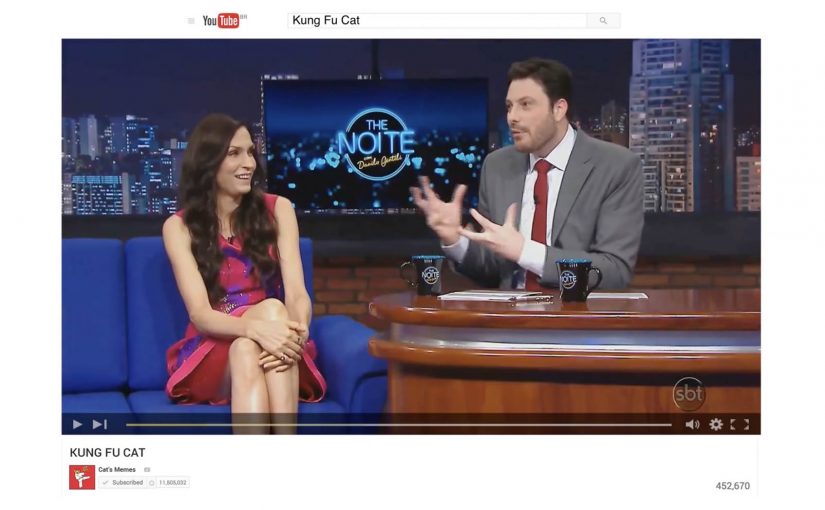
The Noite: Troll Ad Button

To promote a new season of The Noite, Publicis Brasil plays directly with a habit online video has trained into everyone. Skip the ad and move on.

Instead of treating that skip as the enemy, the campaign introduces a second choice. Viewers can click either “Skip Ad” or “Troll this ad”. The “troll” option leads to an unexpected piece of content that stays connected to the original message, and the campaign claims the result was four times more views than comparable pre-roll.

Turning a skip moment into a choice

The mechanic is not more targeting or louder creative. It is viewer control at the exact moment attention usually collapses. If you want to leave, you can. If you want to “troll”, you get rewarded with a playful detour that still carries the show.

In online video advertising, where skippable formats condition people to minimize attention, a simple interactive choice can convert avoidance into participation.

Why it lands

This works because it admits the truth of the format. People dislike being delayed. So the campaign reframes the pre-roll as a game with an opt-out, not a lecture with a countdown. The second button also creates curiosity, because it promises a different outcome than the usual “wait or skip” loop, and curiosity is one of the few reliable reasons people volunteer attention.

Extractable takeaway: If your audience’s default behavior is to escape, build a choice that makes staying feel like a self-directed action, then pay it off immediately with content that still ladders back to the brand.

What the show is really optimizing

The stated win is views, but the deeper win is sentiment. The Noite positions itself as culturally fluent in the platform’s frustrations, and that makes the promotional message feel less like interruption and more like shared humor. It is a promotion that behaves like entertainment.

The real question is not how to stop people from skipping, but how to make the pre-roll moment feel worth choosing.

The smarter move is not to fight skip behavior. It is to design a branded detour that respects it.

What to borrow from the button logic

  • Design at the drop-off point. Put your idea where attention usually dies, not after it.
  • Offer a real opt-out. Interactivity only feels fair if “leave” is genuinely available.
  • Make the alternate path rewarding fast. The payoff has to arrive immediately or the trick reads as manipulation.
  • Keep it on-message. The detour can be weird, but it should still be clearly linked to the original proposition.

A few fast answers before you act

What is the “Troll Ad Button” idea in one line?

A skippable pre-roll that adds a second option, “Troll this ad”, so viewers choose a playful alternate experience instead of simply skipping.

Why is a second button more effective than a better pre-roll film?

Because it changes the relationship with the format. It turns the moment into a decision the viewer owns, which can trigger curiosity and voluntary attention.

What metric did the campaign claim?

That it generated four times more views than similar pre-roll executions.

What is the key risk with “interactive pre-roll” mechanics?

If the alternate option is not genuinely different or feels like a trick, viewers punish the brand with distrust and faster skipping next time.

When should you use this pattern?

When your audience already expects to skip, and your brand can credibly reward curiosity with content that feels entertaining and immediate.
Secret Diary of a Call Girl: The Window Opposite Radio

A window performance built for radio

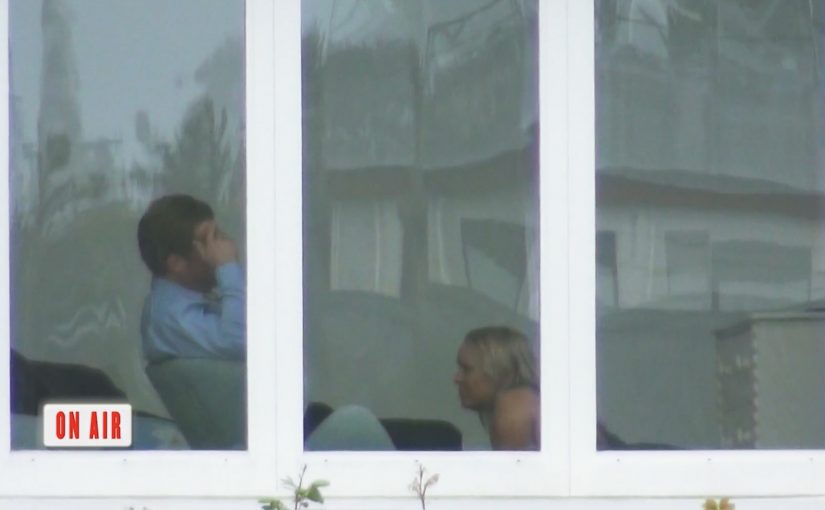
To launch the British TV drama Secret Diary of a Call Girl in New Zealand, DraftFCB staged a simple provocation. An “actress” displayed call girl-like behavior in a house window directly opposite a top radio station for three successive nights.

As expected, the scene caught the attention of the local DJ, who began broadcasting his observations on air. Other DJs around the country reportedly picked up the story, keeping it in circulation for roughly 72 hours. On the final night, with public interest at its peak, the actress closed the blinds to reveal the show message and the reason for the spectacle.

The mechanic: hijacking live commentary as distribution

The campaign is engineered to be “irresistible to narrate.” Put a curiosity trigger within line-of-sight of people whose job is filling airtime with observations, then let their real-time commentary do the heavy lifting. The multi-night schedule matters because it turns a one-off sighting into an unfolding story that listeners can return to, and that other shows can reference without needing new material.

In entertainment launches, live conversation often outperforms polished promos because the audience feels like they are overhearing something that is happening, not being sold something.

In broadcast-led markets, earned attention compounds fastest when the story is physically proximate to a microphone and structured to renew itself across multiple days.

Why it lands

It uses a classic public curiosity loop. People see something ambiguous, hear someone validate it on air, then share it socially to compare interpretations. Because the DJs are reacting in the moment, the “is this real?” tension stays alive long enough to travel, and the final-night reveal provides closure that feels like a payoff rather than a disclosure.

Extractable takeaway: If you want sustained buzz, design a repeatable public trigger that creates daily new angles for commentators, then hold the brand reveal until attention has clearly peaked.

What the launch is really optimizing for

The goal is not just reach. It is talk time, repetition, and social spillover. A premiere wins when it becomes the thing people reference without being prompted, and when the message arrives as the resolution of a story people have already been following.

The real question is whether the setup can turn observation into repeated on-air narration before the reveal arrives.

What to steal from this radio-first stunt

  • Choose a “natural broadcaster.” Put the trigger near people whose incentive is to describe what they see.
  • Make it episodic. Multi-night structure creates freshness and gives people a reason to check back.
  • Design ambiguity, then control the release. Let curiosity build, but ensure the reveal is clean and unmistakable.
  • Plan the social overflow. Seed a format that is easy to retell in one line, so listeners can amplify it without context.

A few fast answers before you act

What did DraftFCB do to promote Secret Diary of a Call Girl in New Zealand?

They staged an actress behaving like a call girl in a bedroom window opposite a radio station for three nights, prompting DJs to discuss it on air until a final-night reveal connected it to the TV premiere.

Why does placing the stunt opposite a radio studio matter?

Because DJs are paid to narrate interesting observations. Physical proximity to the studio turns the environment into live content.

What is the core distribution mechanic?

Earned media through live commentary. The stunt creates something discussable, and the on-air conversation becomes the ad.

Why run it across multiple nights?

Repeat nights transform a sighting into a story arc, increase the chance of pickup across stations, and create a natural moment for a final reveal.

What is the biggest risk with this kind of tactic?

If the reveal is unclear or the tone feels exploitative, the conversation can flip. The payoff must land cleanly and fast.

Billboard Brasil: On Hold Jam Session

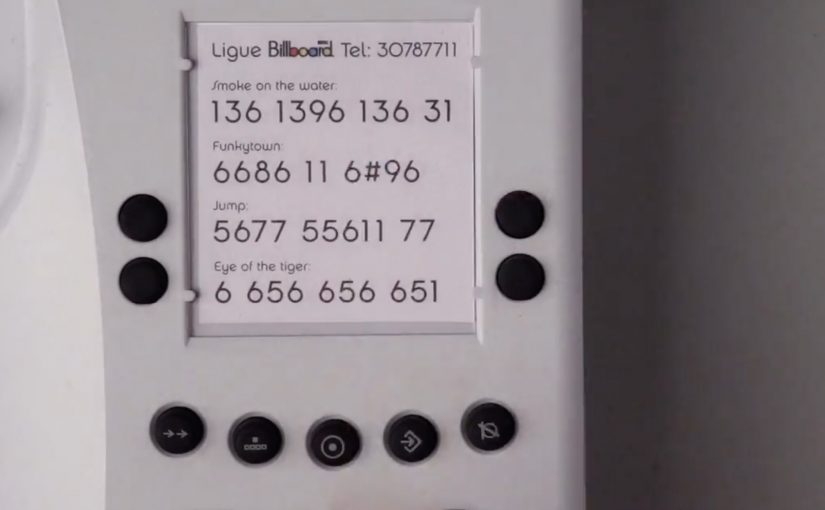
You call a magazine subscription line and get put on hold. Instead of elevator music, you get a prompt that turns your phone keypad into an instrument, so you can jam along while you wait.

Turning hold time into play time

Billboard Magazine features the best of pop music and entertainment in Brazil and, as they frame it, waiting on hold is one of the most boring music moments ever. So their ad agency AlmapBBDO creates the “On Hold Jam Session”, which makes the moment into a fun interactive experience and reflects the magazine’s concept of music and entertainment.

To make the magazine subscribers aware of this new on-hold feature, they send direct mail explaining how one could jam along with their phone buttons when they are put on hold at Billboard Magazine.

Why the mechanic is so effective

The mechanism is simple. Use the tones behind the phone keypad to trigger musical parts, so every button press feels like progress. It replaces passive waiting with viewer control, meaning the caller can shape what they hear in real time. That changes the emotional quality of the same time slice.

Extractable takeaway: If you cannot remove a wait, give people one simple action that produces immediate feedback, so the time feels shorter and more personal.

Definition-tightening: this works because phone buttons generate distinct audio tones that can be mapped to beats, riffs, or samples. The caller does not need instructions beyond “press keys to play”.

In subscription media and entertainment brands, turning unavoidable waiting into a participatory moment is a direct way to make the brand feel lived, not just consumed.

What Billboard is really buying

This is not a content campaign in the usual sense. It is a brand behavior demonstration. If Billboard is about music culture, the brand should show up even in the most unmusical moment, customer service hold time. The real question is whether your brand shows up when the customer is stuck, not only when the customer is browsing.

It also reframes a service weakness into a memorable touchpoint. The caller is more likely to tolerate the wait, and more likely to talk about the experience afterward.

Patterns for turning dead time into play

  • Target dead time. Waiting, queuing, loading, and holding are underused attention windows.
  • Make the first interaction obvious. One prompt, one action, instant feedback.
  • Turn friction into a feature. If the wait cannot be removed, redesign what the wait feels like.
  • Promote it with a physical cue. Direct mail works here because it sets expectation before the call happens.

A few fast answers before you act

What is the “On Hold Jam Session” idea?

It turns phone hold time into a playable music moment by letting callers create beats or melodies using their keypad while they wait.

Why does interactivity matter when someone is on hold?

Because it converts passive waiting into active participation, which reduces boredom and makes the time feel shorter.

How do phone buttons become a music controller?

Each keypad press produces a distinct tone that can be mapped to sounds. The system listens for the tones and triggers matching audio parts.

What is the business benefit beyond “fun”?

A better service experience, higher memorability, and a stronger brand association, plus increased word of mouth because the moment is easy to describe.

What is the main execution risk?

If the audio feedback is delayed or confusing, callers will abandon the interaction and it becomes just another frustrating hold.