
Cadbury: Keep Our Team Pumped

Cadbury: Keep Our Team Pumped

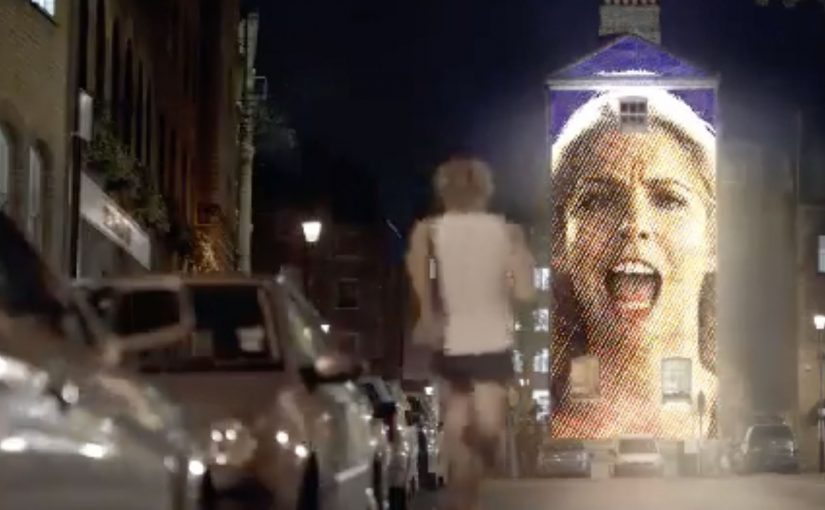
Training for the Olympics is tough, so Cadbury has come up with its loudest campaign to date: Keep Our Team Pumped. Here, supporters of the Great Britain Olympics team can sing a series of motivational, iconic power anthems to keep their team motivated during long training sessions ahead of the big event in 2012.

In plain terms, this is a crowdsourced music campaign: Cadbury gives the nation a set of recognisable “power” tracks, then turns public participation into fuel for Team GB, and into media for the sponsor.

Cadbury is set to release six tracks over the next seven months, culminating in a finale in March 2012 featuring a medley of all six songs created by the British public, plus a performance to Team GB athletes in London.

The Final Countdown

Simply the Best

The integrated campaign involves recruiting singers through social media, followed by a TV campaign airing on 3rd October and running for 6 weeks. There is also radio partnership activity, events, and digital media, with extra support on-pack and in-store, rallying the British public to keep singing.

The fans could follow it all at www.keepourteampumped.com.

In global FMCG sponsorship marketing, this approach works because it turns passive support into an action people can do in under a minute, then reuses that action as campaign content across channels.

The real question is whether your sponsorship can give people a repeatable one-minute action that feels like support, not like homework.

Why music is such a strong sponsorship mechanic

Music is a shortcut to emotion and memory, especially when the songs are already culturally “loaded.” If you pick anthems people instantly recognise, you lower participation friction and increase the chance they will share, remix, or join in again when the next track drops.

Extractable takeaway: If you need mass participation over time, start with a culturally familiar format so the effort is in joining, not in learning what to do.

For a multi-month sponsorship, I would choose a familiar-anthem format over inventing a brand-new mechanic every time, because recognition keeps the participation loop light.

What Cadbury is really building ahead of 2012

At the surface, it is motivation for athletes. Underneath, it is a sponsor-owned participation platform that can run on TV, radio, digital, on-pack and in-store without needing a new idea every week. By “participation platform,” I mean a repeatable participation flow plus reusable assets that can run across channels without reinventing the mechanic. Each track release is a fresh moment, and the public contribution keeps it feeling like a national project rather than a one-off ad.

How to structure a multi-month participation campaign

  • Use a repeatable content format. Six tracks. Same mechanic. New moment each time.
  • Make participation obvious. One clear action, one clear outcome, then show people what happens next.
  • Design for channel handoffs. Social recruitment feeds TV and radio, which then sends people back online.
  • Turn the finale into a payoff. If you ask people to contribute for months, the end needs to feel earned and public.

A few fast answers before you act

What is Keep Our Team Pumped?

It is a Cadbury campaign that invites the British public to record and contribute motivational “power anthem” performances intended to keep Team GB energised during training ahead of London 2012.

How does the campaign mechanic work?

Cadbury releases a sequence of tracks, recruits singers via social media and other channels, then builds toward a final medley performance assembled from public contributions.

Why release the campaign in tracks instead of one big launch?

Staggered releases create repeat attention peaks, give people multiple chances to participate, and keep the campaign fresh across months without changing the core idea.

What channels does this kind of campaign need to work?

You need an online hub for participation, plus at least one mass channel to drive scale and a retail layer to convert awareness into purchase at shelf.

What is the biggest risk with crowdsourced music campaigns?

If the participation flow is awkward or unclear, contributions drop fast. The format only sustains if it is easy to join and people feel their input is genuinely used.
Nike: Jordan Melo M8 Water Projection

Nike: Jordan Melo M8 Water Projection

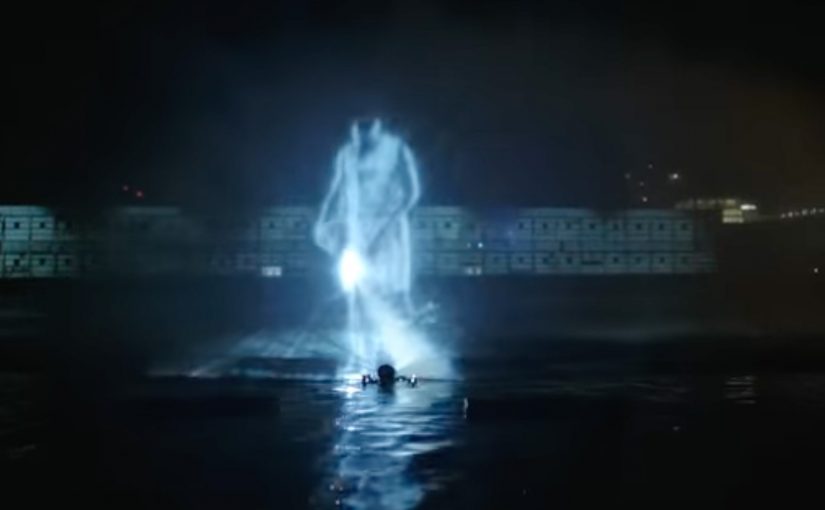
I have seen plenty of projection mapping in the last year or so, but this Nike execution for the Jordan Melo M8 takes a different route. Instead of treating a building as the canvas, it turns the Hudson River into the screen and uses a water curtain to make the visuals feel alive. A “water curtain” is a thin sheet of mist or falling water used as a temporary projection surface.

Trade coverage describes the launch as a live event at Pier 54, where a crowd gathered for performances and then got hit with a large-scale water projection moment featuring Carmelo Anthony and the Melo M8, layered with mapped effects that made the “explosive” theme feel physical.

When projection mapping stops being “mapping”

The mechanic is simple and smart. Water gives you motion for free, so the visuals do not need to do all the work. Every splash, ripple, and mist edge amplifies the animation and makes the illusion feel bigger than it would on a flat wall.

It also creates a built-in contrast. The shoe is a hard, engineered object. The canvas is fluid and unpredictable. That tension is what makes people stare.

In global sportswear launches, the fastest way to earn attention is to make the product reveal feel like a public event, not a private ad.

Why the water screen is the brand message

The most important thing this stunt communicates is not “this is a new shoe”. It is “this is an event-level product”. The audience reads production scale as product importance, especially in a category where new drops appear constantly.

Extractable takeaway: If the reveal mechanic is instantly retellable and the footage visibly signals scale, you get product importance and distribution without needing to explain a single feature.

The real question is whether the spectacle gives people a story they can repeat that makes the drop feel inevitable.

Using water also supports the narrative hook that appears in reporting around the event. Melo “walks on water” as a visual flex. Whether you call it projection, illusion, or theatre, the point is the same. The launch gives people a story they can retell without describing a single feature.

Business intent

This is launch-week acceleration. Get a live crowd. Create a spectacle that looks unreal on camera. Seed the footage. Then let the audience do the distribution, because the clip is more shareable than a standard product film.

Steal this from water-screen projections

  • Choose a canvas that adds value. Water, smoke, ice, and mirrors all contribute “movement” that visuals can ride.
  • Make the environment part of the claim. A river-scale reveal says “major” before any copy does.
  • Design for the recap video. If it does not look unbelievable on a phone screen, it will not travel.
  • Give people one sentence to repeat. “They projected Melo and the shoe onto the Hudson” is enough.

A few fast answers before you act

What is a water screen projection?

A water screen projection uses a thin curtain of mist or falling water as the surface. A projector throws imagery onto it, creating a floating effect that feels more dimensional than a wall projection.

Why does projection on water feel more “real”?

Because the surface moves. Ripples and spray add natural variation, so the visuals feel integrated with the environment rather than pasted onto it.

What makes this kind of stunt effective for a product launch?

It signals importance through scale, creates immediate talk value, and produces recap footage that performs better than a standard reveal because it looks like an event, not an ad.

What is the main operational risk?

Reliability. Water, wind, sightlines, and crowd control can all degrade the experience. If the image is not crisp and the moment does not land fast, the spectacle becomes confusion.

What metrics matter most?

Earned pickup, social share rate of the hero clip, completion rate, and correct retelling of the mechanic. If people remember “Hudson water projection” and connect it to the shoe, the stunt did its job.

Contrex: The Contrexperience

Contrex: The Contrexperience

When diet culture repeats, brands look for a better hook

Contrex looked for a way to make the same truth feel like an experience instead of advice.

Every year, magazines announce new fad diets. And each time, the conclusion is the same. It does not work. To lose weight effectively and permanently, one must adopt a balanced diet, drink water, and do regular exercise.

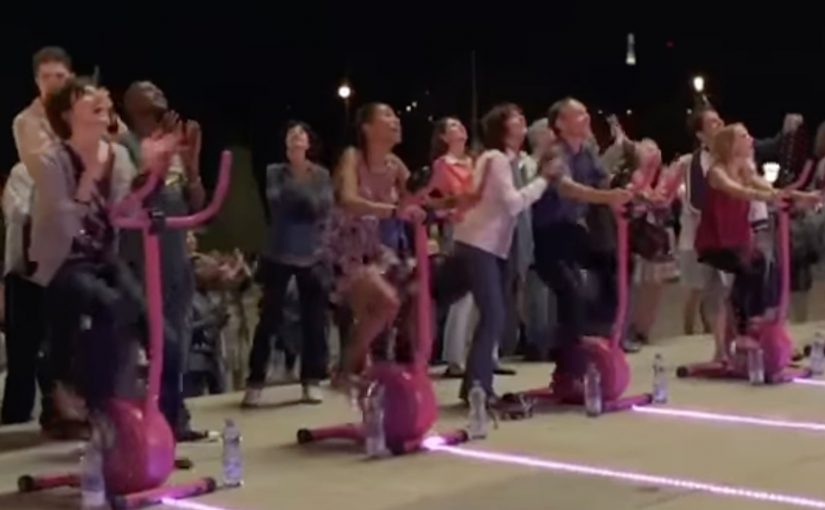
So Contrex, a mineral water brand owned since 1992 by Nestle Waters, decided to create an ambient campaign that showed how losing weight could be fun.

Here, “ambient” means a real-world installation that turns the message into something people do, not something they read.

How the ambient idea turned effort into play

The mechanism was to move the message out of print logic and into physical behavior.

The real question is how to make a wellness behavior feel worth starting now, not merely worth agreeing with.

Rather than telling people to exercise, the campaign created an environment where movement was the point, and where participation delivered a visible, enjoyable payoff. The installation did what most health messaging cannot. It made action feel lighter than intention.

That matters because it turns intention into a felt first step, and felt first steps are easier to repeat.

In European FMCG marketing, “health” messages often fail when they sound like lectures.

Why “fun” can outperform discipline

Fad diets fail for a predictable reason. They demand willpower every day, and they punish slips.

Extractable takeaway: When you need behavior change, design the first step to feel like play, not a test of discipline.

By contrast, play removes friction. When exercise feels like a game, people start without negotiating with themselves. That first step matters because health change is rarely blocked by knowledge. It is blocked by starting.

Contrex used that psychological shift to reframe weight loss from restriction to participation.

The business intent behind making weight loss entertaining

The intent was to connect Contrex with a sustainable, realistic path to wellness, not a temporary fix.

In wellness marketing, lowering the friction to start beats repeating discipline slogans.

By associating the brand with water, movement, and balance, the campaign positioned Contrex as a companion to everyday healthy behavior. In a category where the product is easily interchangeable, that behavioral association is where differentiation lives.

Design moves for your next wellness activation

  • Turn advice into action. If your message is behavioral, build an experience that makes the behavior happen.
  • Design for a low-friction start. The first minute matters more than the perfect plan.
  • Use play as a motivator. Fun can carry people further than discipline messaging.
  • Link brand value to the routine. The brand should feel like part of the habit, not a slogan around it.

A few fast answers before you act

What is Contrexperience?

An ambient campaign by Contrex designed to show that exercise and weight-loss motivation can be fun, not just disciplined.

What problem was Contrex responding to?

Recurring fad-diet cycles that promise quick fixes but do not lead to lasting results.

What was the core mechanism?

Move the health message into a physical, participatory experience that rewards movement and lowers the barrier to starting.

Why does a “fun” approach work in wellness messaging?

Because play reduces friction and gets people moving without requiring constant willpower negotiations.

What is the transferable takeaway for brands?

If your product supports healthy behavior, build experiences that make the behavior feel easy to start and satisfying to repeat.