
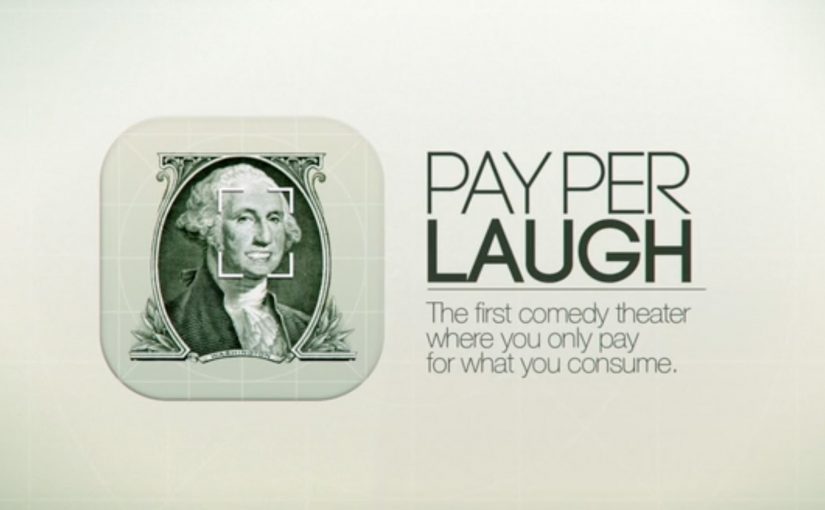
Teatreneu: Pay Per Laugh

In mid-2013, Spain’s theatre scene is described as taking a hit when taxes on theatrical shows reportedly rose from 8% to 21%, with audiences thinning out as a result. Teatreneu, an independent comedy theatre in Barcelona, responds with a pricing idea that sounds like a joke until you sit down.

Entrance is free. You only pay when you laugh. Every laugh costs €0.30, capped at €24 for 80 laughs. If the show is not funny, you pay nothing. If it is, you pay for what you consumed.

The mechanism: pricing tied to visible emotion

The model is made possible by fitting each theatre seat with a system that detects smiles during the show and increments the charge. The experience is framed as transparent and immediate. Laugh, the counter moves. Stay straight-faced, the bill stays still.

In European live entertainment, pricing experiments that align payment to perceived value can reset attention fast, because they turn a ticket into a story people want to debate.

Why this lands

This works because it reframes the risk. Instead of “pay up front and hope it’s good,” the audience gets an “only pay if it works” promise. Because the charge only rises when people visibly enjoy the show, the pricing mechanic feels fairer before the first joke lands. The smile-detection counter also adds tension and theatre inside the theatre, because everyone knows their reaction has a price. The result is a show that sells itself through the mechanic as much as through the jokes. The real question is whether performance-linked pricing can turn hesitation into trial without making the experience feel punitive. The stronger idea here is not the sensor but the risk reversal.

Extractable takeaway: If your category suffers from perceived value risk, attach payment to an observable outcome, then cap the downside so people feel safe trying it once.

What the numbers are trying to prove

Reported results claim that the average ticket yield increased by around €6 compared to the prior model, and that attendance rose by about 35% as the concept became widely talked about. Whether or not each figure holds precisely, the intent is clear. Make pricing the headline, and use that attention to refill seats.

What to steal from performance-based pricing

  • Make the deal easy to repeat. “Free entry, pay per laugh” is instantly explainable.
  • Instrument the experience. The detection system makes the promise measurable, not rhetorical.
  • Protect the customer with a cap. A maximum price keeps the mechanic playful rather than punitive.
  • Let controversy do distribution. A pricing model people argue about spreads faster than a standard poster campaign.

A few fast answers before you act

What is “Pay Per Laugh”?

It’s a comedy show pricing model where entry is free and spectators are charged €0.30 per laugh, capped at €24, using smile detection to meter reactions.

How is laughter detected?

The theatre fits seats with a system that detects smiles during the show and counts them toward the final charge.

Why set the cap at €24?

It limits downside and keeps the mechanic in the range of a normal ticket, so the idea feels like a playful wager, not an open-ended penalty.

What problem is this solving?

It addresses audience drop-off and price sensitivity by shifting risk away from the customer and turning ticket pricing into a reason to attend.

What’s the biggest risk with this approach?

Trust and fairness perception. If people doubt the accuracy of detection or feel pressured to suppress laughter, the experience can backfire.

Frijj: You LOL You Lose

Frijj, a UK-based milkshake brand, and Iris Worldwide developed a campaign to help people build their tolerance to the unexpected. The aim was to make Frijj’s new flavours, Honeycomb Choc Swirl, Jam Doughnut, and Sticky Toffee Pudding, feel like a challenge worth trying.

So they created an advergame, a branded game designed to promote a product through play. It pits you against friends from your social networks in a challenge of who can keep a straight face for the longest period of time while the web app serves up funny and weird YouTube videos.

A “don’t laugh” game that sells flavour confidence

The mechanic is straightforward. You start a session, the site throws escalating clips at you, and you try not to crack. The moment you smile, you lose. The format turns passive viewing into competitive viewing, which is exactly what makes it sticky. Here, “flavour confidence” means making unusual flavours feel safe and fun to try rather than risky or strange.

In FMCG launches, simple competitive mechanics are a reliable way to turn a product message into repeatable social behavior.

Why it lands

This works because it reframes product novelty as a playful test. Instead of saying “these flavours are bold”, it says “prove you can handle bold”. Social comparison does the rest. You want a better score than your friends, so you replay, you share, and you bring others into the same loop. The use of face tracking is also a smart constraint. If the system can “catch” a smile, the challenge feels fair and measurable rather than self-reported.

Extractable takeaway: If your product promise is “unexpected”, build a mechanic where the audience has to demonstrate composure or control. The brand benefit becomes the rule of the game, not the line of copy.

What Frijj is really buying with this advergame

This is a strong launch mechanic because it turns trial curiosity into repeatable social play at scale. The real question is whether the product promise can become a rule people want to test with friends. The game creates time spent, repeat visits, and a socially distributed invitation mechanic, all while keeping the brand message consistent. New flavours that might feel risky in a supermarket become a badge of fun online.

Design rules worth borrowing from Frijj

  • Make the rule binary. Smile equals lose. Simple rules travel.
  • Use content people already understand. YouTube “weird and funny” clips need no explanation.
  • Turn replay into the product benefit. Each retry reinforces “unexpected” as the brand’s territory.
  • Design social competition as the default. Friends, scores, and bragging rights beat generic “share this”.
  • If you use webcam detection, be explicit. Clear consent and clear on-screen feedback keep trust intact.

A few fast answers before you act

What is the core idea of “You LOL You Lose”?

A straight-face challenge where the “payment” is composure. You watch funny clips and try not to smile longer than your friends.

What is an advergame?

An advergame is a branded game designed to promote a product by turning the message into gameplay rather than traditional advertising.

How does the game know you “lost”?

It is described as using face tracking through your webcam to detect a smile. When you smile, the session ends.

Why is this a good fit for launching unusual flavours?

Because it converts “new and unexpected” into a playful challenge, which makes novelty feel fun instead of risky.

What should you measure if you run something similar?

Repeat plays per user, share and invite rate, average session duration, and any lift in branded search or retail trial during the launch window.

Adidas: adiVerse Virtual Footwear Wall

A footwear wall that behaves like ecommerce

The future of instore displays is here. With this example you will see how today’s instore displays are evolving to meet our online experiences.

Adidas has created an in-store digital experience that was described at the time as showcasing over 8,000 Adidas shoes. The technology can be easily deployed to allow almost any retailer to sell the entire Adidas product range without having to be a flagship store in a major city.

How the adiVerse wall runs in-store

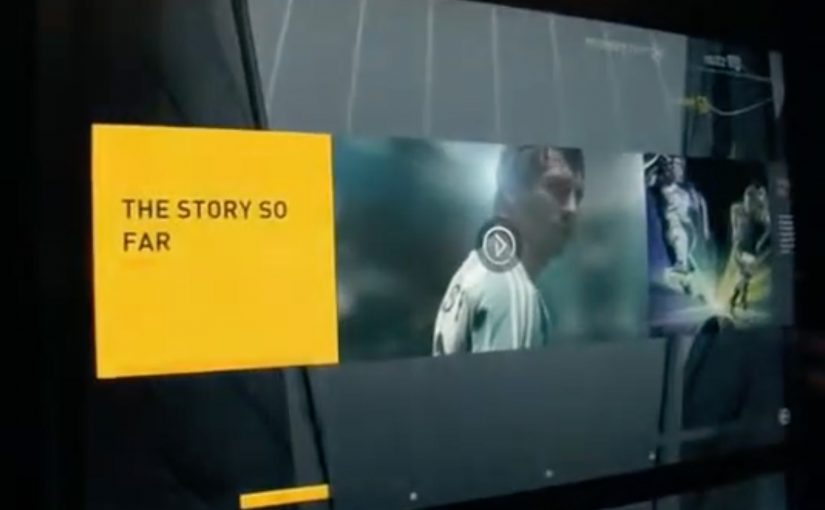
The experience is defined by a large footwear wall, made of multiple LCD touch screens that use facial recognition to detect a customer’s gender on approach to the wall. The adiVerse virtual footwear wall then customizes the product experience for that gender, and helps guide them to the perfect shoe.

Alternatively it lets them browse the entire range of products, with each shoe rendered in real-time 3D.

Endless aisle is a retail setup where a store sells the full catalogue digitally, even if only a fraction of it is physically stocked on the shelf.

Why it feels like online shopping, only bigger

This is essentially ecommerce browsing translated into a shared physical surface. You can scan, filter, compare, and inspect details, but the store controls the pacing and the context. The mechanism that matters is the blend of quick orientation plus depth on demand, and it works because shoppers can get to “relevant enough” fast, then only spend time on richer 3D detail when they care. In multi-brand sporting goods retail, bridging endless-aisle breadth with guided discovery is the difference between “too much choice” and “the right choice”.

Extractable takeaway: On any shared in-store screen, optimize for fast orientation first, then unlock depth only after the shopper signals intent.

The real question is whether your wall can move shoppers from browsing to a confident shortlist without turning discovery into an endless scroll.

Content depth for the winners, speed for everything else

The most popular products in the range get the full content play, including videos, game stats, product specs and even twitter feeds. Everything else stays light, so browsing does not become slow or confusing.

This “tiered content” approach is a practical way to keep performance high while still making hero products feel premium.

The retail play hiding inside the screens

In the end customers can add their selected product into a virtual cart, and check out via an iPad that the store sales staff would have.

That last step is the business intent. Sell the long tail without expanding floor space, while keeping checkout and assistance inside the store experience. Retailers should treat the wall as an assisted-selling surface, not a self-serve kiosk.

The adiVerse Virtual Footwear Wall is an in-store touchscreen wall that lets shoppers browse a large adidas shoe catalogue, inspect products in real-time 3D, and hand selections to store staff for checkout via tablet.

Patterns worth copying for your digital wall

  • Build an endless aisle that feels curated. Offer the full catalogue, but guide to a shortlist fast.
  • Use tiered content deliberately. Deep media for hero products. Lightweight data for everything else.
  • Make staff checkout the final bridge. Tablets in hand keep conversion human and immediate.
  • Design for “public browsing”. Big screens invite group decisions. The UI should support that.

A few fast answers before you act

What is the adiVerse Virtual Footwear Wall?

It is an in-store wall of touchscreen displays that lets shoppers browse a large adidas shoe catalogue, inspect products in real-time 3D, and pass selections to staff for checkout via tablet.

What does “endless aisle” mean in this context?

It is a retail setup where a store can sell the full catalogue digitally, even if only a fraction is physically stocked on the shelf. It expands choice without expanding floor space.

How does it personalize the experience?

It uses facial recognition to detect gender on approach and adapts the interface to that mode, while still allowing shoppers to browse the full range if they prefer.

Why does real-time 3D matter on a digital wall?

Because it supports confident decision-making in-store. Shoppers can inspect details quickly and compare options without needing a physical sample of every model.

What is “tiered content”, and why is it useful?

Hero products get rich media like video and deeper specs, while the long tail stays lightweight. This keeps browsing fast while still making winners feel premium.

How does checkout work in the flow?

Selections are handed to store staff who complete checkout on a tablet. That keeps conversion human and immediate, instead of pushing shoppers to leave the store journey.