
Tic Tac: Likes Matt

Tic Tac: Likes Matt

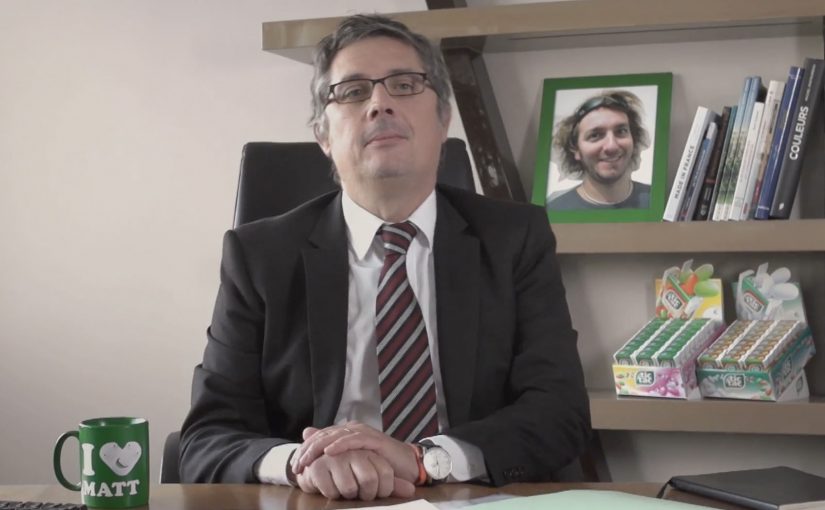
Tic Tac France recently reached one million fans on Facebook. To say thank you, they published a video where the CEO personally thanks the one millionth fan, Matt, with the message: “If you like us, Matt, we’ll like you back”.

In the video, the whole company is totally obsessed with Matt, and his picture shows up everywhere. It is a simple, funny way to celebrate a milestone, and it is worth watching even if it is in French.

A milestone video that turns one fan into the headline

The mechanism is playful personalization. Here, playful personalization means taking one real fan and making that person the center of the joke so the thank-you feels specific rather than generic. Instead of thanking “everyone”, the brand picks one real milestone moment and builds a mini story around it, with the CEO as the voice of gratitude and the office as the exaggerated stage. That mechanism works because naming one person gives the audience a concrete character to remember and retell.

In FMCG social media marketing, milestone celebrations work best when they feel genuinely personal rather than corporate.

Why it lands

This works because it converts an abstract number into a human. “One million fans” is easy to scroll past. “Matt” is specific, memorable, and funny. The obsession gag also gives viewers a reason to share, because the content has a punchline, not just a thank-you line. This is the right way to celebrate a social milestone because it earns attention without sounding self-congratulatory.

Extractable takeaway: When you need to celebrate a community milestone, do not amplify the number. Personify the moment with one concrete protagonist, then build a simple story people can retell in one sentence.

What the brand is really doing

The real question is how to turn a milestone post into something people want to share, not something the brand wants to announce.

The video is not only gratitude. It also signals attentiveness. The brand is implying that individual fans matter, and that the page is a place where recognition can happen, not just another broadcast channel.

What to borrow from this milestone format

  • Make the milestone tangible. One named person beats a generic “thanks everyone”.
  • Use leadership sparingly. A CEO appearance can add weight when the message is short and human.
  • Build a repeatable format. You can repeat the pattern at future milestones without it feeling forced.
  • Give it a share trigger. A clear gag or twist increases forwarding and comments.

A few fast answers before you act

What is “Tic Tac Likes Matt”?

It is a Facebook milestone thank-you video where Tic Tac France celebrates one million fans by thanking “Matt”, the millionth fan, in a humorous, highly personalized way.

Why focus on one person instead of the whole community?

Because a single protagonist makes the milestone concrete and easier to remember, and it gives the audience a story to share.

What role does the CEO play in the idea?

The CEO acts as an authenticity cue. The message feels less like a standard post and more like a direct acknowledgment.

What is the main lesson for community teams?

Milestone posts should earn attention with a simple narrative device, not with bigger graphics or bigger numbers.

How could another brand adapt this?

Pick a real milestone moment, identify a specific “hero” of that moment, and build a short, human thank-you story around them.

LEGO France: Creativity Forgives Everything

LEGO France: Creativity Forgives Everything

A child gets caught mid-creation. The scene looks like trouble at first glance, then the line flips the judgement: “We forgive everything to their creativity”. LEGO has recently launched this campaign in France around that exact tension between mess and imagination.

Click here to watch the video on AdsSpot website.

Turning “naughty” into proof of imagination

The core mechanism is a simple reframe. Instead of defending play as “educational”, the work leans into the moments parents normally correct. The child’s act is still a transgression, but it is also a creative act. The signature gives parents permission to smile first, and judge later.

In brand advertising for physical toys competing with screens, the fastest way to win attention is to make imagination look like something happening right now in the room.

Why the line sticks

“Creativity forgives everything” works because it treats creativity as a social contract, not a product feature. Here, “social contract” means an unspoken trade-off: parents tolerate the mess because it signals imagination at work. Parents recognise the micro-drama instantly. You want boundaries, but you also want your child to be bold, curious, and inventive. The campaign positions LEGO as the tool that triggers that boldness, even when it comes with collateral damage.

Extractable takeaway: If your category is crowded with functional claims, choose a human tension your audience already lives with. Then write a line that resolves the tension emotionally, and let the product become the enabler of that resolution.

What LEGO is protecting

This is brand defence disguised as humour. The real question is how LEGO stays culturally distinctive when screens can deliver endless entertainment without leaving any real-world evidence. It keeps LEGO out of a specs battle and away from “learning toy” cliches. By celebrating the messy edge of creativity, the brand claims a territory that is hard for digital entertainment to steal. Real-world play that leaves evidence.

What brands can borrow from LEGO here

  • Use a permission-giving signature. A great brand line does not just describe. It authorises a feeling or behaviour.
  • Stage recognisable “caught in the act” moments. When the scenario is instantly familiar, the audience supplies the backstory for you.
  • Make the brand the ally. The work does not lecture parents. It makes them complicit, which is more persuasive.
  • Let the theme travel across formats. This idea naturally fits film, print, and outdoor because the tension can be captured in a single moment.

A few fast answers before you act

What is LEGO’s “Creativity forgives everything” campaign?

It is a LEGO France brand campaign built around the idea that adults can forgive children’s small “misbehaviours” when they are clearly driven by creativity and imaginative play.

What is the core idea in one sentence?

Reframe mischief as imagination, then position the product as the trigger for that imagination.

Why does this positioning work for LEGO specifically?

Because LEGO is a physical system for building anything. The campaign connects that open-endedness to real, observable behaviour rather than abstract “learning” benefits.

How do you adapt this approach to another category?

Identify a daily tension your audience recognises, write a line that gives emotional permission, then demonstrate the product as the enabling tool inside that tension.

What should you avoid when copying the pattern?

Avoid moralising. The power comes from empathy and recognition, not from telling the audience how they should behave.

SNCF: Take a look at Brussels

SNCF: Take a look at Brussels

France’s national state-owned railway SNCF is back with another live event. This time, with ad agency TBWA\Paris, they set out to promote the launch of their new direct Lyon (FR) to Brussels (BE) train route.

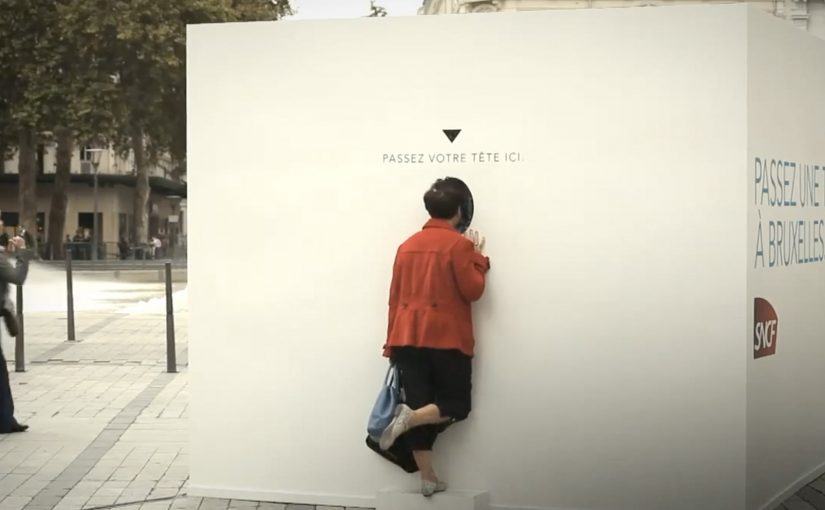
A 3 meter high cube is placed in Place de la République, Lyon with the message “Take a look at Brussels”. Passers-by who peek into the hole are transported to Brussels and greeted live by a Belgian music band.

A cube that makes “direct” feel real

The idea does not try to explain the route. It stages it. The cube behaves like a physical portal that turns “Lyon to Brussels is direct” into something you can experience in a few seconds, without a brochure, timetable, or sales pitch. For route launches, staging the benefit beats explaining it.

How the peephole reveal is engineered

The public-facing mechanic is simple. Here, “mechanic” means the visible action a passer-by is asked to take. Look inside, see Brussels. Underneath, it is a live link that creates the feeling of distance collapsing, with the band providing a human welcome that reads as hospitality rather than tech demo. Because the link is live and the welcome is human, the portal feels credible, which is why the message sticks.

In European transport marketing, live street experiences work best when they compress a service promise into one instantly understood moment.

Why this feels like travel, not advertising

Most transport marketing shows trains and destinations. This one gives you a destination moment first, then lets your brain do the rest. Curiosity pulls people in. The live greeting rewards them immediately. And the “I just saw Brussels from Lyon” story is easy to retell.

Extractable takeaway: If your promise is immediacy, make it visible as a live reveal, so people feel it before you explain it.

The real question is whether your launch makes the benefit felt before it is explained.

What SNCF is really buying with the activation

  • Instant comprehension. “Direct link” becomes experiential, not informational.
  • Earned attention. The cube is a public object that draws a crowd and creates spectators.
  • Shareable proof. The experience is built to be filmed, reported, and repeated as a simple narrative.

Steal this for your next route or service launch

  • Turn the benefit into a moment. Do not describe “direct”. Demonstrate it.
  • Make the invitation frictionless. A peephole beats an app download when you need street volume.
  • Add a human layer. A live welcome lands faster than a purely technical reveal.
  • Design for bystanders. If the crowd understands it instantly, the activation markets itself.

A few fast answers before you act

What is “Take a look at Brussels” by SNCF?

It is a street activation in Lyon where a large cube invites people to look into a peephole and see a live scene from Brussels, promoting a new direct train route.

Why use a cube and a peephole instead of posters?

Because the action is self-explanatory and physical. People understand what to do in seconds, and the reveal delivers the message more memorably than a static claim.

What is the key idea being communicated?

Directness. The campaign makes the Lyon to Brussels link feel immediate by turning it into a live “window” experience.

What makes this effective as live communication?

Curiosity drives participation, the live greeting rewards it, and the outcome becomes a simple story people share: “I saw Brussels from Lyon.”

What should a transport brand measure for activations like this?

Footfall, participation rate, dwell time, earned media pickup, and any measurable lift in route awareness or intent in the regions reached.