Volkswagen LinkedUit: A LinkedIn API Campaign

Volkswagen has released a first of its kind LinkedIn based campaign which takes full advantage of the new LinkedIn API. The campaign is based on the idea that the new Passat is as full of features as your LinkedIn profile is full of information.

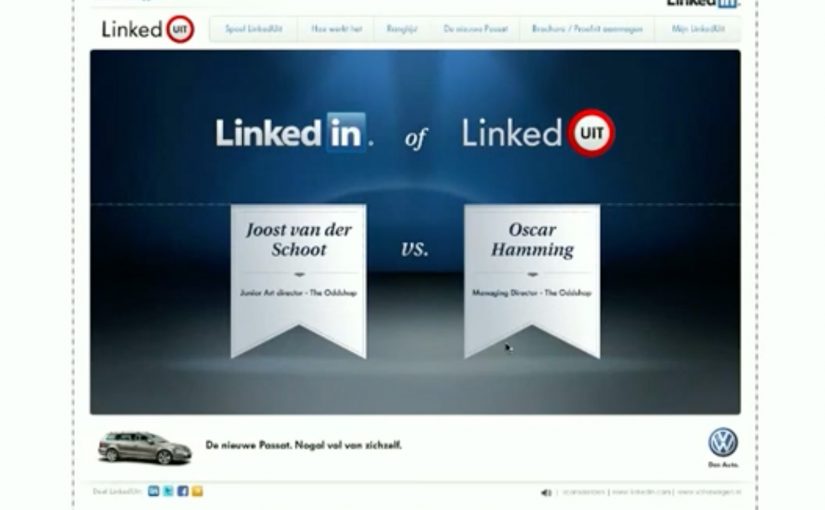
The campaign is called “LinkedUit” (LinkedOut) and gives anyone who challenges a friend on LinkedIn a chance to win a Volkswagen Passat.

The game is really simple. After signing in using your LinkedIn profile, the app lets you choose others in your network to challenge. A LinkedIn victor, and a LinkedOut looser is then chosen based on education, experience, recommendations and connections.

Why this is a smart use of platform data

This campaign uses something people already curate and care about. Their professional identity. Instead of asking for attention, it uses existing LinkedIn data as the raw material for the experience.

  • Low input for users. The profile is already built. The game simply reads it.
  • High personal relevance. Comparisons feel personal because they are based on your own history.
  • Built-in social spread. Challenges create a natural loop through networks.

The Passat benefit: “feature-rich” as a metaphor

The creative link is straightforward. Passat equals feature-rich. LinkedIn profile equals information-rich. The experience makes the metaphor tangible by turning profile depth into a competitive score.

That kind of metaphor works when it is easy to explain in one sentence and easy to experience in one click.

What makes this type of social game succeed or fail

  1. Fair scoring logic. If the rules feel arbitrary, people reject the result.
  2. Fast time-to-result. The payoff must arrive quickly after sign-in.
  3. Friendly rivalry. Challenges should feel playful, not judgmental.
  4. Clear reward. A chance to win a Passat is a simple, memorable incentive.

What to take from this if you are building platform-native campaigns

  1. Use the platform’s native data as the experience. The more you rely on what already exists, the lower the friction.
  2. Make the mechanic social by default. Challenges, invites, and comparisons drive distribution.
  3. Keep the brand connection clean. One strong metaphor beats multiple weak links.
  4. Design for credibility. When you use personal data, transparency and perceived fairness matter.

A few fast answers before you act

What is Volkswagen “LinkedUit”?

It is a LinkedIn-based campaign that uses LinkedIn profile data to create a challenge game, giving participants a chance to win a Volkswagen Passat.

How does the game determine a winner?

The app compares elements such as education, experience, recommendations, and connections to choose a “LinkedIn victor” and a “LinkedOut” loser.

Why is the LinkedIn API important here?

Because it enables the experience to pull in profile information automatically, making the game quick to start and personally relevant without extra data entry.

What is the creative link to the Passat?

The campaign uses the idea that the new Passat is full of features, just like a LinkedIn profile is full of information, then turns that into a competitive mechanic.

What is the main lesson for social platform campaigns?

If you build around native identity and data, and make the interaction social by default, you can create an experience that spreads through the network naturally.
UNIQLO: Lucky Machine Social Pinball Launch

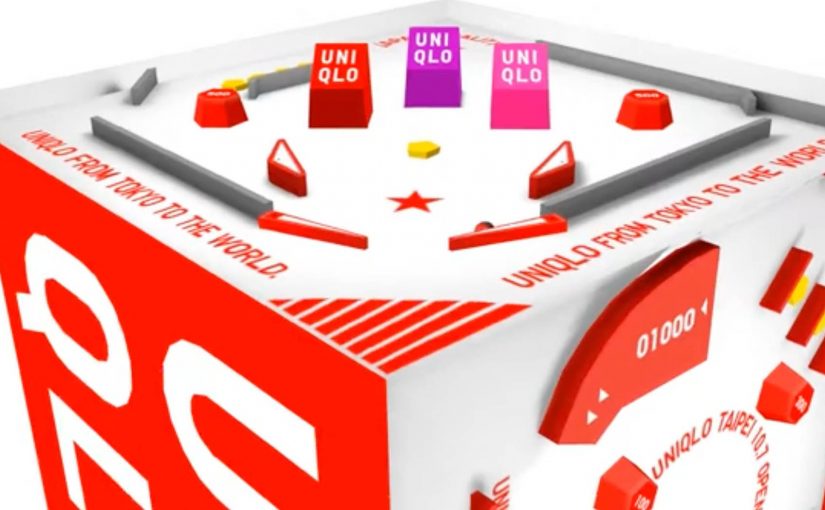
Here is another cool digital campaign from UNIQLO, this time they are promoting the launch of their new UK store via an online pinball machine (built in Papervision) that is socially connected.

You start with a single ball, but on connecting with Facebook you get a bonus 3 to help you climb the leader board for a share of thousands in prizes.

UNIQLO are well known for their digital campaigns and this once again hits the mark, providing a seriously simple pinball machine that feels so easy to master that you’ll be there, racking up some great brand engagement time over the campaign.

Why a simple game is a strong store-launch mechanic

A new store opening is a local moment. A game turns it into a repeated behavior. If the experience is light, fast, and replayable, it can generate more total attention than a one-off announcement.

  • Instant entry. You can play immediately without committing time to learn.
  • Built-in replay loop. “One more try” is the whole point of pinball.
  • Competition creates stickiness. Leaderboards turn casual play into a goal.

Social connection as a value exchange

The Facebook connection is not framed as “follow us”. It is framed as a direct advantage in the game. Extra balls. Better odds of climbing the leaderboard. A clearer path to prizes.

That is the important shift. Social is not an add-on. It is a gameplay benefit, which makes the opt-in feel earned rather than demanded.

What this teaches about gamification done properly

  1. Keep the mechanic obvious. If people do not understand how to win, they leave.
  2. Reward the right action. Extra balls is a reward that directly improves the experience.
  3. Make progress visible. Leaderboards and scores give people a reason to return.
  4. Make prizes feel real. A “share of thousands” is a tangible incentive that fits the competitive loop.

In retail launch marketing, a simple replay loop can outperform a big announcement because it turns curiosity into time spent.

What to take from this if you run retail or digital campaigns

  1. Design for time spent, not just reach. A replayable game builds engagement minutes, not impressions.
  2. Use social as a functional advantage. Tie opt-ins to benefits users actually value.
  3. Let the format do the messaging. A campaign that is fun is a campaign people return to voluntarily.
  4. Keep the barrier to entry close to zero. The simpler the first 10 seconds, the better the retention.

A few fast answers before you act

What is UNIQLO “Lucky Machine”?

It is a socially connected online pinball game built to promote the launch of a new UNIQLO UK store, with leaderboards and prizes.

How does Facebook connection change the experience?

Connecting with Facebook gives players a bonus three balls, improving their chances to climb the leaderboard and compete for prizes.

Why is pinball a good format for engagement?

It is quick to start, easy to replay, and naturally encourages “one more try”, which increases time spent with the brand.

What is the main growth mechanic?

A simple value exchange. Social connection provides a direct gameplay advantage, which drives opt-ins without heavy persuasion.

What is the transferable lesson for campaign design?

If you want engagement time, choose a format that is inherently replayable, then attach social behaviors to real user benefits.

Cadbury Creme Egg: Egg-Splatting Bus Stands

Turning bus-stop boredom into a reason to play

Only available from New Year’s Day to Easter Day, the Cadbury Creme Egg is one of the best selling confections in the U.S., Canada, and the United Kingdom.

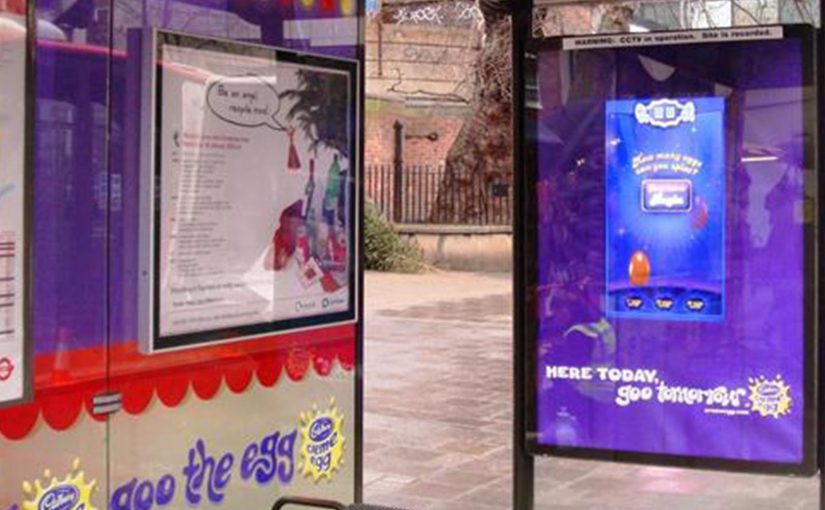
In a bid to boost Creme Egg sales in the lead-up to Easter, Cadbury’s has come up with some really unique bus shelter ideas in the UK.

Waiting for a bus is boring. Now though, you can fill this time by playing Cadbury’s first ever interactive outdoor game called Splat the Egg.

How the idea works: time, place, and a simple interaction loop

The mechanism is classic context hijack. You take a moment with unavoidable dwell time, add a clear instruction, and reward participation with a small burst of fun. The shelter becomes the interface, and the product becomes the “game object”.

In European FMCG launches with seasonal availability, interactive out-of-home can act as both reminder and recruiting surface, converting passive footfall into active brand experience.

Why it lands: it gives the viewer control over the medium

It works because it reframes waiting as choice. Instead of being stuck, you get something to do. And once one person starts, the social proof pulls in the next. A bus stop is already a small crowd. The game turns it into a moment people watch and talk about.

The business intent: make seasonal scarcity feel like an event

Creme Egg’s limited availability is built for anticipation. This activation makes that anticipation physical. It pushes mental availability ahead of Easter and ties the product to a playful ritual rather than just a purchase.

What to steal for interactive out-of-home without overbuilding it

  • Exploit dwell time. Bus stops, queues, and waiting areas are built-in attention pockets.
  • Keep the interaction legible in two seconds. If it takes explanation, it will not scale in the street.
  • Design for spectators as well as players. The crowd is part of the distribution.
  • Connect the physical to an accessible fallback. An online version extends reach beyond the locations.

A neat extension for people who cannot try it in person

Is this the future of advertising. Every lamp post and bus shelter calling out to be stroked, touched or hit?

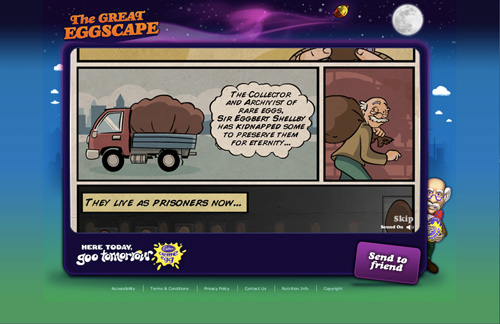
For those who won’t have the chance to experience the real thing. You can have a go at the online version at www.cremeegg.co.uk/greateggscape/.

The Great Eggscape


A few fast answers before you act

What is Cadbury’s “Splat the Egg” bus shelter idea?

An interactive out-of-home activation that turns a bus shelter into a playable game, letting people waiting for a bus engage with a Creme Egg-themed experience.

Why choose bus shelters for an interactive campaign?

Because they come with natural dwell time. People are already waiting, so the activation converts idle minutes into engagement without asking for extra effort.

What is the core mechanism?

Context hijack plus a simple interaction loop. A clear instruction turns a waiting moment into a quick burst of fun, and the shelter becomes the interface.

What is the business goal behind this activation?

To build anticipation for a seasonal product and tie scarcity to a playful ritual that increases mental availability ahead of Easter.

What is the most transferable takeaway?

Build simple viewer control into the medium at moments of forced waiting, and design for spectators as well as participants so the crowd becomes distribution.