
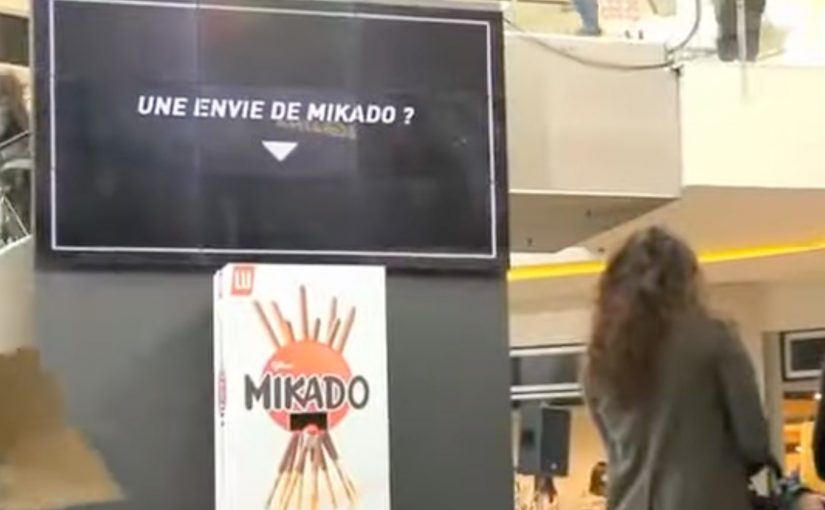
Mikado Resistance Test

You are doing your shopping in a mall, and you spot a giant Mikado dispenser. Above it, a message scrolls: “Une envie de Mikado ? Vous ne devriez pas…”. A free box is right there. The temptation is immediate. People hesitate for half a second, then they reach for it anyway.

The moment the “victim” takes the Mikado, reality shifts. In a beat, they “fall” into an absurd, high-stakes scene. A nightmare wedding. A robbery. A knife-throwing scenario. Six variations. Each one staged to make a single point feel physical: Mikado is hard to resist, even when you are warned not to.

The core move

Turn “irresistible” from a claim into a public dilemma. Then prove it by watching people choose temptation in front of everyone.

The real question is whether you can make your product truth show up as a choice people make, not a line you repeat.

What Buzzman builds for Mikado

This is a deliberately simple setup with a brutal logic loop:

Step 1. Offer the product for free, but add a warning

The dispenser invites you, then immediately tells you not to do it. That contradiction creates tension and curiosity in the exact moment of decision.

Step 2. Make the consequence entertaining, not moralizing

When the actor takes the box, they “drop” into a surreal scenario. The audience in the mall watches the fall. Then they watch the scene unfold. The humor is the proof mechanic.

By “proof mechanic,” I mean the device that makes the claim felt, not merely stated.

Step 3. Extend it into a digital series with repeat value

The campaign runs as a set of videos with multiple protagonists and outcomes. The variety matters because it turns one stunt into a format.

By “format,” I mean a repeatable structure that can produce multiple episodes without changing the premise.

Step 4. Make the viewer complicit

At the end of the video experience, you can choose who becomes the next “victim.” That viewer control is not a gimmick. It reinforces the theme: you are part of the temptation chain.

In European FMCG brand marketing, this kind of public temptation test turns an “irresistible” claim into observable behavior people can share.

Why it works

It works because the proof is a public choice. The audience watches someone decide, then watches the staged consequence play out.

Extractable takeaway: When the attribute you want to land is emotional, design a temptation moment where people demonstrate it through behavior, not explanation.

It turns a brand truth into a behavioral test

The campaign does not explain why Mikado is irresistible. It sets up a moment where resisting is the story.

The warning is the creative fuel

“You shouldn’t” is what makes people want to do it. The copy creates the tension. The action resolves it.

The audience reaction is the distribution engine

People do not only watch the “victim.” They watch the crowd. The social proof is built into the scene itself.

The deeper point

For emotional product truths, experiential proof is usually more persuasive than descriptive messaging.

If you want a product attribute to stick, stop describing it. Build a situation where people demonstrate it for you. Especially when the attribute is emotional (irresistible, addictive, impossible to ignore), the most persuasive proof is behavior under temptation.

How to steal the pattern

  • Stage a contradiction at the point of action. Offer the thing, then tell people they should not take it.
  • Make the “consequence” playful, not punitive. The reveal should entertain the crowd, not shame the participant.
  • Design for repeatability. Build variations so one stunt becomes a series, not a one-off.
  • Capture the crowd, not just the protagonist. Reaction shots are built-in social proof and share fuel.
  • Add viewer control only if it reinforces the theme. Let the audience pick the next participant to keep the temptation chain going.

A few fast answers before you act

What is the core mechanic?

A public dispenser offers free Mikado while warning you not to take it. When someone does, the stunt flips into a staged “consequence” scenario that proves irresistibility.

Why multiple scenarios?

Because a single stunt becomes a repeatable content format. Six outcomes keep it watchable and shareable.

What is the role of interactivity?

Viewers can choose the next “victim” at the end of the video experience, extending participation beyond the mall moment.

What is the transferable pattern?

Design a public “temptation test” where the desired product truth is demonstrated through behavior, not explained through messaging.

What is the biggest risk?

If the consequence feels mean-spirited or unsafe, the tension flips from funny to uncomfortable. The stunt has to stay playful.
Amnesty International: Sound of Amnesty

This year, charity and human rights organization Amnesty International France turns its signatures petition drive at www.marathondessignatures.com into a musical “hymn to freedom” with Paris-based agency La Chose.

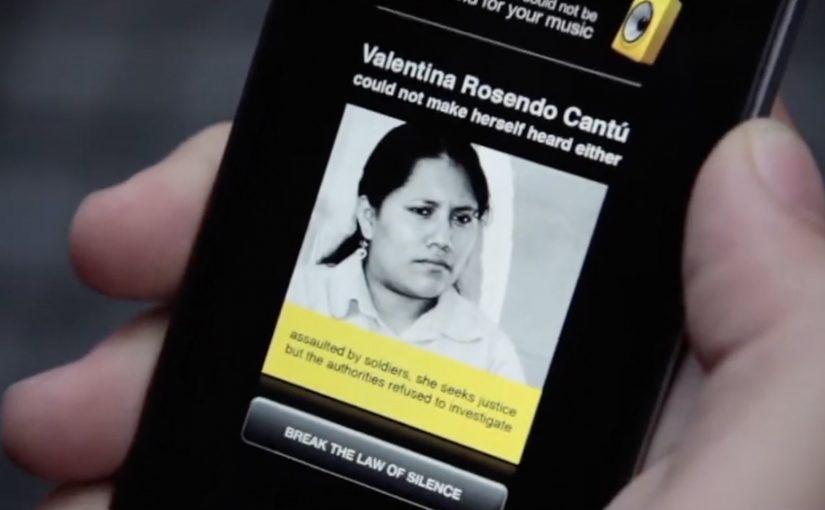
The campaign behaves like a normal petition drive, with one twist: every digital signature releases the next note of an exclusively written song, “The Sound of Amnesty”. To push the idea further, Shazam is used as a distribution channel. When Shazam fails to recognise a song, the app displays a call-to-action message alongside a case story, including: “Valentina Rosendo Cantu could not make herself heard either. Assaulted by soldiers, she asked for justice but the authorities refused to investigate”.

Why the “next note” mechanic works

Most petitions are emotionally important but mechanically flat: sign, share, done. Here, the signature becomes a trigger with immediate feedback. The song becomes a living progress indicator, and every participant can feel they are adding something tangible, not just adding their name to a counter. Because each signature produces an instant, shared “next note” payoff, participation feels consequential, which makes repeat shares and completion more likely.

This is a stronger petition pattern than a static signature counter because it turns support into a felt moment of progress.

Why Shazam is the clever amplifier

Shazam normally appears when you are already paying attention to music. By placing the petition inside the “recognition failed” moment, meaning when the app cannot match a track, the campaign catches people at a point of curiosity and mild frustration. The message reframes that friction as a metaphor for unheard voices, then gives users something concrete to do.

Extractable takeaway: Borrow an existing attention ritual, then use the moment’s friction to make the cause legible and the next action immediate.

In digital petition drives, tying each signature to a shared artifact that literally progresses can turn passive support into collective anticipation.

The real question is whether your petition makes progress feel personal, or just counts people.

Results and escalation

Reportedly, the campaign collected 150,000 signatures, described as a 500% increase from the previous year. The track was also produced on CD and sent to Amnesty’s targeted authorities, turning digital participation into a physical advocacy artifact.

Patterns to copy in petition drives

  • Give every action an immediate consequence. “You unlocked the next note” beats “thanks for signing”.
  • Use an existing habit. Hijacking a familiar moment inside a popular app can outperform building a new destination experience.
  • Make progress audible or visible. A petition counter is abstract. A song evolving over time is memorable.
  • Connect the mechanic to the meaning. The “not recognised” moment mirrors the core human-rights theme: not being heard.

A few fast answers before you act

What is “The Sound of Amnesty” in one line?

A petition drive where each signature unlocks the next note of an original song, turning advocacy into a progressively revealed “hymn to freedom”.

How is Shazam used in the campaign?

When Shazam cannot recognise a song, it displays an Amnesty message and invitation to sign, using the failure moment as a metaphor for silenced voices.

Why does the “unlock the next note” mechanic increase participation?

It adds instant feedback and a shared sense of progress, making signatures feel like contributions to a collective outcome.

Do you need Shazam to replicate the pattern?

No. The transferable move is to piggyback on an existing user habit and turn an ordinary support action into a small, satisfying reveal that people want to share.

What is the most transferable lesson?

If you want more signatures, do not only ask for support. Turn the act of signing into a small experience people can feel and share.

Volkswagen: BlueMotion Roulette

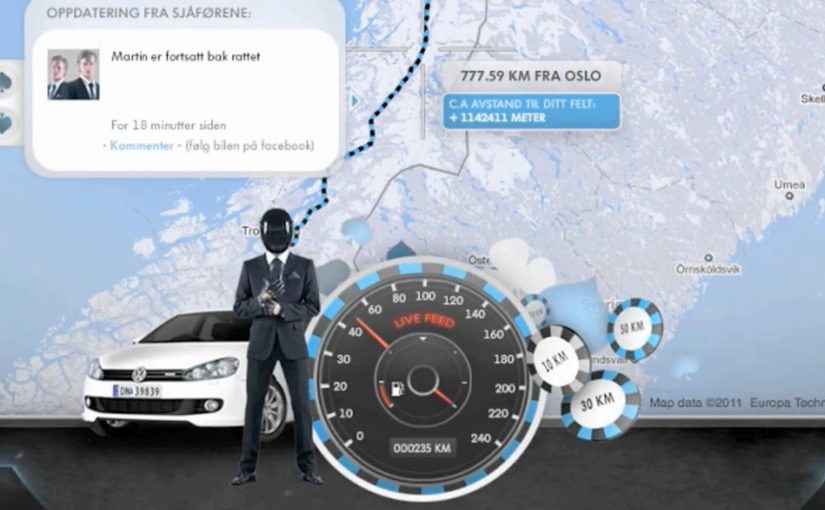
Volkswagen has turned the E6, often described as the Norwegian equivalent to Route 66, into a real-time online game of roulette using Google Maps and Street View.

TRY/Apt from Oslo devised the game to highlight the main feature of the new Golf BlueMotion, its low fuel consumption, in a meaningful and memorable way.

By “roulette”, Volkswagen literally meant dividing the E6 into thousands of map “slots” and asking people to bet on the exact spot where a fully tanked Golf BlueMotion would finally run out of fuel. Each person could place only one guess. If the car stopped on your chosen spot, you would win it.

Why the mechanic forces learning

The one-guess rule is the underrated design choice. If you only get one bet, you do not throw it away casually. You start researching. How efficient is the car, really. How far could it realistically go. What kind of driving conditions matter. The game turns “I saw an MPG claim” into “I tried to estimate a real outcome.”

The real question is how far it will go in real conditions when you only get one chance to be right.

This is a smart way to market efficiency because it turns a fuel-consumption spec into a public, falsifiable outcome people can debate, predict, and verify.

That is the brand win. You are not pushing information at people. You are pulling them into the proof.

In automotive efficiency marketing, a technical number only becomes persuasive when people can translate it into distance, time, and a story they want to test.

What made it stick beyond the stunt

Published campaign results describe close to 50,000 people placing bets, with roughly the same number visiting the site on the day of the drive. The car reportedly kept going for 27 hours and came to a halt about 1,570 km north of Oslo, turning a fuel-consumption spec into a distance people can picture. Even better. There was a real winner. The reporting names Knud Hillers as the person who picked the precise spot where the car finally stopped.

Extractable takeaway: If you want a spec to travel, turn it into a single, answerable public question, then design one constraint that forces participants to estimate, not just watch.

Steal this from BlueMotion Roulette

  • Convert a spec into a prediction. People remember what they estimate, not what they are told.
  • Limit participation to raise intent. One guess makes research feel rational.
  • Make the proof public. A live run creates shared tension and shared conversation.
  • Build the story around a single question. “How far can it really go” is the whole campaign.

A few fast answers before you act

What is BlueMotion Roulette?

BlueMotion Roulette is an interactive Volkswagen campaign that turns a real highway into a map-based betting game. People guess where a Golf BlueMotion will run out of fuel on one tank. If they guess correctly, they win the car.

Why use Google Maps and Street View for this?

Because it makes the “distance” claim tangible. The map gives precision, context, and credibility, and it lets people choose an exact location rather than a vague number.

What makes the one-guess rule so effective?

It increases commitment. If you only get one bet, you are more likely to look up facts and make a reasoned estimate, which forces deeper engagement with the product story.

What is the biggest risk with a live proof mechanic?

If the outcome is unclear or disputed, the proof collapses. The run, the rules, and the documentation of the final stopping point all need to be transparent and easy to understand.

What should you measure for a campaign like this?

Participation volume, repeat visitation on “event day”, social conversation during the live window, and whether people can correctly retell the mechanic and the proof outcome afterward.