
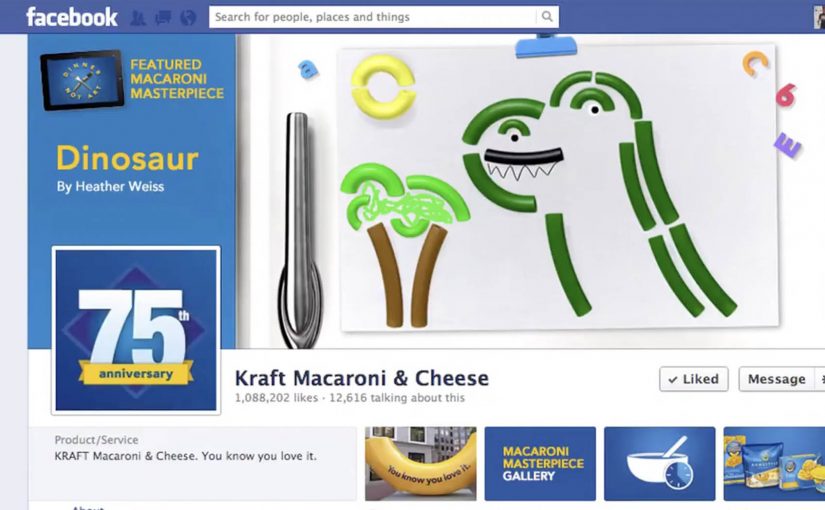
Kraft Mac & Cheese: Dinner, Not Art iPad App

Kids the world over use Kraft’s macaroni noodles to create macaroni art. To stop wastage of its noodles, Kraft along with ad agency CP+B came up with an iPad app that allowed kids to create digital macaroni art.

The special ‘Dinner, Not Art’ app also donated 10 noodles to ‘Feeding America’ for every noodle used in the kids digital art, capped at 110 million noodles. The donation program is said to run till 31.12.2012. So if you would like to participate then head over to www.DinnerNotArt.com.

When “waste” becomes a UI problem

The cultural truth is simple. Kids love gluing macaroni to paper, and the brand ends up underwriting a craft habit that has nothing to do with dinner. Dinner, Not Art flips that behavior into a digital substitute, while keeping the kid-driven creativity intact.

The mechanics behind Dinner, Not Art

The app recreates macaroni art as a touch-first canvas. Kids place noodles, shape the picture, and finish a piece without using a single real noodle.

That substitution works because it preserves the same make-and-place ritual for the child while removing the product waste that makes the original behavior frustrating for parents.

The participation loop is quantified. Each digital noodle used is described as triggering a real-noodle donation to Feeding America, with a stated cap of 110 million noodles, and a program end date described as 31.12.2012.

In global FMCG organizations, utility-style brand apps work best when the interaction directly expresses the brand’s point of view, and produces a measurable counter in the real world.

Why this lands with parents and kids

The line “Dinner, Not Art” works because it is a gentle reprimand wrapped in play. Kids still get to make something. Parents get a reason to say “yes” without the cleanup and the waste, and the brand gets to reframe its product as food, not craft material.

Extractable takeaway: If you are trying to stop a behavior, do not only scold it. Offer a substitute that preserves the fun, then attach a visible benefit to every use.

What Kraft is really buying with this

The real question is whether a food brand can redirect a familiar household behavior without stripping out the fun that made it popular in the first place.

This is brand positioning with a conversion path. It reinforces that the product belongs on the table, creates positive family-time association, and uses the donation mechanic to make engagement feel purposeful rather than promotional.

What brand teams can borrow from Dinner, Not Art

  • Replace the waste, not the impulse. Keep the same creative behavior, move it to a medium that does not consume product.
  • Make the counter tangible. Tie each action to a simple unit that people instantly understand, like noodles donated per noodle used.
  • Cap with intention. A cap can protect budgets while still sounding meaningful, as long as the unit story stays clear.
  • Use a line that can parent-proof the idea. If the tagline helps a parent justify participation, adoption gets easier.

A few fast answers before you act

What is the Dinner, Not Art app?

It is an iPad app from Kraft and CP+B that lets kids create digital macaroni art, positioned as a way to avoid wasting real macaroni noodles on crafts.

How does the donation mechanic work?

The campaign is described as donating 10 real noodles to Feeding America for every digital noodle used in a child’s artwork, with a stated cap of 110 million noodles.

Why does this tactic fit the Kraft Mac & Cheese category?

Because it tackles a real behavior linked to the product, while reinforcing the intended usage. The experience says “this belongs at dinner,” without killing the creativity kids want.

What makes this more than a donation promotion?

It changes a product-adjacent behavior, makes the benefit visible per action, and ties the brand message to how the experience actually works.

What should other brands copy from this pattern?

Pick one wasteful or off-brand usage behavior, create a satisfying digital substitute, and connect every interaction to a simple, counted real-world outcome.

IKEA Beröra

To launch the iPad version of the IKEA catalogue in Norway, ad agency SMFB created a brand new IKEA product called “Beröra”.

“Beröra” is a sewing kit with a special conductive thread that you sew into the index finger of your favourite gloves. Once the operation is done, the gloves work on a touch screen.

The idea in one clean sentence: Beröra turns any winter glove into a touchscreen glove, so the IKEA catalogue app fits the reality of how people live and move.

A launch mechanic that feels like a product, not a campaign

The smart move is that the “ad” looks and behaves like an IKEA item. A needle, instructions, and conductive thread. Simple enough to DIY (do it yourself), tangible enough to talk about, and useful enough to keep around after the novelty fades.

Extractable takeaway: When a digital launch depends on in-the-moment behavior, ship a small physical fix that removes the biggest usage friction so trial becomes effortless.

Conductive thread matters because most touch screens register conductive contact. So the kit essentially makes a glove fingertip “readable” to the device without forcing people to buy specialised tech gloves. By solving the glove-on touchscreen problem up front, the kit makes the first app interaction frictionless, which is what turns curiosity into downloads.

In cold-climate retail markets, the fastest way to accelerate digital adoption is to remove the tiny physical frictions that stop people trying it in the moment.

The real question is whether your launch removes the first real-world barrier to trial, or just asks people to work around it.

Solve the barrier first, then market the now-easier behavior.

Results and recognition

The promotion generated a lot of interest. As reported at the time, 12,000 kits went in roughly two weeks, and the IKEA Norway iPad catalogue app broke download records.

The work later picked up awards-circuit recognition, including a One Show merit award, and gold at the Festival of Media in Montreux in the Best Launch Campaign category.

What to steal for your next app launch

  • Turn the barrier into the giveaway. Do not “explain” the friction. Remove it with something people can hold.
  • Make the object shareable offline. A physical product travels through homes, offices, and friend groups faster than a banner ever will.
  • Keep the installation simple. If the user needs a tutorial longer than a minute, the drop-off kills word of mouth.
  • Let the product demonstrate the promise. When the benefit is self-evident, belief comes for free.

A few fast answers before you act

What is Beröra, in plain terms?

Beröra is a DIY conductive-thread sewing kit created for IKEA Norway. You sew the thread into a glove fingertip so it works on touchscreen devices, supporting the launch of IKEA’s iPad catalogue.

Why does a physical kit help launch a digital catalogue?

Because it removes a real-world usage barrier. If people cannot comfortably use a phone or tablet in winter conditions, they will not build the habit. The kit makes the app feel practical, not theoretical.

What makes this a strong “earned media” idea?

It creates a story that is easy to repeat. IKEA made a product that solves a modern annoyance, and it is tied directly to the app being promoted. That combination tends to travel well as earned media, meaning unpaid coverage and sharing.

What is the key mechanism that drives engagement here?

Utility creates trial. Trial creates talk. Talk creates downloads. The kit is the trigger that makes the catalogue experience easier, then social sharing does the distribution work.

What should you measure if you do something similar?

Track speed of redemption, install lift during the distribution window, and repeat usage of the app. If you have it, add branded search lift and share-of-voice during the launch period.

Slide to Unlock: Audi and Amnesty iAds

Audi “Slide to Unlock”

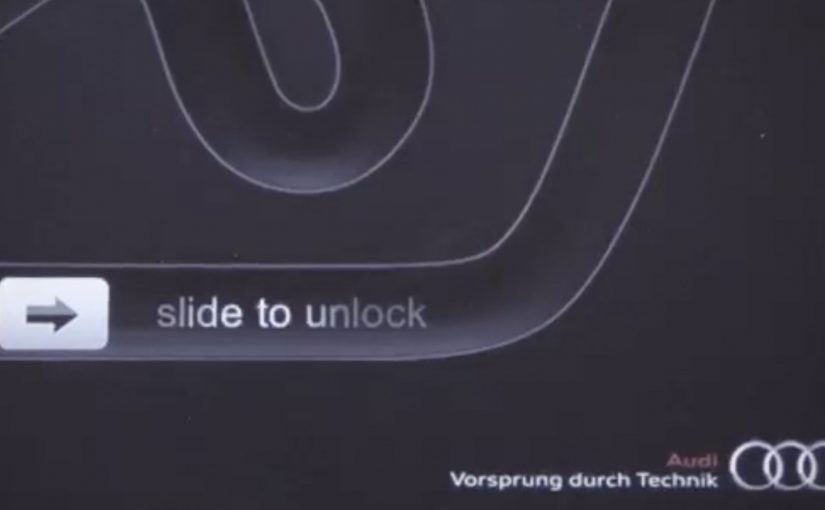
AlmapBBDO Brazil developed a distinctive iAd for the Brazilian Audi Magazine iPad app. Here, “iAd” refers to an interactive in-app ad unit built for iPad publications. The ad appeared in iPad publications and played with Apple’s familiar “Slide to Unlock” gesture to pull people into the experience.

Users instantly recognised the swipe interaction used to unlock Apple devices. After racing their finger around the track, they were rewarded with a free download of the first Audi Magazine issue from the App Store.

Amnesty International “Slide to Unlock the Truth”

Amnesty International ran an iAd in one of Sweden’s largest newspapers, DN, presenting readers with an image of a prison cell and a prisoner inside. The same “Slide to Unlock” gesture opened the cell and revealed a strong invitation to join Amnesty International as an activist.

Mechanic: borrow muscle memory, then repay it with value

Both executions use the same trick. They take an interaction people already know, then remap it to a brand action. In Audi’s case, the swipe becomes a playful mini-game. In Amnesty’s case, the swipe becomes a literal unlock that reveals a call to action.

In iPad-era rich media placements, the fastest engagement comes from interactions that feel native to the device instead of invented for the ad.

The real question is whether the gesture is already learned, so the first second goes to the message instead of the UI.

This approach is worth using when you can deliver a clear payoff within one gesture and one reveal.

Why it lands

The shared win is immediacy. There is no learning curve. The interface is already familiar, so attention goes straight to the message. Audi uses that familiarity to reduce friction on a content reward. Amnesty uses it to make the metaphor physical and emotionally legible.

Extractable takeaway: If you want interaction inside an ad to feel effortless, borrow a gesture people already trust, then make the outcome either instantly rewarding or instantly meaningful.

What to steal from gesture-first iAds

  • Start with a native gesture. Familiar interaction reduces drop-off in the first seconds.
  • Make the mapping obvious. Swipe-to-race and swipe-to-open both explain themselves.
  • Reward immediately. Audi pays the user back with a free issue. Amnesty pays back with a clear reveal and a direct next step.
  • Keep the loop short. One gesture, one transformation, one outcome.
  • Let metaphor do the work. Amnesty’s “unlock” is not decoration. It is the message.

A few fast answers before you act

What is the core idea behind “Slide to Unlock” iAds?

They repurpose a familiar device gesture to trigger a brand action, reducing friction and making interaction feel instinctive.

Why does borrowing a system gesture increase engagement?

Because users already know what to do. That removes instruction time and makes the first interaction feel safe and predictable.

What is the key difference between the Audi and Amnesty uses of the gesture?

Audi uses it for playful interactivity and a content reward. Amnesty uses it as a literal metaphor that reveals a persuasive call to action.

What is the biggest risk when using familiar UI patterns in ads?

If the gesture mapping feels unclear or gimmicky, people feel tricked. The interaction must lead to a payoff that justifies the borrowed familiarity.

What should you measure if you run an interaction-led ad?

Interaction start rate, completion rate, time-to-first-payoff, post-interaction clicks, and whether the interaction improves recall of the message.