
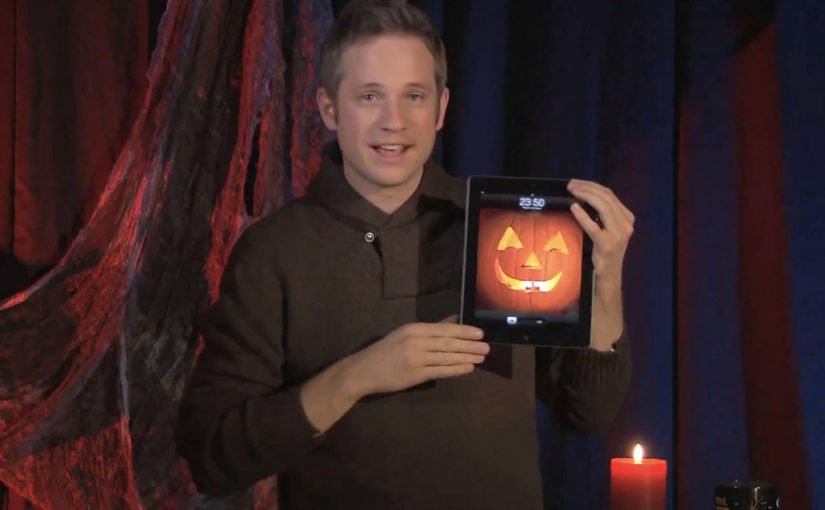
Simon Pierro: iPad Horror Halloween magic

Simon Pierro: iPad Horror Halloween magic

Simon Pierro is a performance artist known for a contemporary style that blends live sleight of hand with screen-based illusion. In this Halloween edition of his iPad magic, he mixes physical tricks with carefully constructed digital wizardry to tell a short, creepy story. Here, “iPad magic” means coordinating physical moves with a pre-built on-screen sequence so the screen appears to affect the real world in one continuous event.

What you are actually watching

The hook is not “an iPad doing magic.” It is the choreography between two realities. One is the real-world performance in front of the camera. The other is the pre-built digital sequence on the iPad screen. When the timing is perfect, the boundary disappears and the viewer’s brain treats the composite as one continuous event.

The mechanism: timing, framing, and a believable interface

The iPad acts like a stage prop with rules the audience already understands. You can swipe, tap, and reveal. Pierro then exploits those expectations with tight timing, camera framing, and transitions that make the screen feel like a portal rather than a display. Because the interface behaves the way people expect, the viewer accepts more impossible outcomes without pausing to question the edit.

In consumer tech culture, touchscreen-first illusions travel because they compress surprise, proof, and shareability into a single loop.

The real question is whether the experience makes the screen feel like a believable tool, not a special effect.

If you want this pattern to travel, you have to design the interface logic before you design the surprise.

Why it lands: story first, tricks second

This is not just a reel of “look what I can do.” The Halloween framing gives each beat a reason to exist. That narrative spine matters, because it turns the tricks into plot points. The viewer stays to see what happens next, not only to decode the method.

Extractable takeaway: The most replayed “tech magic” works like product UX. One clear action, one clear consequence, then escalation. The audience always knows what they are supposed to feel, even if they do not know how it is done.

The business value behind a short viral performance

For a performer, this format does three jobs at once. It demonstrates craft, it demonstrates a distinctive signature style, and it creates a video object people want to pass along. That combination is stronger than a traditional showreel, because the concept is the brand.

What to steal if you build interactive experiences

  • Use familiar gestures as narrative verbs. Swipes and taps can carry meaning, not just navigation.
  • Design the “interface logic” first. The illusion is more believable when the screen behaves the way people expect.
  • Escalate in clean steps. Each beat should be slightly more impossible than the one before.
  • Keep the frame disciplined. The camera is part of the trick. Composition is not optional.
  • Wrap the mechanic in a story. Theme creates patience, and patience creates replays.

A few fast answers before you act

What is “iPad magic” in practical terms?

It is a performance format that coordinates physical sleight of hand with a pre-built on-screen sequence, so the screen appears to affect the real world in a continuous way.

Is this augmented reality?

Not in the typical “live 3D overlays in your environment” sense. It is closer to choreographed digital illusion and camera-based compositing, designed to feel like the screen is interacting with the performer.

Why do these videos get rewatched?

Because they deliver a fast surprise, then invite the viewer to hunt for the method. The best ones also add a narrative reason to stay until the end.

What is the most important design principle behind this style?

Believability of the interface. If the screen behaviour feels consistent and intuitive, the viewer will accept more impossible outcomes.

How can brands use this pattern without copying the trick?

Build short, gesture-driven micro-stories where one touch creates a visible transformation. Keep the logic simple and the payoff immediate, then escalate once.
Augmented Reality: Hyperlinking the real world

Augmented Reality: Hyperlinking the real world

A French company called Capturio turns a t-shirt into a business card. You point your phone at what someone is wearing, and the “link” is the fabric itself. No QR code required.

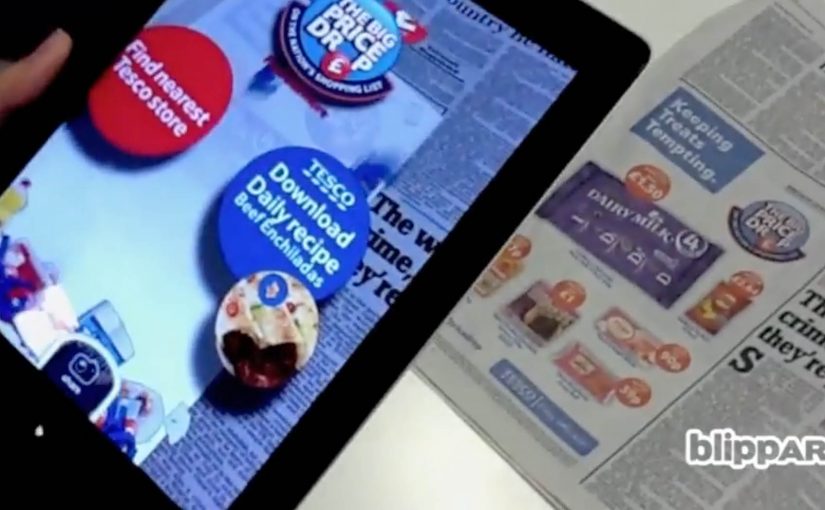
Right after that, Blippar in the UK takes the same idea to printed images. A newspaper page, poster, or pack becomes the trigger. The result is a 3D augmented reality overlay that appears on-screen the moment the image is recognised. Again, no QR code.

From visible codes to recognition triggers

QR codes get put to good use in countless innovative projects. But the drift is towards technology that produces similar results without visible codes. QR codes are not “dead”. Recognition-based triggers win whenever you can control the surface and want the interaction to feel seamless.

How “invisible links” work in practice

Capturio’s concept is simple. The physical object becomes the identifier. A t-shirt behaves like a clickable surface in the real world.

Blippar applies the same pattern to print. Image recognition here means matching what the camera sees to a known reference image so the system can anchor content to that surface.

The interaction is straightforward:

  1. Download a custom app, in this case the Blippar app.
  2. Scan a Blippar-enabled printed image, identifiable by a small Blippar logo, using an iPhone, iPad, or Android device.
  3. Start interacting with the augmented reality 3D overlay on the screen.

In India, Telibrahma uses the same approach to increase experiential engagement for brands via traditional media like newspapers and posters.

In consumer marketing and retail environments, this pattern turns owned surfaces into low-friction entry points for digital experiences.

Why recognition beats visible codes

A visible code is a visual tax. It signals “scan me”, but it also interrupts design and can feel bolted-on. When the surface itself becomes the trigger, the mechanism and the message align. The scan feels like discovery, not compliance. That mechanism is exactly why this pattern tends to spread once teams see it work in the wild.

Extractable takeaway: If you want people to scan, remove the decision point. Make the object itself the identifier, and make the reward immediate.

The bigger idea is not the novelty of 3D overlays. It is that physical surfaces become links. Clothing, posters, newspaper pages, packaging, storefronts. Anything that can be recognised can behave like a gateway to content, commerce, or interaction.

What this unlocks for brands

This is useful when you need a bridge from “attention” to “action” without adding friction. It can turn traditional media into a gateway for:

  • Content. Rich product stories, demos, or tutorials that do not fit on-pack or on-page.
  • Commerce. A route into product detail and purchase flows from packaging or print.
  • Interactivity. Lightweight games, utilities, or experiences that create repeat engagement.

What to steal for your next activation

  • Pick a surface you own. Packaging, print, or wearable assets work best when distribution is in your control.
  • Make the trigger legible. Even without a QR code, users need an affordance like a small mark, instruction, or demo.
  • Design the “first 5 seconds”. Recognition must lead to an immediate payoff, or people will not try twice.
  • Decide what success means. Share, sign-up, repeat use, or store visit. Do not ship without one primary metric.

A few fast answers before you act

What does “hyperlinking the real world” mean here?

It means using image recognition and augmented reality so physical objects like shirts, posters, and print behave like clickable links without QR codes.

Which companies are the concrete examples in this post?

Capturio (France), Blippar (UK), and Telibrahma (India).

How does Blippar work at a high level?

Download the app, scan a Blippar-enabled image marked with a small Blippar logo, then interact with a 3D AR overlay on-screen.

Is this actually “the end” of QR codes?

No. QR codes remain useful. But recognition-based triggers are often preferred when you want the surface to stay clean and the interaction to feel seamless.

What types of media does this apply to?

Newspapers, posters, packaging, and other printed or visual surfaces that can be reliably recognised by a camera.

What should you measure first if you try this?

Start with activation rate, meaning how many people who see the surface actually trigger the experience. Then track the next action, such as shares, sign-ups, or clicks into commerce.

Disney Appmates. The next toy revolution

Disney Appmates. The next toy revolution

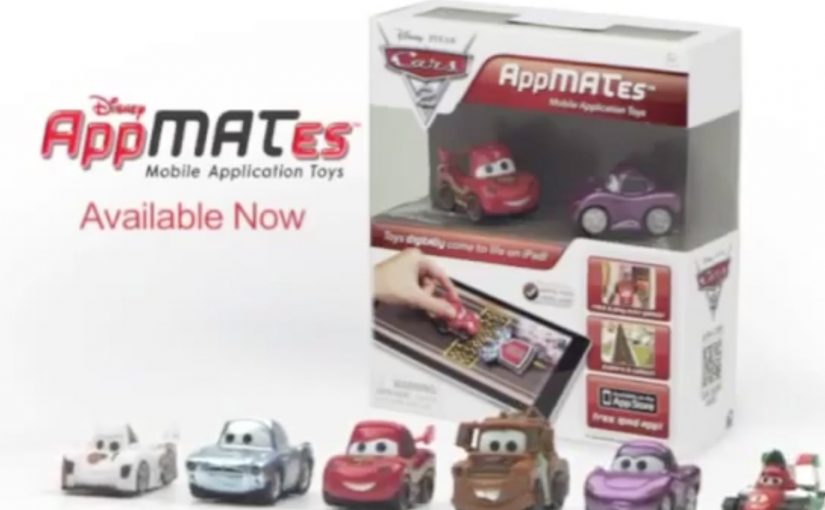
Disney recently announced a new line of toys called Disney Appmates. These new toys and the iPad work in tandem to create a very new age play experience. Featuring the likenesses of characters from Cars 2, the Appmates are miniature figures with special sensors mounted on the bottom. The sensors work with the Cars 2 Appmates app to identify each figure when put against the iPad screen.

The Apple and Disney Stores will start selling Lightning McQueen, Tow Mater, Finn McMissile, and Holley Shiftwell in October. Francesco Bernoulli and Shu Todoroki will be launched in November and will be made available exclusively through the Apple Store.

What is actually new here

The interesting shift is not “toys plus an app.” It is the iPad becoming part of the physical play space. The figure is not only a character. It becomes an input. Place it on the screen, and the app recognizes it and reacts. That is a different play loop than tapping icons, or watching a video, or playing a standalone game. Here, play loop means the repeated sequence of placing a figure, getting a reaction, and continuing the experience through the object itself. That works because turning the toy into the input collapses the gap between physical play and digital response, which makes the interaction feel immediate and intuitive.

In kids’ entertainment and licensed merchandise, the scalable opportunity is not a one-off app but a repeatable toy-to-screen system that sells both characters and ongoing play.

Why this lands beyond novelty

This is an early but strategically important shift from screen play to object-based interaction. The real question is whether the screen stays the destination, or becomes the stage for a physical product system that can expand one character at a time.

Extractable takeaway: When the physical object becomes the interface, each new character can work as both merchandise and feature unlock, which makes the product line easier to extend without rebuilding the core experience.

Why the Cars 2 character lineup matters

The character list makes the product strategy visible. Lightning McQueen, Tow Mater, Finn McMissile, and Holley Shiftwell anchor the launch. Francesco Bernoulli and Shu Todoroki extend the line later. The Apple Store exclusive adds a distribution edge for a toy that is, by definition, tied to an iPad experience. It is a simple way to turn character collecting into repeat purchases inside the same iPad-led system.

What to steal for toy-to-screen experiences

  • Make the physical object the input device. The figure becomes the controller, not an accessory.
  • Keep identification effortless. Recognition on contact avoids pairing and keeps play fast.
  • Use characters as modular content units. Each figure is a new capability that expands the same base app.
  • Distribute where the audience already buys the ecosystem. Selling via Apple and Disney channels reinforces the iPad-first play pattern.

A few fast answers before you act

What are Disney Appmates?

A line of toys designed to work with an iPad to create a combined physical and digital play experience.

How do the toys interact with the iPad?

The miniature figures have sensors mounted on the bottom, which the app uses to identify each figure when placed on the iPad screen.

Which characters are part of the initial release?

Lightning McQueen, Tow Mater, Finn McMissile, and Holley Shiftwell.

What comes next?

Francesco Bernoulli and Shu Todoroki extend the lineup and are described here as Apple Store exclusives.

What is the transferable pattern?

Use physical objects as modular inputs, so collecting characters expands the experience without changing the core platform.