
Omote 3D: The 3D Printing Photo Booth

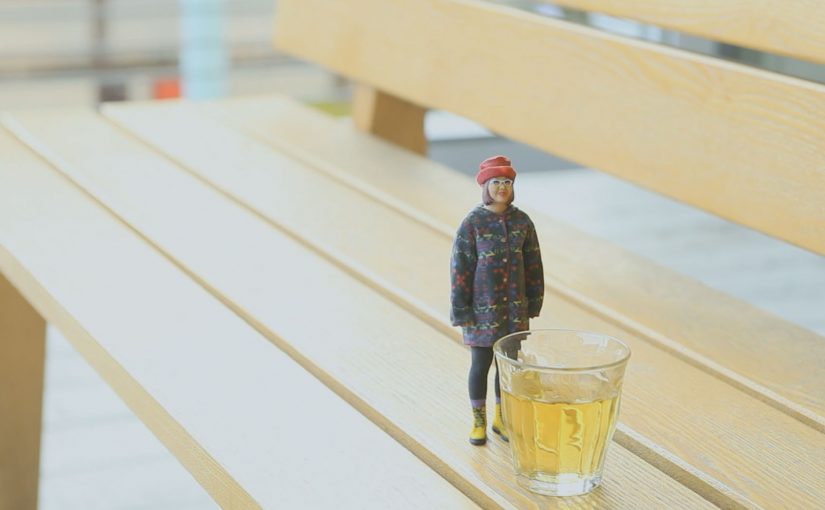
Ever wanted a life-like miniature action figure of yourself. Not a cartoon avatar, but a small, physical replica you can hold in your hand.

Omote 3D makes that possible by setting up what is billed as the world’s first 3D printing photo booth for a limited time at the Eye of Gyre exhibition space in Harajuku, Japan.

From November 24 through January 14, 2013, people with reservations can have their bodies scanned into a computer. Then, instead of a photograph, they receive miniature replicas of themselves.

The miniature replicas are available in three sizes. S (10cm), M (15cm) and L (20cm) for US$264, US$402 and US$528, respectively.

Why this “photo booth” feels like a shift

The mechanism is the message. A booth that normally captures a flat memory instead captures a 3D dataset, then materializes it into a keepsake. The output is not content you scroll past. It is content you place on a shelf.

Extractable takeaway: When you turn personalization into a physical object, it stops being content and starts being a keepsake.

Definition-tightening: this is not 3D “photography” in the traditional sense. It is full-body 3D scanning plus full-color 3D printing, packaged in a familiar photo booth ritual.

In consumer experiences where attention is scarce and products are increasingly interchangeable, turning personalization into a tangible object is a reliable way to earn talk value, meaning people have a reason to talk about it later.

The real question is whether your experience ends as something people display, not something they forget after the moment passes.

What makes it work as an exhibition idea

The booth turns the visitor into the exhibit. It also turns waiting and anticipation into part of the experience, because the “print” is a manufactured object, not an instant print strip. That shift makes the end result feel earned and premium.

Stealable patterns from Omote 3D’s booth

  • Use a familiar ritual as the wrapper. “Photo booth” is instantly understood, even when the technology is new.
  • Make the output physical. Physical artifacts extend the campaign life long after the pop-up closes.
  • Price by meaning, not by material. People pay for identity and memory, not for plastic and ink.
  • Gate with reservations when demand is the story. Scarcity plus scheduling can reinforce that this is special.

Additionally click here to see how Polskie Radio in Poland has used 3D printing technology to market their website.


A few fast answers before you act

What is Omote 3D’s 3D printing photo booth?

It is a pop-up booth that scans your body in 3D, then produces a full-color miniature figure of you instead of a standard photo print.

Why call it a “photo booth” if it prints a figure?

Because it borrows the familiar booth ritual. You step in, you get captured, and you leave with a keepsake. The technology changes, but the mental model stays simple.

How is the miniature created?

Your body is scanned into a 3D model, then the final figure is manufactured via 3D printing in full color and finished as a physical object.

What sizes are offered and what do they cost?

Three sizes are offered. 10cm, 15cm, and 20cm. The listed prices are US$264, US$402, and US$528, respectively.

What is the marketing lesson for brands?

Personalization becomes more valuable when it becomes tangible. A physical output turns novelty tech into an object people keep, show, and talk about.
Parrot AR.Drone: The Flying Banner

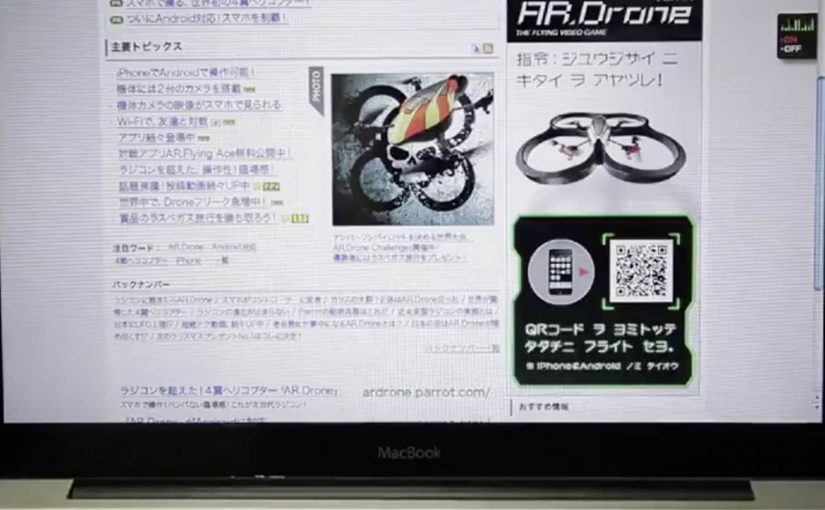
The Parrot AR.Drone is a quadrotor you can control with an iPhone or iPad. Instead of explaining that in copy, Beacon Communications Tokyo built an interactive web banner that lets people experience the idea.

The banner displays a QR code. Scan it and your phone becomes the controller for a virtual AR.Drone that appears inside the banner. You pilot it around the screen using your smartphone, effectively turning the ad into a small playable product demo.

Why this banner stands out

Most banners talk about what a product can do. This one makes the product behaviour the message. If the AR.Drone is “controlled by your phone,” the ad is controlled by your phone. That direct mapping makes the idea instantly believable. For interface-led products, this is the right pattern: let people try the interface, not read about it.

Extractable takeaway: If your product is an interface, let the audience use that interface inside the ad unit, even in a simplified form.

The mechanic: QR to second screen control

The QR code is not decoration. It is the bridge that turns a passive placement into a two-device experience. Here, “second-screen control” means the desktop shows the scene while the phone acts as the controller. The banner stays on the desktop screen. Control moves to the phone. That split makes the interaction feel closer to the real product, and it also creates a small sense of “this is special” because the ad is no longer self-contained.

In consumer electronics launches, the most persuasive interactive advertising is a playable demo that mirrors the product experience in seconds.

The real question is whether the viewer can feel the core control loop before they decide to care.

How it creates attention without shouting

As described in industry coverage, users could fly the drone around the page and even “blast” parts of the site to reveal the full-screen message. That gives the interaction a purpose and a payoff. It is not just movement. It is progression.

Beacon also reported unusually strong click-through performance compared to typical expectations for the placement. In this case, that makes sense. People do not click because they were interrupted. They click because they were already playing.

Second-screen demo moves to copy

  • Replicate the product, do not describe it. A short, real interaction beats a long explanation.
  • Use one clear bridge between devices. QR works here because it is immediate and simple.
  • Design an obvious payoff. A reveal, a score, a result. Give the interaction a reason.
  • Keep the controls teachable. If people cannot learn it in seconds, the banner loses them.
  • Make it readable for spectators. Movement on the main screen helps others understand what is happening fast.

A few fast answers before you act

What is “The Flying Banner” for Parrot AR.Drone?

It is an interactive web banner where scanning a QR code turns your smartphone into a controller for a virtual AR.Drone that you can pilot inside the banner.

Why is this a stronger demo than a normal video ad?

Because it lets people feel the core promise. Phone-controlled flight, through direct interaction, not description.

What role does the QR code play in the experience?

It is the handoff mechanism from desktop to phone. The desktop shows the “world.” The phone becomes the controller, matching how the real product is used.

What is the biggest risk with multi-device banner ideas?

Drop-off. If the connection step is slow, confusing, or unreliable, most users abandon before they experience the payoff.

How would you modernize this mechanic today?

Keep the principle of second-screen control, but reduce friction. Use a fast connect flow and ensure the experience is still satisfying even if someone chooses not to connect a phone.