
DHL: DHL Is Faster Trojan Parcels

A courier from UPS, TNT or DPD walks through a busy city centre carrying a large, plain-looking parcel. A few minutes later, the same box is effectively doing outdoor advertising for DHL, with a bright message reading: “DHL is Faster.”

Turning competitors into media

DHL’s large network of offices, trucks and employees is a straightforward speed story, but saying it loudly in a traditional ad campaign is expensive. So DHL worked with German trojan campaign specialists Jung von Matt/Neckar to make competitors unknowingly promote DHL as the fastest parcel delivery service. In this context, a trojan campaign hides the brand message inside a neutral object or someone else’s distribution until it reveals itself in public.

The mechanism: temperature reveals the punchline

Large, inconspicuous parcels were created and sealed with a thermo-sensitive foil. When cooled in refrigerators, the parcels appeared black, hiding the message. UPS, TNT and DPD were then asked to deliver these parcels to difficult but central city locations. Exposed to warmer street temperatures during delivery, the parcels shifted colour and revealed the words “DHL is Faster.”

A “trojan” mechanic in marketing is a message that travels inside a neutral object or someone else’s distribution, then reveals itself at the moment of maximum visibility.

In competitive European parcel logistics, a proof-by-demonstration stunt can move “we’re faster” from claim to spectacle without buying classic media.

Why this lands

It works because the reveal happens in public and in motion, exactly where speed matters, and it borrows credibility from the awkward fact that a rival courier is doing the carrying. The stunt also makes the comparison feel earned rather than asserted, because the message appears as a consequence of the journey.

Extractable takeaway: If your advantage is hard to believe as a headline, design a mechanism where the environment exposes the proof, and let the proof show up at the exact point where the audience can “see the claim happen.”

What DHL is really buying

The real question is how to turn a functional speed claim into a public proof people can instantly understand and retell.

This is less about humiliating competitors and more about reframing the category. It turns delivery speed into a street-level moment that people can film, retell, and instantly understand, while the brand pays for production rather than for repeated media placements.

What to steal from DHL’s reveal design

  • Build a reveal. Hide the message until the moment the audience is already watching.
  • Use context as a trigger. Temperature, light, movement, location. Let the world “activate” the story.
  • Put the proof on the distribution. The carrier becomes the billboard, not a separate ad unit.
  • Make the explanation obvious at a glance. If it needs a voiceover, the stunt is too clever.

A few fast answers before you act

What is the “DHL is Faster” stunt?

It’s a trojan-style activation where rival couriers deliver parcels that reveal “DHL is Faster” as they warm up in city conditions.

How does the reveal work?

The parcels are wrapped in a thermo-sensitive foil that looks dark when cooled, then changes to expose bright lettering when the parcel warms during delivery.

Why call it a trojan campaign?

Because the message travels hidden inside a neutral-looking object and is distributed by someone else, then reveals itself at the most visible moment.

What brand point does this communicate?

Speed and network scale, reframed as a live demonstration rather than a paid claim.

What’s the main risk with this kind of idea?

Brand backlash if the stunt feels mean-spirited or deceptive, and operational complexity if the reveal is inconsistent or hard to understand in the wild.
Jung von Matt: Lorem Ipsum Recruitment

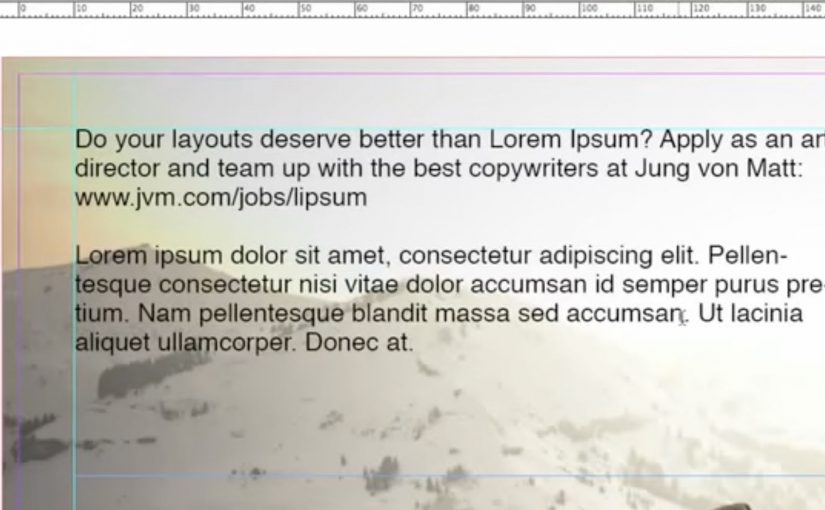
Art Directors in agencies use Lorem Ipsum (dummy text) as a placeholder when creating layouts. A de facto place to generate that dummy text is Lipsum.com, described as drawing tens of thousands of creatives from around the world each day.

So for one week in January, Jung von Matt slipped a recruitment message into the flow. When anyone copy and pasted Lorem Ipsum from Lipsum.com into their layouts, a Jung von Matt recruitment line came along with the dummy text.

Recruitment that hides inside the tool, not the feed

The mechanism is a Trojan insertion into a daily workflow. Here, “Trojan insertion” means placing a message inside a routine working asset so it gets discovered during real task flow rather than through paid media. Instead of buying attention where creatives scroll, the message shows up exactly where creatives build. Inside the placeholder text that sits in the middle of real work. That works because the recruitment line appears when designers are already focused on layout work, which makes the interruption feel relevant rather than random.

In agency talent markets, the most efficient recruitment messages appear inside the tools and rituals creatives use every day.

Why it lands

This idea earns its attention rather than demanding it. The surprise is subtle. You spot it only if you are doing the job, which makes the message feel targeted and insider. It also travels naturally. Layouts get shared for feedback, reviewed, and iterated, so the line can surface in multiple contexts without additional media. This is smarter than a generic job ad because it uses working context as targeting.

Extractable takeaway: If you want to reach specialists, place the recruitment message inside a high-frequency workflow artifact, so the moment of discovery feels personal and relevant.

The real question is how to place a hiring message inside a creative ritual without making the brand feel intrusive.

What Jung von Matt is really optimizing for

The obvious goal is applications. The deeper goal is employer brand positioning. The agency is signalling that it understands how creatives work, and that it will recruit with the same craft it expects in the job.

What recruitment teams can steal from this

  • Target the workflow, not the platform. Start from where your talent produces, not where they consume.
  • Use a low-friction carrier. Dummy text is copied at scale, which makes distribution effortless.
  • Make the message context-native. A recruitment line should look like it belongs in the artifact it hijacks.
  • Design for second-hand discovery. Make it likely to be noticed in reviews, sharing, or handoffs.
  • Keep it respectful. The best hacks feel clever, not invasive.

Previously Jung von Matt have recruited creatives via the Trojan Recruitment campaign.


A few fast answers before you act

What is Lorem Ipsum Recruitment in one sentence?

It is a recruitment tactic where a Jung von Matt hiring message was embedded into Lorem Ipsum text so it appeared when creatives copied dummy text into layouts.

Why is Lipsum.com a smart place to do this?

Because dummy text generation is a repeated, habitual step in layout work, so the message shows up at high frequency in a relevant context.

What makes this more effective than a normal job ad?

It reaches the right audience while they are actively designing, and the discovery feels targeted rather than broadcast.

What is the main risk?

Trust. If the audience experiences it as tampering rather than wit, the stunt can harm employer brand instead of helping it.

What should you measure if you run a similar idea?

Qualified applications, referral quality, portfolio traffic, and whether employer brand perception improves among the specific roles you are targeting.

Mercedes-Benz F-CELL: The Invisible Drive

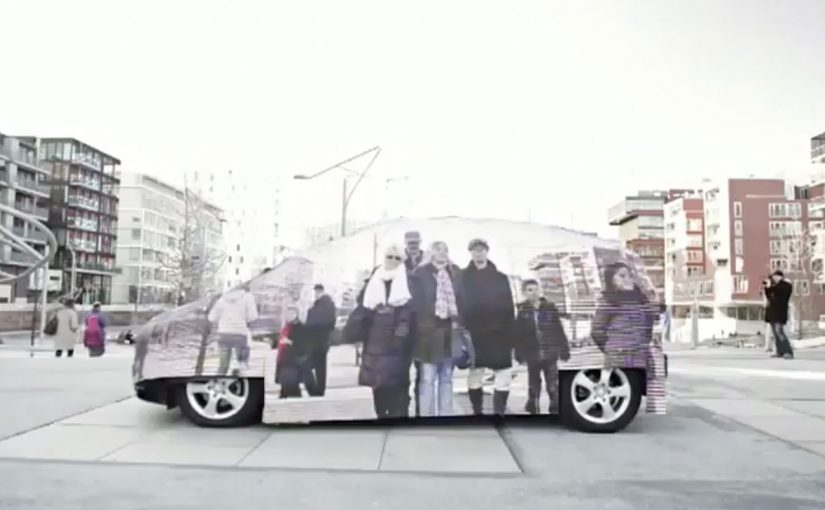
To demonstrate the claimed low impact of its new fuel cell vehicle, Mercedes-Benz has created an “invisible” car that blends into its surroundings.

The trick is a simple, showable hack. One side of the car is covered with LEDs. A camera captures what is on the opposite side, then the LED side displays that live feed so the vehicle appears to disappear from a specific viewpoint.

Stunts like this turn abstract emissions claims into a single, watchable proof-of-idea.

The mechanism that makes the metaphor work

This is not magic and it does not need to be. It is optical camouflage framed as a brand statement. Optical camouflage here means using a camera view and a display surface to mimic the background from a chosen angle. If the vehicle’s impact is close to “nothing,” the car should look like “nothing.” The LED-and-camera setup makes that metaphor instantly legible, even to someone who has never heard the term “fuel cell.” Because the illusion happens live on the car, the metaphor reads as evidence instead of post-production.

In enterprise automotive and mobility marketing, visual proof beats technical proof when the audience is not willing to parse specs.

The real question is whether your claim can be understood and repeated from a single viewpoint without the brochure. This is a strong sustainability communication move when the trick is honest and the metaphor stays tighter than the explanation.

Why it lands

It creates a physical moment people can point at. Sustainability messaging often lives in numbers, claims, and fine print. Here, the message is experiential. You see the effect with your own eyes, and you can describe it in one sentence.

Extractable takeaway: When your product promise is invisible, build a demonstration that makes the promise visible in under five seconds, using a single repeatable rule people can explain to someone else.

Steal the invisibility demo pattern

  • Pick one metaphor and commit to it. The entire execution serves one idea. That focus is why it travels.
  • Use real-world physics, not post-production. Even when the audience knows it is a trick, they trust it more when it is happening live.
  • Design for the shareable angle. Viewpoint-dependent illusions work because they are built for cameras and spectators, not just participants.
  • Make the explanation part of the experience. The best stunts include a built-in “how it works” story that spreads with the clip.

A few fast answers before you act

How does the “invisible car” effect work?

LED panels on one side of the car display a live video feed captured from the opposite side, creating a camouflage illusion from a particular viewpoint.

What is the brand point of using invisibility here?

It turns an environmental claim into a visual metaphor. If the impact is minimal, the car is presented as visually minimal within the scene.

Why do these technology stunts get attention when product specs do not?

They compress the story into a single moment people can see, record, and retell. That makes the promise easier to believe and easier to share.

What is the main risk when copying this approach?

Overcomplicating the trick. If the audience needs a long explanation to understand the effect, the stunt stops being a stunt and becomes a demo.

How do you keep a metaphor stunt from feeling like greenwashing theater?

Keep the claim narrow, make the trick transparent, and ensure the metaphor points to a product attribute you can substantiate elsewhere, even if most people never read the detail.