Facebook wants to transform their Messenger platform into an all-encompassing utility, where people will be able to conduct virtually any interaction, from buying products to paying bills to various other customer service related queries and tasks.
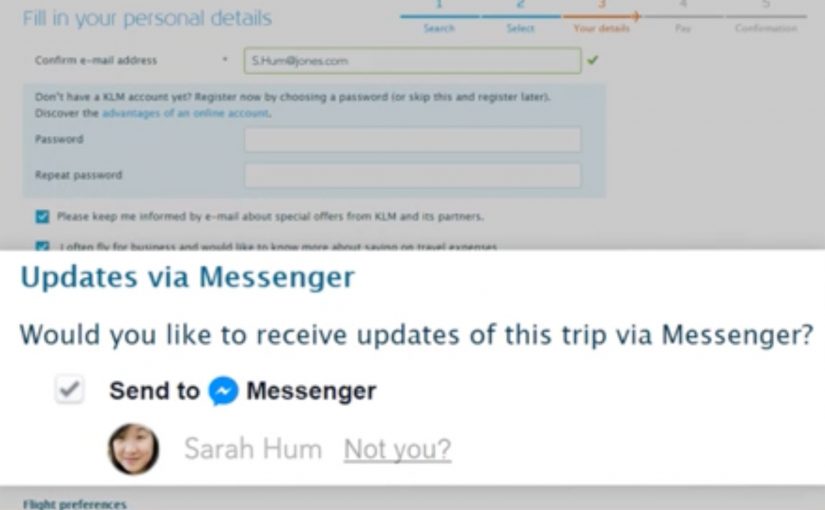
So together with KLM they have launched a new Messenger service. Travellers who book their flight on klm.com can now choose to receive booking confirmation, check-in notification, boarding pass and flight status updates all via Facebook Messenger.
For further questions they can also contact KLM directly through the Messenger, 24/7.
Why this is a meaningful shift in airline service
In service-heavy journeys like air travel, messaging becomes valuable when it carries the essential trip artifacts and keeps help in the same thread. This takes airline communication out of the inbox and into a channel people already use all day. The value is not novelty. The value is reduced friction, because the boarding pass and status updates stay findable inside one conversation.
Extractable takeaway: Move high-frequency journey updates into one persistent thread customers already use, so the essential artifacts stay retrievable at the moment of need.
- Proactive updates. Confirmation, check-in prompts, and status changes arrive automatically.
- One thread per trip. The travel journey stays readable in a single conversation.
- Service in context. Questions can be asked and answered where the information already lives.
Messenger as a utility layer
If Messenger becomes a place where you can transact, track, and solve problems, then brands that show up with real utility earn repeat usage. Here, “utility layer” means the messaging channel carries the task flow and the core artifacts, not just promotional messages. In this case, KLM turns Messenger into a travel companion, not a marketing channel.
The real question is whether your messaging channel can hold the full journey without pushing customers back into apps, email, and account logins.
The more predictable the updates, the more likely customers are to opt in, and the more valuable the channel becomes for both sides.
What to take from Messenger-first travel updates
- Meet customers where they already are. Messaging reduces the cognitive load of managing travel.
- Design for opt-in value. People accept notifications when they are clearly helpful and timely.
- Keep the thread “service-first”. Utility collapses if the channel gets flooded with promotion.
- Support matters. Proactive notifications plus 24/7 human help (or well-designed escalation) is what makes it credible.
A few fast answers before you act
What did KLM launch on Facebook Messenger?
A Messenger service that delivers booking confirmation, check-in notifications, boarding passes, and flight status updates for travellers who book on klm.com, with the option to contact KLM through Messenger 24/7.
Why use Messenger for travel updates?
Because it reduces friction. Customers receive timely information in a channel they already use, without searching email or opening an airline app repeatedly.
Is this a chatbot initiative or customer service?
At its core it is customer service and trip management delivered through messaging. The key value is proactive updates plus the ability to ask questions in the same thread.
What is the main CX benefit?
One continuous conversation that contains the essential trip artifacts. Confirmation, reminders, boarding pass, and live updates in a single place.
What is the transferable lesson for other brands?
If you can deliver high-frequency, high-value updates through a messaging channel with clear opt-in, you can increase satisfaction by making the journey easier to manage.