
Zoo Records: Hidden Live

Zoo Records: Hidden Live

Thousands of Hong Kong’s alternative music fans crave the raw energy, focus, passion, and participation of a live performance. Zoo Records faces a simple challenge. How do you bring that live experience directly to the fans.

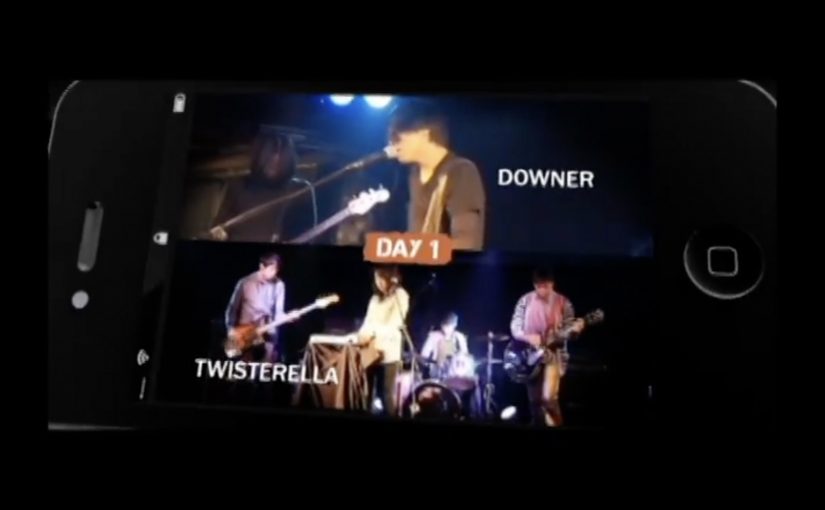
With Leo Burnett Hong Kong, Zoo Records creates “Hidden Live”, billed as a live mobile music festival. Eight indie bands perform across four nights, but the “venue” is not a stage. It is your phone. Tickets contain a hidden code. Scan it and your device becomes the gateway to the gig. Viewers can interact with bands in real time and even buy albums directly through mobile.

The mobile-ticket mechanism

The mechanic is a controlled unlock. In practice, that means entry depends on a visible code that changes the phone from passive screen to active venue. Free tickets are released shortly before each show, and the hidden code on the ticket is the key. Because the code makes entry feel earned and visible, the phone starts to behave like a venue rather than just another media player, which gives people a clearer reason to share and join. A friend’s device is not just showing a clip. It is hosting a live event.

In high-density cities where culture travels through phones first, turning personal devices into venues can scale live experiences beyond physical capacity.

Why it lands

This works because it keeps the emotional core of live music while removing the usual bottleneck. Venue size. Queue friction. Location limits. It also builds interactivity into the experience, so fans feel present rather than merely watching, and the album-buying layer makes the moment commercially useful without interrupting the performance.

Extractable takeaway: If your audience is starved of access, design an “unlock” that turns their existing device into the venue, then attach real-time interaction and a low-friction purchase path to the same moment.

What Zoo Records is really doing

The real question is how to make mobile access feel like attendance, not just distribution. The visible goal is to bring indie live energy to fans. The strategic goal is to convert participation into retail outcomes. Discovery that leads straight to purchase, while the scene still feels authentic. The campaign’s language is about “hidden” culture becoming reachable, and the mechanism makes that promise concrete.

The smart move here is making access itself part of the performance, not treating mobile as a secondary channel.

What to steal from Hidden Live

  • Make access the headline. Do not market “content”. Market the ability to enter something live.
  • Use a key people can show. Codes, tickets, and unlock moments create status and sharing.
  • Design interactivity on purpose. Real-time touchpoints turn viewing into participation.
  • Attach commerce to peak emotion. If buying is one tap while the set is live, it feels like support, not an upsell.

A few fast answers before you act

What is “Hidden Live”?

A Zoo Records campaign where live indie performances are unlocked via mobile by scanning a code on a ticket, turning phones into the concert venue.

Why use ticket codes for a mobile experience?

Codes create scarcity and a ritual. They also provide a simple, visible unlock moment that fans can share and explain quickly.

What makes it feel like a festival rather than a stream?

Scheduled live sets across multiple nights, real-time interaction with bands, and a shared participation loop around access and attendance.

How does the campaign connect to sales?

By letting fans buy the performing bands’ albums directly through mobile while the performance is live.

When is this pattern most useful?

When demand exceeds physical capacity, when fans already behave mobile-first, and when you can make access feel exclusive without making it complicated.
Jeep Wrangler: Drive Your Track

Jeep Wrangler: Drive Your Track

A road trip, chosen by your favorite song

Tell Jeep your favorite song and their app will tell you where to drive. Jeep Spain and Leo Burnett Iberia come up with an online campaign called “Drive Your Track”.

At www.driveyourtrack.com users are asked to upload their favorite song to discover where their music could take them.

How Drive Your Track works

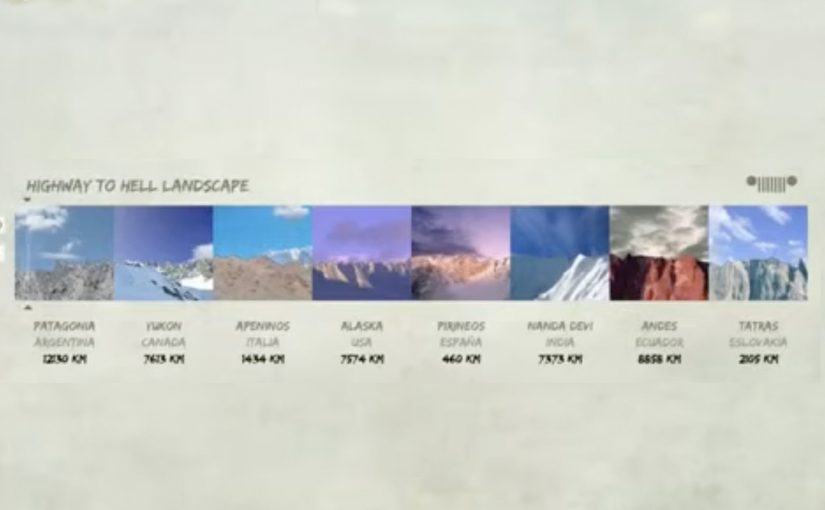
The mechanic is simple and slightly magical. The site reads the shapes of the uploaded track’s sound waves, then matches those shapes to landscape imagery that “looks like” the waveform. With an extra click, users can also discover the route to reach the destination.

In automotive brand building, turning an abstract promise like “freedom” into a playful self-portrait tool helps make exploration feel personally earned. Here, that means the user’s own taste shapes the result, so the experience feels like a reflection rather than a recommendation.

Why it lands

It replaces the usual car-site decision tree with a personal input that people already care about. Their music taste. That shifts the interaction from “find a feature” to “discover a place”, and it gives people a reason to share because the output feels like a quirky reflection of them, not an ad.

Extractable takeaway: If you want people to explore a brand experience, start from an input they feel ownership over, then return an output that looks unique enough to share without needing an incentive.

What Jeep is really buying

This is a soft test-drive nudge disguised as entertainment. The real question is how to make a brand promise about freedom feel personal before anyone even thinks about a vehicle spec sheet. The campaign gets people to imagine themselves on a specific drive with a specific soundtrack, then offers a route so the fantasy can become a plan. Even if the destination is symbolic, the journey cue is real, and that is the brand territory Jeep wants to occupy.

What to steal from Drive Your Track

  • Make the first step emotional, not technical. “Upload a song” beats “choose terrain type”.
  • Turn data into a story artifact. Waveforms become landscapes, so the output is visual and memorable.
  • Give a clear next action. A route option converts discovery into intent.
  • Design for identity sharing. If the result feels personal, distribution comes naturally.

A few fast answers before you act

What is Jeep’s “Drive Your Track”?

It is an interactive campaign where users upload a favorite song and the experience matches the track’s waveform shapes to landscapes, then offers a route to reach the suggested destination.

What is the core mechanic?

Waveform visualization and pattern matching. Your song’s sound-wave shapes are used to generate a landscape-style destination suggestion.

Why does music work as the input?

Music is identity. When the input feels personal, people stay longer, care more about the output, and are more likely to share it.

What makes this more than a novelty?

The route step. It turns a playful recommendation into a concrete next action that can lead toward an actual drive.

What is the transferable lesson for other brands?

Start with a user-owned input, return a shareable artifact, then offer one clear step that turns curiosity into intent.

Fiat Street Evo

Fiat Street Evo

Leo Burnett Iberia has launched a new app called Fiat Street Evo, described as a “not-printed” car catalogue. A catalogue that is virtually on every street in your city.

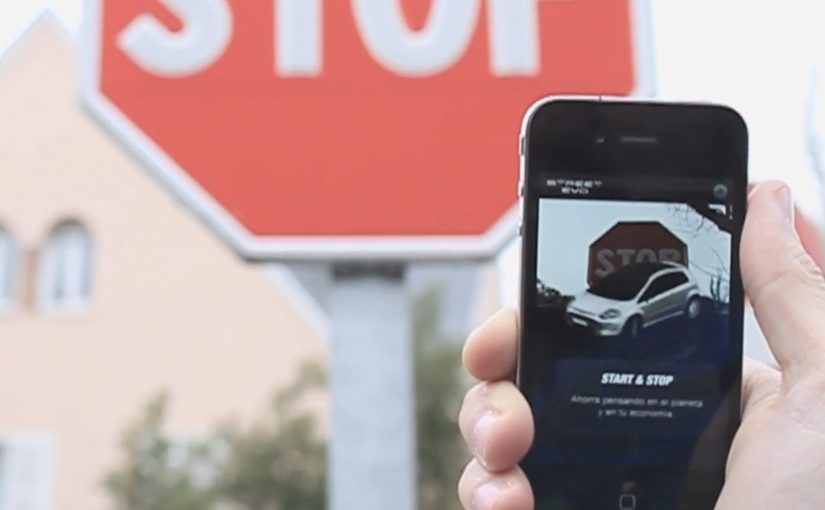
Fiat Street Evo recognises traffic signs as if they were QR codes and associates each sign with a feature of the new Fiat Punto Evo. For example, a STOP sign points you to braking. A curve-ahead sign points you to intelligent lighting that guides you through bends. The list continues across the everyday signage you pass without noticing.

When street furniture becomes a product demo

The mechanism is a neat inversion of the usual brochure logic. Instead of printing a catalogue and hoping people keep it, the city becomes the index. Your camera becomes the browser, and the sign becomes the trigger. Here, “street furniture” means the signs and fixtures already in public space.

In automotive launch marketing, the strongest mobile ideas turn the real world into media without asking people to change their routine.

Why it lands

It reframes “specs and features” as discovery. You do not read a list. You unlock a feature in context, tied to a symbol you already understand. That makes the catalogue feel lighter, and it makes exploration feel like play rather than research. This pattern is stronger than a brochure-style feature list because it earns attention through context, not interruption.

Extractable takeaway: Product education travels further when it is organised around familiar cues in the environment, not around the brand’s feature taxonomy.

What Fiat is really trying to achieve

The real question is whether you can make the phone the first place curiosity goes by attaching product education to cues people already recognise. This kind of execution is doing two jobs at once. It builds attention for a new model, and it makes the phone the first place curiosity goes. That matters because the intent moment is not always at a dealership. It is often on the street, in motion, and in between other tasks.

Patterns to borrow for mobile launch marketing

  • Borrow existing symbols. Traffic signs already carry meaning. Use that meaning as your information architecture.
  • Keep the mapping intuitive. The sign-to-feature link should feel obvious, or people will drop the experience.
  • Design for quick sessions. One sign. One feature. One payoff. Repeat when you feel like it.
  • Make “catalogue” feel like exploration. A sense of discovery beats a long scroll of specifications.
  • Use the city as distribution. When the triggers are everywhere, frequency becomes effortless.

A few fast answers before you act

What is Fiat Street Evo in one sentence?

It is a mobile catalogue concept that recognises traffic signs and uses each sign to reveal a related Fiat Punto Evo feature.

Why call it a “not-printed car catalogue”?

Because the “pages” are distributed across the city as street signs. The phone becomes the reader, and the street becomes the catalogue.

What makes the sign-to-feature mapping important?

The mapping is the comprehension layer. If the association feels natural, users keep going. If it feels random, the idea collapses into novelty.

What is the biggest execution risk?

Recognition reliability. If the app struggles to identify signs in real conditions, people will not persist beyond the first attempt.

What should you measure in a pilot?

Successful recognitions per session, repeat usage, time-to-first-payoff, and whether the experience increases search, dealership visits, or brochure requests.